After your running shoes hit the pavement mile after mile, your muscles are fatigued, tight, and desperately need recovery—this is where knowing how to use foam roller after running becomes essential. Foam rolling has quickly become a non-negotiable part of smart runners’ post-workout routines because it delivers real results where you need them most. When you understand the proper foam rolling techniques after running, you transform from someone who merely completes workouts to an athlete who strategically recovers, prevents injuries, and consistently improves performance. The difference between hobbling through your next run versus feeling fresh and powerful often comes down to what you do in the 15 minutes immediately following your cool-down.
Skipping foam rolling after running is like washing your car but never drying it—you’ve done half the work but missed the crucial step that delivers the full benefit. Many runners mistakenly believe stretching alone is sufficient for recovery, not realizing that tight fascia (the connective tissue surrounding muscles) needs targeted pressure to release properly. This oversight leads to unnecessary soreness, restricted mobility, and ultimately, preventable injuries that derail training plans. By committing to a proper foam rolling routine after every run, you actively participate in your body’s recovery process rather than leaving it to chance.
Target Your Calves and Achilles After Running
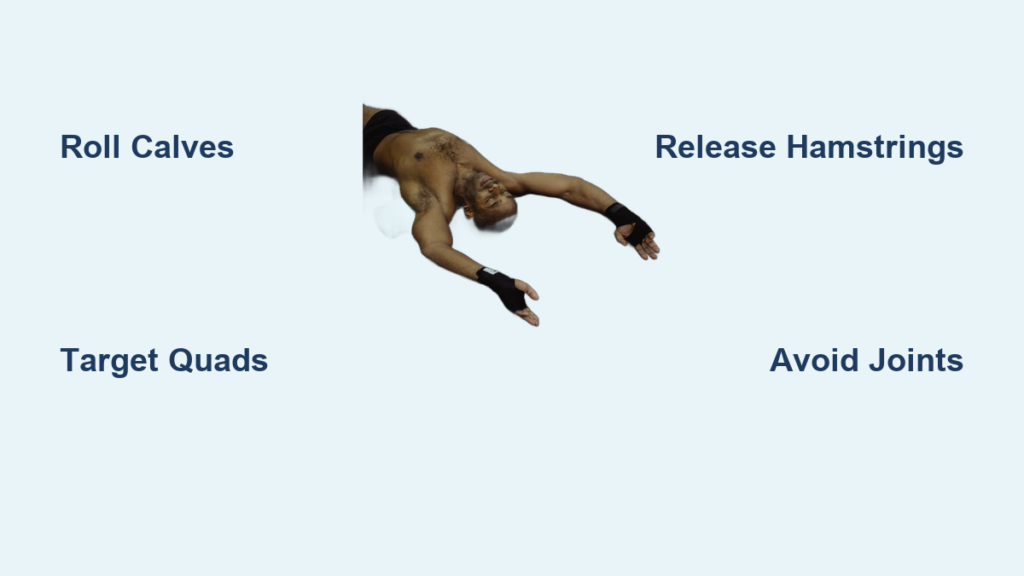
Your calves absorb tremendous impact with each stride, making them prime candidates for immediate foam rolling after running. Sit with the roller positioned under your lower legs, hands pressing into the floor behind you for support. Roll slowly from ankle to knee, pausing for 20-30 seconds whenever you hit a tender spot. Point your toes inward to target outer calf muscles, then outward for inner calves—this subtle adjustment ensures comprehensive release of all calf compartments rather than just the surface muscles.
Never roll directly on your Achilles tendon with full body weight. Instead, cross one leg over the other and use the top leg to apply gentle pressure while rocking slightly. Hold pressure on tight spots near your heel for 15-20 seconds while taking deep breaths—this area often harbors tension that contributes to plantar fasciitis and Achilles issues if left unaddressed. If you’re new to foam rolling, start with lighter pressure on your calves; they’re often the most sensitive area for beginners.
Eliminate Quadriceps Tightness Post-Run
Your quads take massive punishment during running, especially on downhill sections, leading to that heavy, tight feeling that hinders recovery. Lie face down with the roller positioned just above your knees, supporting your upper body on your forearms. Roll slowly toward your hips and back, keeping your core engaged to avoid straining your lower back. Focus extra attention on the area where your quads meet your hip flexors—this transition zone commonly develops knots that limit stride length.
When you find a tight spot in your quads, pause and perform small knee bends while maintaining pressure. This active movement helps break up adhesions more effectively than static pressure alone. For runners with tight hip flexors, spend additional time on the upper portion of your quads near the pelvis. If the standard position strains your shoulders, modify by keeping your elbows close to your body for better stability and control over pressure intensity.
Release Hamstring Tension Before It Causes Injury

Tight hamstrings after running compromise your stride and increase injury risk, yet many runners neglect proper hamstring rolling technique. Sit with the roller positioned under your hamstrings, hands behind you for support, and roll from just below your glutes toward your knees—never directly over the knee joint. Keep movements slow and controlled; rushing defeats the purpose of myofascial release.
For stubborn hamstring tightness, bend your knee slightly while rolling to shift pressure to different portions of the muscle. Runners who sit for long periods often have particularly tight upper hamstrings near the glutes—spend extra time here by leaning slightly to one side to isolate each hamstring individually. If you experience nerve-like shooting pain instead of muscle discomfort, you’re likely pressing on your sciatic nerve; adjust position immediately to avoid irritation.
Prevent IT Band Pain With Strategic Rolling
Contrary to popular belief, you’re not actually rolling your IT band itself—this thick fascia has minimal elasticity and doesn’t respond to direct pressure. Instead, target the tensor fasciae latae (TFL) muscle at your hip and the vastus lateralis on your outer thigh, which both attach to your IT band and create tension when tight. Lie on your side with the roller positioned beneath your outer thigh, bottom leg bent for stability, and roll from hip to knee while supporting your upper body with your forearm.
Focus extra attention on the area just below your hip bone where the TFL resides—this is often the true source of IT band syndrome. Start with lighter pressure here as it’s typically very tender; gradually increase intensity as your muscles adapt. If standard side-lying is too intense, try placing the roller vertically against a wall and using your hands to control pressure while leaning against it—this modification gives you more control over intensity.
Fix Glute Tightness That Sabotages Your Stride

Tight glutes after running disrupt your biomechanics, forcing other muscles to compensate and increasing injury risk. Sit on the roller and cross one ankle over the opposite knee into a figure-four position. Lean toward the crossed leg to shift weight onto the targeted glute, then roll side-to-side and forward-backward to cover the entire muscle. Pay special attention to any tender spots that might indicate piriformis syndrome, which can cause sciatic nerve pain.
For deeper glute release, lie on your back with knees bent, place the roller beneath your glutes, and cross one ankle over the opposite knee. Pull the uncrossed leg toward your chest to increase pressure on the targeted glute. Hold tight spots for 20-30 seconds while taking deep breaths—this position is gentler on your arms while still delivering effective release. Runners with desk jobs especially need this post-run glute work to counteract hours of sitting.
Avoid Critical Foam Rolling Mistakes That Worsen Soreness
Rolling too quickly is the most common error runners make when using a foam roller after running. Your muscles need sustained pressure—spend at least 20-30 seconds on each tight spot rather than rushing through your routine. Another critical mistake is rolling directly on joints or bones; your knee, hip bones, and spine lack protective muscle and should never bear direct roller pressure.
Never foam roll through sharp, shooting pain—this indicates you’re pressing on nerves or injured tissue. The discomfort should be a “good hurt” that gradually subsides as you maintain pressure, not intensifying pain that makes you tense up. Additionally, don’t neglect consistency; occasional foam rolling after hard runs won’t deliver the cumulative benefits that regular, post-run sessions provide for injury prevention and recovery.
Optimize Foam Rolling Duration for Maximum Recovery
After most runs, spend 1-2 minutes on each major muscle group for a total session of 10-15 minutes. Focus on your calves, quads, hamstrings, and glutes—the primary muscle groups engaged during running. For particularly hard workouts or long runs, extend your session to 20 minutes with extra attention on problem areas.
Don’t overdo it on stubborn knots—more than 3 minutes on a single spot can cause bruising and inflammation that delays recovery. If tension persists after multiple sessions, consult a physical therapist rather than forcing the issue. Consistency matters more than duration; a brief 5-minute routine after every run delivers better results than lengthy occasional sessions.
Choose the Right Foam Roller for Running Recovery

Beginners should start with a medium-density smooth roller—it’s versatile enough for all muscle groups without being overwhelming. As you become more comfortable with foam rolling after running, consider progressing to higher-density rollers for deeper tissue work on larger muscle groups like quads and glutes.
Avoid textured rollers as a beginner; the ridges and bumps create excessive pressure that often causes bruising rather than effective release. For home use, choose a 36-inch roller that accommodates your full body length during back rolling; if space is limited, a 24-inch roller still works for lower body muscles. Replace your roller when it shows significant compression or wear—typically after 6-12 months of regular use.
Make Foam Rolling a Non-Negotiable Post-Run Habit
Keep your foam roller in plain sight where you finish your runs so you see it immediately after cooling down. Perform your routine while your muscles are still warm and most receptive to release—this timing maximizes blood flow and recovery benefits. Pair foam rolling with your post-run hydration ritual to create a consistent habit loop.
Don’t view foam rolling as optional “extra” work—it’s as essential as your running shoes for maintaining long-term running health. On rest days, incorporate brief foam rolling sessions to maintain muscle pliability between runs. Over time, you’ll develop an intuitive understanding of your body’s needs, allowing you to customize your routine for maximum effectiveness without following a rigid script.
Consistently implementing proper foam rolling techniques after running transforms your recovery from passive to active, putting you in control of your muscle health and running longevity. By targeting specific problem areas with the right techniques and timing, you’ll reduce soreness, improve flexibility, and maintain the biomechanics that keep you running strong. Start with just 5 minutes after each run focusing on your most problematic areas, and gradually expand as your muscles adapt. Remember, the runner who rolls effectively after every run isn’t just recovering—they’re strategically preparing for their next breakthrough performance. Your future self, logging miles pain-free while others battle injuries, will thank you for making foam rolling a non-negotiable part of your running routine today.