You’ve probably seen athletes rolling out on foam cylinders after workouts or spotted these popular recovery tools lining fitness store shelves. But when you’re standing in front of a wall of foam rollers with different textures, densities, and price tags, how do you know which one actually matches your specific needs? The right foam roller can transform your recovery routine, while the wrong choice might leave you frustrated or even cause injury. This guide cuts through the marketing hype to give you a practical, step-by-step approach to selecting the perfect foam roller based on your body type, fitness level, and recovery goals—so you can make an informed purchase that delivers real results without wasting money on something that sits unused in your closet.
Most beginners make the critical mistake of grabbing the hardest, most aggressive roller they see, thinking “no pain, no gain” applies to recovery tools. In reality, starting too intense often leads to bruising, excessive soreness, and abandoning your rolling routine altogether. The ideal foam roller balances effectiveness with comfort for your current condition. Whether you’re a weekend warrior dealing with tight hamstrings, a postpartum mom rebuilding core strength, or a senior citizen managing joint stiffness, your perfect roller differs significantly from others’. This comprehensive guide walks you through the exact selection process professionals use, including how to match roller density to your body composition, choose the right size for your height, and identify quality construction that won’t disintegrate after two weeks of use.
How Your Body Weight Determines Foam Roller Density Selection

Why 150lbs Is the Critical Threshold for Density Choice
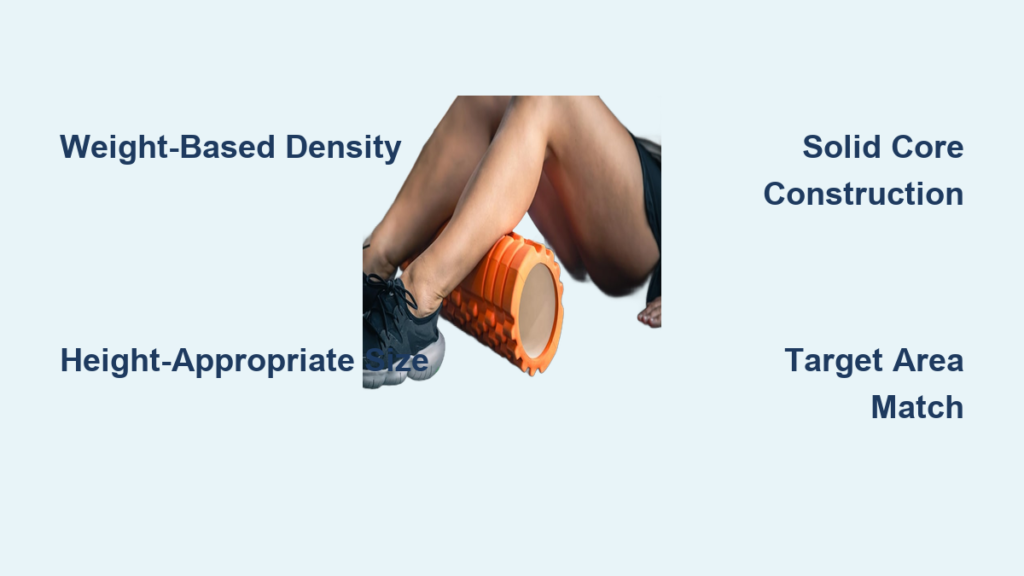
Your body weight directly impacts which foam roller density will provide optimal pressure without causing injury. If you weigh under 150 pounds, starting with a medium-density roller prevents excessive pressure that could bruise delicate tissue. Lighter individuals often make the mistake of using high-density rollers that create painful pressure points rather than effective myofascial release. For those between 150-200 pounds, medium to high-density rollers typically provide the ideal balance—firm enough to penetrate muscle tissue but forgiving enough to allow sustained rolling. Athletes over 200 pounds generally require high-density or vibrating rollers to achieve sufficient pressure penetration through thicker muscle mass.
Matching Roller Firmness to Your Pain Tolerance and Fitness Level
Beginners should always start with softer rollers regardless of weight—your muscles need time to adapt to myofascial release. Try this simple test: sit on your potential roller with modest pressure. If you immediately flinch or can’t maintain position for 30 seconds, it’s too firm for your current stage. As you progress, gradually increase density over 4-6 weeks rather than jumping to the hardest option immediately. Runners with chronically tight calves might need firmer rollers than yoga practitioners focusing on gentle spinal mobility work. Postpartum women rebuilding pelvic floor strength often benefit from extra-soft rollers that provide gentle stimulation without strain.
Critical Size Considerations: Matching Foam Roller Dimensions to Your Height and Target Areas
Why 36-Inch Rollers Work Best for Full-Body Work (With Exceptions)
Taller users (over 5’8″) typically require the standard 36-inch foam roller length to effectively target full muscle groups like hamstrings or back without constant repositioning. Shorter individuals (under 5’4″) often find 18-24 inch rollers more practical for targeted work on specific areas like calves or quads. If you travel frequently or have limited storage space, consider a dual-purpose approach: a compact 12-inch roller for travel plus a full-size roller at home. Never choose roller length based solely on price—using an undersized roller for full-body work creates inefficient rolling patterns that reduce effectiveness.
Targeted vs. Full-Body Rolling: Which Diameter Suits Your Primary Needs
Standard 6-inch diameter rollers provide the most versatile full-body option for general use. However, if you primarily target small muscle groups like IT bands or feet, a narrow 4-inch roller delivers more focused pressure. Physical therapists often recommend extra-wide 8-inch rollers for beginners because the increased surface area distributes pressure more evenly, reducing discomfort while learning proper technique. For users with limited upper body strength (such as seniors or post-surgical patients), wider rollers require less arm pressure to generate effective release.
Material Quality Indicators That Determine Longevity and Performance
Spotting Low-Density Foam That Deteriorates Within Weeks
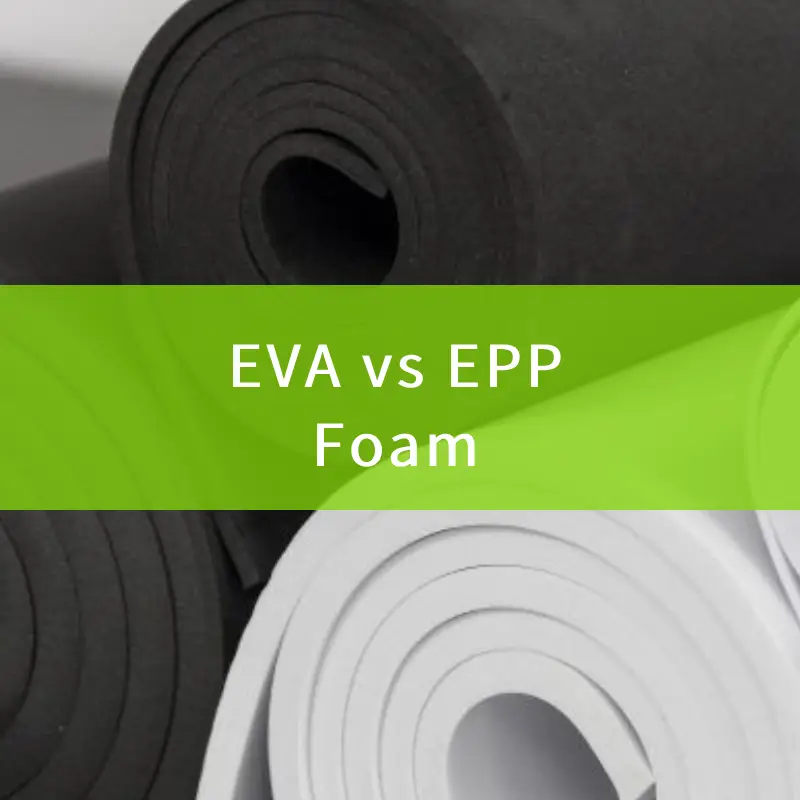
Quality foam rollers maintain their shape and firmness through hundreds of uses. Press your thumb firmly into the roller—if it leaves a permanent indentation, the foam density is too low and will flatten prematurely. High-quality EPP (expanded polypropylene) foam retains shape better than traditional EVA foam, especially in temperature extremes. Avoid rollers with visible seams or inconsistent texture, which indicate poor manufacturing that leads to uneven wear. Reputable brands specify foam density in pounds per cubic foot (PCF)—aim for 1.8-2.5 PCF for medium density, 2.6-3.5 PCF for high density.
Why Hollow Core Rollers Fail Faster Than Solid Construction
Solid-core rollers withstand repeated pressure without collapsing, while hollow-core models often develop permanent grooves where you apply the most pressure. Test potential purchases by applying firm, consistent pressure along the entire length—if it bends significantly or creates visible valleys, it lacks structural integrity. Professional-grade rollers typically weigh 3-5 pounds; anything significantly lighter usually indicates compromised materials. The best rollers feel substantial in your hands without being uncomfortably heavy to transport.
Specialized Foam Roller Types for Specific Recovery Needs
When Grid Pattern Rollers Provide Better Results Than Smooth Surfaces
Grid-pattern rollers work best for breaking up severe adhesions in large muscle groups like quads or lats, but they’re often too aggressive for beginners or sensitive areas like the lower back. The raised grid creates targeted pressure points that mimic thumbs during massage therapy. If you have moderate to severe muscle knots, start with a medium-density grid roller for 2-3 weeks before progressing to high-density. Never use grid rollers directly on bones, joints, or the spine—maintain at least two inches of clearance from all bony prominences.
Vibrating Rollers: Worth the Investment or Just Marketing Hype?
Vibrating rollers enhance traditional foam rolling by adding oscillation that helps relax muscle fibers before deep pressure application. They’re particularly effective for users with chronic tightness who’ve plateaued with standard rollers. Look for models with adjustable vibration intensity (minimum 3 settings) and at least 2 hours of battery life. The vibration feature should activate independently from rolling motion—never purchase rollers requiring constant pressure to maintain vibration. While more expensive upfront, quality vibrating rollers often replace multiple specialized tools, potentially saving money long-term for serious athletes.
Price vs. Value Analysis: What You’re Really Paying For
Why $15 Rollers Often Cost More Long-Term Than $40 Options
Extremely cheap foam rollers typically use low-density foam that permanently deforms within weeks, forcing replacement. Calculate cost-per-use: a $15 roller lasting 2 months costs $0.25 per day, while a $40 roller lasting 18 months costs just $0.07 per day. Mid-range rollers ($25-$35) from reputable fitness brands offer the best balance for most users—sufficient density without professional-grade markup. Avoid purchasing rollers solely from marketplaces with unverified sellers; established fitness retailers provide quality control that prevents defective products.
Brand Reputation Signals That Justify Higher Price Points
Brands with physical retail presence (like TriggerPoint or RumbleRoller) generally maintain stricter quality control than online-only sellers. Check return policies—reputable companies offer at least 30-day satisfaction guarantees. Professional endorsements from physical therapists or sports medicine specialists carry more weight than influencer promotions. The best value often comes from mid-tier professional brands rather than ultra-premium or bargain options. Consider rollers with manufacturer warranties of at least one year as a quality indicator.
Foam Roller Selection Mistakes That Sabotage Your Recovery
Why Ignoring Your Current Injury Status Leads to Setbacks
Using an inappropriate density roller on acute injuries (within 48 hours) can worsen inflammation and delay healing. Post-surgical users often make the critical error of rolling directly over incision sites before tissues have properly healed. If you have osteoporosis or bone density issues, high-density rollers may create excessive pressure on fragile bones. Always consult your physical therapist about roller selection specific to your condition—they might recommend avoiding rollers entirely during certain recovery phases.
The Posture Mistake 90% of Beginners Make During Rolling
Leaning too heavily on your arms while rolling shifts pressure away from target muscles and strains your wrists. Proper technique requires engaging your core to control pressure, not collapsing into your upper body. Shorter users frequently choose rollers that are too long, forcing awkward positioning that compromises spinal alignment. Keep your neck in neutral alignment—never crane your head to watch the roller’s movement. For back rolling, place hands behind your head with elbows wide to maintain natural cervical curve.
Your Foam Roller Selection Checklist Before Purchase
- [ ] Tested firmness against your body weight (not just hand pressure)
- [ ] Confirmed appropriate length for your height and storage space
- [ ] Verified solid core construction with no excessive flexing
- [ ] Checked material density specifications (not just marketing terms)
- [ ] Ensured return policy matches your risk tolerance
- [ ] Matched roller type to your primary target areas
- [ ] Considered vibration needs based on current progress plateau
By methodically working through these selection criteria rather than impulse-buying based on price or appearance, you’ll invest in a foam roller that delivers consistent results for years. The perfect roller meets you at your current fitness stage while allowing progression as your body adapts—creating a sustainable recovery tool that earns its space in your routine rather than collecting dust. Remember that the most expensive or intense roller isn’t automatically the best choice; your ideal match balances effectiveness with comfort for your unique physiology and goals. When in doubt, start softer and smaller—you can always progress to more advanced options as your body adapts to regular myofascial release.