Slam balls have become essential equipment for athletes, CrossFit enthusiasts, and anyone looking to build explosive power, but selecting the proper weight can make the difference between an effective workout and potential injury. Whether you’re a beginner exploring medicine ball exercises or an experienced athlete intensifying your plyometric routine, understanding how to match slam ball weight to your fitness level and goals is crucial. The wrong choice—whether too light to challenge your muscles or too heavy to control safely—can derail your training progress and increase injury risk. This guide walks you through the key factors to consider, from experience level to specific exercise requirements, helping you make an informed decision that maximizes your results while keeping you safe.
Determine Your Starting Weight Based on Training Experience
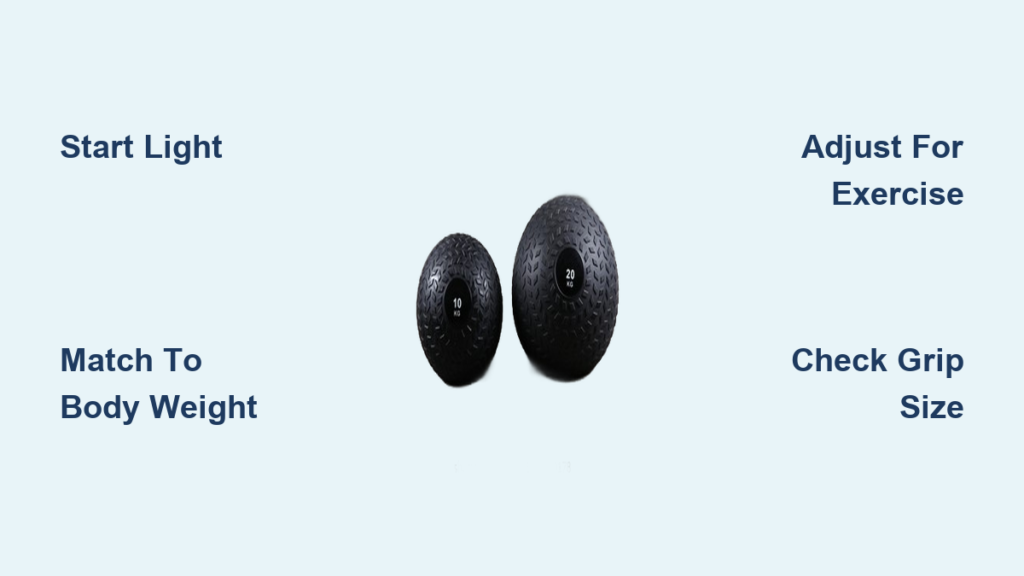
Your current fitness background should directly influence your slam ball selection, as choosing incorrectly can lead to either ineffective workouts or unnecessary injury risk. Beginners to strength training should start with lighter slam balls between 6-12 pounds (3-6 kg) to develop proper movement patterns without compromising control during explosive motions. This lighter weight range allows new athletes to focus on technique rather than struggling with excessive weight that could alter their form. Intermediate athletes with 3-6 months of consistent training can typically progress to 14-20 pound (6-9 kg) slam balls, as their core stability, grip strength, and neuromuscular coordination have developed sufficiently to handle increased resistance. Advanced athletes and competitive CrossFit participants often work with 25+ pound (11+ kg) slam balls, though even experienced lifters should increase weight gradually—adding no more than 5 pounds at a time—to prevent overuse injuries from the high-impact nature of slam ball training.
How to Identify When You’re Ready to Increase Weight
Track your performance across multiple sessions before progressing to heavier slam balls. You’re ready for a heavier weight when you can complete all prescribed repetitions with perfect form, maintaining the same explosive power on the final rep as the first. If your slams become slower, your range of motion decreases, or your landing position changes toward the end of a set, you’re likely using too heavy a ball. For most athletes, progression occurs every 4-8 weeks of consistent training, but this varies based on individual recovery capacity and training frequency. Listen to your body—persistent wrist or shoulder soreness after slam ball workouts indicates you’ve progressed too quickly and should return to a lighter weight to rebuild proper movement patterns.
Select Weight Based on Your Body Composition

Your physical size and strength-to-weight ratio significantly impact optimal slam ball selection, as these factors determine how much weight you can safely control through explosive movements. Athletes under 130 pounds typically achieve best results with 8-12 pound slam balls for standard overhead slams, as heavier weights can compromise form and increase injury risk. Those weighing between 130-180 pounds generally find 12-20 pound balls provide the ideal resistance-to-control balance for most slam ball exercises. Athletes over 180 pounds often benefit from 20-30 pound slam balls for traditional slams, though wall ball exercises might require slightly lighter weights due to the different movement pattern. Women often select weights 40-50% lighter than men of similar size and experience level, though this varies significantly based on individual strength development and training history.
Why Body Weight Matters More Than Gender
While general gender-based recommendations exist, your actual strength relative to your body weight provides a more accurate selection criterion than gender alone. A petite but highly trained female CrossFit athlete might comfortably handle a 25-pound slam ball, while a larger beginner male might need to start with just 10 pounds. Focus on your personal capabilities rather than predefined categories—your ideal slam ball weight should challenge your muscles without compromising your ability to maintain proper spinal alignment and joint positioning throughout the movement. If you find yourself leaning forward excessively or losing balance during slams, the ball is too heavy for your current strength-to-weight ratio.
Match Weight to Specific Exercise Requirements

Different slam ball exercises demand varying weight selections, as movement patterns and force production differ significantly between exercises. Overhead slams require the most control and generate the highest impact forces, typically demanding weights 20-30% lighter than what you’d use for controlled wall ball exercises. For example, if you use a 20-pound ball for wall balls, you’d likely need a 14-16 pound ball for overhead slams to maintain proper form. Wall balls and chest passes allow slightly heavier weights because the movement is more controlled with a shorter travel distance before impact. Rotational throws and lateral slams fall between these extremes, with 15-20 pound balls serving most athletes well for these multidirectional movements that require both power and stability.
How to Choose When Training Multiple Movement Patterns
When your workout includes various slam ball exercises, select a versatile mid-range weight that performs adequately across movements rather than optimizing for one specific exercise. Most general fitness enthusiasts find a 15-20 pound ball serves as an effective “all-purpose” slam ball for mixed workouts. Competitive CrossFit athletes often need multiple weights in their collection—lighter options (10-15 pounds) for high-repetition couplets and heavier selections (25-30+ pounds) for strength-focused elements. If budget or space constraints limit you to one slam ball, choose a weight appropriate for your most frequent exercise type, typically overhead slams, as this is the most technically demanding movement that will translate well to other exercises.
Address Grip Strength Limitations
Grip capacity frequently becomes the limiting factor before muscular fatigue during slam ball training, making hand size and grip strength critical selection criteria often overlooked by beginners. Standard slam balls range from 9-14 inches in diameter, with heavier weights naturally creating larger balls that can challenge smaller hands. If you find yourself losing control of the ball during the downward phase of your slam or struggling to maintain grip during rotational exercises, your hands may be too small for the ball’s diameter at that weight. Look for slam balls with textured rubber surfaces that improve grip, especially if your hands sweat during intense workouts. Some manufacturers offer reduced-diameter options that maintain standard weight ranges specifically for athletes with smaller hands.
How to Test Slam Ball Grip Before Purchasing
When possible, physically test different slam ball weights before purchasing to assess what feels controllable through a full range of motion. Your grip should never be the point of failure during explosive exercises—if you’re dropping the ball or your fingers slip during the slam, the weight is too heavy for your current grip strength. Perform a few test slams with each weight option, focusing on maintaining consistent grip throughout the movement. If purchasing online, research the specific brand’s ball diameter-to-weight ratio, as some manufacturers produce more compact slam balls that provide better grip for smaller hands at heavier weights.
Consider Material Composition and Bounce Characteristics

The construction materials of slam balls directly impact both safety and training effectiveness, making this factor as important as weight selection itself. High-quality slam balls are typically filled with sand, steel shot, or a combination that creates minimal bounce—essential for safe training environments and preventing unpredictable rebounds toward your face during overhead slams. Balls with excessive bounce should be avoided, as they compromise workout effectiveness and increase injury risk. Rubber-shell slam balls generally offer superior durability and better grip texture than vinyl alternatives, though they may produce louder impacts on hard surfaces.
How Training Environment Affects Your Choice
Your workout space significantly influences ideal slam ball selection beyond just weight considerations. If training on hard gym floors, consider slam balls with slightly softer exteriors that reduce noise and impact shock while maintaining minimal bounce characteristics. Outdoor or garage gym settings can accommodate heavier, more durable rubber-shell options that withstand rougher surfaces. Price often correlates with material quality—mid-range to premium slam balls ($30-80) typically offer better value through longer lifespans and more consistent performance than budget alternatives that may develop uneven weight distribution or excessive bounce over time.
Plan Your Long-Term Weight Progression Strategy

Selecting a starting weight that accommodates future progression ensures your slam ball investment serves your training needs for months or years. Document your performance with specific metrics like repetitions completed, height achieved on wall balls, or consistent form maintenance to track improvements objectively. Most athletes benefit from having two to three weight options available to accommodate different training phases and exercise variations. When adding weight, increase by no more than 20% at a time—jumping from a 10-pound to a 15-pound ball (50% increase) often compromises form, while moving to a 12-pound ball (20% increase) allows for sustainable progression.
Recognizing When You’ve Reached Your Current Limit
You’ve selected too heavy a slam ball if your spinal alignment changes during the movement, your range of motion decreases, or you experience joint pain during or after workouts. Deload weeks with lighter weights are essential for maintaining movement quality while allowing recovery, particularly important during high-intensity slam ball training that stresses the entire kinetic chain. Consider your long-term goals when planning progression—general fitness enthusiasts might peak at 20-30 pounds, while competitive athletes may need to work toward 40-60 pound slam balls for specialized training.
Final Selection Recommendations by User Profile
| Training Goal | Recommended Starting Weight | Progression Path |
|---|---|---|
| General Fitness Beginner | 8-12 lbs (3-6 kg) | +2-4 lbs every 6-8 weeks |
| CrossFit Athlete | 15-20 lbs (7-9 kg) | Multiple weights: 10/15/20/25 lbs |
| Combat Sports Training | 10-15 lbs (5-7 kg) | Focus on speed over weight |
| Rehabilitation | 4-8 lbs (2-4 kg) | Very gradual progression |
| Youth Athletes | 4-6 lbs (2-3 kg) | Increase only with coach approval |
When selecting your slam ball, always prioritize movement quality over weight. Starting with a lighter ball that allows perfect form will deliver better long-term results than struggling with excessive weight that compromises technique. Test different weights if possible, and remember that the right slam ball weight feels challenging but controllable through every phase of the movement—from the lift to the explosive slam.