You’ve brought home your new walking pad only to realize your favorite workout spot has carpet—not hard flooring. Without proper preparation, using a walking pad directly on carpet can compress fibers, create uneven wear patterns, and compromise stability during use. The good news? A dedicated protective mat solves these problems completely, creating a stable surface that protects both your carpet and your equipment. This guide reveals exactly how to set up your walking pad on carpet for safe, effective workouts while preserving your flooring investment. You’ll learn which mat specifications work best, how to install it properly, and maintenance tips that ensure years of reliable use.
Why Your Walking Pad Needs Protection on Carpet
Carpet seems soft and comfortable, but it creates hidden problems for walking pad operation that can damage both your equipment and flooring. The continuous vibration from your walking pad compresses carpet fibers beneath the unit’s feet, creating permanent indentations that alter your carpet’s appearance and texture. More critically, plush carpet padding creates an unstable foundation that affects belt tracking and motor performance—your walking pad requires a firm, level surface to operate efficiently.
The underlying structure of carpeted floors compounds these issues significantly. Most carpet installations include padding beneath the visible fibers, and this additional cushioning creates an uneven surface that causes your walking pad to rock during use. This instability affects your balance, increases noise levels, and puts unnecessary strain on the walking pad’s frame and motor over time. Without intervention, you’ll experience premature wear on both your carpet and your equipment. A protective mat addresses all these concerns by distributing weight evenly and creating a stable platform that mimics hard flooring performance.
How Carpet Affects Walking Pad Performance
Walking pads operate with precise mechanical tolerances that carpet disrupts in several measurable ways. On carpet, the belt mechanism experiences inconsistent tension as the unit’s feet sink into soft fibers, causing the belt to slip or track unevenly. Users report increased motor strain and higher operating temperatures when running walking pads directly on carpet compared to hard surfaces. The vibration from this unstable operation transmits through your floor structure, creating noticeable noise in rooms below—particularly problematic in multi-story homes.
Carpet fibers also interfere with the walking pad’s cooling system. Many models draw air through vents in the base to prevent overheating, but carpet fibers can block these vents when the unit sits directly on carpet. This restriction reduces airflow, causing the motor to run hotter and potentially triggering automatic shutdowns during longer workouts. The protective mat elevates the walking pad just enough to maintain proper airflow while creating the stable surface the mechanism requires.
Select the Perfect Protective Mat for Your Carpet
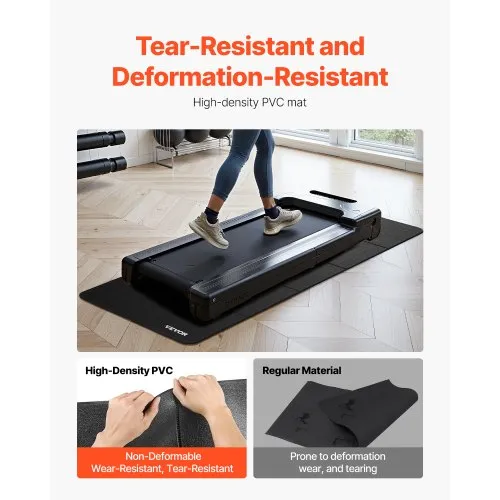
Choosing the right protective mat makes the difference between a successful setup and ongoing problems with your walking pad on carpet. Not all mats deliver equal protection, so understanding the critical specifications ensures you invest in a solution that works long-term.
Critical Material and Thickness Requirements
High-density PVC material represents the gold standard for walking pad mats on carpet. This construction provides exceptional durability and shock absorption that withstands continuous use while protecting both your equipment and flooring. Look for mats with a thickness of 0.25 inches (1/4 inch)—this specification consistently outperforms thinner options by providing optimal balance between cushioning and stability. Mats thinner than 0.2 inches often compress too quickly under the walking pad’s weight, while those thicker than 0.3 inches introduce excessive cushioning that affects stability.
The density of the PVC matters significantly—lower-density materials compress over time, reducing their protective effectiveness. Quality mats maintain their shape through months of daily use, preventing the walking pad’s feet from contacting the carpet surface. This density also delivers noise reduction, minimizing vibration transmission through your floor structure. Additionally, PVC’s waterproof properties protect your carpet from moisture damage during intense workouts, preventing mold growth and staining that could require expensive remediation.
Correct Sizing for Your Walking Pad Model
Standard protective mats measure 68 inches in length by 24 inches in width—dimensions specifically designed for most walking pad models. Before purchasing, measure your walking pad to confirm adequate coverage. Your mat should extend at least 2-3 inches beyond all edges of the device to create a protective margin around the perimeter. Many users make the mistake of selecting mats that only match their walking pad’s footprint, leaving carpet exposed to direct pressure at the edges.
If your walking pad has an unusual size, look for mats that can be trimmed to custom dimensions. High-quality PVC mats allow precise cutting with standard utility knives, enabling you to create a perfect fit for your specific equipment. One user with a Deer Run walking pad confirmed their unit fit perfectly on a standard 68″ x 24″ mat with additional lengthwise clearance—this extra space prevents carpet compression beyond the walking pad’s operational area.
Install Your Walking Pad on Carpet Properly
Correct installation ensures your protective mat performs effectively from day one. Rushing this process creates persistent problems, so taking time upfront pays dividends in long-term satisfaction and equipment performance.
Mat Preparation Before Equipment Placement
Upon receiving your protective mat, you’ll find it folded for shipping. Resist placing your walking pad directly on it—allow the mat to rest flat on your carpet for 24-48 hours first. This critical step lets the material relax and shipping creases diminish almost entirely. A mat with prominent creases under your walking pad creates an uneven surface affecting stability and potentially damaging the belt mechanism.
Before laying the mat, vacuum the carpet area thoroughly to remove debris that could create bumps. The protective mat should lie completely flat with no curling edges or air pockets beneath it. Once properly flattened, the mat remains securely positioned on carpet due to its non-slip design and the combined weight of both the mat and walking pad. Users consistently report that skipping this flattening period leads to persistent rocking issues during use.
Final Setup and Stability Testing
After your protective mat has flattened completely, position your walking pad centered on the mat’s surface. Ensure all feet rest firmly on the mat with no overhang. Test stability by gently pushing on the handrail—any rocking indicates the need to reposition the mat or check for debris beneath it. If your walking pad has adjustable leveling feet, now’s the time to fine-tune them for perfect stability.
Run your walking pad at a slow speed (1-2 mph) for several minutes to verify smooth operation before increasing speed. Listen for unusual belt slippage sounds or motor strain that would indicate improper setup. Properly installed, your walking pad should operate just as quietly and smoothly on carpet with a protective mat as it would on hard flooring.
Optimize Your Walking Pad Experience on Carpet

With your protective mat in place, you can use your walking pad on carpet just as effectively as on hard flooring, but a few optimizations enhance the experience and extend equipment life.
Speed and Incline Best Practices
Walking pads operate effectively across their full speed range when protected by a quality mat on carpet. The stable surface created by the mat allows smooth belt operation whether walking slowly while working at a desk or increasing pace for more intensive workouts. Remote-controlled speed adjustments work without interference, maintaining the convenience that makes walking pads ideal for home use.
The combined shock absorption of both the walking pad and protective mat creates a comfortable, low-impact surface comparable to outdoor walking on grass. This cushioning reduces joint stress, making extended walking sessions more comfortable than hard flooring alternatives. Users report joint comfort even during longer workouts—none of the discomfort sometimes associated with concrete or tile-based cardio equipment.
Storage Solutions for Compact Spaces
One advantage of the protective mat solution involves storage flexibility. Many walking pad owners appreciate sliding their equipment in and out from under furniture like beds when the protective mat is in place. The mat adds minimal bulk and can remain on carpet continuously or be rolled up alongside the walking pad for closet storage.
When storing both items together, roll the mat alongside the walking pad rather than stacking them. This prevents residual moisture from becoming trapped between surfaces and maintains the mat’s shape for faster setup. Some users describe their protected walking pad setup as functioning as both a protective surface and what they humorously term a “shaker table,” demonstrating the mat’s versatility in compact living spaces.
Maintain Your Carpet Setup for Long-Term Success
Routine maintenance ensures your protective mat and walking pad continue performing optimally throughout their lifespan. The good news is that upkeep requires minimal effort while delivering significant benefits.
Regular Inspection and Cleaning Protocol
Inspect both your walking pad and protective mat monthly for signs of wear, damage, or shifting. Check the mat’s surface and edges for developing issues—surface wear, edge curling, compression spots where the feet rest, and any moisture accumulation all warrant attention. Cleaning involves simple wiping with a damp cloth to remove sweat residue and dust. For thorough cleaning, use mild soap solutions followed by complete drying before returning to service.
The waterproof nature of quality PVC mats allows effective cleaning without moisture damage concerns. However, ensuring the mat is completely dry before use prevents slippage and maintains safety. Users who skip this drying step often report reduced traction between the mat and carpet during subsequent workouts.
Protect Your Investment with the Right Mat
The investment in a quality protective mat delivers exceptional value through multiple mechanisms. These mats typically cost between $28.99 and $34.99—a small fraction of your walking pad’s value and potential carpet repair costs. User experiences confirm that this simple accessory enables safe operation on any carpeted surface, expanding your workout options throughout your home.
By creating a stable, level surface for your walking pad, the protective mat preserves both your equipment and flooring investment. The high-density PVC construction with 0.25-inch thickness provides optimal protection for most residential applications. At less than $35, this solution represents one of the most cost-effective accessories available for walking pad owners with carpeted flooring—enabling workout flexibility that would otherwise require professional flooring installation. Invest in the right mat today and enjoy convenient, effective walking pad exercise in any room of your home.