Your Urevo walking pad delivers convenient home fitness, but without proper lubrication, you’ll soon face frustrating squeaks, belt slippage, and premature wear. Learning how to lubricate Urevo walking pad components correctly extends its lifespan and keeps your workouts smooth and quiet. While Urevo’s specific documentation on this maintenance task is limited, the proper lubrication techniques outlined here follow industry-standard practices for walking pads and will protect your investment. This guide gives you everything you need to maintain optimal performance through proper lubrication—no guesswork required.
Why Your Urevo Walking Pad Squeaks Without Proper Lubrication
When friction builds between your Urevo walking pad’s belt and deck, you’ll hear that telltale squeak that ruins your workout experience. This noise signals excessive friction that not only annoys you but also damages critical components. Without adequate lubrication, the motor must work harder to turn the belt, causing unnecessary strain on electrical components and reducing the overall lifespan of your machine.
Proper lubrication creates a protective barrier that reduces friction by up to 90%, significantly extending the life of three crucial elements: the walking belt itself, the motor system, and the roller bearings. A well-lubricated walking pad operates more quietly, requires less energy to run, and provides a noticeably smoother walking experience. Most importantly, regular lubrication prevents the belt from developing permanent wear patterns that eventually require expensive replacement.
7 Warning Signs Your Urevo Walking Pad Needs Immediate Lubrication
Don’t wait for catastrophic failure—recognize these early indicators that your Urevo requires lubrication attention right now:
Persistent squeaking or grinding noises during operation signal dangerous friction levels building between the belt and deck. These sounds typically start subtly but intensify rapidly if ignored. If you hear rhythmic squeaking that matches your walking pace, lubrication is urgently needed.
Belt slippage occurs when the walking surface moves independently of your feet, creating an unsafe and frustrating experience. While tension issues can cause this problem, insufficient lubrication is the most common culprit—especially if you notice slippage increasing during incline settings or higher speeds.
Increased motor strain manifests as sluggish acceleration, unusual vibrations, or the motor working harder than normal to maintain consistent speed. Your walking pad may also shut down unexpectedly due to overheating caused by excessive friction.
Visible belt wear patterns along the edges or center of the walking surface indicate uneven friction distribution. If you notice shiny spots, fraying, or uneven texture on the belt, immediate lubrication can prevent further damage.
Excessive heat buildup beneath the walking surface after normal use suggests dangerous friction levels. If the deck feels unusually warm to the touch after a standard walking session, lubrication should be your first maintenance step.
Increased dust accumulation around the belt edges often accompanies poor lubrication. The static electricity generated by dry friction attracts more dust and debris, creating a vicious cycle of increased wear.
Unusual resistance when manually rotating the belt indicates significant friction buildup. If the belt doesn’t move smoothly when you turn it by hand (with power disconnected), lubrication is overdue.
Essential Tools for Urevo Walking Pad Lubrication (Don’t Skip #3)

Gather these specific items before starting your lubrication process to ensure success:
- Silicone-based treadmill lubricant (specifically formulated for walking pads) – Avoid petroleum-based products or household oils that can damage belt materials
- Clean, lint-free microfiber cloths – For wiping excess lubricant and preparing surfaces
- Hex key or screwdriver set – To access rear roller adjustment mechanisms
- Flashlight – For inspecting the deck surface beneath the belt
- Protective mat or old towel – To catch any drips and protect your flooring
- Work gloves – To keep your hands clean during the process
Why Silicone Lubricant Is Non-Negotiable for Urevo Models
Using the wrong lubricant can cause permanent damage to your Urevo walking pad. Silicone-based products maintain their viscosity across temperature ranges, resist breaking down under continuous use, and won’t degrade the polymer materials in your walking belt assembly. Petroleum-based alternatives like WD-40 or 3-in-1 oil attract dust, break down quickly, and can create slippery hazards that compromise safety.
Safety-First Preparation Before Lubricating Your Urevo
Critical Power Disconnection Steps
Unplug your Urevo walking pad from all electrical sources—never skip this step. Even when turned off, walking pads contain capacitors that store electrical energy. Allow the machine to rest for 10 minutes after unplugging to ensure complete discharge before beginning maintenance.
Belt Cooling and Workspace Setup
After your last use, wait at least 30 minutes before attempting lubrication. A hot belt will cause lubricant to thin excessively and distribute unevenly. Clear a three-foot perimeter around your walking pad to prevent dust or objects from falling into internal components during the process.
Pre-Lubrication Belt Inspection Checklist
Before applying lubricant, inspect these critical areas:
– Check for foreign objects trapped beneath the belt edges
– Examine the deck surface for visible debris through the belt-frame gap
– Assess belt tension by pressing down in the center—there should be 1-2 inches of give
– Look for signs of belt wear that might require replacement rather than lubrication
Exact Lubricant Application Method for Urevo Walking Pads
Creating Access to the Deck Surface
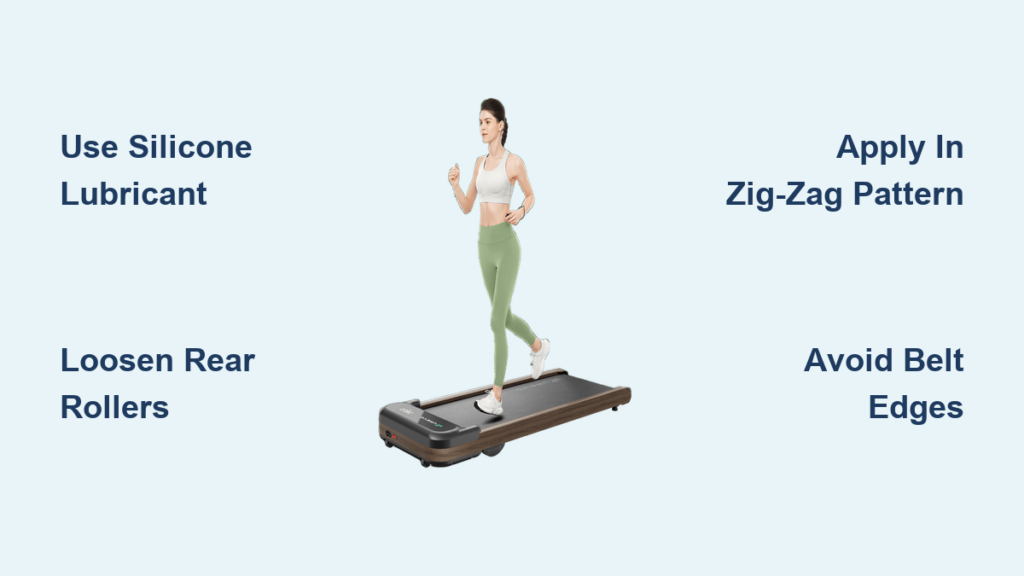
Locate the rear roller adjustment bolts at the back of your walking pad. Using your hex key, slightly loosen these bolts (¼ to ½ turn counterclockwise) to create a small gap between the belt and deck. Don’t over-loosen, as this can cause belt tracking issues. The goal is a 1/8-inch clearance—just enough to insert your lubricant applicator.
Proper Lubricant Distribution Technique

Apply lubricant in a zig-zag pattern across the entire deck surface, maintaining a consistent 6-8 inch distance from the surface if using spray lubricant. Focus on covering the entire contact area where your feet typically walk, but avoid applying too close to the belt edges. Use approximately 2-3 ounces of lubricant per application—more isn’t better and can cause slippage issues.
Critical Edge Avoidance Protocol
Never apply lubricant within 1 inch of the belt edges. Excess lubricant at the edges migrates to side rails and roller caps, attracting dirt and creating safety hazards. If lubricant does reach the edges, immediately wipe it away with a clean cloth before proceeding.
Post-Lubrication Testing: The 5-Minute Validation Process
After application, follow this critical validation sequence before resuming normal use:
- Allow the walking pad to rest for 3 minutes to permit initial lubricant absorption
- Manually rotate the belt through 5 complete revolutions to distribute lubricant evenly
- Reconnect power and operate at 0.5 mph for 3 minutes while monitoring for:
– Unusual squealing (indicates over-lubrication)
– Belt slippage (requires additional break-in time)
– Persistent grinding noises (suggests underlying mechanical issues) - Gradually increase speed to 1.0 mph for 2 minutes while testing responsiveness
- Check for any unusual vibrations or resistance during operation
Optimal Lubrication Schedule Based on Your Usage Pattern
Your lubrication frequency should match your actual usage—not a generic calendar schedule:
- Light users (under 3 hours/week): Lubricate every 6-8 weeks
- Moderate users (3-7 hours/week): Lubricate every 4-6 weeks
- Heavy users (over 7 hours/week): Lubricate every 2-4 weeks
Monitor your walking pad’s performance between scheduled lubrications. If you notice early warning signs like slight squeaking or increased resistance, lubricate immediately regardless of your schedule. Consistent performance monitoring prevents minor issues from becoming major repairs.
3 Costly Lubrication Mistakes That Damage Urevo Walking Pads
Mistake #1: Using Household Oils Instead of Specialized Lubricant
Many users grab whatever oil they have on hand, not realizing WD-40 and 3-in-1 oil degrade belt materials and create slip hazards. Always use silicone-based lubricant specifically designed for treadmills—this small investment prevents expensive repairs.
Mistake #2: Over-Lubricating the Deck Surface
Excessive lubricant causes dangerous belt slippage and can migrate to electrical components. If you’ve applied too much, operate your Urevo at low speed for 10-15 minutes to work out the excess rather than trying to wipe it away.
Mistake #3: Neglecting Belt Tension After Lubrication
After loosening rear rollers for lubrication access, always verify proper tension before resuming use. Incorrect tension causes premature wear regardless of lubrication quality. The belt should lift 2-3 inches when pressed firmly in the center.
When to Call Urevo Support Instead of Lubricating Yourself
While lubrication is a routine maintenance task, certain situations require professional assistance:
- Persistent squeaking after proper lubrication suggests bearing or roller issues
- Visible belt damage (fraying, separation, or tears) requires replacement, not lubrication
- Electrical malfunctions occur during or after maintenance attempts
- Your walking pad is still under warranty—check terms before performing DIY maintenance
If you’re ever uncertain about the lubrication process for your specific Urevo model, contact Urevo customer support directly. They can provide model-specific guidance that ensures your maintenance efforts protect rather than compromise your equipment.
Keep Your Urevo Walking Pad Running Smoothly for Years
Mastering how to lubricate Urevo walking pad components properly transforms your home fitness experience from frustrating to flawless. By recognizing early warning signs, using the correct lubricant, and following the precise application technique outlined here, you’ll extend your machine’s lifespan significantly while enjoying quieter, smoother workouts. Remember that consistent maintenance beats costly repairs every time—schedule your lubrication sessions based on actual usage and always listen to what your walking pad tells you through performance changes. With proper care, your Urevo walking pad will remain a reliable fitness companion for years to come.