Picture this: you’ve just finished your morning walk on your new walking pad, ready to tuck it away before your next Zoom meeting. But as you try to move the treadmill under your desk, you’re surprised by how heavy it feels. If you’re wondering how much does a walking pad weigh and whether it will fit seamlessly into your daily routine, you’re not alone. The weight of these compact treadmills directly affects how easily you can store them, move them between rooms, and even set them up in your home. Understanding the real-world implications of walking pad weight helps you avoid the frustration of purchasing equipment that gathers dust because it’s too cumbersome to use regularly.
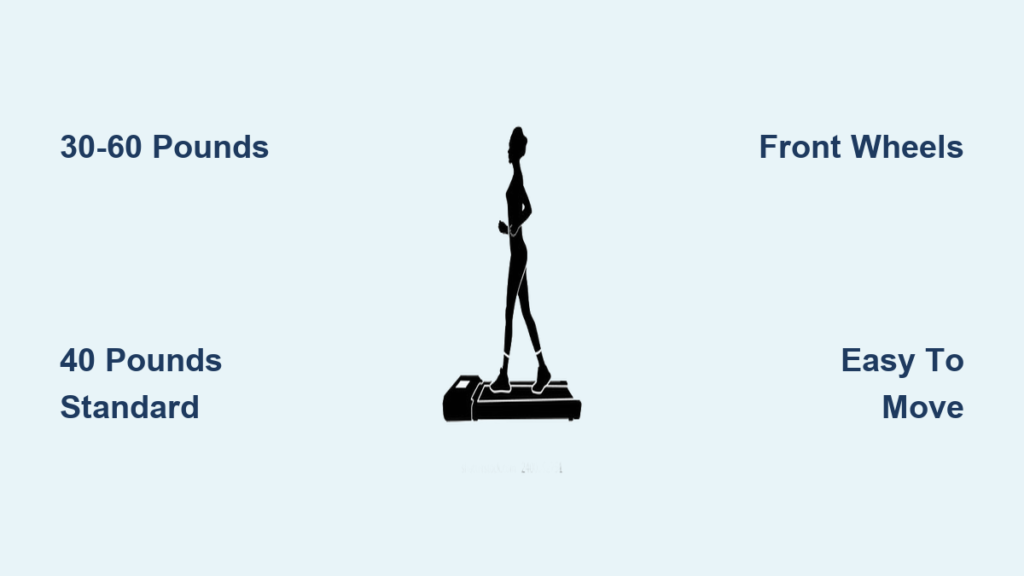
Most quality walking pads weigh between 30 and 60 pounds, with the sweet spot for portability and stability falling between 35-50 pounds. The popular Ulfario model, for example, weighs exactly 40 pounds as a standalone unit—a figure that appears across numerous customer reviews and product specifications. This weight might sound substantial until you consider that it’s carefully engineered to balance sturdiness during use with practical portability when stored. In this guide, we’ll break down exactly what these weights mean for your daily routine, how different models compare, and which features make heavier units surprisingly easy to maneuver.
Walking Pad Weight Ranges: What to Expect by Category
Walking pads fall into three distinct weight categories that directly correlate with their performance and portability. Lightweight models (30-38 pounds) prioritize maximum mobility but often sacrifice running surface area, motor power, and stability during use. These may wobble or slide when walking at higher speeds, especially on hard flooring surfaces. Mid-range units (38-50 pounds), like the Ulfario at 40 pounds, deliver the optimal balance most users need—enough mass for stability without becoming impractical to move. Premium models (50+ pounds) offer enhanced motor power and larger running surfaces but require more physical effort to reposition.
The Ulfario’s 40-pound weight represents the industry standard for quality under-desk treadmills, but it’s crucial to distinguish between item weight and shipping weight. While the treadmill itself weighs 40 pounds, the complete package arrives at approximately 46 pounds due to protective packaging, lubricant, remote control, and user manual. This difference matters significantly if you live in an apartment without elevator access or need to carry your purchase up stairs after delivery. One customer specifically noted this distinction, mentioning they “expected something lighter” but appreciated how the wheels made the actual treadmill manageable despite the heavier shipping box.
Why the 40-Pound Standard Dominates the Market
The prevalence of 40-pound walking pads isn’t accidental—it represents the engineering sweet spot where manufacturers achieve sufficient stability without compromising portability. A walking pad that’s too light might slide across the floor during use, creating safety hazards and frustration. Too heavy, and users avoid moving it altogether, defeating the purpose of a compact treadmill designed for flexible placement. The Ulfario’s 40-pound frame supports an impressive 264-pound user capacity, demonstrating how thoughtful engineering allows moderate weight to deliver maximum performance.
How Weight Affects Your Daily Routine
Consider your actual usage patterns when evaluating weight specifications. If you plan to move your walking pad between rooms multiple times daily—perhaps from bedroom to office to living room—opt for models with excellent wheel systems even if they weigh slightly more. One user with limited space confirmed this practical approach: “I move mine between rooms regularly, and the wheels make the 40 pounds feel like nothing.” Conversely, if your treadmill will remain in one location with occasional under-bed storage, a slightly heavier model might provide better stability during use.
Essential Portability Features That Make Weight Manageable
Don’t let the number on the scale fool you—integrated mobility features transform how walking pad weight impacts your experience. The Ulfario model exemplifies smart design with its front-mounted wheels and rear handhold, creating a pivot system that most adults can operate independently. Instead of lifting the entire 40 pounds, users simply tilt the treadmill backward onto its wheels and roll it to the desired location. Multiple customer reviews confirm this design’s effectiveness: “The front wheels make it incredibly easy to maneuver,” and “Despite the weight, it glides across hardwood floors with minimal effort.”
Three-Step Movement Technique for Heavy Walking Pads

- Position yourself correctly: Stand behind the treadmill with feet shoulder-width apart for stability
- Engage the wheel system: Tilt the unit backward until the front wheels make contact with the floor
- Roll with control: Push or pull the treadmill using the rear handhold, keeping your back straight
This technique minimizes strain while maximizing control, especially important when navigating door thresholds or tight corners. One user who initially worried about the weight shared their experience: “I’m not particularly strong, but the wheel system means I don’t have to be—I just tilt and roll.”
Storage Solutions That Work With Your Walking Pad’s Weight
The folded height of 4.1 inches determines whether your walking pad will fit under furniture. The Ulfario’s dimensions make it compatible with most standard bed frames but often too tall for sofas or coffee tables. Measure your storage space before purchasing—several customers reported disappointment after discovering their treadmill wouldn’t fit under their preferred furniture due to the 10.5-centimeter folded height.
Vertical storage against walls works well for space-constrained environments, but requires proper technique due to the 40-pound weight. Position the unit on the side with the rear handhold (not the wheel side) to avoid pinching the power cord. This orientation provides better balance and protects components during storage. One apartment dweller shared their solution: “I store mine vertically in the closet corner—it takes up minimal floor space and the handhold makes lifting manageable.”
Weight Capacity vs. Treadmill Weight: What Really Matters
The relationship between a walking pad’s own weight and its maximum user capacity reveals important quality indicators. The Ulfario’s 40-pound frame supporting 264 pounds demonstrates thoughtful engineering that prioritizes structural integrity. This 6.6:1 ratio (user weight to treadmill weight) indicates a robust build that won’t wobble or slide during use—a common complaint with cheaper, lighter models.
Material Choices That Impact Weight and Performance
ABS (acrylonitrile butadiene styrene) frame construction contributes significantly to the Ulfario’s 40-pound weight while providing exceptional durability. This thermoplastic polymer offers impact resistance far superior to cheaper alternatives, explaining why users consistently describe the unit as “feeling premium” rather than flimsy. The 5-layer non-slip belt adds to the overall weight but delivers crucial joint protection and quiet operation—features that justify the additional mass for serious users.
Real-World Stability During Use
Weight translates directly to stability when you’re actually walking. Lighter models often develop annoying rattles or movement across smooth floors, especially at higher speeds. The Ulfario’s 40-pound mass keeps it firmly in place, even during brisk walking sessions. Customer reviews consistently mention this advantage: “It doesn’t budge an inch when I’m walking,” and “No more chasing my treadmill around the room mid-workout.” This stability factor makes the slightly higher weight worthwhile for daily usability.
Delivery and Setup: Managing the Initial Weight Challenge

The 46-pound shipping weight requires planning if you live in a multi-story building without elevator access. Consider these practical tips before your delivery arrives:
- Request ground-floor delivery if available through the retailer
- Schedule delivery when someone can assist with carrying the package
- Have a dolly or hand truck ready for navigating stairs
- Open the box at the final location to avoid multiple lifts
Once unpacked, setup is remarkably simple—most users report having their walking pad operational within 15 minutes with no assembly required. The included remote control and straightforward interface mean you can start walking immediately after verifying the wheel system functions properly. One first-time buyer shared their positive experience: “I was worried about the weight, but the wheels worked perfectly right out of the box—I moved it into position by myself with no struggle.”
Choosing Your Ideal Walking Pad Weight
Selecting the right weight depends entirely on your specific circumstances. If you live alone in a single-story home with ample storage space, prioritize stability with a 45-50 pound model. Renters who frequently move or those with limited upper-body strength should lean toward the 35-40 pound range with excellent mobility features. Households with multiple users need to consider everyone’s physical capabilities—what feels manageable to one person might prove challenging for another.
The Weight-Portability Sweet Spot
For most users, walking pads weighing 38-45 pounds offer the ideal compromise. This range provides sufficient mass for stability during use while remaining manageable for regular movement between rooms. The Ulfario’s 40-pound specification hits this target perfectly, explaining its popularity among home office workers who value both performance and flexibility. As one satisfied customer summarized: “It’s heavy enough to stay put when I walk, but light enough that I actually move it every day.”
Final Considerations Before You Buy
When researching how much does a walking pad weigh, remember that the number alone tells only part of the story. A 40-pound treadmill with excellent wheels and grip points will feel dramatically more portable than a 35-pound model without these features. Watch demonstration videos showing actual movement techniques, read reviews specifically mentioning portability, and measure your storage spaces before committing to a purchase.
Most importantly, consider how often you’ll actually move your treadmill—many users discover that a slightly heavier model gets used more regularly because it feels stable and substantial during workouts. The goal isn’t finding the absolute lightest option, but rather the weight that fits seamlessly into your routine without becoming a barrier to consistent use. With the right model, that 40-pound walking pad will transform from a piece of equipment into an effortless part of your daily movement habit.