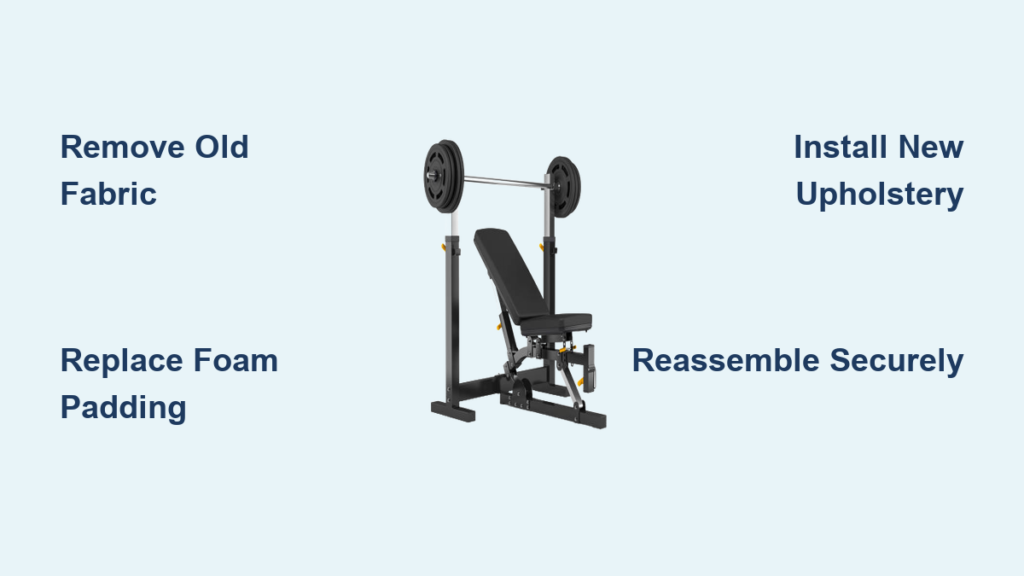
A worn-out weight bench can derail your home gym experience, whether it’s suffering from cracked vinyl, compressed foam, or unsightly tears that expose the padding beneath. These issues not only affect aesthetics but can compromise your workout comfort and safety during lifts. Reupholstering your weight bench breathes new life into this essential fitness equipment, saving you hundreds compared to replacement costs while giving you complete control over the final look and feel. This guide delivers a step-by-step approach that transforms your deteriorating bench into a like-new piece of equipment that supports your training goals. You’ll discover how to properly remove old materials, select appropriate replacement components, and apply professional finishing techniques that withstand the rigors of regular gym use—no prior upholstery experience required.
Gather Essential Tools and Materials

Having the right equipment before starting prevents mid-project delays and ensures you can work efficiently through each phase of the restoration process.
Your tool checklist should include: a complete screwdriver set for disassembling the bench frame without stripping hardware; an electric staple gun with appropriate staple sizes for secure fabric attachment; a rubber mallet for loosening stubborn components without damage; needle-nose pliers for extracting old staples cleanly; sharp utility knives or upholstery shears for precise material cutting; measuring tape for accurate dimension capture; and a drill with appropriate bits for efficient reassembly. While basic hand tools may suffice for simple benches, power tools significantly reduce the physical strain during disassembly and reassembly phases.
Material requirements vary by bench design but generally include replacement foam padding in appropriate densities, durable upholstery fabric suitable for gym use, industrial-strength spray adhesive, and potentially replacement hardware if original components show wear. Foam selection proves critical—most weight benches benefit from medium to high-density foam that maintains structural integrity under repeated compression during workouts. For fabric, prioritize materials with moisture resistance and easy-clean properties since gym equipment endures significant sweat exposure. Vinyl and leather alternatives often perform better than fabric options in fitness environments due to their wipe-clean surfaces and resistance to moisture penetration.
When planning your material purchase, measure your bench components carefully and add 15-20% extra to account for pattern matching, stretching during installation, and potential cutting errors. Attempting to work with insufficient material creates unnecessary pressure during installation and often results in visible seams or improperly tensioned fabric. Consider visiting a local upholstery supply store where experts can help you select appropriate materials based on your specific bench design and intended usage patterns.
Disassemble the Weight Bench Systematically
Proper disassembly preserves reusable components and provides valuable insight into your bench’s construction before you begin the reupholstery process.
Begin by placing your bench on a stable work surface with ample clearance around all sides. Remove any detachable components like weight plate holders or safety bars first, organizing them in labeled containers as you work. Document each step with photographs—modern smartphones make this effortless—and create a simple diagram showing hardware placement. This visual record proves invaluable during reassembly, especially for benches with multiple adjustment positions that create complex mounting configurations.
Carefully remove all fasteners securing the upholstery assembly to the frame, working slowly to avoid stripping screw heads. If hardware resists removal, apply penetrating oil and allow it to work before attempting again—forcing stubborn bolts often damages threads and creates additional repair needs. As you separate components, note how foam layers interconnect and how fabric wraps around edges, as these details inform your reupholstery approach. Pay particular attention to stress points where fabric shows the most wear, as these areas often require special attention during reinstallation.
After complete disassembly, inspect all metal components for rust or corrosion. Light surface rust can often be addressed with wire brushing and protective coating, but significant corrosion may require component replacement for safety reasons. Clean all metal surfaces thoroughly before reassembly to ensure proper contact with new upholstery materials and prevent future moisture-related issues.
Remove Old Upholstery and Assess Foam Condition

Stripping away worn materials reveals the underlying structure and determines whether foam replacement proves necessary for proper support.
Work methodically to remove old fabric, starting from one edge and progressing toward opposite sides to maintain control. Use needle-nose pliers to extract staples completely, as partially removed staples create uneven surfaces that compromise new installations. As you remove fabric, examine the foam beneath for compression patterns, tears, or areas where the material has broken down from repeated use. Foam that permanently indents under hand pressure or shows visible breakdown typically requires full replacement.
When removing old foam from wooden backing boards, note any adhesive residue that needs cleaning before applying new materials. Residual adhesive creates uneven surfaces that affect how new foam bonds to the substrate. Clean these surfaces thoroughly with appropriate solvents, following manufacturer recommendations for both the wood type and any remaining finishes. Allow adequate drying time before proceeding to prevent moisture-related issues with new adhesive applications.
Assess wooden components for damage hidden beneath upholstery. Look for soft spots, cracks, or warping that might compromise structural integrity. Minor damage can often be repaired with wood fillers or reinforcements, but significant structural issues may necessitate replacement of affected components before continuing.
Cut and Install Replacement Foam Padding
Precision foam installation creates the foundation for comfortable, supportive workouts and professional-looking results.
Trace your old foam pieces onto new material, adding approximately half an inch to each dimension to account for compression during use. For contoured sections, create cardboard templates first to verify fit before cutting expensive foam material. Cut slowly with sharp tools to maintain clean edges—jagged cuts create visible imperfections beneath fabric coverings.
Apply spray adhesive to both the foam and wooden substrate according to manufacturer instructions, allowing proper tack time before joining surfaces. Press foam firmly into place, working from center to edges to eliminate air pockets that create uneven surfaces. For multi-layer foam constructions, bond layers together before attaching to the substrate to ensure uniform compression characteristics.
Allow adequate curing time for adhesives before proceeding—rushing this step risks foam shifting during fabric installation. Most industrial adhesives require several hours to reach full bond strength, though initial handling strength develops more quickly. Verify foam adhesion by gently pressing on multiple points before moving to the next phase.
Apply New Upholstery Fabric Professionally
Fabric installation represents the most visible aspect of your reupholstery project and requires careful tensioning for optimal results.
Lay your fabric face-down on a clean work surface, positioning the foam-covered bench components on top with generous overhang on all sides. Begin installation on the longest straight edge, pulling fabric taut but not excessively stretched—over-tensioning creates thin spots that wear quickly. Secure with staples spaced approximately two inches apart, working from center toward corners to maintain even tension.
Create professional-looking corners by folding fabric at 45-degree angles before stapling, which prevents unsightly bulges and ensures clean lines. For contoured sections, make precise relief cuts in the fabric backing to allow smooth wrapping without wrinkles or puckering. These cuts should extend from the edge toward the center but stop short of the final stapling line to maintain structural integrity.
Pay special attention to areas that contact your body during use, ensuring these sections remain completely smooth and free of seams that could cause discomfort. Test fabric tension by pressing on multiple points—if the surface feels consistently firm without giving way, your tension proves appropriate for gym use.
Complete Reassembly and Final Testing
Proper reassembly ensures your restored bench functions safely and maintains its appearance through regular use.
Follow your disassembly documentation to position components correctly, checking alignment before fully tightening any hardware. Insert bolts finger-tight initially, verifying proper positioning before applying final torque. Over-tightening can damage threads or compress foam unevenly, while under-tightening creates unsafe movement during workouts.
Reinstall all adjustment mechanisms and verify smooth operation through all range-of-motion positions. Test the bench with gradual weight application before full use, checking for unusual sounds or movement that might indicate improper assembly. Allow 24-48 hours for all adhesives to fully cure before subjecting the bench to intense workout conditions.
Conduct a final inspection of all stapled edges and fabric surfaces, addressing any minor issues immediately while materials remain accessible. A thorough final check prevents small problems from becoming major issues after the bench enters regular use.
Maintain Your Restored Bench for Longevity
Regular maintenance preserves your reupholstery investment and extends the life of your restored equipment.
Wipe down contact surfaces after each use with appropriate cleaners that won’t degrade fabric treatments. Avoid harsh chemicals that break down protective coatings over time. Establish a monthly inspection routine to catch minor issues like loose staples or developing wrinkles before they require significant repair.
Consider applying fabric protectant treatments designed for gym equipment to enhance resistance to sweat and body oils. These products create invisible barriers that prevent moisture penetration while maintaining the material’s texture and appearance. Store your bench in a climate-controlled environment when possible, as extreme temperature fluctuations accelerate material degradation.
With proper care, your reupholstered weight bench delivers years of reliable service, maintaining both its appearance and functional integrity through regular gym use. The satisfaction of restoring essential fitness equipment extends beyond cost savings—it creates a personal connection to your workout space that enhances your overall fitness journey.