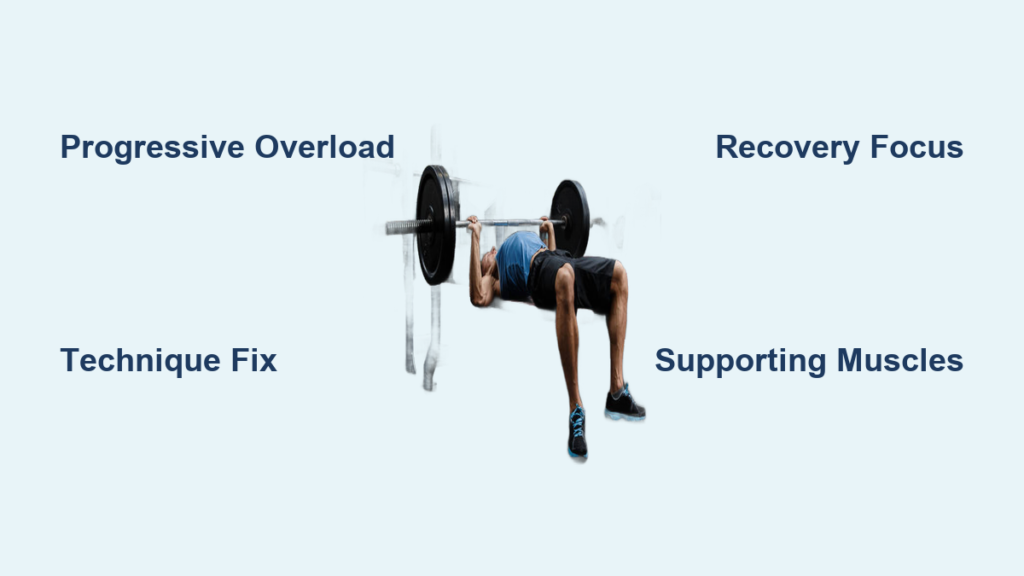
Stuck at the same bench press weight for months? You’re not alone—most lifters hit frustrating plateaus that halt their progress despite consistent training. Whether you’re struggling to clear 135 pounds or pushing toward 315, simply adding more weight to the bar won’t cut it. The secret to a stronger bench press lies in understanding the precise combination of technique refinement, strategic programming, and recovery protocols that create sustainable strength gains. This guide delivers actionable, science-backed methods to break through your plateau and start adding meaningful weight to your bench press immediately.
Most lifters make the critical mistake of focusing exclusively on the bench press itself while ignoring the supporting systems that drive real progress. Your bench press strength depends on a complex interplay of muscle development, nervous system efficiency, recovery capacity, and nutritional support—all working together in harmony. Without addressing these interconnected elements, you’ll keep spinning your wheels while others surge ahead with heavier lifts.
Apply Progressive Overload to Break Bench Press Plateaus
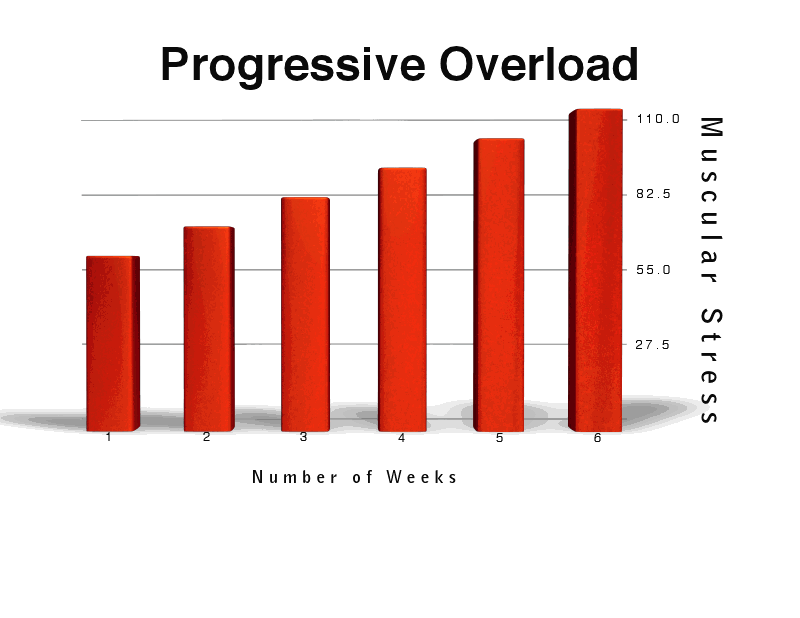
Progressive overload isn’t just a buzzword—it’s the non-negotiable engine driving every pound you’ll add to your bench press. This principle means consistently increasing the stress on your muscles through strategic adjustments to your training variables. Without this systematic progression, your body has no reason to adapt and grow stronger, leaving you stuck at the same weight indefinitely.
How Much Weight Should You Add Weekly?
Beginners can often add 5-10 pounds per week as their nervous systems rapidly adapt to new stimuli. Intermediate lifters (1-3 years of training) should aim for more modest gains of 2.5-5 pounds every 1-2 weeks. Advanced lifters may need to implement microloading techniques, adding just 1.25-2.5 pounds at a time. The key metric isn’t how much weight you add, but whether you’re consistently challenging your muscles beyond their current capacity.
Four Effective Progressive Overload Methods Beyond Adding Weight
– Repetition increases: Move from 3 sets of 8 reps to 3 sets of 10 at the same weight before adding load
– Volume increases: Add an extra set to your bench press workout once weekly
– Density improvements: Reduce rest periods from 3 minutes to 2 minutes while maintaining weight
– Tempo control: Implement a 3-second eccentric phase to increase time under tension
Optimize Your Bench Press Training Frequency
Your bench press frequency directly impacts how quickly you gain strength, but too many lifters train chest either too infrequently or too often. Research shows that training the bench press 2-3 times per week delivers optimal results for most lifters, striking the perfect balance between stimulus and recovery.
Beginner vs. Intermediate vs. Advanced Bench Press Schedules
Beginners (0-1 year) thrive on 3x weekly bench sessions using linear progression. Intermediate lifters (1-3 years) should drop to 2x weekly sessions—one heavy day and one moderate volume day. Advanced lifters (3+ years) still benefit from twice-weekly pressing but must incorporate sophisticated periodization to continue progressing.
How Many Rest Days Do You Really Need Between Sessions?
Your muscles need 72 hours to fully recover from intense bench press sessions. Training chest on Monday and Wednesday gives you only 48 hours of recovery—insufficient for complete adaptation. Instead, structure your week with bench press on Monday and Thursday, or Tuesday and Friday, ensuring proper recovery time between sessions.
Fix These 3 Common Bench Press Technique Errors
Poor bench press technique wastes potential strength and increases injury risk. Most lifters unknowingly sabotage their progress with preventable form mistakes that limit how much weight they can lift.
Why Your Foot Placement Matters More Than You Think
Your feet aren’t just for balance—they’re the foundation of your entire press. Plant your feet firmly on the floor, slightly wider than shoulder-width with knees bent at 90 degrees. Warning: Feet too far forward or up on the bench reduces leg drive and stability, costing you 10-15 pounds on your lift.
The Perfect Arch for Maximum Bench Press Strength
A controlled arch in your upper back shortens your range of motion and engages your lats more effectively. Avoid excessive arching that lifts your shoulders off the bench—this creates instability. Your upper back should maintain full contact with the bench throughout the movement.
Finding Your Ideal Grip Width for Heavier Lifts
Measure your grip width from the inside edges of your hands—most lifters should use a grip 17-22 inches wide. Test your grip by unracking the bar and checking that your forearms are vertical when the bar rests on your chest. Too wide increases shoulder stress; too narrow shifts emphasis to triceps.
Build Supporting Muscles That Actually Increase Your Bench

Your bench press strength depends heavily on muscles beyond your chest. Ignoring these supporting muscle groups creates weak points that limit how much weight you can lift.
Tricep Exercises That Directly Improve Bench Press Lockout
– Close-grip bench press: 3 sets of 6-8 reps at 80% of your max
– Floor press: 3 sets of 5 reps focusing on explosive lockout
– Overhead tricep extensions: 2 sets of 10-12 reps to target the long head
Shoulder Accessories for Better Pressing Stability
The overhead press develops shoulder strength that directly transfers to bench pressing. Perform 3 sets of 5-6 reps twice weekly, focusing on strict form without leg drive. Pair this with face pulls (3 sets of 15) to maintain shoulder health.
Why Back Strength Transfers to Heavier Bench Presses
Strong lats create a solid base for pressing by stabilizing your upper body. Incorporate heavy rows (3 sets of 6-8 reps) twice weekly—your bench press will improve as your back gets stronger, even without additional chest work.
Recover Like a Champion to Lift Heavier Next Session
Your muscles grow during recovery, not during training. Most lifters neglect recovery strategies that would allow them to add significant weight to their bench press.
Sleep’s Direct Impact on Bench Press Strength
Research shows that lifting performance drops by 10-15% after just one night of poor sleep. Aim for 7-9 hours nightly, maintaining consistent sleep and wake times even on weekends. Your bench press will improve noticeably within two weeks of better sleep habits.
How to Plan Effective Deload Weeks for Bench Press Progress
Every 4-6 weeks, reduce your bench press volume by 40-50% while maintaining intensity. Instead of your usual 5 sets of 5 at 85%, do 3 sets of 5 at 85%. This allows accumulated fatigue to dissipate while preserving strength, often resulting in immediate gains when you return to normal training.
Target Your Specific Bench Press Weak Points
Every lifter has a unique sticking point that prevents them from adding weight to the bench press. Identifying and targeting your specific weakness delivers faster results than general bench press training.
Troubleshooting Why You Can’t Get the Bar Off Your Chest
If you struggle at the bottom position, implement paused bench presses with a 2-3 second pause on your chest. Start with 70% of your max for 3 sets of 5 reps. This builds explosive strength out of the bottom position while teaching proper leg drive.
Solving Lockout Problems That Limit Your Bench Press
Lockout weakness almost always indicates underdeveloped triceps. Add close-grip bench press to your routine twice weekly, using a grip 6-8 inches apart. Perform 3 sets of 6-8 reps with 80-85% of your max, focusing on full lockout.
Avoid These 5 Deadly Bench Press Mistakes
Why Training Chest Too Frequently Slows Your Progress
Training chest three or more times weekly without adequate recovery prevents muscle growth. Your muscles need 72 hours to repair and strengthen—more frequent training leads to overuse injuries and stalled progress. Stick to 2x weekly bench sessions for optimal results.
How Ego Lifting Actually Makes Your Bench Press Weaker
Using weight that compromises your form teaches your nervous system inefficient movement patterns. You might lift heavier for one session, but this habit prevents true strength development and often leads to injury. Pro tip: If your spotter has to help you more than 10% of the time, the weight is too heavy.
Sample Bench Press Programs for Fast Results
3-Day Beginner Bench Press Plan for Consistent Gains
– Monday: Bench press 3×8, dumbbell press 2×10, tricep pushdowns 2×12
– Wednesday: Pull-ups 3xmax, bent-over rows 3×8, face pulls 2×15
– Friday: Bench press 3×8, incline press 2×10, overhead press 2×8
4-Day Intermediate Upper/Lower Split for Heavier Presses
– Monday (Push): Bench press 5×5, overhead press 4×6, incline press 3×8
– Tuesday (Pull): Deadlifts 3×5, pull-ups 4×6, barbell rows 3×8
– Thursday (Push): Bench press 4×6, close-grip bench 3×8, tricep extensions 3×10
– Friday (Pull): Squats 4×6, seated rows 3×10, face pulls 3×12
Start Adding Weight to Your Bench Press Today
Breaking through your bench press plateau requires more than just grinding out reps with heavier weight. By implementing strategic progressive overload, optimizing your training frequency, perfecting your technique, building supporting muscles, and prioritizing recovery, you’ll create the conditions necessary for consistent strength gains. The most successful lifters understand that bench press progress comes from systematic application of these principles over months and years—not quick fixes or ego-driven lifting. Begin with one or two changes from this guide, track your progress meticulously, and watch as the weight on your bar steadily increases week after week. Your stronger bench press starts today—commit to the process and trust the results.