
When you’re handling metal plates for construction, fabrication, or manufacturing projects, knowing exactly how to calculate plate weight prevents costly mistakes in material ordering, shipping logistics, and structural planning. Whether you’re a seasoned engineer or a DIY enthusiast tackling a weekend project, inaccurate weight estimates can lead to safety hazards, budget overruns, and project delays. The good news is that calculating plate weight follows straightforward mathematical principles once you understand the required measurements and material properties. This guide provides the precise methodology to determine plate weight for any metal type, shape, or configuration—complete with practical examples and common pitfalls to avoid. By the end, you’ll confidently calculate plate weight for carbon steel, aluminum, stainless steel, and other materials with professional accuracy.
Measuring Your Plate’s Critical Dimensions
Accurate measurements form the foundation of any reliable plate weight calculation. Before applying formulas, you must gather precise dimensional data using appropriate tools to avoid costly errors in your final weight estimate.
Thickness Measurement Techniques
Plate thickness represents the single most critical dimension affecting weight. For carbon steel plates under 1 inch thick, use digital calipers to measure at multiple points across the surface—manufacturing tolerances often create slight variations between the center and edges. When working with thicker plates (1 inch or more), a precision ruler or micrometer provides adequate accuracy. Always convert measurements to consistent units before calculation; mixing inches with millimeters creates substantial errors.
Dimensional Requirements by Plate Shape
Square and rectangular plates require three essential measurements: length, width, and thickness. Measure length and width from edge to edge, not including any beveled edges. For round plates, replace length and width with outside diameter—the straight-line distance through the circle’s center point. If your plate contains holes for bolted connections, record both the number of holes and their individual diameters. Don’t overlook quantity—multiply your single-plate calculation by the total number of identical plates in your project for accurate material ordering.
Carbon Steel Plate Weight Formula Explained

Carbon steel remains the most common plate material in construction and fabrication, making its weight calculation formula essential knowledge for industry professionals.
Step-by-Step Calculation Process
The fundamental formula for solid carbon steel plates follows this sequence: Weight = Length × Width × Thickness × 0.2836. This density factor (0.2836 pounds per cubic inch) converts volume to weight. For example, a 24×48×0.5-inch carbon steel plate calculates as: 24 × 48 × 0.5 × 0.2836 = 163.35 pounds. Verify your work by remembering that 1 square foot of 1-inch thick carbon steel weighs approximately 40.8 pounds—so our example (8 square feet at half-inch thickness) should weigh about half of 8×40.8, confirming our result.
Unit Conversion Considerations
When working with metric measurements, convert carbon steel’s density to 7.85 grams per cubic centimeter. A 600×1200×12mm steel plate weighs: 60×120×1.2×7.85 = 68,198 grams or 68.2 kilograms. Many professionals maintain a quick reference chart of common thicknesses: quarter-inch steel weighs about 10.2 pounds per square foot, half-inch weighs 20.4 pounds, and three-quarter-inch weighs 30.6 pounds.
Calculating Round Plate Weight Accurately
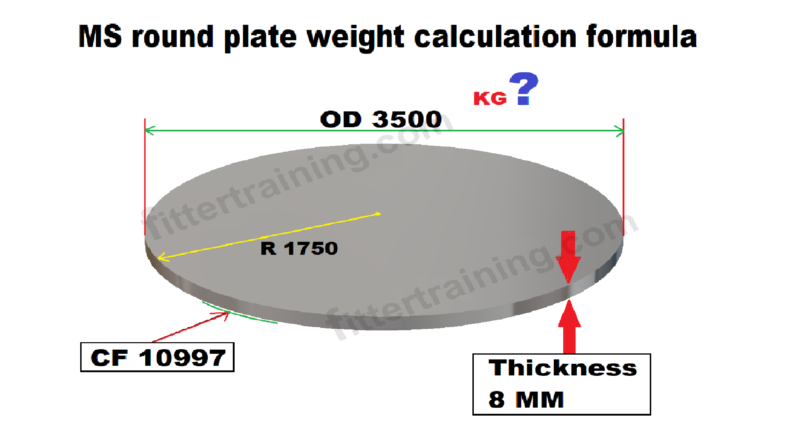
Circular plates require a modified approach that accounts for their geometric properties while maintaining the same fundamental weight calculation principles.
Diameter-Based Calculation Method
For solid round plates, apply this formula: Weight = π × (Diameter ÷ 2)² × Thickness × Density Factor. The (Diameter ÷ 2) calculation gives you the radius, which you square and multiply by π (3.1416) to determine surface area. A 36-inch diameter, 1-inch thick carbon steel plate weighs: 3.1416 × (18)² × 1 × 0.2836 = 288.2 pounds. Notice how the circular geometry affects the calculation compared to a square plate of similar dimensions.
Multiple Round Plate Considerations
When calculating weight for multiple identical round plates, multiply your single-plate result by the quantity. For production runs with varying diameters, create a spreadsheet with columns for diameter, thickness, quantity, and calculated weight. This systematic approach prevents errors when ordering materials for complex projects involving numerous circular components.
Subtracting Material for Holes and Cutouts
Plates designed for bolted connections require special weight calculation techniques to account for material removed during fabrication.
Single Hole Weight Adjustment
To calculate weight for plates with holes, first determine the solid plate weight, then subtract the weight of material removed. For a single hole: Hole Weight = π × (Hole Diameter ÷ 2)² × Thickness × Density Factor. A 12×12×1-inch carbon steel plate with a 3-inch diameter hole weighs: (12×12×1×0.2836) – (3.1416×1.5²×1×0.2836) = 40.35 – 2.00 = 38.35 pounds. The hole removes approximately 5% of the total weight.
Multiple Hole Complexity
Plates with multiple holes require summing all hole volumes before subtraction. For a plate with nine 1-inch diameter holes: calculate the volume of one hole (π×0.5²×thickness), multiply by nine, then subtract from the total plate volume. This becomes increasingly important with larger hole counts—structural connection plates with dozens of fastener holes can have significantly reduced weight compared to solid plates of identical outer dimensions.
Material Density Differences That Matter
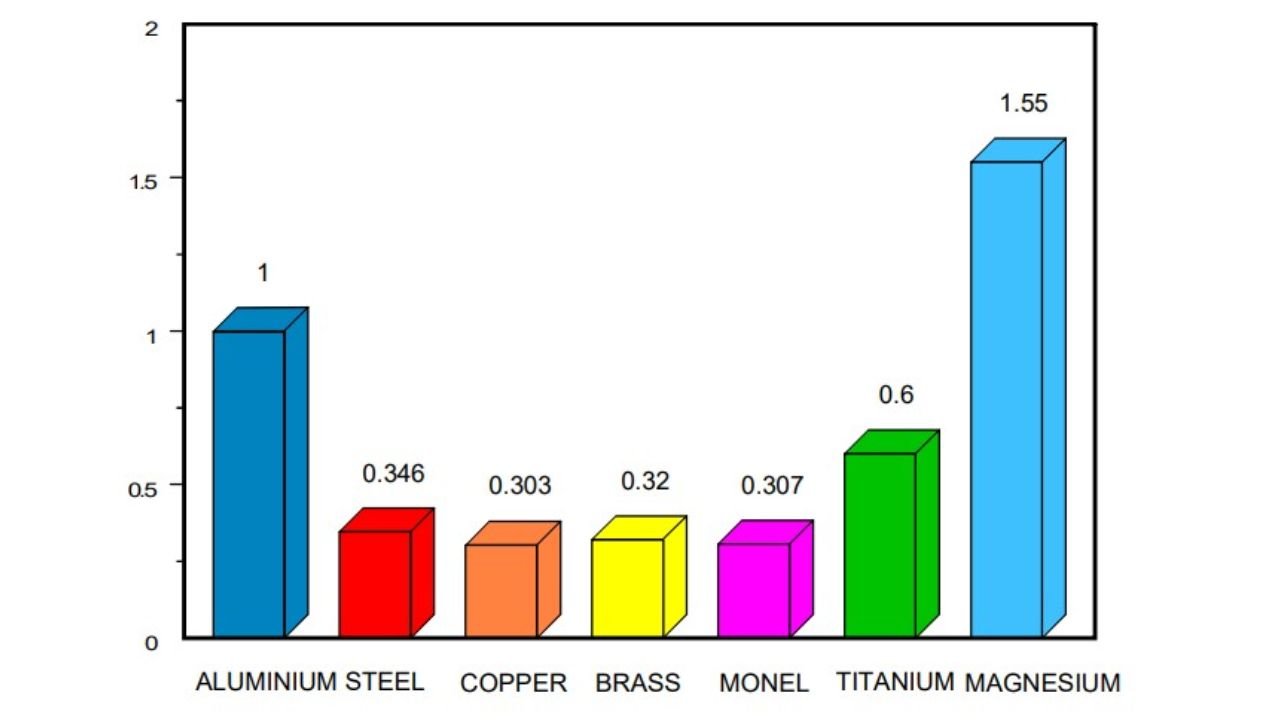
Using the wrong density factor creates substantial calculation errors, as different metals have dramatically different weight characteristics despite identical dimensions.
Common Metal Density Values
Carbon steel’s density of 0.2836 lb/in³ serves as the industry baseline, but other materials vary significantly:
– Stainless steel: 0.286 lb/in³ (slightly heavier)
– Aluminum: 0.098 lb/in³ (about one-third the weight)
– Copper: 0.322 lb/in³ (approximately 14% heavier)
– Brass: 0.306 lb/in³ (about 8% heavier)
Material-Specific Calculation Example
Consider a 12×12×1-inch plate: carbon steel weighs 40.35 pounds, while aluminum of identical dimensions weighs only 14.11 pounds. This dramatic difference explains why aluminum replaces steel in weight-sensitive applications like aerospace. Always verify material specifications before calculating—ordering based on incorrect density assumptions leads to costly material shortages or excess inventory.
Field Estimation Techniques for Quick Calculations
When precise calculators aren’t available, these mental math techniques provide reliable weight estimates for carbon steel plates.
Square Foot Reference System
Memorize that 1 square foot of 1-inch thick carbon steel weighs 40.8 pounds. For other thicknesses:
– 1/4 inch: 10.2 pounds per square foot
– 3/8 inch: 15.3 pounds per square foot
– 1/2 inch: 20.4 pounds per square foot
– 3/4 inch: 30.6 pounds per square foot
Multiply the appropriate value by your plate’s square footage (length × width ÷ 144). A 4×8-foot sheet of 3/8-inch steel weighs approximately: 32 sq ft × 15.3 lb/sq ft = 489.6 pounds.
Metric Estimation Shortcut
For metric measurements, remember that 10mm thick carbon steel weighs 78.5 kg per square meter. A 2×6m plate at 10mm thickness weighs: 12 sq m × 78.5 kg = 942 kg. For other thicknesses, simply multiply by the thickness in millimeters and divide by 10.
Avoiding Costly Calculation Errors
Even experienced professionals make preventable mistakes when calculating plate weight—recognizing these pitfalls ensures your calculations remain accurate.
Measurement Verification Protocol
Always measure thickness at multiple points across the plate surface. Manufacturing tolerances allow for slight variations—measuring only one location might miss thinner or thicker sections. For critical applications, take nine measurements (center and eight perimeter points) and use the average thickness in your calculation.
Unit Consistency Checklist
Before calculating, verify all measurements use the same unit system. A common error involves mixing inches with millimeters or using metric density factors with imperial measurements. Create a simple checklist: “All dimensions in inches? Density factor matches measurement system? Hole calculations included?”
Real-World Applications of Plate Weight Calculation
Understanding how to calculate plate weight directly impacts project success across multiple industries.
Structural Engineering Requirements
Civil engineers rely on precise plate weights when designing building foundations and support structures. The cumulative weight of all steel plates affects load calculations, seismic considerations, and code compliance. Underestimating plate weight by even 10% could compromise structural integrity in critical applications.
Fabrication and Manufacturing Logistics
Material handlers need accurate weights to determine proper lifting equipment—using an undersized crane creates dangerous situations. Shipping departments calculate freight costs based on weight, while purchasing departments use weight calculations to verify material invoices. A single miscalculation can cascade through multiple departments, causing delays and financial losses.
Quality Control Verification
Manufacturers use weight as a quality control metric—actual measured weight should closely match calculated values. Significant discrepancies indicate potential problems with material composition, dimensional accuracy, or manufacturing defects. This cross-check catches issues before plates reach customers or get incorporated into final products.
By mastering these plate weight calculation techniques, you ensure accurate material ordering, safe handling procedures, and proper project planning. Start with precise measurements, apply the correct formula for your specific plate type and material, and always account for holes or cutouts. When in doubt, verify your calculations using multiple methods to confirm results before committing to material orders or structural decisions.