Sweat-dampened hands gripping your foam yoga block during downward dog, fingers pressing into the same surface hundreds of times—these essential props silently absorb more than just your body weight. When your recycled foam yoga blocks start developing that unmistakable musty odor or visible grime after regular practice, proper cleaning becomes non-negotiable for both hygiene and performance. Knowing how to clean yoga blocks properly extends their lifespan by years while ensuring you’re not practicing on a breeding ground for bacteria. Whether you’re a daily home practitioner or a studio owner managing shared equipment, this guide delivers actionable cleaning protocols specifically validated for common foam yoga blocks.
Most yoga enthusiasts focus exclusively on mat maintenance while neglecting their blocks, creating a hidden hygiene problem. Unlike yoga mats that typically get wiped down after sessions, blocks often get tossed into bags while still damp, accelerating odor development and material breakdown. The good news is that implementing a simple, manufacturer-approved cleaning routine takes minimal time but delivers maximum impact on your practice environment. You’ll discover exactly when to use a quick wipe versus a deeper clean, which products actually work (and which destroy foam), and how to spot when it’s time to replace rather than clean.
Stop Wiping Down Yoga Blocks With Household Cleaners
Using standard household disinfectants on your yoga blocks is the fastest way to ruin them. Unlike hard-surface items, foam yoga blocks have porous structures that absorb cleaning solutions, and many common ingredients break down the cellular structure of recycled foam. When you grab that all-purpose cleaner under your sink, you’re likely exposing your blocks to harsh chemicals like ammonia or bleach that compromise both integrity and safety.
What Makes Foam Yoga Blocks Degrade During Cleaning?
Foam yoga blocks maintain their supportive structure through interconnected air pockets within the material. When exposed to harsh cleaning agents or excessive moisture, these air pockets collapse, causing permanent compression that affects performance. You’ll notice this degradation as:
- Areas that no longer spring back after pressure
- Discoloration or yellowing of the foam
- A sticky residue that affects grip during poses
- Increased absorption of sweat rather than repelling it
The structural damage happens gradually, so you might not notice the decline until your once-reliable block feels unstable in challenging poses like half-moon or awkward pose. This is why understanding proper cleaning techniques for how to clean yoga blocks is essential for maintaining consistent support.
Identify Safe Cleaning Ingredients for Foam Blocks
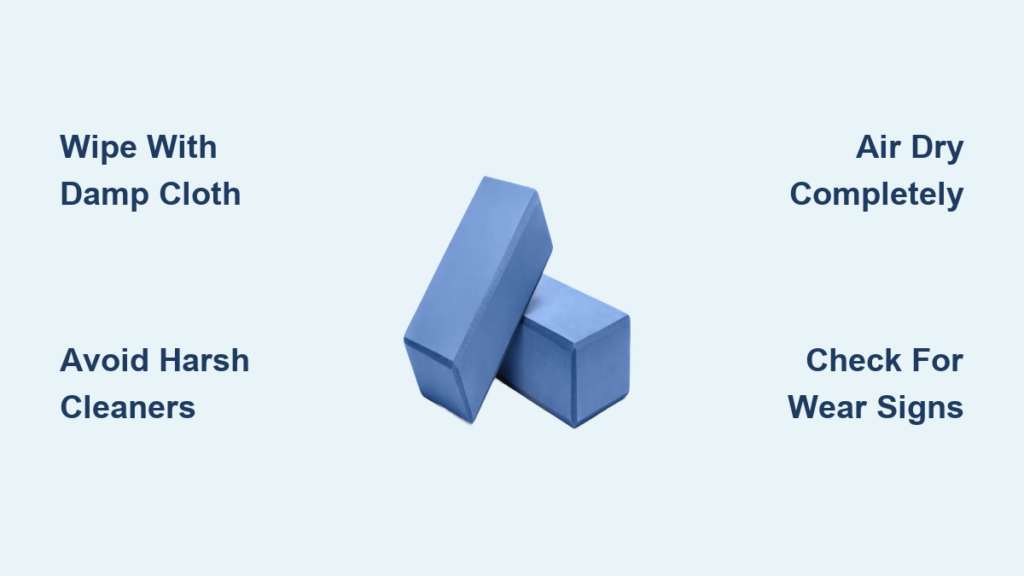
The safest cleaning solution for recycled foam yoga blocks is surprisingly simple: plain water applied with a slightly damp (not wet) cloth. For regular maintenance between deeper cleans, this basic approach effectively removes surface contaminants without risking material breakdown. When you need something stronger for odor or stubborn dirt, look for cleaners specifically formulated for yoga equipment like Manduka’s Yoga Mat Wash & Refresh, which uses pH-balanced ingredients safe for foam structures.
Create an immediate cleaning station with these essentials:
– Microfiber cloths (lint-free to prevent residue)
– Spray bottle with water or approved cleaner
– Small bowl for mixing (if creating DIY solution)
– Well-ventilated drying area
Avoid these common household products that damage foam blocks:
– Vinegar (too acidic for prolonged exposure)
– Bleach (breaks down foam structure)
– Ammonia-based cleaners (causes yellowing)
– Essential oils (can create slippery residue)
– Alcohol solutions (dries out foam prematurely)
Eliminate Persistent Odors From Yoga Blocks Without Damage
When surface wiping no longer keeps up with odor development, your foam yoga blocks need deeper intervention. This typically happens after 2-3 months of regular use, or sooner if you practice hot yoga or sweat heavily. The key is addressing the odor at its source—bacteria embedded in the foam—without compromising the block’s supportive qualities.
How to Deep Clean Foam Yoga Blocks Step-by-Step
- Prepare your cleaning station: Lay down towels in a well-ventilated area away from direct sunlight
- Apply cleaner evenly: Spray Manduka Yoga Mat Wash & Refresh (or similar yoga-specific cleaner) across all surfaces, including edges and textured areas
- Wipe methodically: Use a clean damp cloth to wipe in one direction across each surface to avoid spreading contaminants
- Focus on high-contact zones: Pay special attention to areas where hands, feet, and face contact the block
- Rinse if necessary: For non-specialized cleaners, lightly wipe with a clean damp cloth to remove residue
- Air dry completely: Place blocks vertically to maximize air exposure on all sides
This deep cleaning process should take no more than 10 minutes but requires patience during the drying phase. Unlike mats that dry relatively quickly, foam blocks need 12-24 hours to dry completely through, depending on humidity levels. Rushing this step by using heat sources or storing damp blocks guarantees mold development inside the material.
Create a Targeted Odor Treatment for Problem Blocks
For blocks with stubborn odors that resist regular deep cleaning, try this manufacturer-approved treatment:
- Spray affected areas generously with yoga-specific cleaner
- Let sit for 2-3 minutes to penetrate the foam surface
- Wipe thoroughly with a clean cloth
- Repeat if necessary, but never saturate the block
- Allow extended drying time (up to 48 hours for severe cases)
Never soak yoga blocks or submerge them in water—this forces moisture deep into the foam where it can’t escape, creating permanent damage. The key to how to clean yoga blocks effectively is surface treatment only, respecting the material’s limitations.
Prevent Mold Growth in Yoga Blocks With Proper Drying

Most yoga block failures stem not from cleaning itself, but from improper drying practices. When moisture gets trapped inside foam, it creates the perfect environment for mold and mildew growth—often invisible until it’s too late. The critical mistake many practitioners make is storing blocks while they still feel cool to the touch, not realizing moisture remains trapped deep within the material.
Optimal Drying Techniques for Long-Lasting Blocks
Place cleaned blocks in a vertical position rather than flat to maximize air exposure on all sides. Rotate them every few hours during the drying process to ensure even air circulation. In humid climates, extend drying time by 50% and consider using a fan on low setting (not direct heat) to move air around the blocks. Never use hairdryers, radiators, or direct sunlight to speed drying—these heat sources warp foam structure permanently.
Check for complete dryness by pressing your palm firmly against multiple surfaces. If any coolness or moisture transfers to your hand, the block needs more drying time. Properly dried blocks feel uniformly room temperature and slightly firm to the touch. This thorough drying process prevents the internal moisture that leads to musty odors developing between uses.
Establish a Cleaning Schedule Based on Your Practice Intensity
Your yoga block cleaning frequency should directly correlate with how hard you work during practice. A practitioner who barely breaks a sweat in gentle restorative sessions needs far less frequent cleaning than someone flowing through vigorous vinyasa in a heated studio. Tailoring your cleaning routine to actual usage prevents both over-cleaning (which wears down blocks) and under-cleaning (which creates hygiene issues).
Customize Your Cleaning Routine By Practice Type
| Practice Intensity | Surface Wipe Frequency | Deep Clean Frequency |
|---|---|---|
| Gentle/Restorative | Once weekly | Every 4-6 weeks |
| Moderate/Vinyasa | After every 2-3 sessions | Every 2-3 weeks |
| Hot/Power Yoga | After every session | Weekly |
The most effective practitioners integrate block cleaning into their existing mat care routine. Just as you roll up your mat after practice, take 30 seconds to wipe down your blocks while everything’s still out. This habit prevents the “I’ll do it later” mentality that leads to neglected equipment. For studio owners, keep cleaning supplies visibly available near prop storage areas to encourage students to wipe blocks after use.
Recognize When Cleaning Is No Longer Enough

Even with perfect care, foam yoga blocks have a finite lifespan. Knowing when to replace rather than clean saves you from using compromised equipment that affects your alignment and stability. Permanent compression marks that don’t bounce back, persistent odors that cleaning can’t eliminate, and visible surface breakdown are clear indicators that replacement time has arrived.
Examine your blocks quarterly for these failure signs:
– Areas that stay indented after pressure release
– Discoloration that cleaning doesn’t improve
– Texture changes affecting grip during poses
– Cracks or flaking on the surface
– Musty smell that returns within days of cleaning
High-quality recycled foam blocks properly maintained should last 2-3 years with daily use. When replacement becomes necessary, recycle your old blocks through manufacturer take-back programs where available rather than sending them to landfills.
Maintain Your Entire Prop Collection With Unified Cleaning Protocols
The cleaning principles for how to clean yoga blocks apply across your entire equipment collection. Using the same yoga-specific cleaner on mats, straps, and bolsters creates consistency in your maintenance routine while ensuring compatibility across materials. Many practitioners discover that switching to a single specialized cleaner simplifies their entire equipment care process.
Develop a weekly prop maintenance ritual:
– Wipe down all frequently touched surfaces
– Inspect for wear and damage
– Allow proper drying time before storage
– Rotate equipment to distribute wear evenly
This holistic approach prevents the common scenario where practitioners meticulously care for their mats while neglecting other props. Your blocks deserve the same attention as your mat—they’re working just as hard to support your practice.
Final Note: By implementing these manufacturer-approved cleaning techniques, you’ll extend the life of your yoga blocks while maintaining a hygienic practice space. Remember that proper drying is just as important as the cleaning itself, and when in doubt about a cleaning method, less is more with foam materials. Establish a routine that matches your practice intensity, and your blocks will continue providing reliable support through countless sun salutations.