Yoga straps and blocks transform challenging poses into accessible movements, bridging the gap between where your body is and where you want it to go. These essential props extend your reach when flexibility falls short and elevate the floor to meet your body where it naturally rests. Whether you’re struggling to touch your toes in a forward fold or seeking deeper hip opening in Pigeon Pose, these tools provide the precise support needed to maintain proper alignment without strain. Understanding how to use yoga straps and blocks effectively unlocks hundreds of variations that make your practice safer, more sustainable, and ultimately more transformative.
This practical guide delivers exactly what you need to know about incorporating yoga straps and blocks into your daily routine. You’ll discover how to select the right equipment for your body type and practice goals, master foundational techniques for common poses, and combine both props for enhanced support. By the end, you’ll have the confidence to use these tools strategically, turning frustrating limitations into opportunities for growth in your yoga journey.
Transform Your Practice with Strategic Prop Placement

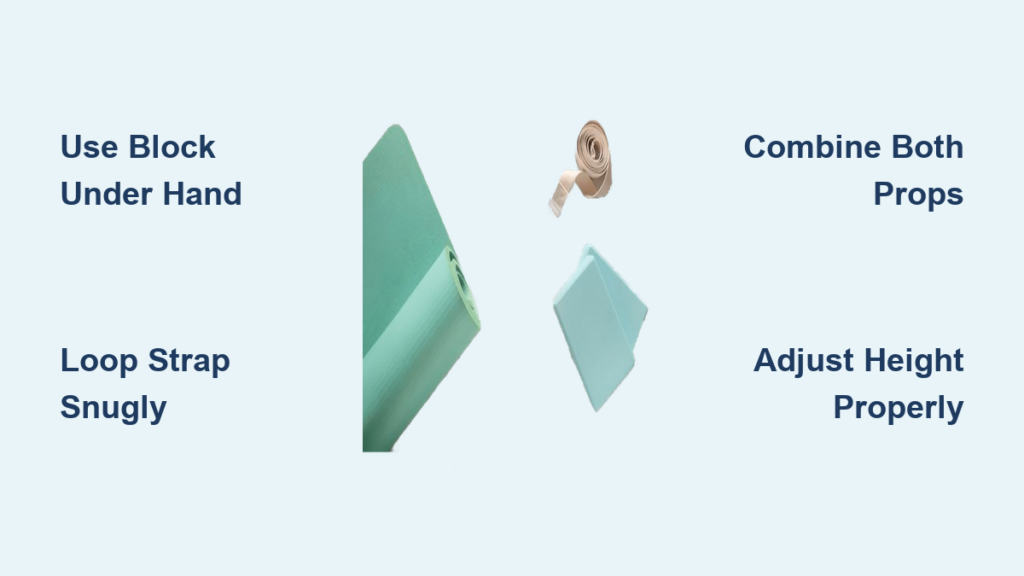
Yoga blocks aren’t just for beginners—they’re intelligent tools that create alignment opportunities your body wouldn’t otherwise access. When placed correctly under your hand in Triangle Pose, a block prevents spinal collapse while maintaining shoulder stability, allowing you to experience proper alignment immediately rather than waiting months for increased flexibility. The key is positioning: place blocks directly under your active hand, not off to the side, so your weight transfers through your shoulder joint correctly.
For forward folds, position blocks at their tallest height beside your feet rather than in front of them. This subtle adjustment keeps your hips moving toward your heels while maintaining spinal length. Many practitioners unknowingly create tension by reaching too far forward with blocks, defeating their purpose. Your blocks should meet your hands at the natural endpoint of your fold, not force you into a deeper position that compromises your spine.
How to Adjust Block Height for Optimal Support
Experiment with all three block heights to find what works for your unique body structure. The 4-inch height provides minimal elevation for practitioners with moderate flexibility, the 6-inch height offers moderate support for most standing poses, and the 9-inch height delivers maximum elevation for deep stretches or therapeutic applications. In seated poses like Easy Pose, placing a block under your sit bones at the 4-inch height creates immediate hip opening without straining your knees.
When supporting your spine in restorative poses, horizontal placement often works better than vertical. For Supported Fish Pose, lay your block horizontally across your upper back, adjusting the height until your breath flows freely without strain. Start with the lowest height and gradually increase until you find the sweet spot where your chest opens without discomfort in your neck.
Master Precision Strap Techniques for Deeper Stretches
The most common strap mistake—using it too loosely—undermines its effectiveness in creating meaningful connections between body parts. To create proper tension, loop your strap around your foot in Reclining Hand-to-Toe Pose until it’s snug enough that you can control leg movement without constant readjustment. The strap should feel like an extension of your arm, not a loose tether requiring constant correction.
How to Create Effective Loop Sizes for Different Poses
Practice making three standard loop sizes before your practice begins: a small loop for hand-to-foot connections, a medium loop for shoulder stretches, and a large loop for full-body extensions. For shoulder opening in Cow Face Pose arms, a medium loop allows you to gradually bring your hands closer without straining your shoulders. Hold both ends of the strap in your top hand and let the bottom hand grasp the strap below, adjusting the loop size until you feel a gentle stretch without pain.
In Downward Dog with a strap between hands and feet, step one foot onto the center of the strap and walk your hands up until your arms are straight. The strap should create tension that encourages spinal lengthening while allowing bent knees. Keep your gaze between your thumbs and press firmly through your index fingers to maintain shoulder stability as you work deeper into the pose.
Combine Straps and Blocks for Integrated Support Systems

Strategic combinations of both props create support networks that address multiple limitations simultaneously, transforming inaccessible poses into sustainable practices. In Pigeon Pose, place a block under your front hip at medium height while looping a strap around your back foot. This dual support system reduces knee strain while providing something to hold if your hands can’t reach your foot, allowing you to focus on breath and release rather than mechanical struggle.
How to Use Props Together in Restorative Poses
For a deeply supported Bridge Pose, position a block horizontally under your sacrum at medium height while looping a strap around your thighs just above the knees. The block elevates your pelvis to open hip flexors while the strap maintains proper knee alignment, preventing strain on your medial ligaments. Stay in this configuration for 3-5 minutes, breathing deeply into the spaces created by the props.
In Legs-Up-The-Wall Pose, place a block between your sacrum and the wall to create a gentle pelvic tilt that relieves lower back tension. Add a strap around your thighs to maintain hip-width distance between your legs, allowing complete muscular release. This combination transforms a simple inversion into a powerful nervous system reset that reduces stress and improves circulation.
Avoid These Common Prop Misuse Errors
Placing blocks too far from your body forces you to reach and collapse rather than support and align—this fundamental error undermines the entire purpose of using props. In standing poses, position blocks where your hands naturally fall when properly aligned, not where you think they “should” be. Your blocks should bring the ground to you, not require you to stretch toward them.
How to Prevent Strap Over-Tightening
Straps that are too tight restrict circulation and create tension that works against the relaxing intention of stretching poses. Periodically check your strap tension by attempting to slide a finger underneath—there should be enough space for comfortable movement without the strap slipping. In seated forward folds, the strap should allow controlled movement of your torso toward your legs, not lock your position in place.
Many practitioners forget to engage supporting muscles when using props, creating a false sense of flexibility that disappears when props are removed. Continue actively reaching through your spine and engaging your supporting leg in Triangle Pose even with a block under your hand. Props should help you develop strength and flexibility to eventually move beyond them, not replace muscular engagement.
Build a Sustainable Home Practice with Props
Designate a specific area for your practice where props remain within immediate reach, eliminating the friction that prevents consistent home practice. Store your blocks vertically in a corner and keep your strap coiled and ready on top of them—this simple organization system ensures you never waste practice time searching for equipment.
How to Track Your Prop Progress
Document which prop configurations work best for different poses in a simple practice journal. Note block heights, strap positions, and your subjective experience to track improvements over time. Most practitioners discover they gradually need less support as flexibility and strength develop—a satisfying reminder that props are growth tools, not permanent fixtures.
Begin each session with a quick prop check: ensure blocks are clean and stable, and straps are free of twists. This brief ritual prepares your mind for practice as thoroughly as it prepares your space. As you become more experienced, you’ll develop intuition about which props you’ll need for different sequences, allowing you to set up efficiently and focus your energy on the practice itself.
Yoga straps and blocks are transformative tools that unlock possibilities in your practice you never thought possible. By extending your reach, stabilizing your balance, and supporting your body in challenging positions, these simple props turn frustrating limitations into opportunities for growth. Start with the basic techniques outlined here, experiment with different configurations, and watch as poses that once felt impossible become natural, sustainable movements. The true power of yoga lies not in achieving perfect form but in meeting your body where it is today—grab your strap and block, and discover what your practice can become with the right support.