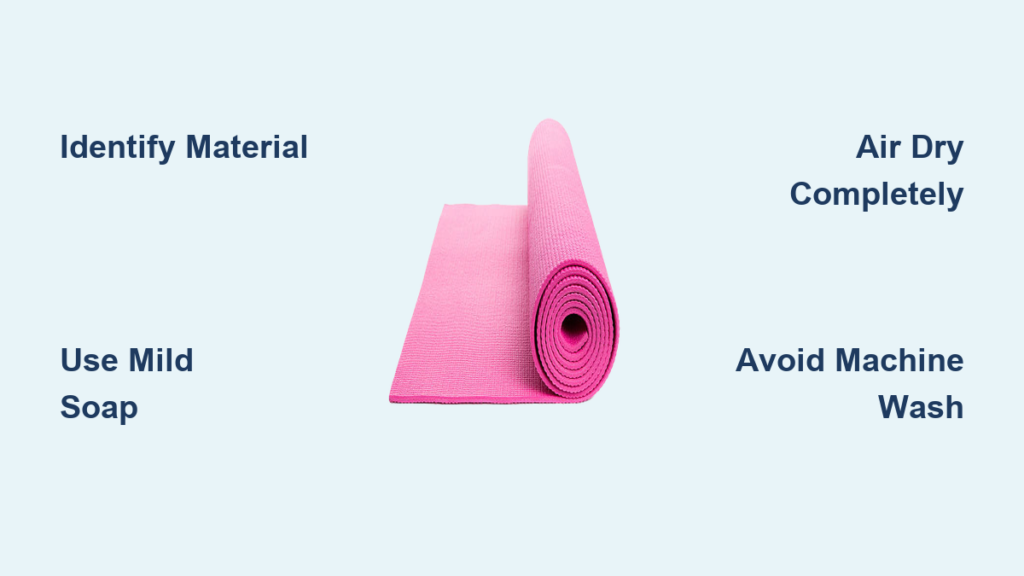
Sweat, oils, and bacteria accumulate on your yoga mat after every practice session, transforming what should be your sacred space into a breeding ground for odor and potential skin irritations. Learning how to wash yoga mat properly isn’t just about freshness—it’s essential for maintaining grip, preventing infections, and extending your mat’s lifespan. Without regular cleaning, that sticky surface designed to support your downward dog becomes slippery and unreliable, compromising both your practice and your health.
Most practitioners don’t realize that a single hour of yoga deposits significant amounts of skin cells, sweat, and natural oils onto their mat—creating the perfect environment for bacteria and mold to thrive. Whether you’re a hot yoga enthusiast or practice in a cooler studio, your mat needs consistent care to perform optimally. This guide delivers specific, actionable steps to clean any yoga mat safely, regardless of material, so you can maintain a hygienic practice surface that supports your journey rather than hindering it.
Why Your Yoga Mat Needs Regular Deep Cleaning
Ignoring your mat’s hygiene creates serious consequences beyond unpleasant smells. During a typical session, your body deposits sweat containing salts, oils, and bacteria directly onto the mat’s surface. These compounds break down the mat’s material over time, causing premature wear and that dangerous slickness during balancing poses. Dermatologists confirm that unclean mats frequently cause skin irritations, rashes, and even fungal infections—especially for practitioners with sensitive skin or those who practice barefoot.
Beyond health concerns, regular cleaning preserves your mat’s performance characteristics. The grip that keeps you stable in challenging poses depends on maintaining the mat’s texture. Sweat and oils fill microscopic pores, gradually transforming your sticky surface into a slippery hazard. A clean mat maintains consistent traction, allowing you to focus on alignment rather than worrying about sliding. Establishing a proper cleaning routine protects both your investment and your practice experience, ensuring your mat performs reliably session after session.
Identify Your Mat Material Before Washing

Before applying any cleaning method, you must determine your mat’s material—using the wrong technique can permanently damage your mat. Most mats display their composition on packaging or a tag, though you may need to check the manufacturer’s website if this information isn’t visible.
PVC mats tolerate the most aggressive cleaning methods. These durable, non-porous mats handle hand washing with mild detergent and occasional machine washing on gentle cycles. Avoid harsh chemicals like bleach, which can break down the material over time.
Natural rubber mats require gentler treatment. Never machine wash rubber mats, as agitation causes delamination. Use only mild, pH-balanced cleaners and avoid citrus-based products that break down rubber.
Cork mats feature antimicrobial properties but are highly absorbent. Clean by lightly spritzing with diluted soap rather than submerging, and always dry immediately. Avoid oil-based cleaners that penetrate cork.
TPE mats offer a middle ground between PVC and rubber. Most tolerate hand washing, but verify manufacturer recommendations. Never use hot water, which causes warping.
Gather Essential Cleaning Supplies
Having the right supplies ready ensures thorough cleaning without mid-process scrambling. For most yoga mat cleaning needs, household items suffice, though specialized products simplify maintenance.
Mild detergent or yoga mat cleaner forms your foundation. Avoid household cleaners with harsh chemicals—opt for baby shampoo, diluted dish soap, or dedicated mat sprays. Natural options include white vinegar/water (50/50) or diluted tea tree oil for antimicrobial properties.
Soft cleaning tools prevent surface damage. A microfiber cloth works for wiping, while a soft-bristled brush (an old toothbrush) dislodges debris from textured surfaces. Avoid abrasive scrubbers that compromise grip.
Drying equipment proves equally important. Clean, lint-free towels absorb excess moisture quickly. If machine drying is appropriate, use low heat and remove when damp-dry.
Optional supplies include a spray bottle for cleaning solutions, a small bucket for hand washing, and a mat bag for storage. Keeping a small spray bottle in your yoga bag enables quick post-class wipe-downs.
Hand Wash Your Yoga Mat Properly
Hand washing works for virtually all mat types and gives you complete control over the process. Lay your mat flat on a clean, non-porous surface like a bathtub (place an old towel underneath to prevent scratches).
Fill a bucket with lukewarm water and add one teaspoon of mild detergent per gallon. Avoid excessive detergent, which attracts dirt and creates slippery surfaces. Submerge your mat if material allows, or dampen a microfiber cloth with the solution for cork/delicate mats.
Use your soft-bristled brush to gently scrub stained areas with circular motions, applying minimal pressure. For PVC, TPE, and rubber mats, gently swish the mat through the water to lift away oils and bacteria.
Rinsing proves equally important. For submersible mats, drain dirty water and refill with clean water, swishing thoroughly until water runs clear. For non-submersible mats, wipe with a clean, damp microfiber cloth multiple times. Any soap residue left behind attracts dirt and degrades your mat over time.
Machine Wash Safely When Appropriate

Machine washing offers convenience but carries risks if done incorrectly. Only machine wash mats explicitly labeled as machine-washable—most natural rubber, cork, and premium mats should never undergo machine cleaning.
If your mat is machine-washable, place it inside a large mesh laundry bag or pillowcase tied closed. Use a front-loading machine rather than a top-loader with an agitator. If only a top-loader is available, run without the agitator or place the mat loosely around it.
Select the gentlest cycle with cold or lukewarm water only. Never use hot water, which causes warping. Add minimal mild detergent and skip fabric softeners, bleach, and laundry boosters. Run an extra rinse cycle if available.
Drying requires equal caution. Never machine dry unless explicitly permitted, and even then, use the lowest heat setting. Safest approach: remove immediately after washing and air-dry flat or hanging in well-ventilated area away from direct sunlight.
Deep Clean Stubborn Stains and Discoloration

Persistent discoloration in high-contact areas requires targeted intervention. For surface-level staining on PVC or TPE mats:
- Create a paste using baking soda and water
- Apply directly to discolored areas with a soft-bristled brush
- Allow to sit for 10-15 minutes before rinsing thoroughly
For more stubborn stains on machine-washable mats:
– Apply undiluted mild detergent directly to stained areas
– Work it in gently with fingers or soft brush
– Let sit for 5-10 minutes before normal washing
Natural remedies offer chemical-free alternatives:
– Vinegar and baking soda paste creates foaming action that lifts residues
– Hydrogen peroxide (3% concentration) can lighten discoloration on light-colored mats (test first)
– Diluted enzyme-based cleaners break down organic stains without harsh chemicals
Remove Odors Effectively
Effective odor removal addresses the root cause—bacterial growth—rather than masking smells. For mild odors, use a simple vinegar solution:
- Mix equal parts white vinegar and water in a spray bottle
- Lightly mist your mat (avoid saturation)
- Wipe clean with a damp microfiber cloth
- The vinegar smell dissipates completely as the mat dries
Sunlight offers natural deodorizing:
– Hang your mat outdoors in direct sunlight for 1-2 hours
– UV radiation destroys microorganisms while heat drives out moisture
– Avoid prolonged exposure, which can fade colors
For persistent odors:
– Sprinkle baking soda generously over the surface
– Let sit for several hours (or overnight for severe cases)
– Vacuum or brush off thoroughly before next practice
– Add a cup of white vinegar to the rinse cycle for machine-washable mats
Dry Your Mat Properly
Improper drying causes more yoga mat problems than almost any other maintenance mistake. Develop proper drying habits to protect your cleaning investment:
- Immediately after cleaning, wipe your mat with a clean, dry microfiber towel
- Press firmly to absorb surface moisture
- Lay flat in a clean, well-ventilated area away from direct sunlight
- Flip your mat halfway through drying to ensure both sides dry completely
Hanging mats works well when space allows:
– Use sturdy hanging rods or dedicated mat drying racks
– Ensure the mat doesn’t touch the floor or other surfaces
– Place towels underneath to catch dripping water
– Never hang in direct sunlight or near heating vents
Be patient during drying—complete drying may take 24-48 hours. Never roll or store a mat that feels even slightly damp. Test dryness by pressing a clean, dry paper towel against the mat’s center—if any moisture transfers, continue drying.
When to Replace Your Yoga Mat
Even with excellent maintenance, yoga mats eventually need replacing. Recognize these signs:
- Surface degradation: Persistent slick spots that don’t improve with cleaning
- Structural damage: Cracks, tears, or separating layers that create safety hazards
- Persistent odors: Mustiness that remains despite thorough cleaning
- Loss of cushioning: Noticeable thinning in high-impact areas
Most yoga mats maintain optimal performance for 1-3 years with regular practice and proper care. Mats used daily or in hot yoga conditions typically require replacement sooner. If you can’t remember when you bought your mat or it’s showing any degradation signs, it’s time to consider replacement.
Daily and Weekly Maintenance Routine
Establish consistent habits to prevent heavy soiling between deep cleanings:
After each practice:
– Wipe your mat with a damp microfiber cloth
– Use a quick-drying yoga mat spray for thorough cleaning
– Unroll and let air dry before storing
Weekly:
– Perform a thorough hand washing
– Inspect for developing wear spots or discoloration
– Allow complete drying before storage
Monthly:
– Apply baking soda paste to stained areas
– Consider vinegar soak for odor prevention
– Check for any developing issues requiring attention
Proper yoga mat care takes minimal time but delivers significant long-term benefits for your practice hygiene and equipment longevity. By implementing these cleaning strategies, you’ll enjoy a fresh, grippy, hygienic practice surface that supports your yoga journey for years to come. Remember that how to wash yoga mat properly varies by material—when in doubt, gentler methods always prove safer than aggressive treatments. Your mat serves as the foundation of every practice, and treating it with care honors both your investment and your commitment to your practice.