Your yoga mat absorbs more than just your sweat—it’s a breeding ground for bacteria, fungi, and skin cells. Every downward dog and warrior pose deposits moisture deep into the mat’s surface, creating the perfect environment for microorganisms to thrive. Without proper sanitization, your practice companion can cause skin infections, persistent odors, and even compromise your grip during poses. Learning how to sanitize your yoga mat properly isn’t just about cleanliness—it’s essential for protecting your health and extending your mat’s lifespan.
This comprehensive guide delivers specific, actionable methods for sanitizing any yoga mat, whether you practice hot yoga daily or attend studio classes weekly. You’ll discover quick daily refreshers, deep cleaning protocols, natural DIY solutions, and material-specific care instructions that keep your mat fresh without damaging its texture or grip.
Why Your Yoga Mat Needs Regular Sanitization
Staphylococcus, Streptococcus, and various fungi colonize yoga mats within 24-48 hours after use. For daily practitioners or those attending hot yoga classes, bacterial loads multiply exponentially, creating genuine health risks. Beyond infections, accumulated sweat and oils degrade mat materials over time, causing the surface to become slick and reducing traction during poses.
The frequency of sanitization depends on your practice intensity:
– Light practitioners (1-2 sessions weekly): Sanitize weekly
– Regular practitioners (3-4 sessions weekly): Sanitize every 3 days
– Hot yoga enthusiasts or daily practitioners: Sanitize after every session
Ignoring proper mat care leads to permanent odors that no amount of airing can eliminate and significantly shortens your mat’s usable life.
Quick Daily Sanitization Method for Busy Yogis
When you need to sanitize your yoga mat between practices without a full cleaning session, follow this five-minute process:
How to Perform a Quick Sanitization After Practice
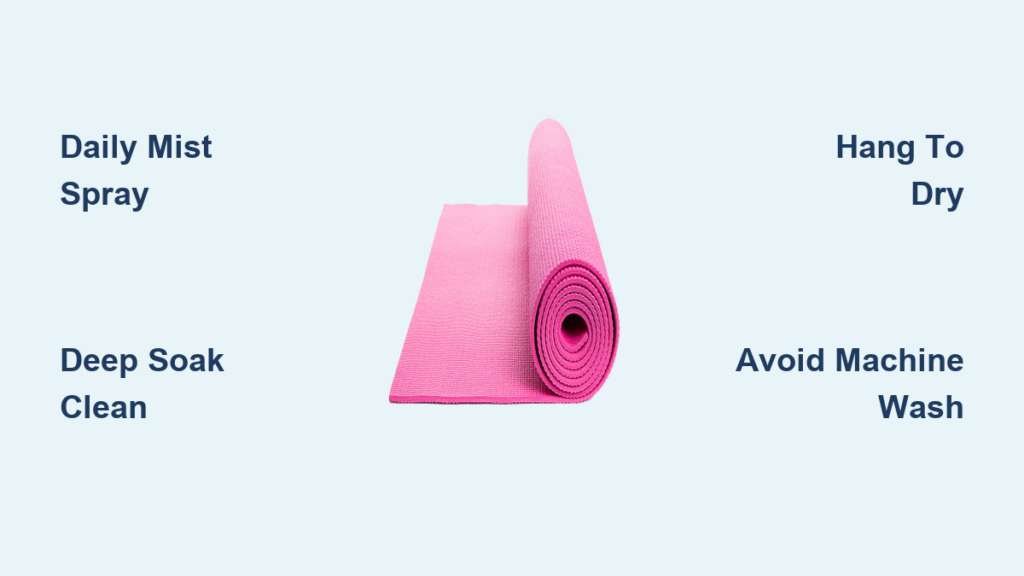
Unroll your mat in a well-ventilated area and lightly mist the entire surface with a disinfecting solution. The ideal mixture combines one part white vinegar to three parts water in a spray bottle—this ratio effectively kills bacteria without damaging mat materials. Alternatively, use a commercial mat cleaner specifically formulated for yoga equipment.
Wipe systematically with a clean microfiber cloth, working from top to bottom in one direction. Focus extra attention on high-contact zones where your hands and feet rest, as these areas accumulate the most sweat and oils. Immediately hang your mat to dry completely before rolling—trapped moisture breeds mildew and creates odors that become permanent.
On-the-Go Sanitization for Studio Practitioners
Keep individually packaged disinfecting wipes in your yoga bag for quick sanitization after studio classes. Select wipes specifically designed for yoga mats rather than generic hand wipes, which often contain oils that create slippery surfaces. Look for wipes with natural ingredients like tea tree oil or eucalyptus that provide antibacterial properties without harsh chemicals.
Never use wipes containing alcohol, bleach, or ammonia, as these degrade mat materials over time and compromise the grip you rely on during challenging poses.
Deep Cleaning Your Yoga Mat Step-by-Step
Weekly deep cleaning removes the buildup that daily sanitization can’t address. This 15-20 minute process restores your mat to nearly new condition.
Proper Deep Cleaning Technique Without Damage
Fill a bathtub with lukewarm water—hot water can warp certain materials. Add one tablespoon of mild dish soap or specialized yoga mat cleaner. Submerge your mat completely and gently agitate the water with your hands. Let it soak for 5-10 minutes to loosen embedded oils.
For stubborn spots, use a soft brush or sponge to gently scrub in circular motions, focusing on high-contact areas but avoiding abrasive tools. Drain the dirty water and rinse thoroughly until no soap residue remains—residue attracts dirt and creates slippery surfaces.
Drying Your Mat Correctly to Prevent Mildew
Press excess water from your mat by rolling it in clean towels—never wring it. Hang in a well-ventilated area away from direct sunlight, which fades colors and degrades materials. Allow 4-6 hours for complete drying before storage. Never store a damp mat, as trapped moisture promotes mold growth that’s nearly impossible to eliminate.
Material-Specific Sanitization Methods That Work

Different mat materials require tailored cleaning approaches to maintain performance and longevity.
PVC Mat Cleaning Protocol
PVC mats tolerate the widest range of cleaning products but are highly porous. Use vinegar solutions, mild dish soap, or commercial cleaners, but ensure thorough rinsing to prevent residue buildup. Avoid acetone-based cleaners and excessive scrubbing, which break down the material over time.
Cork Mat Care Without Warping
Never submerge cork mats in water—moisture penetrates deeply and causes warping. Instead, spot clean with a barely damp cloth and mild soap solution. Cork’s natural antimicrobial properties mean these mats require less frequent intensive cleaning than PVC alternatives.
Rubber Mat Sanitization Without Sticky Residue
Stick to mild soap or vinegar solutions for rubber mats, which can degrade with harsh chemicals. Test any new cleaner on a small area first, as some products cause rubber to develop a sticky residue that compromises grip.
Common Yoga Mat Sanitization Mistakes to Avoid

Even well-intentioned practitioners damage their mats through preventable errors.
Why Machine Washing Ruins Most Mats
The agitation breaks down materials, heat causes warping, and the spin cycle creates permanent creases. Only attempt machine washing if your mat specifically states it’s safe—most aren’t. When in doubt, hand clean to preserve your investment.
The Hidden Danger of Disinfecting Wipes
Many wipes contain bleach, alcohol, or harsh chemicals that degrade mat surfaces over time. These ingredients strip the grip-enhancing texture from your mat, creating dangerous slip hazards during practice. Choose yoga-specific wipes or make your own with diluted vinegar solution.
Why Rolling a Damp Mat Creates Permanent Odors
Trapped moisture in a rolled mat creates the perfect environment for mold and mildew. Always ensure complete dryness before storage—use a fan or hair dryer on cool setting if you’re in a hurry. Persistent odors often originate from this single mistake.
Pro Tips to Extend Your Mat’s Lifespan Between Cleanings
Preventive measures significantly reduce cleaning frequency and maintain optimal performance.
Create a Sweat Barrier During Practice
Place a yoga-specific towel over your mat during heated sessions to absorb sweat before it penetrates the surface. These towels provide grip even when damp and dramatically reduce bacterial growth, making post-practice cleaning much easier.
Establish an Effective Cleaning Schedule
Daily quick sanitization combined with weekly deep cleaning prevents buildup that leads to permanent odors. Set phone reminders until the habit becomes automatic—your skin (and practice) will thank you.
Proper Storage Techniques for Longevity
Store your mat in a climate-controlled space, rolled loosely or laid flat. Extreme heat softens adhesives causing delamination, while cold temperatures make materials brittle. Never leave your mat in a car, garage, or other temperature-extreme locations.
When It’s Time to Replace Your Yoga Mat
Even with excellent care, yoga mats eventually reach the end of their useful life. Recognize these replacement signs:
- Visible cracks, tears, or permanently compressed areas that harbor unreachable bacteria
- Persistent odor returning within hours of cleaning
- Loss of grip even when the mat is clean and dry
- Discoloration that doesn’t respond to cleaning
Daily practitioners should replace quality mats every 1-3 years, while occasional users can expect 3-5 years of service. Track your purchase date to evaluate when replacement becomes necessary for safety and performance.
Regular sanitization transforms your yoga mat from a potential health hazard into the clean, supportive foundation your practice deserves. By implementing these specific cleaning protocols tailored to your mat’s material, you’ll extend its lifespan while protecting your skin from bacteria and odors. The five minutes spent on daily sanitization pays dividends in improved practice quality and reduced replacement costs. Your mat supports you through every pose—return the favor with proper care and maintenance.