Your Manduka yoga mat represents a significant investment in your practice, and keeping it clean isn’t just about aesthetics—it’s essential for hygiene, performance, and longevity. Over time, sweat, oils, dead skin cells, and bacteria accumulate on every surface you touch during practice. This buildup doesn’t just create an unpleasant smell; it can actually degrade your mat’s grip, cause discoloration, and shorten its usable lifespan. Fortunately, Manduka has developed a complete line of specialized cleaning products designed specifically for their premium mats, ensuring you can maintain that like-new feel practice after practice.
Whether you’re a daily practitioner or someone who rolls out their mat a few times per week, understanding the proper cleaning technique for your specific Manduka mat material will pay dividends in both mat performance and hygiene. This guide walks you through everything you need to know, from selecting the right cleaning products to establishing a maintenance routine that keeps your mat in peak condition for years to come.
Select Your Manduka-Specific Cleaner
Manduka understands that different mat materials require different care approaches, which is why they’ve developed specialized formulas for each type of mat. Using the wrong cleaner can damage your mat’s surface, reduce grip, cause discoloration, or compromise structural integrity over time. Selecting the appropriate product from the start ensures you’re providing your mat with exactly what it needs to perform at its best.
Yoga Mat Wash and Refresh for Standard Mats
For most Manduka yoga mats, the Yoga Mat Wash and Refresh formula is your go-to cleaning solution. This all-natural cleaning formula is specifically designed for daily use and works effectively on all Manduka yoga mat varieties except those made from natural rubber. The formula contains organic essential oils that provide natural fragrance while maintaining the mat’s grip and texture, so you won’t have to worry about a slippery residue after cleaning.
The product comes in three sizes and two scent options to match different practice intensities and preferences. The small 4-ounce bottle (€12.00) works well for occasional practitioners who might clean their mats once or twice weekly. The medium 8-ounce bottle (€18.00 for lemongrass or lavender) suits regular practitioners who clean several times per week. For dedicated daily practitioners or studio owners, the large 32-ounce bottle (€38.00) offers the best value and ensures you never run out at a critical moment.
The Lemongrass scent, available in all three sizes, offers a fresh and energizing aroma that many practitioners find invigorating before their practice. Alternatively, the Lavender option provides a calming, relaxing scent that can help ease you into a more meditative state. Both scents use organic essential oils that evaporate completely without leaving residue.
Natural Rubber Mat Restore for Rubber Mats
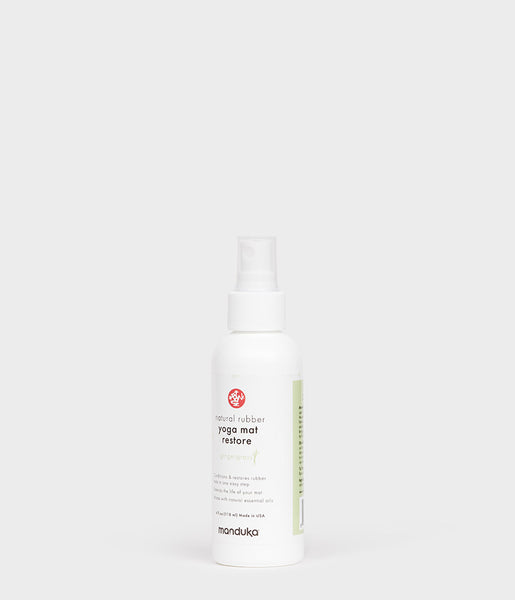
If you practice on a Manduka natural rubber yoga mat, you need a cleaner specifically formulated for this unique material. Natural rubber requires different care than synthetic materials because it can be more sensitive to certain cleaning agents that might cause premature deterioration, cracking, or loss of grip. The Natural Rubber Yoga Mat Restore is a 100% naturally derived restoration formula engineered exclusively for maintaining the unique properties of natural rubber mats.
This specialized formula comes only in an 8-ounce size (€18.00) with a Gingergrass scent, featuring a warm, spicy fragrance that distinguishes it from the other options. Using this product regularly helps extend your natural rubber mat’s lifespan while keeping it in peak condition, something generic household cleaners simply cannot achieve.
Daily Cleaning Routine That Takes 2 Minutes
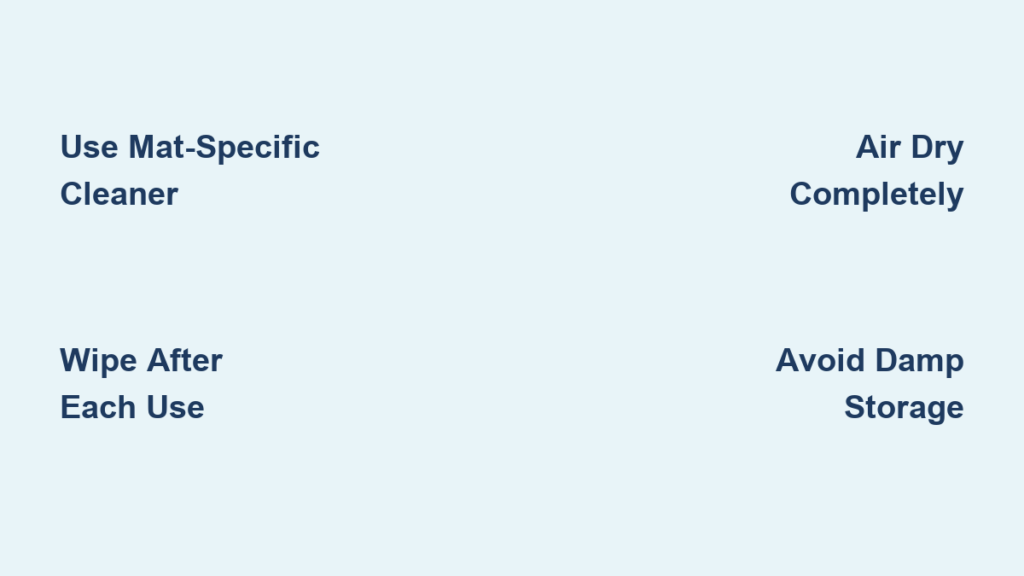
Establishing a daily cleaning habit takes only minutes but delivers significant benefits for both your mat’s condition and your practice hygiene. After each session, wipe down your mat while it’s still rolled out, before any sweat or oils have time to set in. This quick intervention prevents the accumulation of contaminants that become harder to remove over time and can begin degrading your mat’s surface.
Step-by-Step Daily Cleaning Process
- Spray evenly: Lightly mist your chosen Manduka cleaner across the entire surface of your mat (3-5 pumps is usually sufficient)
- Wipe thoroughly: Using a soft cloth or paper towel, wipe the entire surface, paying extra attention to areas where your hands and feet typically contact the mat
- Air dry completely: Allow your mat to air dry for 5-10 minutes before rolling it up—never store a damp mat as this promotes mold growth
The beauty of Manduka’s cleaning formulas is their gentle yet effective nature. You can use them daily without worrying about harsh chemicals that might expose you to synthetic substances during practice or damage your mat’s surface over time. The organic essential oils evaporate completely, leaving no residue behind—just a fresh, clean surface ready for your next session.
Deep Clean Your Manduka Mat in 15 Minutes
While daily light cleaning handles routine maintenance, your Manduka yoga mat occasionally needs a more thorough cleaning to address deeper buildup that regular wiping cannot remove. This becomes especially important if you practice intensely, practice outdoors frequently, or notice persistent odors that don’t dissipate after your normal cleaning routine.
Complete Deep Cleaning Procedure
- Prepare your space: Lay your mat flat in a clean, dry area—ideally outdoors or in a well-ventilated room
- Apply cleaner generously: Spray your Manduka cleaner across the entire surface until damp but not soaked
- Let sit: Allow the cleaner to sit for two to three minutes, giving the natural ingredients time to break down accumulated oils and dirt
- Gentle scrubbing: Using a soft brush or clean cloth, gently scrub the surface in circular motions, working from one end to the other
- Thorough rinsing: Rinse your mat thoroughly with clean water to remove all cleaning residue (critical step to prevent slippery film)
- Water removal: Carefully squeeze out excess water without wringing or twisting the mat
- Complete drying: Lay flat to air dry completely—this may take several hours depending on humidity
Never roll up or store your mat until it’s completely dry, as trapped moisture creates ideal conditions for mold and bacteria. This deep cleaning should be performed every 2-4 weeks depending on your practice frequency.
Essential Cleaning Tools Checklist
Having the right tools on hand makes both daily and deep cleaning more effective and efficient. Keep these items ready for optimal mat care:
- Soft microfiber cloth: Specifically for mat cleaning—avoid abrasive materials that could scratch your mat’s surface
- Soft-bristled brush: For deep cleaning sessions to agitate stubborn buildup without causing wear
- Designated spray bottle: Keep a bottle of your chosen Manduka cleaner near your practice space
- Storage solution: A basket or shelf to keep all your mat cleaning supplies organized and accessible
Many practitioners find that keeping their cleaning supplies visible and accessible removes barriers to regular maintenance. The medium 8-ounce bottles fit easily on a shelf or in a closet, while the large 32-ounce option works better if you have a dedicated cleaning station.
Extend Your Manduka Mat’s Lifespan by Years
Your Manduka yoga mat is built to withstand years of dedicated practice, but proper care significantly accelerates or degrades that timeline. Practitioners who establish consistent cleaning habits and use appropriate products often enjoy twice the lifespan of mats that receive irregular or improper care.
Proven Longevity Tips
- Rotate your mat: Periodically flip or rotate your mat if you practice primarily in one spot to prevent uneven wear
- Proper storage: When not in use, store your mat unrolled in a cool, dry location away from direct sunlight
- On-the-go cleaning: Keep a small spray bottle in your yoga bag for cleaning after studio sessions
- Material-specific care: Always use the cleaner formulated for your specific mat type
Avoid using generic household cleaners, even natural ones not specifically designed for yoga mats. Products containing harsh chemicals, bleach, ammonia, or strong fragrances can break down your mat’s materials. The same caution applies to essential oils not specifically formulated for yoga mat care—they can degrade certain materials.
Common Cleaning Mistakes That Damage Manduka Mats
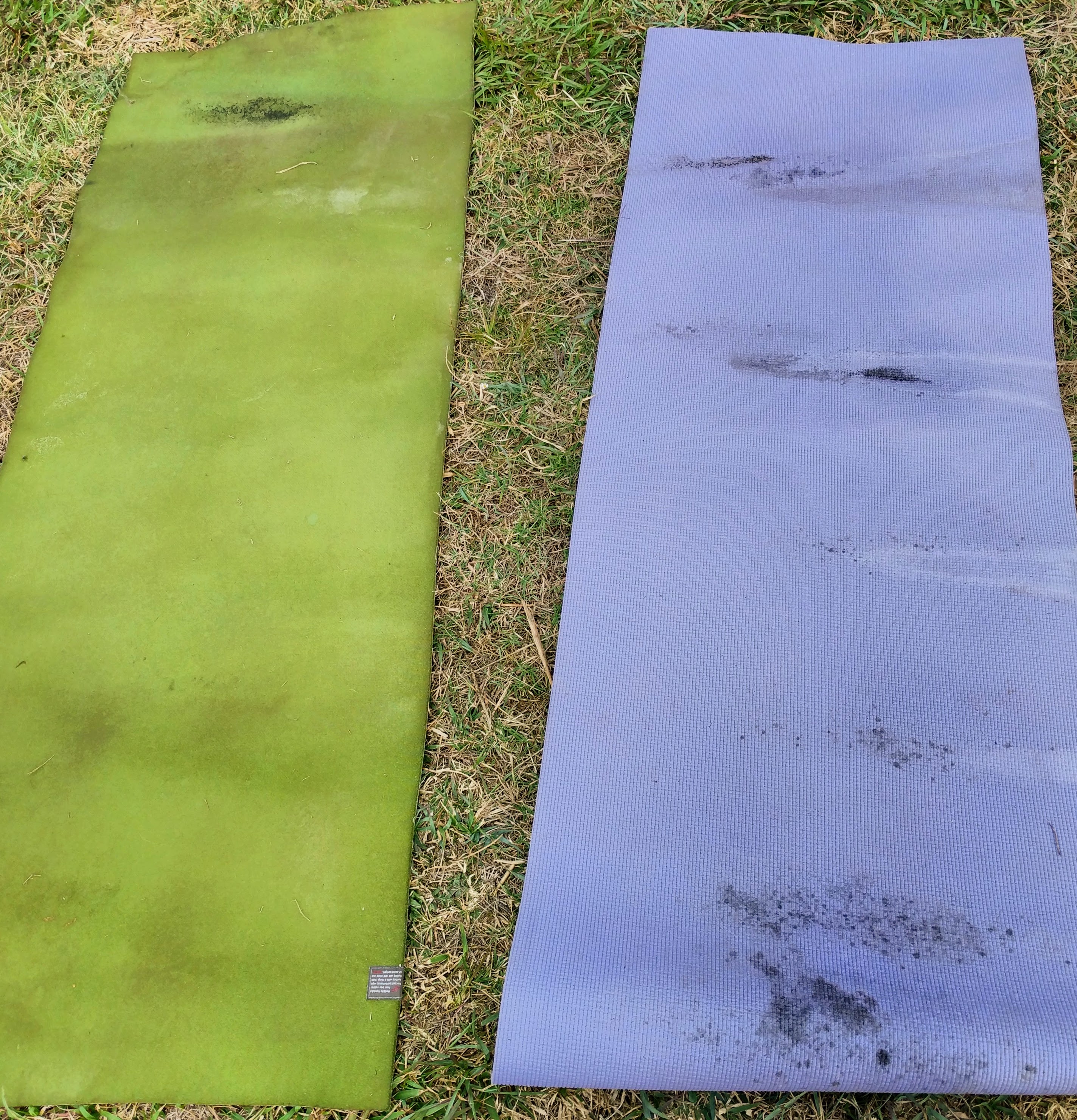
Even well-intentioned practitioners sometimes make errors in mat care that compromise their mat’s performance or longevity. Understanding these common mistakes helps you sidestep potential problems before they develop.
Top 3 Cleaning Errors to Avoid
-
Oversaturating your mat: Using too much cleaner leaves residue that affects grip. A light, even mist is sufficient—your mat should dry within minutes rather than hours.
-
Rolling up a damp mat: Trapping moisture inside creates perfect conditions for mold, mildew, and bacterial growth. Always ensure complete dryness before storage.
-
Using heat to speed drying: Direct sunlight or hair dryers might dry the surface quickly but can cause warping, cracking, or material breakdown. Air drying at room temperature is always safest.
Size Selection Guide for Your Practice Frequency
Selecting the right size of Manduka cleaning product depends on your practice frequency, intensity, and preferences. The small 4-ounce bottle works well for occasional practitioners who might clean their mats once or twice weekly, lasting several months with typical use. The medium 8-ounce option suits regular practitioners who clean several times per week, providing a balance between product availability and storage convenience.
For dedicated daily practitioners, yoga studio owners, or households with multiple mats to maintain, the large 32-ounce bottle offers the best value and ensures you never run out at a critical moment. Many studio owners keep several large bottles on hand for student use, while home practitioners appreciate having product readily available without frequent reordering.
Build a Consistent Cleaning Habit That Lasts
The most effective mat care strategy is one you can maintain consistently over time. Rather than deep cleaning sporadically, establish a simple daily routine that takes only moments after each practice session. Light wiping after every use prevents the heavy buildup that makes deep cleaning necessary, creating a positive cycle that keeps your mat in excellent condition with minimal effort.
Keep your Manduka cleaning product where you’ll actually use it—near your practice space, in your yoga bag, or in a designated cleaning station. When something is convenient, you’re far more likely to use it regularly. Consider setting a reminder on your phone or leaving your cleaning supplies out as visual cues until the habit becomes automatic.
Your yoga mat is the foundation of every practice, and treating it with the care it deserves ensures it supports your practice for years to come. By choosing the appropriate Manduka cleaner for your mat material, establishing consistent cleaning habits, and avoiding common mistakes, you maintain not just a hygienic practice surface but also preserve the grip, cushioning, and performance characteristics that make Manduka mats stand apart. A few minutes of care after each session delivers returns in both mat longevity and practice quality that make that investment of time more than worthwhile.