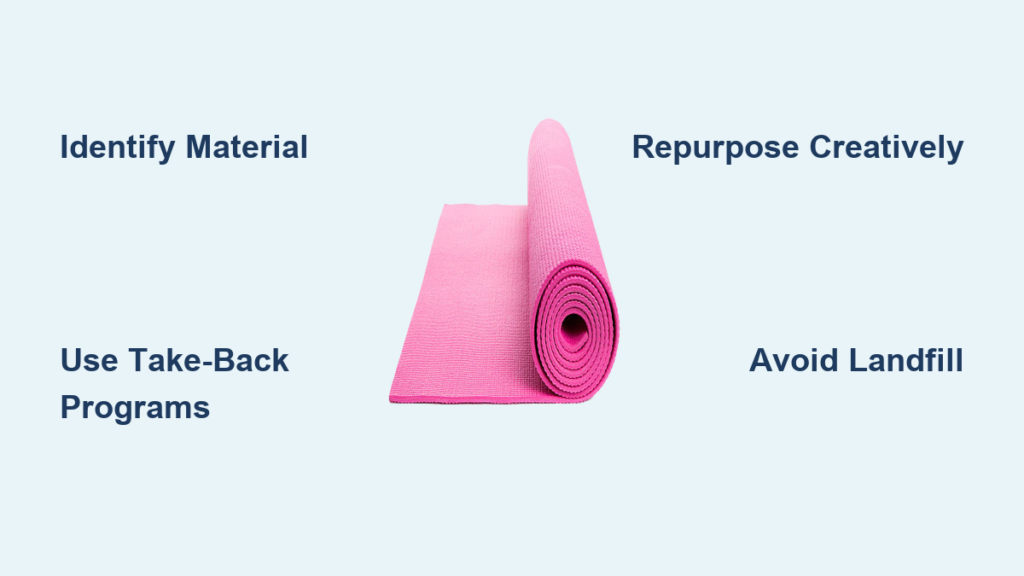
When your trusty yoga mat finally shows signs of wear after countless sun salutations and downward dogs, you might wonder how to responsibly dispose of it. Most practitioners don’t realize that standard recycling bins won’t accept these essential wellness tools. With millions of yoga mats reaching the end of their life each year, finding proper recycling solutions has become an environmental imperative. This guide reveals exactly how to recycle your yoga mat through manufacturer programs, specialty facilities, creative repurposing, and sustainable alternatives you can implement today.
Yoga mats present unique recycling challenges due to their material composition and construction, causing most to end up in landfills despite containing potentially recyclable components. Unlike paper or plastic bottles that fit neatly into municipal recycling streams, yoga mats require specialized handling. Understanding why standard recycling fails for yoga mats and discovering the limited but growing number of legitimate recycling options will help you make informed disposal decisions that align with your wellness practice’s values.
Why Your Yoga Mat Won’t Recycle Through Standard Curbside Programs
Yoga mats resist standard recycling due to their multi-layer construction and specialized materials that confuse automated sorting systems. Municipal facilities process single-material items in high volumes, while yoga mats contain blended compounds that don’t fit standard categories. When you place a yoga mat in your curbside bin, workers typically pull it from the conveyor belt during sorting because its size, shape, and material composition cause machinery jams and contamination.
The rubber compounds in most yoga mats—whether PVC, TPE, or natural rubber—require specialized processing that standard facilities lack. These materials often contain antimicrobial agents, dyes, and texture enhancements that complicate recycling. Even if your mat appears to be a single material, the manufacturing process bonds layers together in ways that prevent separation, making true recycling impossible through conventional means.
Most municipal recycling programs explicitly exclude yoga mats from acceptable items. Check your local program’s guidelines—you’ll likely find rubber products listed as non-recyclable. This exclusion isn’t arbitrary; yoga mats’ dimensions and thickness prevent proper processing through equipment designed for crushable containers. The result? Mats mistakenly placed in recycling bins often end up in landfills anyway, creating “wish-cycling” that burdens recycling systems.
Identify Your Mat’s Material Before Attempting Recycling

PVC Mats: The Most Problematic for Recycling
PVC yoga mats contain polyvinyl chloride, one of the most environmentally damaging plastics. When PVC reaches landfills, it can leach phthalates and other additives into soil and groundwater. Recycling PVC requires specialized facilities capable of handling hazardous materials, which are scarce. If your mat is PVC (check for recycling symbol #3), prioritize manufacturer take-back programs or creative repurposing over standard recycling attempts.
TPE Mats: Technically Recyclable But Rarely Accepted
Thermoplastic elastomer (TPE) mats offer better recycling potential than PVC but still face significant barriers. While TPE can be melted and reformed, few facilities accept it due to low market demand for recycled TPE. Your best option is manufacturer-specific recycling programs that collect enough volume to make processing economically viable. Look for recycling symbol #7 with “TPE” indicated on your mat.
Natural Rubber Mats: The Most Sustainable End-of-Life Options
Authentic natural rubber mats (check for “100% natural rubber” labeling) provide the most environmentally friendly disposal path. These can often be composted in industrial facilities or buried to biodegrade naturally. However, many “natural rubber” mats contain synthetic blends that prevent true biodegradability. Verify your mat’s exact composition before attempting composting.
Activate Manufacturer Recycling Programs for Proper Disposal
Lululemon’s Mat Take-Back System
Lululemon operates a “Like New” program where you can trade in gently used yoga mats for store credit. While primarily focused on resale, their system ensures unsellable mats get properly recycled through partnerships with specialized facilities. Visit their website to check current program details, as offerings change periodically. When sending your mat, clean it thoroughly and package it securely to qualify for credit.
Manduka’s Long-Term Recycling Commitment
Manduka offers a dedicated mat recycling program for their PRO series mats. Their “Grounded” initiative accepts worn mats and transforms them into new products through specialized processing. Check their website for current shipping instructions and whether they accept competitor mats. Manduka’s program typically requires you to pay shipping costs, which support the specialized recycling process.
Gaiam’s Periodic Recycling Campaigns
Gaiam occasionally launches mat recycling initiatives, often tied to product launches or environmental awareness months. Sign up for their newsletter to receive notifications about upcoming recycling opportunities. While their standard operations don’t include continuous take-back, their periodic programs provide valuable disposal options when available.
Locate Specialty Yoga Mat Recycling Facilities Near You

Search for Rubber Recycling Centers
Use targeted search terms like “rubber recycling near me” or “sports equipment recycling facilities” to find specialty processors. Some tire recycling centers accept yoga mats since both contain similar rubber compounds. Call facilities directly to confirm they accept yoga mats—don’t rely solely on website information, as policies change frequently.
Check TerraCycle’s Brand-Specific Programs
TerraCycle partners with specific yoga brands for periodic recycling initiatives. While they don’t maintain a universal yoga mat program, check their website regularly for new partnerships. Some yoga studios host TerraCycle collection events for various wellness products, so inquire at your local studio about upcoming opportunities.
Consider the Environmental Cost of Shipping
Weigh the carbon footprint of shipping your mat against the recycling benefits. For heavily worn mats with minimal recyclable content, local repurposing may be more environmentally sound than shipping long distances. Reserve shipping for mats with significant usable material and when the recycling program clearly outweighs transportation emissions.
Transform Your Old Mat Through Creative Repurposing

Cut Into Functional Home Accessories
Slice your mat into smaller pieces to create:
– Protective knee pads for gardening or floor work
– Non-slip surfaces under heavy furniture
– Drawer liners that prevent scratching
– Shelf padding for delicate items
– Protective coasters for hot dishes
Convert Into Practical Fitness Tools
Repurpose mat sections as:
– Weightlifting grip pads
– Pilates reformer foot bar covers
– Bench padding for home gyms
– Non-slip surfaces for exercise equipment
– Protective padding for home workout spaces
Donate to Community Organizations Needing Equipment
Contact local schools, community centers, or military bases to offer your gently used mat. Many organizations welcome donations for:
– Physical education programs
– Senior center exercise classes
– Veterans’ wellness initiatives
– Homeless shelter activity programs
– Prison rehabilitation yoga programs
Choose Sustainable Mats to Avoid Future Disposal Problems
Select Brands With Closed-Loop Recycling Systems
Prioritize companies that accept their own mats for recycling at end-of-life. Brands like Jade Yoga operate take-back programs where they grind returned mats into material for new products. While these programs may require shipping fees, they provide genuine recycling solutions rather than greenwashing.
Opt for Truly Biodegradable Options
Choose mats certified as fully biodegradable by reputable organizations like the Biodegradable Products Institute. These mats break down safely in industrial composting facilities, eliminating landfill concerns. Look for third-party certifications rather than manufacturer claims alone.
Consider the Full Lifecycle Before Purchasing
Evaluate potential new mats by asking:
– Does the manufacturer offer end-of-life recycling?
– What certifications verify sustainability claims?
– How long does the mat typically last before replacement?
– What materials comprise the mat (check for blends)?
– Can the mat be repaired rather than replaced?
Extend Your Current Mat’s Life Through Proper Maintenance
Implement Daily Cleaning Routines
Wipe your mat after each use with a solution of:
– 1 part vinegar to 4 parts water
– A few drops of tea tree oil for antimicrobial properties
– A microfiber cloth to avoid fiber shedding
Avoid harsh chemicals that break down mat materials over time. For deep cleaning, follow manufacturer instructions—some mats can be hand-washed in bathtubs while others require spot treatment only.
Store Your Mat Correctly Between Sessions
Roll your mat loosely with the top side facing out to prevent creasing. Store it in a cool, dry place away from direct sunlight, which degrades rubber compounds. Never fold your mat, as this creates permanent weak points that lead to premature wear.
Rotate Between Two Mats for Heavy Users
If you practice daily, invest in two mats and alternate between them. This allows each mat to fully recover between sessions, significantly extending both mats’ lifespans. The slight investment pays off through reduced replacement frequency and disposal concerns.
Key Takeaways for Responsible Yoga Mat Disposal
Your yoga mat’s end-of-life journey matters as much as its functional life. Start by identifying your mat’s exact material composition—this determines your viable recycling options. Prioritize manufacturer take-back programs before exploring specialty recyclers, as these provide the most reliable disposal paths. When recycling isn’t practical, creative repurposing extends usefulness while preventing waste.
Looking forward, choose mats from companies with verified recycling programs and transparent sustainability practices. Proper maintenance doubles or triples your mat’s lifespan, delaying disposal needs. Document your disposal experience to inform future purchasing decisions and share knowledge with your yoga community.
By taking responsibility for your mat’s entire lifecycle, you honor yoga’s principles of mindfulness and environmental stewardship. Each conscious disposal decision contributes to reducing the estimated 300,000 yoga mats that enter landfills annually in the United States alone. Your individual action, multiplied across the yoga community, creates meaningful change toward a more sustainable practice.