Your IUGA yoga mat is your personal sanctuary for practice, but sweat, oils, and bacteria build up quickly with regular use. Without proper cleaning, your mat becomes slippery, develops unpleasant odors, and can even cause skin irritation during your practice sessions. While specific care instructions may vary across IUGA’s product line—from their popular Flow series to their eco-friendly cork options—most IUGA mats share similar material properties that respond well to particular cleaning approaches. Knowing how to clean IUGA yoga mat properly ensures you maintain optimal grip, hygiene, and longevity for your investment.
The frustration of slipping during downward dog because of a dirty mat or noticing persistent odors after practice is all too familiar for regular yogis. This guide delivers actionable cleaning techniques specifically adapted for IUGA yoga mats based on general yoga mat care principles and material science. You’ll learn daily maintenance routines that take less than two minutes, deep cleaning methods that restore like-new performance, and crucial mistakes to avoid that could permanently damage your mat’s surface.
Why Regular Cleaning Extends Your IUGA Mat’s Lifespan
Skipping mat cleaning might seem harmless, but the consequences accumulate quickly. Sweat and body oils break down the surface texture of your IUGA yoga mat, reducing grip exactly where you need it most—under your hands and feet. Most IUGA mats feature specialized surface textures designed for maximum traction, but these microscopic patterns become clogged with residue over time, compromising performance.
How Sweat and Bacteria Damage Mat Surfaces
Your body releases approximately 0.5-1 liter of sweat during a 60-minute hot yoga session, creating a perfect breeding ground for bacteria on your mat’s surface. These microorganisms feed on your skin cells and oils, producing waste that creates stubborn odors and breaks down the polymer structure of your mat. IUGA mats, like most premium yoga mats, use either TPE (thermoplastic elastomer) or natural rubber compounds that degrade faster when left uncleaned between sessions.
Visible Signs Your IUGA Mat Needs Cleaning
Check for these telltale indicators that your mat requires immediate attention:
– Discoloration spots where hands and feet contact the mat
– Slippery patches that weren’t present when the mat was new
– Persistent odors even after airing out for 24 hours
– Sticky residue that attracts more dirt rather than repelling it
Ignoring these signs accelerates wear in high-contact zones, potentially requiring premature mat replacement. Regular cleaning prevents this deterioration, helping your IUGA mat maintain its original performance characteristics for years rather than months.
Daily Cleaning Routine for Post-Practice Freshness
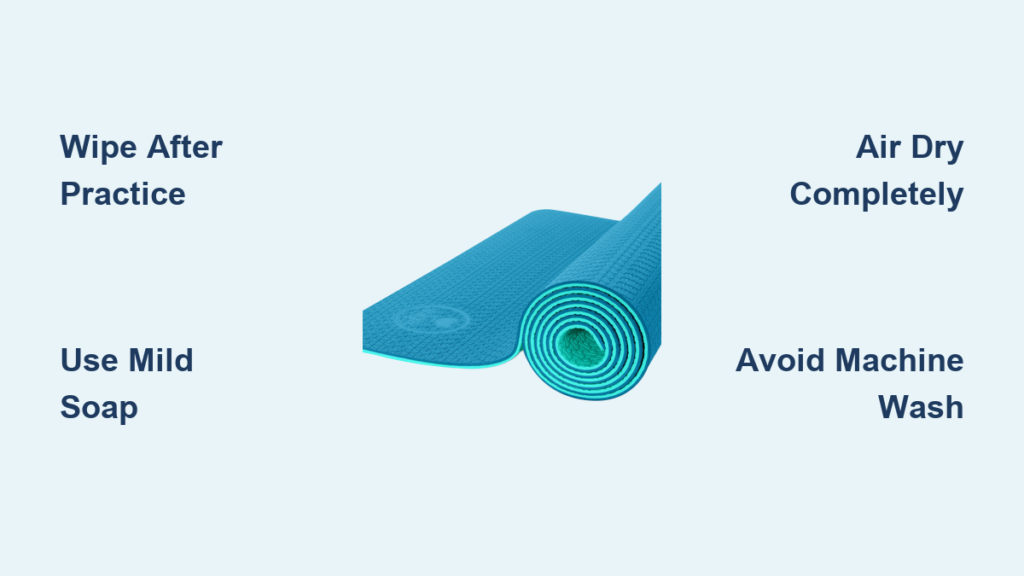
Spending just 90 seconds after each session prevents most buildup problems before they start. The key is cleaning while your mat is still warm from your practice, as heat opens the material’s pores, making it easier to remove contaminants.
Quick Wipe-Down Method for IUGA Mats
- Mix 1 cup of water with 2-3 drops of mild dish soap (like Seventh Generation Free & Clear) in a spray bottle
- Lightly mist the entire mat surface—never saturate, as excess moisture penetrates deep into the material
- Wipe in straight lines from top to bottom using a microfiber cloth (circular motions spread contaminants)
- Pay special attention to high-contact areas: the space beneath your hands, feet, and any sweat-prone zones
- Hang your mat to air dry completely before rolling—this prevents trapped moisture that causes odors
Alternative No-Water Cleaning for Travel Days
When you’re at the studio without cleaning supplies, flip your mat so the bottom side faces up for your next practice. This gives the top surface 24+ hours to air out while you use the cleaner underside. Many IUGA mats feature dual-textured surfaces specifically designed for this purpose, though you should confirm this feature applies to your specific model.
Deep Cleaning Methods for Stubborn Buildup
When daily cleaning hasn’t kept up with your practice frequency, deep cleaning restores your IUGA mat’s original performance. The method you choose depends on your mat’s material composition—check IUGA’s website for your specific model before proceeding.
Hand Washing Technique for All IUGA Mats
Fill your bathtub with lukewarm water (never hot, which can warp materials) and add 1 tablespoon of mild, fragrance-free detergent. Submerge your mat and gently press it through the water for 2-3 minutes, focusing on discolored areas. Drain the soapy water, refill with clean water, and repeat the rinsing process until water runs clear. Never twist or wring your mat—this stretches the material permanently.
Machine Washing Guidelines (Check First!)
Some thicker IUGA mats made from durable TPE can withstand machine washing, but this depends on your specific model. If manufacturer instructions permit:
– Use cold water on the gentle cycle
– Place mat inside a large mesh laundry bag
– Skip detergent—use ½ cup white vinegar instead
– Never use dryer—air dry only
Critical Warning: Most IUGA cork and natural rubber mats absolutely cannot be machine washed. Always verify your specific model’s care instructions before attempting this method.
Eliminating Odors Without Damaging Your Mat

Persistent smells indicate bacteria have penetrated beyond the surface. Standard cleaning won’t solve this problem—you need targeted odor elimination that preserves your mat’s integrity.
Baking Soda Deep Treatment
Sprinkle food-grade baking soda liberally across your entire mat surface, then lightly mist with water until damp (not wet). Let sit for 30 minutes, then wipe clean with a damp cloth. The baking soda neutralizes odors at the molecular level rather than masking them. For severe cases, leave the baking soda overnight before vacuuming with a brush attachment.
Natural Disinfecting Spray Recipe
Combine in a spray bottle:
– 1 cup distilled water
– ¼ cup white vinegar
– 10 drops tea tree oil (natural antimicrobial)
– 5 drops lavender essential oil (optional for fragrance)
Shake well before each use. Mist lightly on mat surface and wipe with microfiber cloth. Never use undiluted essential oils—they can degrade IUGA’s specialized surface treatments and create slippery spots.
Proper Drying and Storage Techniques
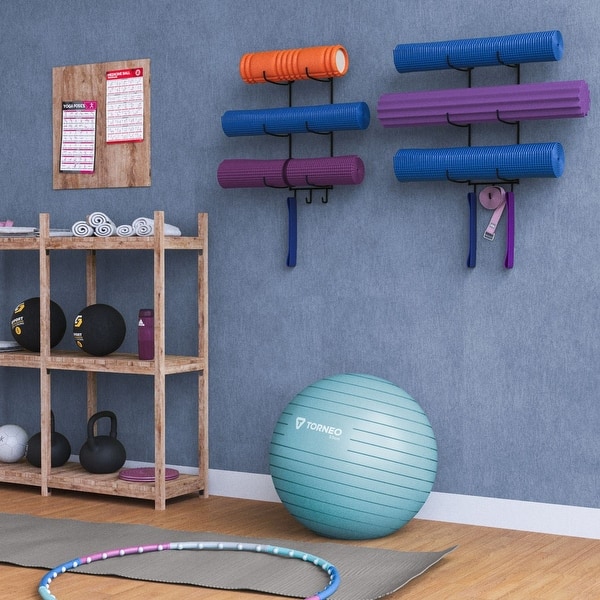
How you dry and store your mat affects its longevity more than many practitioners realize. Trapped moisture causes the most common preventable damage to yoga mats.
Air Drying Best Practices
Hang your mat over two parallel lines (like a clothesline) to prevent creasing. If hanging isn’t possible, lay flat on a clean towel in a well-ventilated area away from direct sunlight. Flip after 30 minutes to ensure both sides dry completely. Most IUGA mats require 2-4 hours to dry fully—never roll up a damp mat.
Long-Term Storage Solutions
Store your completely dry mat loosely rolled with the top side facing outward. Avoid tight rubber bands—use a fabric strap instead. Keep in a breathable cotton bag rather than plastic, which traps residual moisture. For extended storage (over 30 days), place silica gel packets inside the storage bag to prevent humidity damage.
When to Replace vs. When to Keep Cleaning
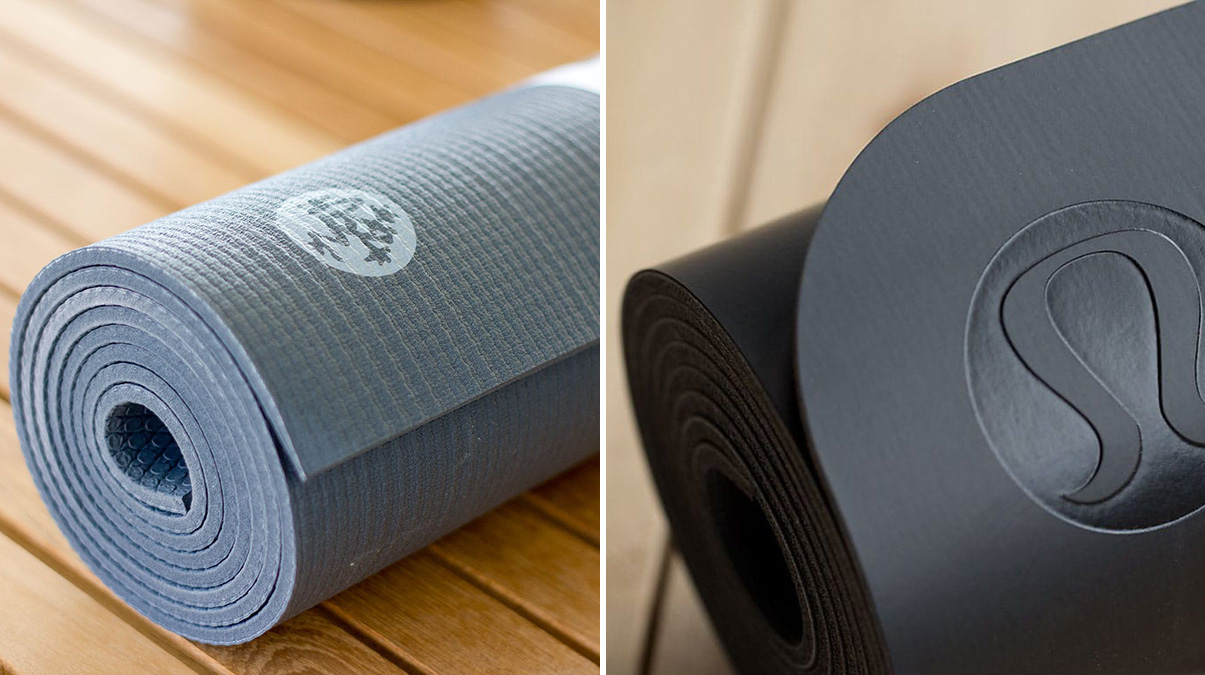
Even with perfect care, yoga mats eventually reach the end of their lifespan. Knowing when cleaning can’t fix the problem saves you time and frustration.
Irreversible Damage Signs
Replace your IUGA mat immediately if you notice:
– Permanent discoloration that won’t lift with deep cleaning
– Thinning areas where cushioning has compressed permanently
– Cracks or tears in the surface material
– Persistent odors after multiple deep cleanings
Expected Lifespan by Practice Frequency
- Daily practice: 12-18 months with proper care
- 3-5 times weekly: 18-24 months
- 1-2 times weekly: 2-3 years
Most IUGA mats fall within these ranges depending on your body chemistry and practice intensity. When in doubt, consult IUGA’s customer service with photos of your mat—they often provide specific guidance based on your model.
Important Note: While these cleaning methods work for most IUGA yoga mats, specific care instructions vary across their product line. IUGA’s Flow, Harmony, and Cork series each have slightly different material compositions requiring tailored maintenance. Always check IUGA’s official care instructions for your specific mat model on their website before attempting deep cleaning methods. When manufacturer instructions differ from this guide, follow IUGA’s recommendations to preserve your mat’s performance and warranty coverage. Proper cleaning extends your mat’s life, but using inappropriate methods for your specific IUGA model could cause irreversible damage.