Rolling your yoga mat properly is far more than a simple cleanup task—it’s an essential practice that directly impacts your mat’s performance, longevity, and your overall yoga experience. Many practitioners unknowingly damage their mats through improper rolling techniques, leading to frustrating issues like permanent creases, curling edges, and reduced grip during practice. Knowing how to roll a yoga mat correctly ensures you protect your investment while maintaining optimal performance for every session. This guide delivers actionable techniques backed by years of collective yoga community wisdom, helping you master the perfect roll every time.
A poorly rolled mat doesn’t just look messy—it compromises your practice in subtle but significant ways. Mats stored incorrectly develop memory creases that create uneven surfaces, potentially affecting your alignment and balance in poses. Trapped moisture from rolling a damp mat can breed bacteria and cause unpleasant odors, while excessive tightness during rolling can permanently damage the mat’s cellular structure. By learning proper rolling techniques, you’ll extend your mat’s usable life by years, maintain consistent grip and cushioning, and keep your practice space organized and inviting.
Prepare Your Mat Before Rolling
Before initiating the rolling process, invest thirty seconds in proper mat preparation—this small step prevents long-term damage and ensures a clean, tight roll. Lay your mat completely flat on a clean surface with the top side facing upward (if your mat has a designated top). Run your palms firmly from the center toward the edges to eliminate any wrinkles or air pockets that would create bulges in your final roll. This smoothing action should feel deliberate, almost like ironing out invisible creases in fabric.
Inspect your mat for moisture, sweat, or debris that could become trapped when rolled. If you notice any dampness, resist the urge to roll immediately—instead, drape your mat over a drying rack or hang it vertically for 15-30 minutes until completely dry to the touch. For routine maintenance, wipe your mat with a solution of one part vinegar to three parts water using a microfiber cloth, focusing on high-contact areas like where your hands and feet rest. Avoid soaking the mat, as excessive moisture weakens the material over time.
Pay attention to your specific mat’s characteristics before rolling. Thicker mats (6mm and above) require more deliberate pressure during rolling to prevent air pockets, while ultra-thin travel mats (3mm or less) need gentler handling to avoid creating sharp creases. If your mat has a textured surface for grip, roll it with the textured side inward to preserve the pattern’s integrity. Recognizing these subtle differences in your particular mat transforms rolling from a chore into a mindful ritual that honors your practice equipment.
Master the Basic Rolling Technique
The foundation of proper mat rolling begins with creating a clean starting edge that prevents unraveling. Stand at one end of your mat with your feet positioned shoulder-width apart for stability. Using both hands, fold the top two inches of the mat back toward you to form a small lip—this creates your anchor point and adds structural integrity to the roll. Keep your fingers spread wide across the mat’s width to ensure even tension across the entire surface.
Begin rolling by placing your palms flat on the mat approximately shoulder-distance apart and using your body weight to guide the material toward you in a single, fluid motion. Apply consistent downward pressure as you roll, maintaining contact with the mat’s surface to eliminate air pockets. Your hands should move in a synchronized pattern: as your front hand reaches the edge of the roll, your back hand takes its position, creating a continuous rolling action without stopping. Imagine you’re rolling up a poster for mailing—too loose and it won’t stay rolled, too tight and it might crease.
Monitor the alignment of both edges as you roll, ensuring they remain parallel to prevent a conical shape. If the roll begins drifting to one side, pause and adjust your hand position inward toward the centerline before continuing. For standard 68-inch mats, complete the roll in 8-10 smooth rotations, maintaining consistent tension throughout. The finished roll should feel firm but not rigid when gently squeezed, with clean, straight edges that show no signs of twisting or buckling.
Choose Your Rolling Direction Strategically

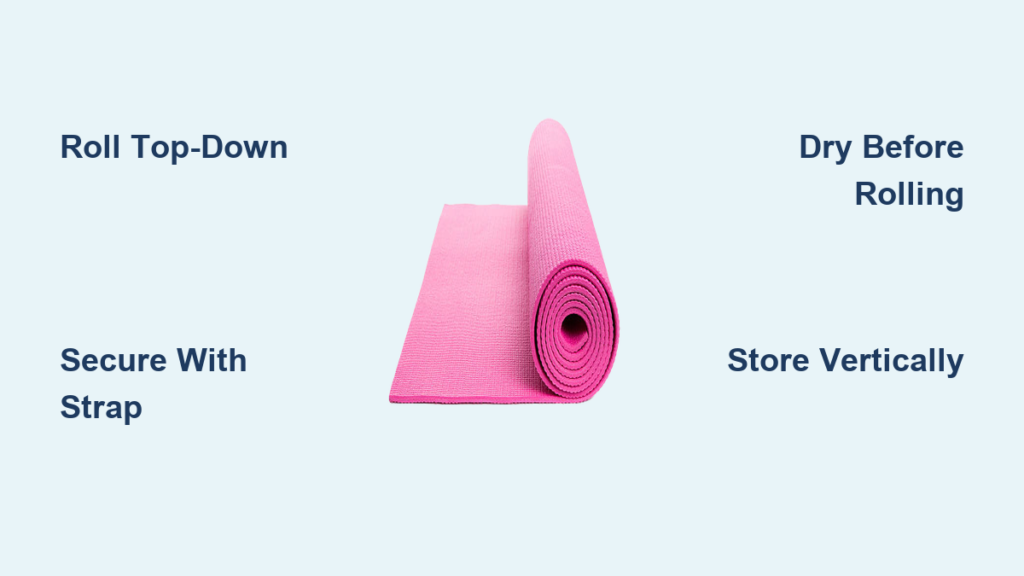
The direction you choose for rolling significantly impacts how well your mat stays rolled and maintains its shape over time. Top-down rolling (starting from the head end of your mat) works with the natural curvature that develops during practice, creating a tighter, more stable roll for most practitioners. This method typically produces cleaner edge alignment because the mat’s surface naturally follows the rolling motion rather than fighting against it.
Bottom-up rolling (starting from the foot end) may feel more intuitive for some practitioners, particularly those who unroll their mats from the bottom when setting up for practice. Certain high-end mats with specialized grip patterns may actually perform better with bottom-up rolling, as the manufacturer designed the surface texture to maintain integrity when rolled in this direction. The best approach is to test both methods with your specific mat—roll it each way and observe which method produces a tighter roll that stays secured longer without slipping.
Consider your storage method when choosing a rolling direction. If you store your mat vertically in a corner or stand, top-down rolling often creates a more stable base that won’t wobble. For travel situations where you’ll be placing your mat in a bag, bottom-up rolling might create a more secure end that won’t unravel when jostled. Pay attention to how your particular mat responds to different rolling directions and adjust your technique accordingly—your mat will tell you what works best through its behavior over time.
Secure Your Rolled Mat Effectively
Proper securing transforms a loosely rolled mat into a compact, transport-ready package that maintains its shape for days or weeks. If your mat came with a strap, position it approximately one-third of the distance from each end rather than at the exact center—this creates balanced tension that prevents the roll from bowing outward. Adjust the strap tightness so the roll feels firm but doesn’t show visible indentations in the material, which could create permanent compression marks over time.
For mats without straps, consider these three effective alternatives:
– Elastic loop straps: These stretchy bands slide over the ends of your roll and provide consistent tension without slipping
– Adjustable buckle straps: Offer precise tension control and work well for thicker or heavier mats
– DIY solutions: A simple hair tie or rubber band can work in a pinch, but monitor regularly as these can degrade and break
When securing your mat, always check that the strap lies flat against the roll without twisting, as twisted straps create uneven pressure points. For extended storage, add a second strap at the opposite third point to provide additional stability. Before placing your mat in storage, give the roll a gentle shake—if it maintains its shape without unraveling, your securing technique is effective. Mats that consistently slip free of their straps may need replacement or could benefit from rolling in the opposite direction to improve tension retention.
Implement Proper Storage Solutions
Where and how you store your rolled mat determines its long-term structural integrity and performance. Vertical storage in a cool, dry corner protects against flat spots that develop when mats remain horizontal for extended periods. This position allows air circulation around the entire roll, preventing moisture buildup that can occur when mats are stored against walls or in confined spaces. If vertical storage isn’t possible, place your rolled mat on a shelf with at least two inches of clearance on all sides to maintain airflow.
For frequent travelers, invest in a ventilated yoga mat bag with mesh panels that allow moisture to escape while protecting your mat from dirt and abrasion. Avoid non-breathable bags made of vinyl or thick nylon that trap humidity, as these create a breeding ground for bacteria and mold. When packing your bag, position the mat strap facing outward for quick identification and access—this small organizational detail saves time when you’re rushing to class.
Never store your mat in a car trunk or other location with extreme temperature fluctuations, as heat causes materials to break down while cold temperatures make them brittle. If you must store your mat horizontally, place it on a shelf with no weight on top and rotate its position monthly to prevent consistent pressure on the same section. Most importantly, never store a damp mat—always allow it to air dry completely for at least 30 minutes after cleaning or use to prevent microbial growth that can permanently damage the material.
Troubleshoot Common Rolling Problems

When your mat stubbornly unrolls despite proper technique, address the root cause rather than applying increasingly tighter straps. If your mat has become too soft from frequent use or exposure to heat, store it in a cooler location for 24-48 hours to temporarily restore some firmness. For persistent unraveling, create a secondary securing point by wrapping an additional strap or band one-third of the way from each end—this distributes tension more effectively than a single central strap.
Curling edges represent one of the most common mat issues and often respond well to strategic rolling adjustments. Roll your mat in the opposite direction from your usual method for three consecutive sessions, applying slightly more tension to the curled edges as you roll. After unrolling for practice, place heavy books along the problem edges and leave them for several hours to encourage the material to relax into a flat position. For severe curling, lay your mat in direct sunlight for 10-15 minutes (avoiding intense midday sun) to gently warm and soften the material before reshaping.
Creases that form along common folding lines typically indicate improper storage habits rather than material defects. Rotate your mat 180 degrees each time you unroll it for practice to distribute wear patterns evenly across the surface. When storing, vary the position of your securing strap by moving it slightly up or down the roll each time—this prevents consistent pressure on the same section of material. For existing creases, roll your mat tightly in the opposite direction of the crease formation and secure it for 24 hours, repeating the process if necessary until the crease diminishes.
Maintain Your Mat for Longevity

Incorporate these three maintenance practices into your routine to extend your mat’s life significantly. Clean your mat after every third practice session using a solution of one teaspoon of mild dish soap in two cups of water, focusing on high-contact areas. Rinse thoroughly with a damp cloth to remove all soap residue, which can degrade the material over time. Deep clean monthly by laying your mat flat and sprinkling it with baking soda, letting it sit for 15 minutes before wiping clean—this neutralizes odors without harsh chemicals.
Regularly inspect your mat for thinning areas, particularly where your hands and feet consistently rest during practice. When you notice significant wear (visible through-thickness or loss of grip), rotate your mat 180 degrees for subsequent practices to distribute wear more evenly. For intensive practitioners, consider implementing a two-mat rotation system—using one mat while the other fully dries and recovers between sessions significantly extends both mats’ lifespans.
Store your mat away from direct sunlight even when properly rolled, as UV exposure degrades most mat materials over time. Keep it in a closet or cabinet rather than against an exterior wall where temperature fluctuations occur. Every few months, unroll your mat completely and let it lie flat for 24 hours to allow the material to “breathe” and reset its memory—this simple practice prevents permanent compression and maintains optimal cushioning for your practice.