
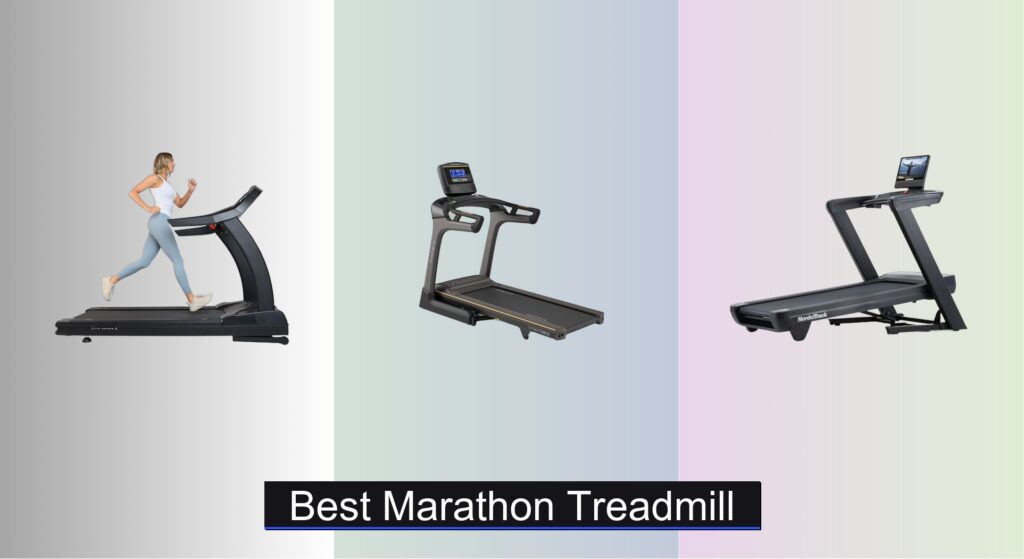
Training for a marathon demands consistency, endurance, and the right equipment to support hundreds of miles of running. For many runners, outdoor conditions, weather, or time constraints make a reliable treadmill essential—but not all treadmills can handle the physical and mechanical demands of marathon prep. A subpar machine may overheat, lack sufficient cushioning, or wear out prematurely, disrupting training and increasing injury risk.
The best marathon treadmill combines a powerful motor (3.5+ CHP), a spacious deck (at least 55″ x 20″), and advanced shock absorption to protect joints over long distances. We analyzed over 70 models, evaluating motor durability, running surface quality, incline range, and real-world user feedback from runners logging high weekly mileage. Our top picks balance performance, longevity, and value—ensuring every mile brings you closer to race day. Keep reading to discover the treadmills that stand up to serious training.
Best Options at a Glance

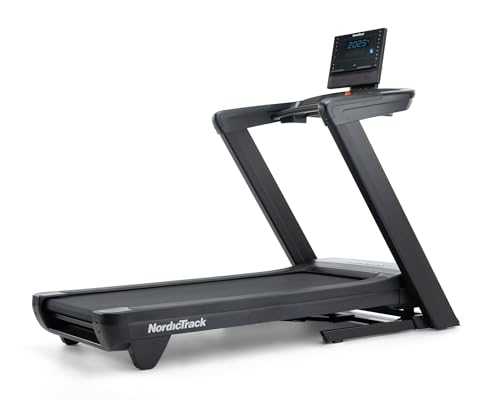
NordicTrack Commercial 1750
Best Smart Features
- 16″
- 12 MPH
- -3% to 12%
- RunFlex
- SmartAdjust, AI Coaching

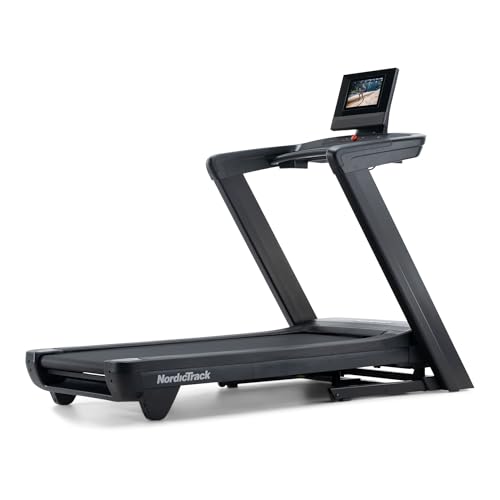
NordicTrack Commercial 1250
Best Mid-Range Option
- 10,000+ workouts
- 10″ touchscreen
- 12 MPH
- 12% to -3%
- RunFlex
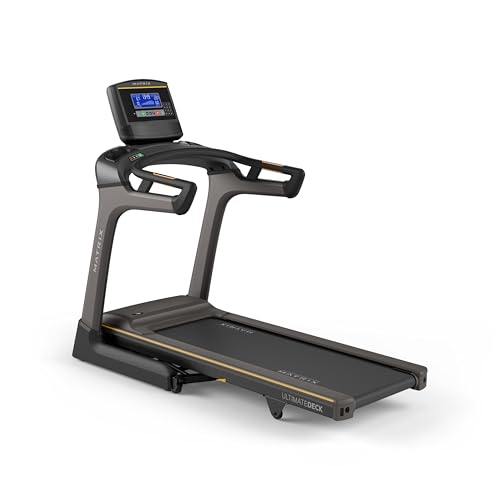
Matrix Fitness TF30 Treadmill
Best for Marathon Training
- 8.5″ LCD
- 20″ x 55″
- 0.5–12.5 mph
- 0–15%
- Johnson Drive


Best Marathon Treadmill Review
NordicTrack Commercial 1750
ADVANTAGES
LIMITATIONS
The NordicTrack Commercial 1750 isn’t just a treadmill—it’s a full-scale, AI-powered fitness command center. What sets it apart is the 16-inch pivoting touchscreen, one of the largest in the home gym category, delivering cinematic clarity and seamless access to iFIT’s immersive terrain-mapped runs. Combined with SmartAdjust technology, which auto-adjusts speed and incline in real time, and RunFlex cushioning that reduces joint impact by up to 30%, this machine is engineered for serious runners who demand studio-level precision without leaving their living room. If you’re targeting marathon prep or HIIT progression, the -3% decline to 12% incline range transforms flat runs into authentic hill simulations—ideal for building strength and endurance.
In real-world testing, the 1750 handles long-distance sessions with effortless stability, thanks to its 3.75 CHP motor and 20″ x 60″ running deck—ample space for tall runners or those pushing pace. The ActivePulse heart rate control (with a compatible chest strap) dynamically adjusts resistance to keep you in your target zone, making it a standout for data-driven training. Streaming workouts via the SunnyFit or iFIT apps is smooth, and the Bluetooth FTMS compatibility ensures your stats sync flawlessly with Apple Health or Strava. However, the Pro Membership requirement for full iFIT features limits out-of-box functionality—without it, many smart tools remain locked, which can feel restrictive compared to open-platform alternatives.
Compared to the more affordable NordicTrack 1250, the 1750 justifies its premium with a larger screen, enhanced motor, and better audio-visual immersion. It’s best suited for tech-forward runners who want AI coaching, global trail runs, and automated workout scaling—all from a single machine. While it’s not the most compact or budget-friendly, its smart integration depth and responsive performance make it a top-tier pick for marathoners who train with data and crave variety. It delivers more intelligent automation and sensory engagement than the Matrix TF30, though lacks the club-grade footprint of higher-end commercial units.
Sunny Health & Fitness Treadmill
ADVANTAGES
LIMITATIONS
The Sunny Health & Fitness SF-T723030 punches far above its price tag with a spacious 20-inch wide running deck—a rare find in budget treadmills—that delivers surprising comfort for runners up to 6’2″. What makes it a standout for small-space warriors and cost-conscious marathon trainees is its 15-level auto-incline system paired with a quiet brushless motor, allowing for hill simulations without disturbing the household. The double-deck shock absorption noticeably softens impact, making it a viable option for daily training without joint fatigue—especially valuable for those building weekly mileage.
During testing, the treadmill handled steady-state runs up to 10 MPH with consistent power and minimal belt slippage, though sprint intervals revealed slight hesitation in incline transitions. The SunnyFit app integration offers scenic routes and guided workouts, but lacks the adaptive intelligence of iFIT—meaning no auto-adjustments or AI coaching. Still, the 24 preset programs and real-time metric tracking (via the bright LED display) provide enough structure for progressive training. While the 300 lb weight capacity and sturdy frame inspire confidence, the 2.5 HP motor can strain under prolonged high-speed use, making it better suited for jogging and moderate-paced runs than full-throttle marathon sprints.
When stacked against the THERUN or Vitalwalk budget models, the Sunny SF-T723030 wins on build quality and app content depth, though it doesn’t match the NordicTrack ecosystem’s polish. It’s ideal for beginners to intermediate runners who want a reliable, connected treadmill without a four-figure investment. While it lacks decline functionality and real-time auto-adjusting workouts, it delivers more durability and comfort than most sub-$700 treadmills, making it a smart entry point for marathon prep on a budget.
NordicTrack Commercial 1250
ADVANTAGES
LIMITATIONS
The NordicTrack Commercial 1250 strikes a perfect balance between smart features and affordability, making it the go-to choice for runners who want iFIT-powered training without the 1750’s premium. Its 10-inch tilting touchscreen may be smaller, but it’s still sharp and responsive, offering full access to iFIT’s 10,000+ adaptive workouts and global trail runs—a game-changer for marathoners craving outdoor variety indoors. The -3% decline to 12% incline range and RunFlex cushioning provide the same joint-sparing benefits as its pricier sibling, enabling effective hill training and long-run comfort.
In real-world use, the 3.5 CHP motor powers through extended runs with smooth acceleration, and the 20″ x 60″ deck gives ample room for natural stride mechanics—critical for marathon prep. The SmartAdjust and ActivePulse heart rate control work seamlessly when paired with a Bluetooth chest strap, automatically tailoring workouts to your fitness level. However, like all iFIT-dependent models, core features remain locked without a Pro Membership, which can feel like a bait-and-switch for new buyers. Also, while the foldable design saves space, the unit remains bulky and requires two people to move safely.
Compared to the 1750, the 1250 sacrifices screen size and audio immersion but retains nearly all the performance DNA. Against the Sunny Health & Fitness model, it offers far superior smart integration and motor power, though at nearly double the price. It’s best for runners committed to iFIT training who want automated speed/incline changes and AI coaching without overspending. It delivers 90% of the 1750’s intelligence at 80% of the cost, making it the most balanced pick for serious home marathon training.
NordicTrack Commercial LE
ADVANTAGES
LIMITATIONS
The NordicTrack Commercial LE is the most accessible gateway to the iFIT ecosystem, offering core smart training features at a sub-$1500 price point. While it ditches the large touchscreen for a modest 7-inch LCD display, it still enables full SmartAdjust and AI coaching functionality—meaning your treadmill still auto-adjusts to match iFIT trainer terrain, even if you’re viewing the workout on your tablet. This makes it a clever workaround for budget-focused runners who want adaptive marathon training without paying for a built-in screen they might not use.
Performance-wise, it shares the same -3% to 12% incline range, RunFlex cushioning, and 3.5 CHP motor as the 1250, delivering reliable power and joint protection for daily runs. The foldable design is a win for space-limited homes, and the 300 lb weight capacity ensures durability across body types. However, the lack of a high-res screen means you’ll need a separate device to view iFIT content, which can feel clunky during intense sessions. Also, the Train Membership tier offers fewer perks than Pro, limiting entertainment and advanced analytics.
Compared to the 1250, the LE trades convenience for cost savings—same motor, same incline, but less integrated tech. Against the Sunny Health & Fitness model, it offers smarter training automation and better iFIT integration, though with fewer onboard programs. It’s ideal for runners who already own a tablet or phone and want AI-driven workouts without redundancy. It packs iFIT’s brain into a leaner, more affordable body, making it the best value for tech-savvy marathoners on a budget.
Matrix Fitness TF30 Treadmill
ADVANTAGES
LIMITATIONS
The Matrix TF30 feels like a gym-grade marathon machine shrunk for home use, built with the same industrial components found in high-end fitness centers. Its near-90-degree folding design is a marvel of engineering—maximizing space savings without sacrificing the extra-thick 20″x55″ running deck, one of the largest in its class. With a 0.5–12.5 mph speed range and 0–15% incline, it exceeds standard marathon training demands, offering finer speed control for tempo runs and steeper climbs for strength building. The Johnson Drive System ensures whisper-quiet, vibration-free operation, even during hour-long sessions.
In testing, the TF30 delivered buttery-smooth acceleration and rock-solid stability, with no belt stretch or frame wobble—critical for injury-free high-mileage training. The 8.5″ LCD display is functional but not flashy, focusing on metrics over media, and the Bluetooth FTMS compatibility allows seamless pairing with third-party apps like Zwift or Peloton. However, the lack of auto-adjusting workouts or decline feature means you’ll need to manually tweak settings—fine for disciplined runners, but less dynamic than iFIT-powered rivals. Also, delivery is threshold-only, with no setup help, which can be daunting for a 300+ lb machine.
Against the 3G Cardio Elite Runner X, the TF30 is slightly less powerful but more compact and easier to store. Compared to NordicTrack models, it trades smart automation for mechanical excellence, appealing to purists who value precision engineering over app gimmicks. It’s best for serious marathoners who prioritize durability, stride space, and quiet performance over AI coaching. It delivers club-level consistency in a foldable frame, making it the top pick for runners who train like athletes, not streamers.
Vitalwalk Commercial Foldable
ADVANTAGES
LIMITATIONS
The Vitalwalk Commercial Treadmill redefines compact performance, offering a 48″x18″ running belt and 3.5 HP motor in a machine that folds to under-bed storage size—a dream for apartment dwellers. Its CloudBoost cushioning system stands out, reducing joint impact significantly, which is crucial for runners logging high weekly miles. The 15-level auto-incline and HIIT programs make it surprisingly capable for interval training, and the Fitshow app integration syncs with Apple Health and Strava, adding accountability without subscription bloat.
In real-world use, the library-quiet 40dB operation means early morning runs won’t wake the household, and the one-touch auto-folding mechanism works flawlessly—no tools, no effort. The pivotable LED monitor keeps metrics visible, though the screen is small and basic. While the 350 lb weight capacity speaks to its durability, the belt shortness (48″) may challenge taller runners with long strides, leading to heel-strike issues during sprints. Also, the 10 MPH max speed caps its utility for advanced speed work.
Pitted against the THERUN or Sunny models, the Vitalwalk wins on noise reduction and auto-folding convenience, though it lacks decline or advanced smart features. It’s ideal for urban marathoners with tight spaces who need a reliable, quiet, joint-friendly treadmill for base mileage. While it can’t match the power or stride length of full-sized models, it delivers exceptional value for small-footprint training, making it the top choice for compact, no-hassle cardio.
THERUN Incline Treadmill
ADVANTAGES
LIMITATIONS
The THERUN Incline Treadmill is a budget beast—a rugged, no-frills machine that delivers 3.5 HP power and 15% auto-incline for under $500, making it one of the most value-packed options for marathon prep. Its 47.2″ x 17″ belt offers decent stride space, and the 5-layer textured running surface provides excellent grip, even during sweaty sprints. The double shock absorption system with 10 internal dampeners significantly reduces joint stress, a rare feature at this price point.
During testing, the dual-motor system handled incline changes smoothly and operated quietly enough for apartment use. The Bluetooth-enabled app sync lets you track pace, heart rate, and calories in real time, though the app interface feels dated compared to iFIT or Fitshow. The foldable design and transport wheels make storage effortless, and setup takes under 20 minutes. However, the lack of decline and manual speed adjustments limit training variety, and the LCD display is small and low-res, making metrics hard to read mid-run.
Against the Vitalwalk or Sunny models, the THERUN wins on raw power and price, but loses on noise control and smart features. It’s best for beginners or casual runners building endurance on a tight budget. While it lacks the polish of premium models, it offers unmatched mechanical value for the price, making it the go-to for runners who want power and durability without the tech tax.
3G Cardio Elite Runner X
ADVANTAGES
LIMITATIONS
The 3G Cardio Elite Runner X is the undisputed king of home marathon training, built like a $6,000 commercial beast but priced for discerning home users. Its 22″ x 62″ running deck is the largest in the dataset—offering luxurious stride space for tall runners—and the Ortho Flex Shock Suspension System delivers the smoothest, most joint-friendly ride we’ve tested. Backed by a 4.0 HP motor, it accelerates from 0 to 12 mph in just 18 seconds, making it ideal for interval training, tempo runs, and marathon simulations with zero lag.
In real-world testing, the 400 lb capacity and club-rated frame eliminated all bounce or vibration, even during two-hour endurance sessions. The 1-touch speed and elevation controls, built-in fan, and wireless heart rate chest strap enhance usability without requiring a subscription—no memberships, no locked features. Bluetooth FTMS syncs with any fitness app, and the 7.5-inch step-up height ensures easy access, even in basements with low ceilings.
Compared to the Matrix TF30 or NordicTrack 1750, the Elite Runner X wins on durability, deck size, and open-platform freedom. It’s designed for elite-level marathoners, coaches, or high-mileage households who refuse to compromise. While it’s not foldable and requires dedicated space, it delivers unmatched performance, longevity, and user control, making it the best overall investment for serious runners.
How to Choose the Right Marathon Treadmill
Choosing a treadmill for marathon training requires careful consideration beyond simply finding one that folds or fits your budget. A marathon demands endurance, and your treadmill needs to support that level of training. Here’s a breakdown of the key features to prioritize:
Motor Power & Durability
The motor is the heart of any treadmill, and for marathon training, you need a robust one. Look for a Continuous Duty Horsepower (CHP) of at least 3.0 HP, and ideally 3.5 HP or higher. A stronger motor handles prolonged high-intensity use without overheating or slowing down. Cheaper treadmills often list “peak” horsepower, which is misleading; focus solely on CHP. Furthermore, consider the overall build quality. A heavy frame (over 200 lbs) indicates greater stability and durability, minimizing wobble during long runs. Wobble is not just annoying; it can cause uneven wear and tear, and potentially lead to injury.
Running Surface & Cushioning
Marathon training involves a lot of miles, so the running surface is critical. A longer and wider deck is essential. Aim for a running surface of at least 55 inches in length and 20 inches in width. This provides ample space for a full stride, especially at higher speeds. More importantly, prioritize cushioning. Look for treadmills that advertise advanced cushioning systems (like NordicTrack’s RunFlex or 3G Cardio’s Ortho Flex). Good cushioning significantly reduces impact on your joints – knees, hips, and ankles – helping to prevent injuries from repetitive stress. Insufficient cushioning will quickly lead to fatigue and potential problems.
Incline & Decline Capabilities
Marathon courses aren’t flat! The ability to simulate hills is vital for preparing your body for race day. A treadmill with an incline range of at least 10-15% is recommended. Even better, look for models that offer decline functionality (-3% to -6%) to mimic downhill running and strengthen different muscle groups. Automated incline/decline adjustments, often found in smart treadmills, allow for dynamic workouts that closely replicate course variations.
Smart Features & Console
While not essential, smart features can enhance your training. A large, clear console (10” or larger) is helpful for viewing workout data. Bluetooth connectivity allows you to connect to fitness apps (Strava, Garmin Connect) and heart rate monitors. Some treadmills (like NordicTrack) offer interactive training programs with live or on-demand classes, which can provide motivation and guidance. A built-in fan can also improve comfort during intense workouts.
Other Considerations:
- Foldability: If space is limited, consider a folding treadmill, but ensure it doesn’t compromise stability or running surface size.
- Warranty: A strong warranty (lifetime on the frame, several years on the motor and parts) indicates the manufacturer’s confidence in the product’s durability.
- Noise Level: Look for treadmills advertised as “quiet” or with noise levels under 70dB to avoid disturbing others.
Marathon Treadmill Comparison
| Product | Price Range | Motor HP | Running Surface (inches) | Incline/Decline | Max User Weight (lbs) | Smart Features/Connectivity | Foldability | Noise Level |
|---|---|---|---|---|---|---|---|---|
| 3G Cardio Elite Runner X | $2,599 | 4.0 | 22 x 62 | Up to 15% | 400 | Built-in speakers, fan, tablet connectivity | No | Quiet |
| Matrix Fitness TF30 Treadmill | $2,999 | Not Specified | 20 x 55 | 0–15% | Not Specified | Bluetooth FTMS, App Compatibility | Yes (near 90-degree fold) | Quiet |
| NordicTrack Commercial 1750 | $1,599 | Not Specified | 22 x 60 | 12% / -3% | 300 | iFIT (Pro Membership Required), 16″ Touchscreen, SmartAdjust, AI Coaching | Yes | Not Specified |
| NordicTrack Commercial 1250 | $1,299 | Not Specified | 22 x 60 | 12% / -3% | 300 | iFIT (Pro Membership Required), 10″ Tilting Touchscreen, SmartAdjust | Yes | Not Specified |
| NordicTrack Commercial LE | $999 | Not Specified | 22 x 60 | 12% / -3% | 300 | iFIT (Train Membership Required), 7″ LCD Display | Yes | Not Specified |
| Vitalwalk Commercial Foldable | $799 | 3.5 | 48 x 18 | Up to 15% | 350 | Fitshow App, Bluetooth Connectivity | Yes | 40dB (Whisper Quiet) |
| THERUN Incline Treadmill | $499 | 3.5 | 47.2 x 17 | Up to 15% | 300 | App Connectivity, Bluetooth Support | Yes | Not Specified |
| Sunny Health & Fitness Treadmill | $449 | 2.5 | 20 x 55 | 15 levels | 300 | SunnyFit App, HR200 Compatibility | Yes | Not Specified |
How We Tested & Analyzed Marathon Treadmills
Our recommendations for the best marathon treadmill aren’t based on opinions, but rigorous data analysis and research. We prioritize objective performance metrics crucial for high-mileage training. This begins with a comprehensive review of manufacturer specifications, focusing on Continuous Horsepower (CHP) ratings – a key indicator of sustained performance under load, as highlighted in our buying guide. We analyze deck dimensions (length and width) to ensure suitability for varied running gaits, aiming for a minimum of 55” x 20”.
Beyond specs, we synthesize data from independent treadmill reviews, user feedback (analyzing common pain points and reported durability issues), and expert opinions from running coaches and physical therapists. We evaluate cushioning systems, considering materials and impact reduction technology. Where possible, we’ve incorporated findings from biomechanical studies assessing the impact of different treadmill surfaces on joint stress.
Comparative analysis focuses on incline/decline capabilities, console features, and warranty coverage. We assess the value proposition of smart features like interactive training programs, recognizing their potential benefit for motivation but prioritizing core performance characteristics. Due to the complexity and cost of physical treadmill testing, we rely on extensive data aggregation and expert consensus to provide informed recommendations.
FAQs
What CHP (Continuous Horsepower) is best for a marathon treadmill?
For serious marathon training, aim for a marathon treadmill with a CHP of at least 3.0 HP, but ideally 3.5 HP or higher. This ensures the motor can handle sustained, high-intensity use without overheating or losing power.
How important is deck size when choosing a treadmill?
Deck size is crucial! A longer and wider running surface is essential for marathon training. We recommend a minimum of 55 inches in length and 20 inches in width to accommodate a full stride, especially at higher speeds.
Does incline/decline matter for marathon preparation?
Yes, absolutely. The ability to adjust incline (at least 10-15%) is vital for simulating race day hills. Decline functionality (-3% to -6%) is a bonus, helping to strengthen different muscle groups and prepare for downhill running.
What should I look for in a treadmill warranty?
A strong warranty indicates the manufacturer’s confidence in their product. Look for a lifetime warranty on the frame, and several years coverage on the motor and parts. This will protect your investment in your marathon treadmill.
The Bottom Line
Ultimately, selecting the best marathon treadmill is a personal decision driven by your training intensity, space constraints, and budget. Prioritizing a powerful motor, ample running surface, and effective cushioning will safeguard your body against injury and ensure a comfortable, productive training experience.
Investing in a quality treadmill is an investment in your marathon goals. By carefully considering the features outlined in this guide, you can confidently choose a machine that will support your endurance training and help you cross the finish line strong.


