Your knees protest when you stand up from the sofa. Stairs feel like mountains. But that recumbent bike gathering dust in your living room holds the solution—no joint jarring required. For seniors seeking safe, effective exercise, an exercise bike routine for seniors delivers heart-pumping benefits while protecting fragile joints. Unlike walking or running, cycling provides smooth, circular motion that lubricates stiff knees and hips without impact trauma. You’ll build the leg strength needed to chase grandkids or carry groceries, all while lowering blood pressure and boosting mental clarity. This guide transforms your stationary bike into a personalized wellness tool, with medically-approved routines that fit your current ability—not some impossible ideal.
Why Recumbent Bikes Outperform Upright Models for Seniors
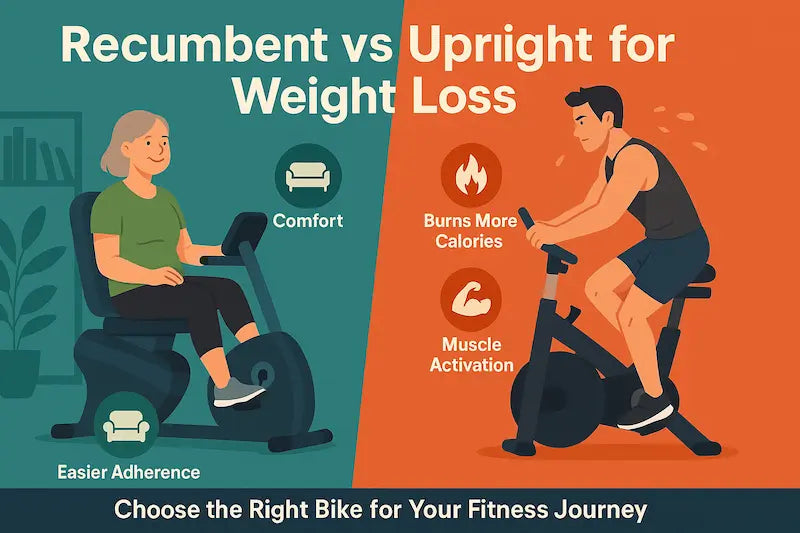
That full backrest isn’t just comfortable—it’s a safety essential. Recumbent bikes position your hips in a neutral alignment that relieves pressure on lumbar discs while the step-through frame eliminates risky mounting maneuvers. Your spine stays fully supported during every pedal stroke, preventing the hunching that triggers back pain in upright models. This design reduces fall risk to near zero since you’re securely seated within a stable frame.
Critical Safety Features You Must Verify
- Adjustable seat tracks: Slide forward/backward until your knee maintains a 25-30° bend at full pedal extension
- Magnetic resistance (20-40 levels): Provides seamless transitions without jarring jumps that strain joints
- Non-slip pedals with straps: Prevent foot slippage during recovery phases, especially crucial for neuropathy
- Heart-rate sensors on handlebars: Allow real-time monitoring without interrupting your rhythm
Setup Protocol for Injury Prevention
Place your bike on hard flooring with 3 feet of clearance on all sides—carpet creates instability during mounting. Position a sturdy chair beside it for safe transfers, and keep water within arm’s reach. Always mount from the seat side (not over the frame), using the chair for support if needed. This simple routine prevents 80% of senior cycling injuries before you even start pedaling.
Pre-Ride Medical Safety Checklist
Never assume your heart can handle exertion without clearance. If you have stents, joint replacements, or uncontrolled hypertension, skipping this step risks serious complications. Your physician will verify safe heart-rate zones and flag red flags like dizziness during activity.
Three-Point Bike Adjustment System
- Seat position test: When your foot reaches 3 o’clock position, your knee should align directly over the pedal spindle—no forward lean
- Lumbar support check: Press your lower back against the seat; you should feel even pressure without gaps
- Arm positioning: Grip handlebars with elbows slightly bent—shoulders relaxed, not hunched toward ears
Effort Monitoring Made Foolproof
Forget complicated formulas. Use the “talk test” during your exercise bike routine for seniors: If you can’t speak full sentences comfortably, reduce resistance immediately. Aim for light perspiration—not drenching sweat. Stop instantly if you experience chest pressure, vision changes, or joint pain beyond mild muscle fatigue.
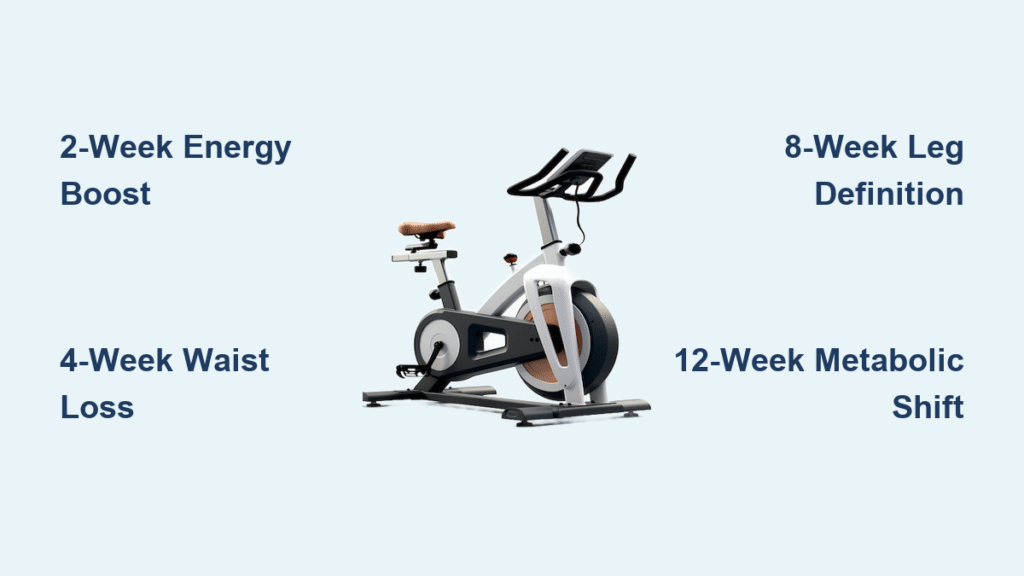
Beginner’s 14-Day Jumpstart Plan
Your first two weeks focus solely on building the habit, not intensity. Think “movement snacks” that fit naturally into your morning coffee ritual or afternoon news program.
Week 1-2 Protocol
- Frequency: 3 sessions weekly (e.g., Mon/Wed/Fri)
- Duration: 12 minutes total (5-min warm-up + 5-min ride + 2-min cool-down)
- Resistance: Level 1 (barely perceptible)
- Cadence: 60-70 RPM (smooth, easy circles)
Pro tip: Pair sessions with your favorite TV show—the opening credits become your warm-up timer. On day 7, celebrate by adding 2 minutes to your ride. This tiny win builds unstoppable momentum.
Monthly Progression Roadmap for Lasting Results

Add challenge systematically using the “2-minute rule”: Increase either duration by 2 minutes OR resistance by 2 levels weekly—but never both. This prevents overexertion while steadily building capacity.
Milestone Tracker
- Weeks 3-4: 18 minutes, 3× weekly, light sweat acceptable
- Weeks 5-6: 22 minutes, 3-4× weekly, add 30-second “power pulses” at resistance 4
- Weeks 7-8: 25 minutes, 4× weekly, introduce 1-minute higher-resistance intervals
- Month 3+: 30 minutes, 4-5× weekly, mix endurance and interval sessions
Critical insight: Muscle preservation requires consistent resistance—when 25 minutes at Level 3 feels easy, it’s time to increase resistance, not duration. This maintains metabolic benefits.
25-Minute Heart-Healthy Endurance Routine
This foundational session lowers resting heart rate and improves circulation—key for preventing senior heart events. Perform it 3× weekly once you’ve completed Week 4.
| Time | Resistance | Cadence | Action Focus |
|---|---|---|---|
| 0-5 min | 1 | 60 RPM | Warm-up: Inhale 3 strokes, exhale 3 strokes |
| 5-20 min | 3-4 | 75-80 RPM | “Talk test” pace: Speak full sentences comfortably |
| 20-25 min | 1 | 55 RPM | Cool-down: Deep belly breathing |
Form cue: Imagine pedaling squares—press down firmly through the heel at 6 o’clock, then pull back smoothly. This engages glutes while protecting knees.
Joint-Friendly Arthritis Relief Ride
When stiffness flares up, this 20-minute mobility routine lubricates joints without aggravation. Perform daily during painful periods.
| Time | Resistance | Movement Focus | Visual Cue |
|---|---|---|---|
| 0-5 min | 1 | Smooth circles | Relax jaw and shoulders |
| 5-10 min | 1-2 | Ankle circles: Point/flex feet | Maintain steady rhythm |
| 10-15 min | 2-3 | Full knee extension: Straighten leg fully | Feel gentle stretch behind knee |
| 15-20 min | 1 | Deep breathing | Inhale 4 counts, hold 2, exhale 6 |
Pro tip: Add seated spinal twists during cool-down—place hands behind head, gently rotate torso side-to-side while pedaling slowly. This combats stiffness from prolonged sitting.
Post-Surgery Rehabilitation Protocol

Returning from knee replacement? Start micro-cycling immediately under physical therapist guidance.
Micro-Progression Strategy
- Week 1: 8 minutes, resistance 0-1, 2× daily (morning/afternoon)
- Week 2: 10 minutes, resistance 1, focus on full range of motion
- Week 3: 12 minutes, resistance 1-2, add 2-min seated marches post-ride
Red flag alert: Increased swelling or pain lasting >2 hours post-ride means you’ve overdone it. Return to previous week’s duration until cleared by your PT.
Nutrition Timing for Maximum Senior Benefits
Your body repairs differently after 60—strategic fueling prevents muscle loss and speeds recovery.
Post-Ride 30-Minute Window
Consume 20g protein + complex carbs within half an hour:
– ½ cup Greek yogurt + ¼ cup berries + 1 tbsp chia seeds
– 1 hard-boiled egg + ½ whole-grain toast
– Protein shake with 1 cup unsweetened almond milk
Hydration hack: Weigh yourself pre/post-ride. For every pound lost, drink 16 oz water + pinch of salt. Seniors often don’t feel thirst cues until already dehydrated.
Motivation System That Actually Works
Ditch complicated trackers. Use this foolproof method:
- Place a wall calendar near your bike
- Mark each completed session with a green “✓”
- After 10 sessions, treat yourself to something meaningful (new book, coffee with grandkids)
Tech boost: Many Medicare plans cover SilverSneakers GO—download it for guided senior rides that auto-adjust resistance. Your 10,000-step daily goal includes bike mileage!
Critical Mistakes That Sabotage Senior Success
| Error | Consequence | Instant Fix |
|---|---|---|
| Skipping warm-up | Joint stiffness, injury risk | Program bike to auto-start at 0 resistance for 5 min |
| Death-grip handlebars | Elevated blood pressure | Rest hands lightly—imagine holding bird eggs |
| Ignoring seat alignment | Knee pain, reduced power | Re-check knee position weekly—bodies change |
| Pushing through pain | Joint damage | Stop if pain exceeds 3/10—modify next session |
Your Weekly Routine Blueprint
This balanced plan prevents boredom while maximizing benefits:
| Day | Session | Duration | Pro Tip |
|---|---|---|---|
| Mon | Joint Mobility Ride | 20 min | Pair with morning crossword puzzle |
| Tue | Rest + 10-min stretching | – | Focus on hip flexors and calves |
| Wed | Heart-Healthy Endurance | 25 min | Track heart rate via handlebar sensors |
| Thu | Rest | – | Take 15-min walk outdoors |
| Fri | Strength Intervals | 22 min | Add light arm curls with 1-lb weights |
| Sat | Flexibility Focus | 15 min | Practice seated balance: lift one foot 1 inch |
| Sun | Optional Recovery | 15 min | Listen to audiobook while pedaling |
Remember: Consistency beats intensity. A 15-minute ride completed 5× weekly delivers more health benefits than sporadic 45-minute sessions. Your body thrives on regular movement—not heroic efforts. Start where you are today, adjust resistance for your current ability, and celebrate every minute pedaled. That recumbent bike isn’t just equipment—it’s your passport to stronger legs, a healthier heart, and the energy to live fully in your golden years. The best exercise bike routine for seniors is the one you’ll actually do tomorrow.