Struggling to find a workout that doesn’t leave you sore and discouraged? An exercise bike workout for beginners delivers exactly what you need—effective fitness without joint pain or intimidation. Unlike running or high-impact exercises, stationary cycling builds cardiovascular strength while protecting your knees and joints from unnecessary stress. Whether you’re recovering from injury, managing weight, or simply new to fitness, this low-impact approach produces remarkable results without requiring gym confidence.
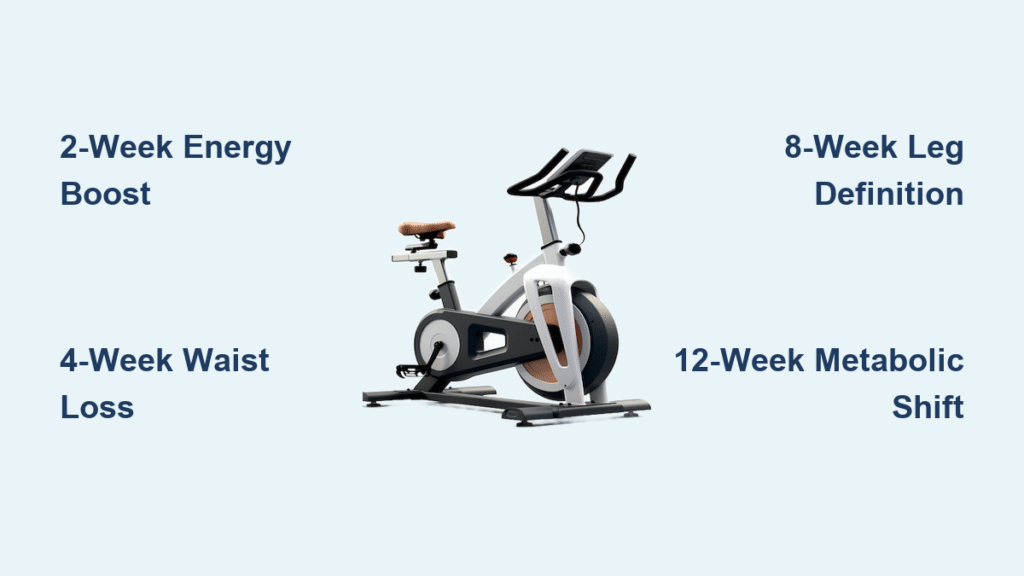
You don’t need expensive equipment or prior experience to begin. That dusty bike in your garage works perfectly for starting your exercise bike workout for beginners. Within just three consistent sessions weekly, most newcomers notice increased energy levels, improved mood, and visible lower body toning. This guide cuts through fitness confusion with a practical 4-week progression plan that adapts to your changing fitness level—no guesswork required.
Perfect Your Bike Setup Before First Pedal Stroke

Adjust Seat Height for Pain-Free Cycling
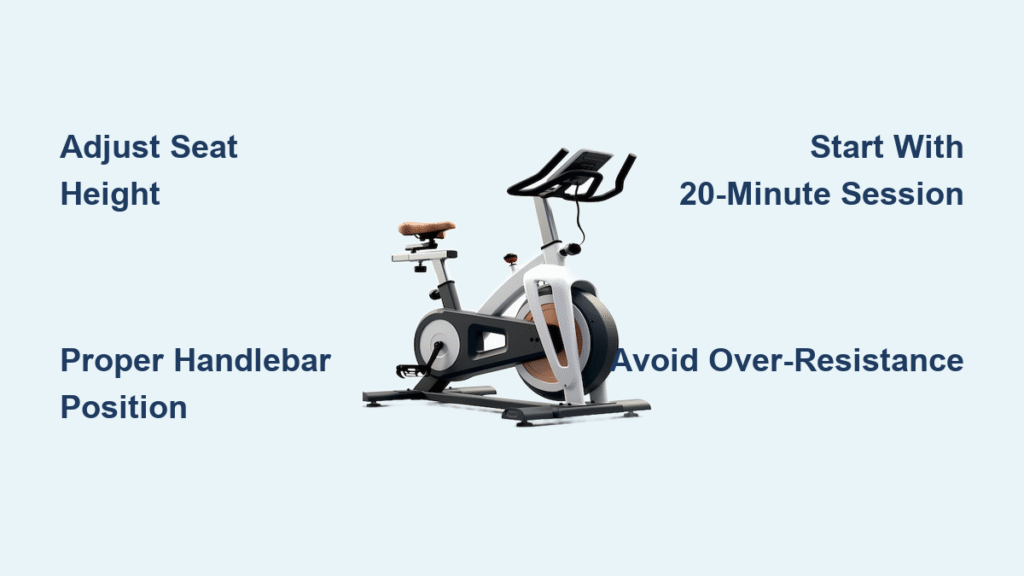
Stand beside your bike and raise the seat to match your hip bone height—this prevents common beginner mistakes causing knee pain. When seated with feet in the pedals, your knee should maintain a 25-30 degree bend at the lowest pedal point. If your hips bounce while cycling, increase resistance; if your knees hurt, lower it immediately. Proper seat height transforms uncomfortable sessions into sustainable workouts that build real fitness.
Position Handlebars for Back Comfort
Your handlebars should allow comfortable reach without hunching your back—a common cause of beginner discomfort. Most new cyclists benefit from slightly higher handlebars to reduce lower back strain during initial sessions. Keep shoulders relaxed and down, not hunched near your ears. Maintain a slight elbow bend rather than locking arms straight, allowing your core (not arms) to support upper body weight.
Gear Up Without Breaking the Bank
Skip expensive clip-in cycling shoes for your first month—regular athletic shoes work perfectly for exercise bike workouts for beginners. Invest in moisture-wicking clothing to prevent chafing and regulate temperature during longer sessions. Padded cycling shorts dramatically improve comfort for sessions over 20 minutes, but wear them without underwear to prevent friction. A basic helmet protects against potential falls, especially if transitioning to outdoor cycling later.
Master Your First 20-Minute Beginner Session
Warm Up Properly to Avoid Early Fatigue
Begin every exercise bike workout for beginners with 5 minutes of easy pedaling at low resistance—this isn’t just physical preparation but mental transition from daily stress to workout mode. Focus on smooth, circular pedaling motion rather than mashing down on pedals. Your breathing should remain comfortable enough to hold a conversation throughout the warm-up. Skipping this step causes premature fatigue that derails most beginner efforts.
Follow This Simple Intensity Structure
| Time (minutes) | What to Do | How It Should Feel |
|---|---|---|
| 5 | Easy pace, low resistance | Like a casual walk |
| 3 | Slightly faster, add 1-2 resistance levels | Noticeable effort but comfortable |
| 2 | Increase either resistance or speed | Challenging but sustainable |
| 3 | Return to baseline pace | Recovery period |
| 2 | Second challenge interval | Match or exceed previous effort |
| 5 | Gradual cool-down | Return to starting ease |
Measure Effort Without Complicated Metrics
Use the Rate of Perceived Exertion (RPE) scale from 1-10 instead of heart rate monitors as a beginner. For your exercise bike workout for beginners, RPE 4-6 represents your sweet spot—challenging enough to create adaptation but sustainable for the entire workout. If you can’t speak in short sentences, reduce intensity immediately. Gasping for air means you’ve pushed too hard too soon, risking burnout before seeing results.
Avoid These 3 Beginner Mistakes That Derail Progress
Resistance Setting Errors That Cause Injury
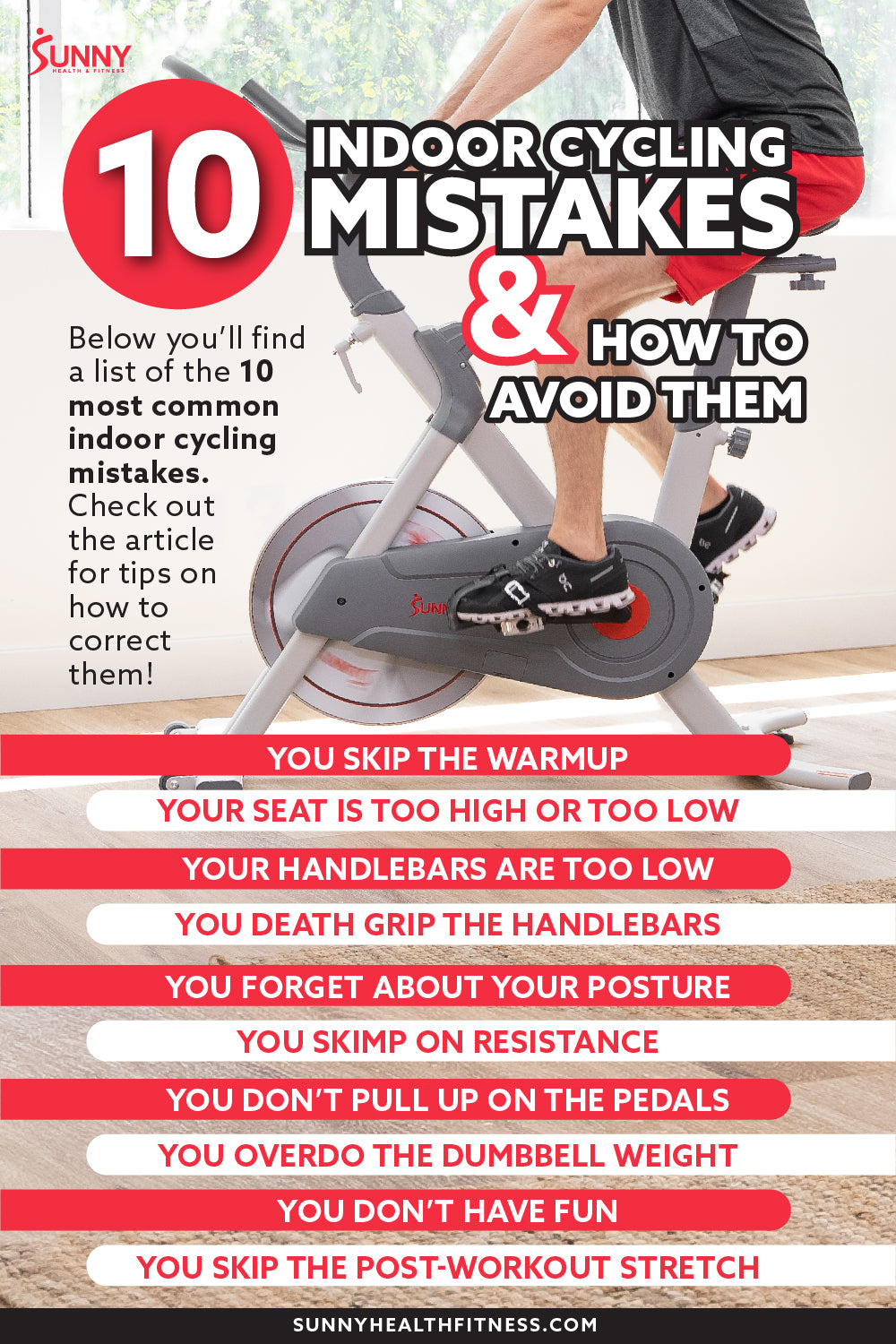
Most beginners either spin wildly with no resistance (wasting energy) or grind at impossibly high resistance (straining knees). Aim for 70-90 RPM cadence where you feel controlled resistance against smooth pedal strokes. If your hips bounce in the seat, increase resistance. If your knees hurt, reduce it immediately—pain isn’t normal and indicates improper setup.
Posture Problems That Create Discomfort
Death-gripping handlebars transfers upper body tension to your neck and shoulders. Rest your hands lightly while engaging your core to support your upper body. Keep shoulders relaxed and down, not hunched near your ears. Maintain a slight bend in elbows rather than locking arms straight. Your back should stay neutral, not rounded or over-arched—this single adjustment prevents most beginner back pain.
Progressing Too Quickly That Leads to Burnout
Adding more than 10% duration or intensity weekly dramatically increases injury risk. Your connective tissues adapt slower than your cardiovascular system, making gradual progression crucial. If Week 1 feels easy, that’s perfect—it means you’re building sustainable habits rather than burning out. Consistency beats intensity for exercise bike workouts for beginners.
Implement This 4-Week Progressive Training Plan

Week 1: Build the Habit (Don’t Worry About Intensity)
Focus entirely on completing workouts rather than pushing hard. Your goal is teaching your body—and schedule—this new routine.
– Day 1: 15 minutes at easy pace (RPE 3-4)
– Day 3: 20 minutes at easy pace
– Day 5: 30 minutes at easy pace
Week 2: Add Moderate Efforts (Still Conversational Breathing)
Introduce slightly harder efforts while maintaining ability to speak short sentences during recovery.
– Day 1: 15 minutes with 5 minutes moderate effort (RPE 5-6)
– Day 3: 20 minutes with 8 minutes moderate effort
– Day 5: 25 minutes steady moderate effort throughout
Week 3: Introduce Intervals (Boost Fitness Efficiently)
Alternate between easy and moderate efforts to build cardiovascular fitness faster.
– Day 1: 10 easy + 10 moderate
– Day 3: 5 easy + 15 moderate with 2-minute sprint intervals
– Day 5: 20 minutes moderate continuous effort
Week 4: Build Endurance (Prepare for Longer Sessions)
Combine longer efforts with strategic recovery to handle sustained workouts.
– Day 1: 20 minutes moderate effort
– Day 3: 15 minutes including 5 hill climbs (increase resistance)
– Day 5: 30 minutes moderate effort
– Day 7: 40-45 minutes easy effort for distance
Fuel and Hydrate for Maximum Beginner Results
Pre-Workout Fueling That Prevents Nausea
Eat a small meal 1-2 hours before cycling—think banana with peanut butter or toast with honey. Avoid heavy, fatty foods that sit in your stomach during your exercise bike workout for beginners. If exercising first thing in morning, a small piece of fruit provides enough energy without digestive discomfort. Never ride on empty stomach as this causes premature fatigue.
During-Ride Hydration That Maintains Energy
Sip water every 10-15 minutes during workouts longer than 20 minutes. For sessions under 30 minutes, plain water suffices. As duration increases beyond 45 minutes, consider diluted sports drinks to replace electrolytes. Most beginners under-hydrate during their first weeks, leading to unnecessary fatigue that feels like poor fitness.
Post-Workout Recovery That Accelerates Results
Consume protein and carbohydrates within 30 minutes after cycling to accelerate recovery. Chocolate milk, Greek yogurt with berries, or a protein shake with banana all provide ideal recovery nutrition. This becomes increasingly important as workout intensity and duration increase—skipping recovery nutrition slows your progress significantly.
Track Progress Without Obsessing Over Metrics
Simple Metrics That Actually Matter
Track these three data points weekly: total workout minutes, average RPE, and how you felt afterward. Most beginners see dramatic improvements in the first 4-6 weeks simply by maintaining consistency. Don’t obsess over speed, distance, or calorie burn initially—focus on completing planned workouts. Your body adapts faster when you measure what truly matters.
Setting Realistic Goals That Keep You Motivated
Beginners should target completing their planned workouts rather than achieving specific performance metrics. After 4-6 weeks, shift goals toward increasing duration (from 20 to 30 minutes) or adding one weekly session. Weight loss goals should target 1-2 pounds weekly through combined exercise and nutrition changes—rapid weight loss usually means muscle loss, not fat loss.
Your first exercise bike workout for beginners requires nothing more than commitment to that initial 20-minute session. Follow this plan consistently, and within one month you’ll transform from questioning your ability to confidently planning your next workout. Remember that every expert cyclist started exactly where you are now—clipped into pedals for the first time. The bike hasn’t changed—you have.