Accurately determining how to calculate weight of steel plate is essential for engineers, fabricators, and construction professionals who need precise material estimates. Whether you’re planning structural frameworks, estimating shipping costs, or budgeting for a fabrication project, an incorrect steel plate weight calculation can lead to costly material shortages, transportation issues, or structural safety concerns. The process relies on a straightforward formula but requires careful attention to measurement accuracy and unit consistency.
This guide provides the exact methodology professionals use to calculate steel plate weight with precision. You’ll learn the fundamental formula, understand how steel density affects your results, and discover practical techniques to avoid common calculation errors. By the end, you’ll be able to confidently determine the weight of any steel plate for your specific project requirements.
Why Steel Plate Weight Calculation Matters for Your Project
Steel plate weight directly impacts multiple critical project factors that affect your bottom line and timeline. An inaccurate weight estimate can trigger a cascade of problems including insufficient material ordering, incorrect crane capacity selection, and unexpected shipping costs. Structural engineers rely on precise plate weights for load calculations that determine foundation requirements and overall building safety.
When estimating material costs, even small calculation errors compound significantly across large projects. A 2% underestimation on a 100-ton steel order represents two tons of unaccounted-for material—enough to derail your budget and schedule. Understanding how to calculate weight of steel plate properly ensures your project stays on track from procurement through installation.
The Core Formula Every Professional Must Know
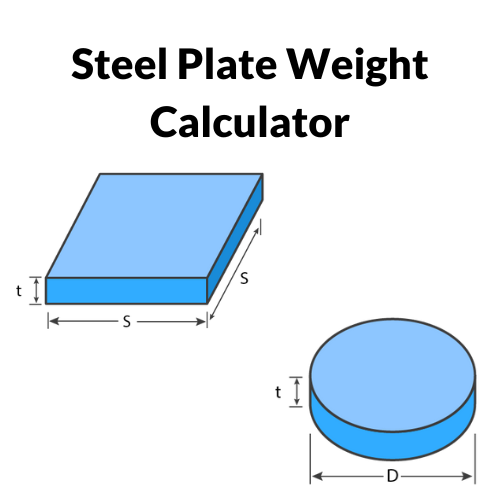
The universal formula for calculating steel plate weight combines physical dimensions with material density to produce accurate results. This single equation works for any steel plate regardless of size or application when applied correctly.
Steel Plate Weight = Length × Width × Thickness × Density
This formula first calculates the plate’s volume, then converts that volume to weight using steel’s density properties. The critical factor is maintaining consistent measurement units throughout your calculation. Mixing metric and imperial units without proper conversion guarantees inaccurate results.
Measuring Steel Plate Dimensions Accurately
Precise measurements form the foundation of reliable weight calculations. For length and width measurements, use a calibrated tape measure and record dimensions at multiple points along each edge—manufacturing processes sometimes produce plates with slight dimensional variations.
Thickness measurement requires special attention as this dimension has the greatest impact on final weight. Use a micrometer rather than a standard ruler for thickness measurements, especially on thinner plates where small errors represent larger percentage differences. Measure thickness at several points across the plate surface and use the average value for your calculation.
Steel Density Values by Material Type
Different steel alloys have varying density values that significantly affect weight calculations:
| Steel Type | Density (g/cm³) | Density (kg/m³) | Weight Difference |
|---|---|---|---|
| Carbon Steel | 7.85 | 7850 | Baseline |
| Stainless Steel 304 | 8.00 | 8000 | +1.9% |
| Stainless Steel 316 | 8.00 | 8000 | +1.9% |
| Tool Steel | 7.85-8.25 | 7850-8250 | 0% to +5% |
| Alloy Steel | 7.80-8.10 | 7800-8100 | -0.6% to +3.2% |
Using carbon steel density (7.85 g/cm³) for stainless steel plates introduces approximately 2% error—acceptable for rough estimates but problematic for precise applications. Always verify the specific density value for your steel grade using mill certificates or material specifications.
How to Calculate Weight of Steel Plate in Metric Units
Follow this step-by-step process to determine steel plate weight using metric measurements:
- Measure dimensions in millimeters (length, width, thickness)
- Calculate volume in cubic millimeters (length × width × thickness)
- Convert to cubic centimeters by dividing by 1,000
- Multiply by density (7.85 g/cm³ for carbon steel)
- Convert to kilograms by dividing by 1,000
Example calculation: A carbon steel plate measuring 2000 mm × 1000 mm × 10 mm
– Volume = 2000 × 1000 × 10 = 20,000,000 mm³
– Convert to cm³ = 20,000,000 ÷ 1,000 = 20,000 cm³
– Weight = 20,000 × 7.85 = 157,000 g
– Convert to kg = 157,000 ÷ 1,000 = 157 kg
For faster calculations, use this simplified metric formula:
Weight (kg) = Thickness (mm) × Width (m) × Length (m) × 7.85
How to Calculate Weight of Steel Plate in Imperial Units

When working with imperial measurements, follow this streamlined process:
- Measure dimensions in inches (length, width, thickness)
- Calculate volume in cubic inches (length × width × thickness)
- Multiply by density (0.2836 lb/in³ for carbon steel)
Example calculation: A carbon steel plate measuring 48 in × 24 in × 0.5 in
– Volume = 48 × 24 × 0.5 = 576 in³
– Weight = 576 × 0.2836 = 163.35 lbs
For quick field calculations, use this simplified imperial formula:
Weight (lbs) = Thickness (in) × Width (in) × Length (in) × 0.2836
When to Use Steel Plate Weight Tables Instead of Calculations
For common plate sizes and thicknesses, weight tables provide faster results than manual calculations. These reference tables list pre-calculated weights per unit area for standard thicknesses.
Carbon Steel Weight Reference Table
| Thickness (mm) | Weight per m² (kg) | Weight per ft² (lb) |
|---|---|---|
| 5 | 39.25 | 7.99 |
| 10 | 78.50 | 15.98 |
| 15 | 117.75 | 23.98 |
| 20 | 157.00 | 31.97 |
| 25 | 196.25 | 39.96 |
To use this table, multiply the weight per square meter by your plate’s area in square meters. For a 3m × 2m plate at 10mm thickness: 78.50 kg/m² × 6 m² = 471 kg. This method saves time while maintaining accuracy for standard plate sizes.
Critical Mistakes That Skew Your Steel Plate Weight Results
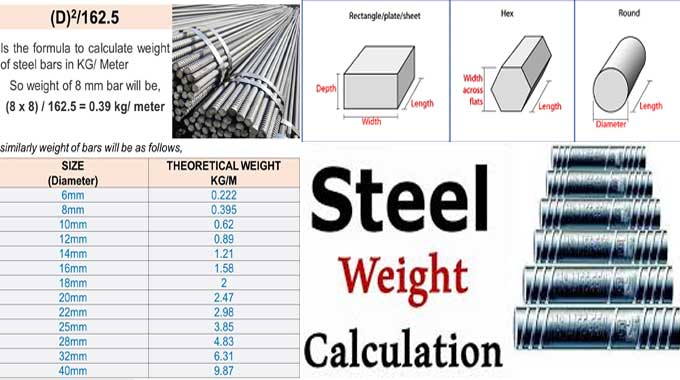
Even experienced professionals make calculation errors that compromise project accuracy. Recognizing these common pitfalls helps you avoid costly mistakes.
Mixing Measurement Systems Without Conversion
The most frequent error involves combining metric and imperial measurements in a single calculation. Using millimeters for dimensions with inch-based density values produces completely wrong results. Always convert all measurements to a single unit system before calculating and label every number with its unit to catch mixing errors during review.
Using Incorrect Density Values
Applying carbon steel density to stainless steel plates introduces approximately 2% error—acceptable for rough estimates but significant for precise applications. Always verify the specific density value for your steel grade using material certificates rather than relying on standard reference values when accuracy matters.
Forgetting Unit Conversion Steps
Calculations performed in cubic millimeters require conversion to cubic centimeters before applying density values. Forgetting this step produces results off by factors of 1,000. Develop a systematic calculation process with explicit conversion steps and review your work to ensure each conversion is completed correctly.
How to Verify Your Steel Plate Weight Calculations
Critical projects demand verification of your weight calculations through multiple methods. When accuracy affects structural safety or large material orders, cross-check your results using alternative approaches.
Three-Point Verification Method
- Calculate manually using the fundamental formula
- Cross-reference with weight-per-unit-area tables
- Verify using a digital calculator tool
Significant discrepancies between methods indicate measurement errors or unit conversion mistakes requiring investigation. When all methods agree within acceptable tolerance ranges, your result likely represents the true plate weight.
Documentation Best Practices
Maintain detailed records of your weight calculations including:
– Original measurement data with verification notes
– Calculation methods and formulas used
– Density values and their sources
– Unit conversion factors applied
– Final weight results with safety margins
This documentation supports quality control processes, facilitates project audits, and provides reference for future similar calculations.
Industry-Specific Applications of Steel Plate Weight Calculations
Different industries use steel plate weight calculations for specialized purposes with varying accuracy requirements.
Construction and Structural Engineering
Structural engineers require precise weight calculations for load analysis, foundation design, and steel quantity takeoffs. Foundation sizing depends directly on total structural weight, making accurate plate weights essential for safe, economical designs. Steel quantity takeoffs for project bidding rely on accurate weight calculations for material cost estimation.
Manufacturing and Fabrication
Manufacturing environments use plate weight calculations for material procurement, process planning, and cost control. Cutting operations require weight data to estimate machine time and power consumption. Forming and bending operations depend on material weight for die selection and force calculations.
Shipping and Logistics
Transportation costs depend directly on cargo weight, making accurate steel plate weights essential for logistics planning. Shipment pricing, container loading calculations, and handling equipment selection all require precise weight data. Overestimating weights increases shipping costs unnecessarily, while underestimating risks equipment overloading and safety hazards.
Final Verification: Does Your Calculation Make Sense?
Before finalizing your steel plate weight calculation, apply these reality checks:
- Compare with similar projects: Does your calculated weight align with previous similar projects?
- Check order of magnitude: A 1m² × 10mm carbon steel plate should weigh approximately 78.5kg—does your result fall within reasonable expectations?
- Consider material additions: Have you accounted for galvanization (adds 5-10% weight) or other surface treatments?
Accurate steel plate weight calculation combines straightforward mathematics with attention to measurement precision and material properties. By following the step-by-step methods outlined here and avoiding common calculation errors, you’ll produce reliable weight data that supports successful project execution from procurement through installation. Remember that the fundamental formula remains consistent, but attention to detail transforms a simple calculation into a critical project asset.