Forgetting your yoga mat strap happens to the best of us. Whether the strap snapped during your last commute, you left it at the studio, or you simply prefer traveling light, knowing how to transport your mat without its built-in carrier makes all the difference between a frustrating walk and a smooth journey to your practice. This guide covers practical alternatives, clever workarounds, and permanent solutions so you never struggle with an unwieldy rolled mat again.
Most yogis have faced that moment when you realize your strap is missing just as you’re heading out the door. The good news? You don’t need fancy equipment to solve this problem. The methods below work for all standard mat sizes, from compact travel mats to extra-wide options. Some techniques require nothing more than what you already own, while others encourage simple DIY upgrades that cost just a few dollars. Choose the approach that fits your lifestyle, and you’ll wonder why you ever relied on that flimsy strap in the first place.
Fold Your Mat Into a Compact Package
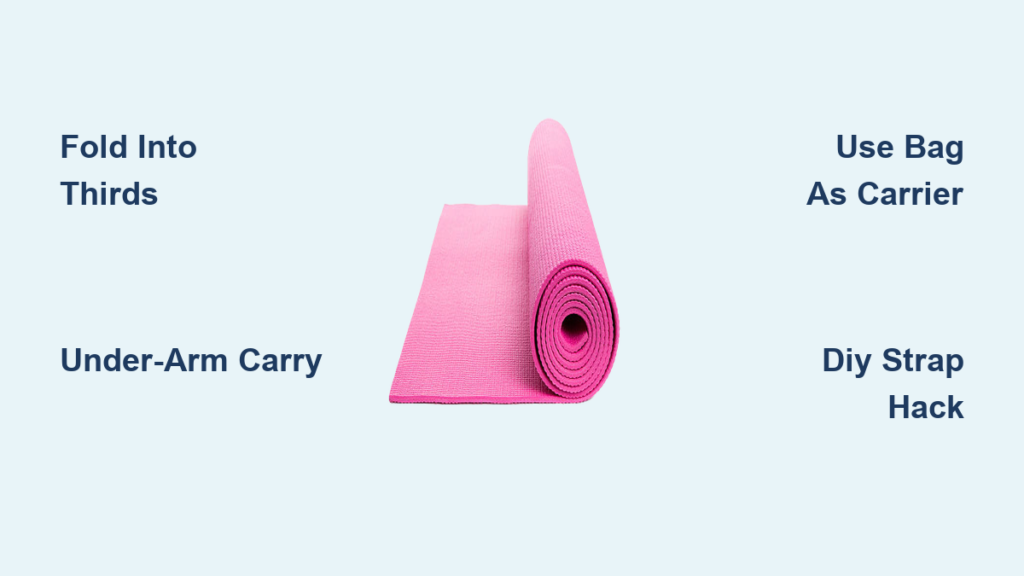
Rolling your mat into a tight cylinder isn’t your only option when you need to carry yoga mat without strap. Folding creates a more stable shape that’s easier to grip securely. Lay your mat flat and fold it lengthwise into thirds, creating a narrow strip about 8-10 inches wide. Most quality mats fold cleanly without permanent creases, especially those made from rubber or TPE materials.
Master the Under-Arm Carry Technique
Hold the folded mat against your side, tucked under your armpit, and secure it with your arm wrapped around the outside. This method works best for mats that are 3-4mm thick. Thicker cushions (5mm and above) become bulky when folded, making them harder to manage over longer distances.
Pro tip: For extra security during your commute, tuck the folded mat under your arm with the textured side facing out—this creates natural grip against your clothing. If your mat is particularly thick, consider rolling it instead or using one of the other techniques below. The under-arm carry leaves your hands completely free for other items like keys, coffee, or your phone—perfect for those quick trips to a nearby studio.
Transform Your Mat Into a Briefcase-Style Carry
Rolling your mat the standard way and carrying it vertically creates a natural handle that solves the problem of how to carry yoga mat without strap. Grip the mat near the center where the roll is tightest, keeping your fingers wrapped around the cylinder. Walk with the mat at your side, letting the bottom end rest near your hip.
Prevent Mid-Commute Unrolling Disasters
For mats that tend to unroll, secure the roll with a small hair tie, rubber band, or piece of string before grabbing hold. This prevents that frustrating moment when your mat starts unraveling mid-walk. Simply wrap the securing material around the middle of the roll twice, then tie a secure knot.
Key visual cue: Look for the point where the mat feels most compressed when rolled—that’s where you should grip it for maximum stability. The briefcase grip works especially well for 6mm and 8mm mats that have some weight to them—the heft actually helps keep the roll stable as you walk. This method takes about 15 seconds to execute and requires zero additional equipment.
Convert Everyday Bags Into Yoga Mat Carriers

Sliding your rolled mat into any bag you already own eliminates the need for a dedicated carrier entirely. Tote bags work exceptionally well because their open top allows easy access and their sturdy handles support the mat’s weight. Simply roll your mat, insert it vertically into the tote, and let it stand upright while you carry the bag by its handles.
Optimize Backpack Transportation
Backpacks offer hands-free transportation and distribute weight across both shoulders. Lay your mat flat inside the main compartment if it fits, or slide it vertically into the top opening. Some backpacks have external bungee cords or side pockets perfect for securing a mat on the outside.
Common mistake to avoid: Don’t force an oversized mat into a small backpack—that creates bulging that makes the bag uncomfortable to wear. Instead, try the backpack strap threading method below. This approach works beautifully for commuters who need their hands for subway poles, opening doors, or holding coffee. You’ll arrive at class with both hands free and your mat protected from street grime.
Create an Emergency Strap From Household Items
When you need something more secure than bare-hand carrying, fashion a temporary strap from items most people have at home. A long scarf, belt, or even a sturdy shoelace works surprisingly well. Simply thread the material through the center hole of your rolled mat (or wrap it around the middle if your mat doesn’t have a center core), tie the ends together to form a loop, and sling the mat over your shoulder.
Choose the Right Material for Comfort
Fabric choices matter more than you’d think. Silk scarves slip too easily and can cut into your shoulder under the mat’s weight. Thick cotton towels or yoga towel straps provide cushioning and grip. Old belts offer adjustable length and sturdy hardware.
Pro tip: Double-knot your improvised strap—mat weight can cause single knots to loosen during transport. Experiment with materials you already own—you might discover that a worn-out belt actually outperforms the original strap that came with your mat. This solution takes less than a minute to implement and costs nothing.
Integrate Your Mat With Existing Backpack Straps
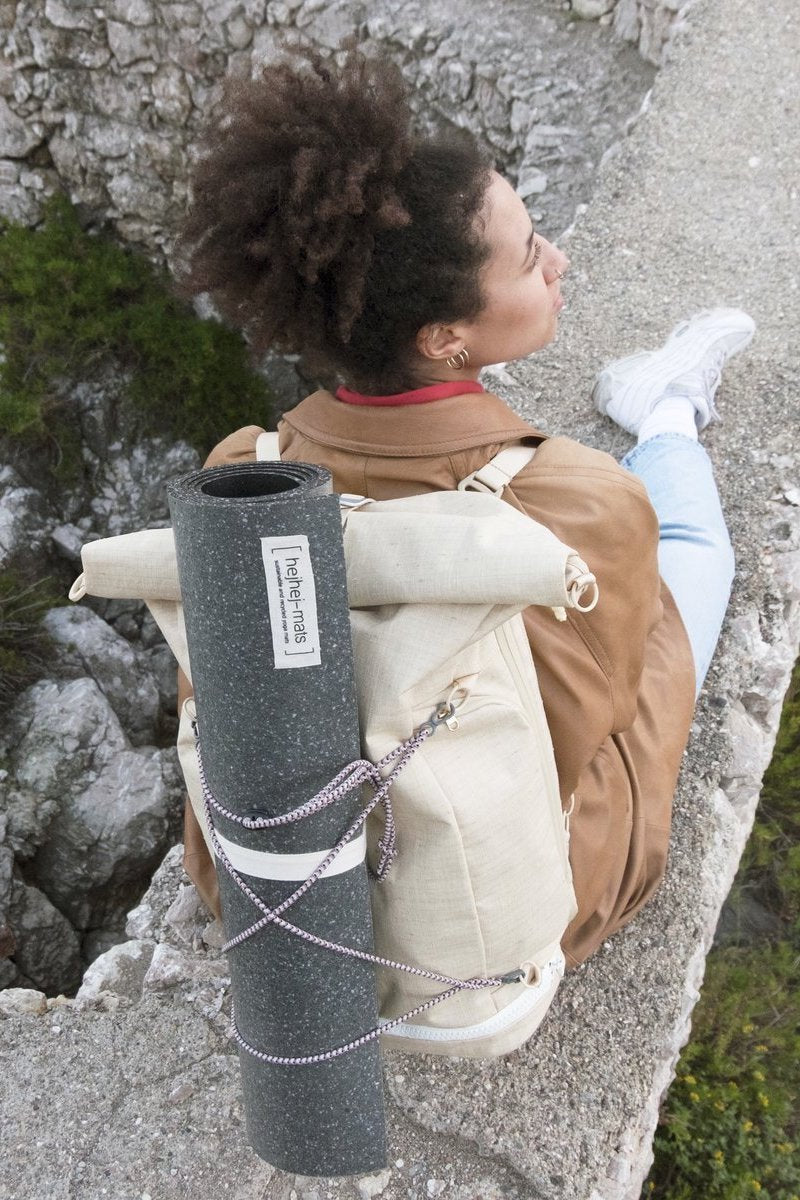
Transform your backpack into a yoga mat carrier without modifying either item. After rolling your mat, slide it under the top handle of your backpack or thread it through the loops where the shoulder straps attach to the bag. The mat sits horizontally across your back, secured by the backpack’s own structure.
Ensure Proper Fit for Comfortable Transport
This method works best when the mat is on the smaller side (travel mats or 24-inch widths) and your backpack has structured shoulder straps. Larger mats may hang too low or shift uncomfortably. Test this at home before attempting your commute—if the mat interferes with your movement or feels unstable, switch to carrying the mat inside the backpack instead.
Visual indicator: Your mat should rest across your upper back, not lower than your waistline. If it hangs too low, it will bounce with each step, creating discomfort. This clever technique keeps both your hands free and your mat secure—perfect for navigating crowded streets or public transportation.
Implement the Carabiner Clip Solution

A simple carabiner opens up carrying possibilities you might not have considered when figuring out how to carry yoga mat without strap. Clip the carabiner through the center hole of your rolled mat, then attach the other end to a belt loop, bag handle, or purse strap. This hands-free approach keeps your mat securely in place while freeing both hands for other tasks.
Select the Right Hardware for Safety
Buy a sturdy metal carabiner rated for at least 20 pounds of load capacity—cheap plastic versions can snap under the weight of a dense rubber mat. Locking carabiners (those with a twist-to-close mechanism) prevent accidental opening, which becomes important if you’re navigating crowded spaces or public transportation.
Expert note: Keep a mini carabiner in your keychain specifically for yoga mat emergencies—it takes up virtually no space but solves the strap problem instantly. This solution works particularly well for those quick trips when you’re carrying minimal gear but still want your hands free.
Wear Your Mat Across Your Body
Threading the mat strap substitute over your head and letting it rest across your chest creates a hands-free carry that feels natural and balanced. This works whether you’re using an actual strap, a scarf, a belt, or a carabiner with a loop. The mat sits in front of your body where you can keep an eye on it, and the weight distributes across your torso rather than pulling on one shoulder.
Adjust for Maximum Comfort
Adjust the strap length so the mat sits at hip level, not so low that it hits your knees when you walk or so high that it interferes with your arm movement. The cross-body carry works particularly well when combined with a messenger bag or purse—you can wear both simultaneously without the straps competing for space.
Troubleshooting tip: If the mat twists while walking, try reversing the direction it faces—sometimes a simple orientation change solves the rotation problem. This method provides excellent stability for longer walks and keeps your valuable mat safely in view rather than dangling behind you.
Invest in a Permanent Mat Bag Solution
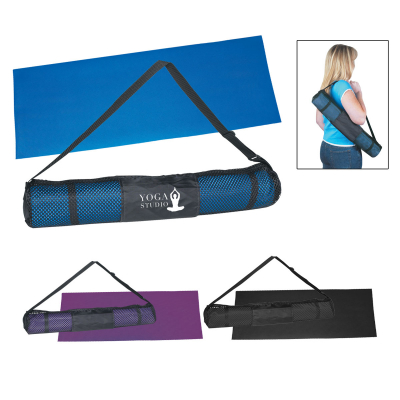
Stop struggling with broken or missing straps by choosing a dedicated yoga mat bag that solves how to carry yoga mat without strap permanently. Basic drawstring bags cost very little and slip easily into larger bags or lockers. More elaborate options include pockets for blocks, straps, and water bottles, plus ventilated sections that let damp mats dry between uses.
Select the Perfect Fit for Your Mat
Choose a bag that’s slightly larger than your mat to allow easy sliding in and out. Mats with center holes pair perfectly with drawstring bags—the string threads through the hole and cinches closed around the roll. Mats without holes work better in zippered sleeves or tote-style carriers that close completely.
Pro tip: Look for bags with exterior pockets—they’re perfect for storing your keys, phone, or wallet so you don’t have to carry an additional bag. This one-time investment eliminates daily strap frustrations and often includes features you didn’t know you needed, like moisture-wicking fabric or antimicrobial lining.
Prevent Future Mat Transportation Problems
Stop struggling with broken or missing straps by choosing mats with integrated carrying solutions from the start. Many modern mats feature built-in loops, adjustable straps, or carrying handles that never break because they’re part of the mat’s construction itself. These designs eliminate the weakest point of traditional strapped mats—the connection between strap and mat.
Create a Reliable Backup System
Keep a spare strap in your car, desk, or gym bag as a backup. Cheap replacement straps are available online and at most yoga supply stores. Having a backup means a forgotten strap never derails your practice again. Some yogis keep multiple straps in different lengths for different carrying preferences.
Expert insight: Treat your yoga mat transportation like any other essential practice element—plan for it consistently. The right technique makes every commute smoother and keeps your focus where it belongs: on your mat, not on how to carry it. Whether you master the briefcase grip or invest in a proper bag, you’ll arrive at your practice with one less thing to stress about.