Imagine lying on your foam roller after an intense workout, only to discover it’s too short for your legs or too firm for your sore muscles. You’re not alone—most fitness enthusiasts waste money on the wrong foam roller size because they don’t understand how dimensions impact effectiveness. Whether you’re a beginner starting your recovery journey or an athlete seeking optimal performance, knowing how to choose foam roller size makes the difference between transformative myofascial release and frustrating discomfort. The right size directly determines which muscle groups you can effectively target, how comfortable your sessions will be, and whether you’ll actually stick with this valuable recovery practice.
Walking into any fitness store or browsing online reveals countless foam roller options ranging from compact 9-inch travel models to sprawling 24-inch versions. This overwhelming selection leads many people to purchase based on price alone, only to abandon their roller after a few painful sessions. The truth is, your ideal foam roller size depends on multiple factors including your height, weight, experience level, and specific recovery goals. This guide cuts through the confusion by providing actionable criteria for selecting the perfect size based on your unique physiology and needs—so you can invest wisely in equipment that delivers real results.
Standard Foam Roller Dimensions (18-24 Inch Models)
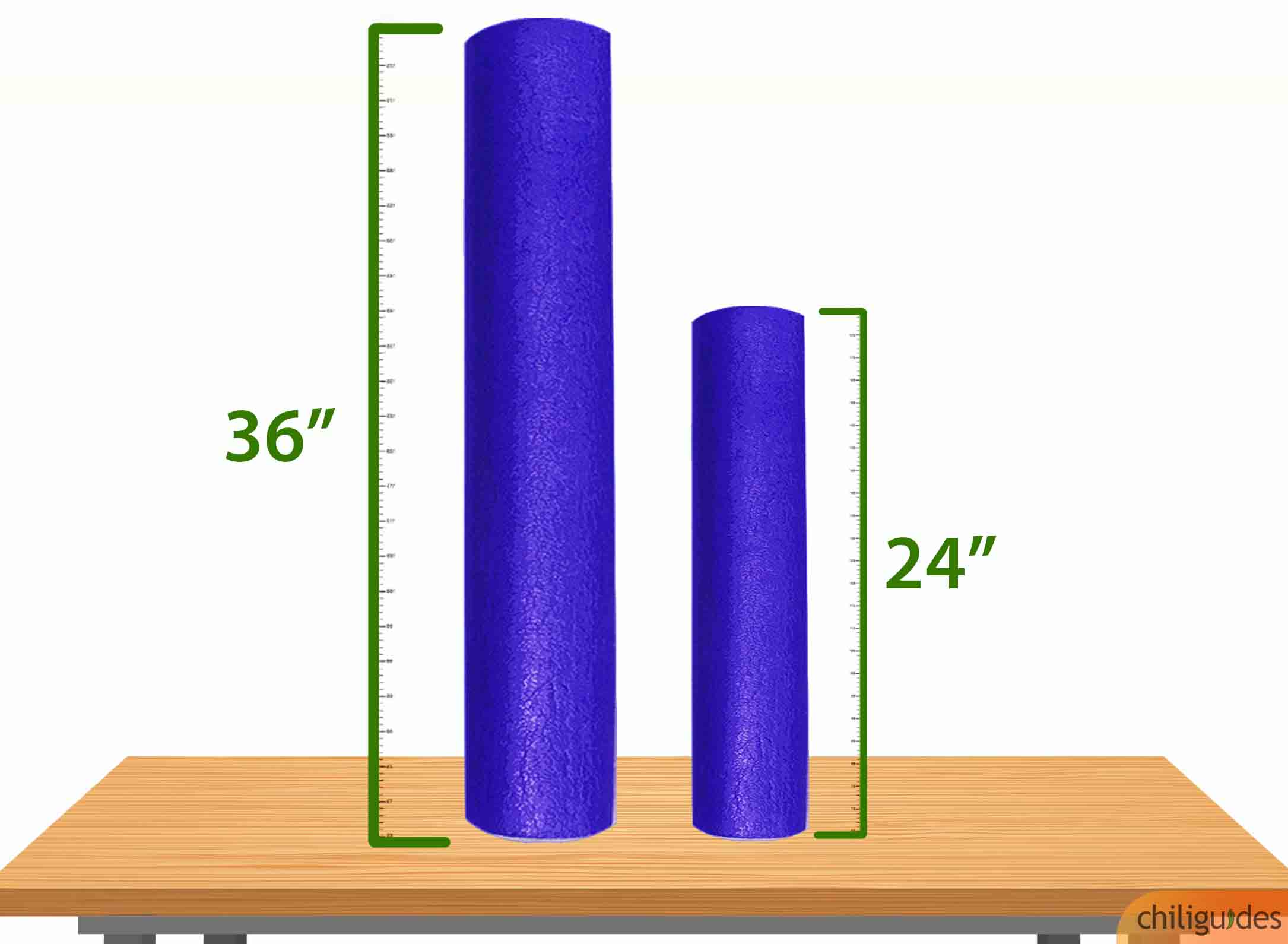
Full-size foam rollers dominate professional settings because they accommodate the widest range of users and muscle groups. Understanding what makes these sizes effective helps you determine whether they suit your specific needs or if a specialized option would serve you better.
Full-Size 18-24 Inch Rollers
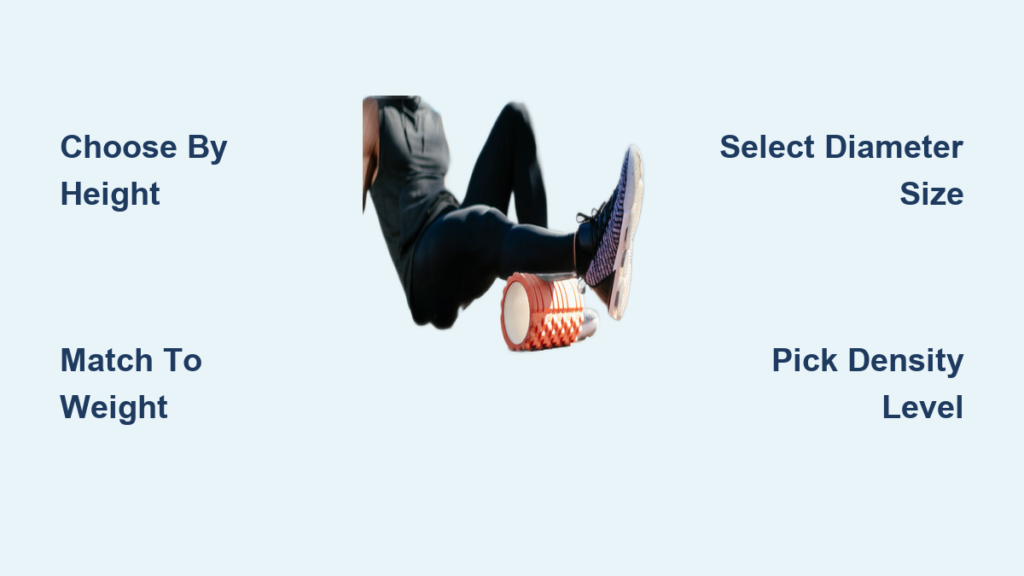
The 18-inch length with 6-inch diameter represents the most common foam roller configuration accounting for approximately 65% of all purchases. This size works exceptionally well because it accommodates the entire length of most adults’ backs, hamstrings, and quadriceps in a single rolling motion—eliminating the frustration of constant repositioning. Taller individuals (over 6 feet) typically benefit from 24-inch options to cover longer limb segments, while users under 5’6″ often find the standard 18-inch length perfectly adequate.
Physical therapists consistently recommend standard rollers for treating iliotibial band syndrome because the length provides stability during rolling, allowing controlled pressure application while maintaining proper body positioning. If your goals include general muscle recovery, flexibility improvement, or warm-up preparation before workouts, a standard-sized roller likely provides everything you need without requiring specialized equipment.
Diameter Options and Pressure Control
Foam roller diameters typically range from 4 to 6 inches for standard models, with the diameter directly influencing session intensity. Larger diameters distribute pressure across more surface area, creating a gentler sensation, while smaller diameters concentrate pressure more intensely on specific muscle bands. A 4-inch diameter roller creates higher pressure concentration, which some experienced users prefer for deep tissue work, though beginners often find this uncomfortable.
Most fitness professionals recommend starting with a 5-6 inch diameter because it balances pressure distribution with tissue penetration effectively. Users weighing over 200 pounds may need the 6-inch diameter to achieve sufficient tissue compression, while lighter users (under 150 pounds) often find the 5-inch diameter provides adequate pressure without excessive discomfort.
Compact Travel Rollers: When Size Matters Most
Travel-sized foam rollers serve specific purposes that standard models cannot fulfill, though they come with notable limitations that users must understand before purchasing. Knowing when compact options make sense—and when they fall short—helps you decide whether to add one to your toolkit.
12-Inch and Smaller Options
Travel foam rollers typically measure 12 inches in length with diameters of 3 to 5 inches, with some ultra-compact options at just 9 inches designed specifically for carry-on luggage. These rollers often feature hollow cores that reduce weight to under 1 pound compared to 2-3 pounds for solid foam alternatives, making them genuinely portable for frequent travelers.
Compact rollers work best for isolated muscle groups including calves, upper back (trapezius), shoulders, and forearms—areas where precision matters more than coverage. Yoga and Pilates practitioners often carry compact rollers to studios where storage space is limited, while business travelers maintain fitness routines in hotel rooms despite space constraints.
Limitations of Compact Sizes
Physical therapists consistently caution that travel-sized rollers should complement, not replace, full-size rollers for comprehensive myofascial release programs. The reduced surface area concentrates pressure on smaller zones, which may increase discomfort during treatment and potentially cause bruising in sensitive individuals. Users with chronic tightness often find compact rollers insufficient for achieving desired results in major muscle groups.
The 12-inch length requires constant repositioning when working on hamstrings or back muscles, disrupting the rhythmic motion that makes foam rolling effective. This frustration leads many users to abandon compact rollers for larger options once they realize the practical limitations, making them better suited as secondary tools rather than primary recovery equipment.
Density Decoded: Matching Firmness to Your Experience Level

Foam roller density directly determines how your tissue responds to rolling, making this factor equally important to size when selecting equipment. Understanding density ratings helps you match firmness to your experience level, body weight, and treatment goals.
Soft, Medium, Firm Explained
Manufacturers typically rate foam roller firmness on a scale from soft through medium to firm or extra firm, corresponding to approximate Shore durometer measurements:
- Soft density (30-40 Shore): Compresses easily under body weight, suitable for beginners or acute injury recovery
- Medium density (40-50 Shore): Most popular category offering sufficient firmness while remaining comfortable
- Firm density (50-60 Shore): For experienced users seeking deep tissue work or athletes with significant muscle mass
Beginners should start with medium-density rollers because firm options may cause enough discomfort to discourage consistent use. The goal of foam rolling is tissue release, not endurance testing—if you’re tensing up from pain, you’re likely counteracting the therapeutic benefits.
Material Types and Durability
The two primary foam materials—ethylene-vinyl acetate (EVA) and polyethylene (PE)—exhibit distinct performance characteristics. EVA foam offers comfort and durability at moderate price points and resists moisture absorption, making it suitable for gym environments. Polyethylene foam, used in higher-end rollers, provides greater density and resilience under repeated compression, maintaining shape and firmness longer than EVA alternatives.
Quality foam rollers from reputable manufacturers typically maintain functional integrity for 2-5 years with regular home use, while commercial gym rollers may require replacement every 6-12 months due to heavy usage.
Your Body Type’s Ideal Foam Roller Size
Your physical dimensions significantly influence which foam roller sizes will serve you effectively. Selecting based on body type rather than generic recommendations prevents the common frustration of purchasing equipment that doesn’t match your needs.
Weight-Based Recommendations
Your body weight directly affects how much the foam compresses during use, influencing the effective firmness you experience:
- Under 150 pounds: 4-5 inch diameter works best, as lighter weight provides sufficient pressure penetration
- 150-220 pounds: Standard 5-6 inch diameter offers optimal balance
- Over 220 pounds: Consider 6-inch diameter or high-density foam to prevent excessive compression
Users above 250 pounds may prefer rollers with increased diameter (up to 8 inches) to maintain sufficient firmness for effective tissue release without requiring extreme pressure.
Height Considerations
Taller individuals benefit from longer rollers that accommodate their limb segments without constant repositioning. Someone standing 6’2″ will find hamstring rolling far more efficient on a 24-inch roller than an 18-inch model that requires repositioning every few rolls. The standard 18-inch length works well for most users under 5’10”, while taller individuals should seriously consider extended lengths.
Shorter users shouldn’t assume they need shorter rollers—in fact, the extra length on standard rollers provides versatility for exploring different muscle groups and techniques without causing problems.
Budget to Premium: Making Cost-Effective Size Choices
The foam roller market offers quality options at every price point, with the primary differentiators being material density, construction quality, and specialized features rather than basic functionality.
Entry-Level Roller Options
Budget foam rollers from online retailers ($10-25 range) provide adequate entry points for casual users exploring foam rolling. While many budget rollers perform adequately initially, durability concerns often emerge within 6-12 months for daily users. When evaluating budget options, check customer photos of actual products rather than stock images to assess manufacturing quality.
Mid-Tier Value Picks
The $25-60 range represents the sweet spot for most consumers, offering quality materials, consistent manufacturing, and reasonable durability. Products from established brands like TriggerPoint, Pro-Tec Athletics, and OPTP dominate this category. Mid-tier products typically carry manufacturer warranties of 6-12 months and receive substantially more consistent user reviews than budget alternatives.
For individuals committed to regular foam rolling, this tier offers the best value proposition—quality foam rollers maintain their shape and firmness far longer than budget alternatives, making them more cost-effective despite higher upfront costs.
Common Foam Roller Size Mistakes and How to Avoid Them
Learning from others’ foam roller purchasing errors helps you avoid wasting money on unsuitable equipment. The most common mistakes stem from prioritizing the wrong factors or failing to match equipment to actual needs.
Sizing Errors and Solutions
Purchasing rollers too short for intended use cases represents one of the most frequent sizing errors. Users buying 12-inch rollers for hamstring work often discover the length requires constant repositioning that disrupts the effective rhythmic motion of myofascial release. Conversely, travelers purchasing standard 18-inch rollers frequently find them impractical for luggage constraints.
Before purchasing, honestly assess where and how you’ll use the roller. If travel is genuinely a priority, a compact roller makes sense despite its limitations. If you’re primarily rolling at home and occasionally traveling, a standard roller you actually use at home beats a travel roller that sits in a closet because it’s less effective.
Density Misalignment Issues
Many foam roller purchasers buy firm rollers seeking “more effective” treatment, only to find the experience painful enough to discourage consistent use. This approach often backfires because effective foam rolling requires relaxation of the muscle being treated—pain-induced tension counteracts the benefits you’re seeking.
Starting with medium density and adjusting based on actual experience proves more effective than guessing at the ideal firmness before trying anything. Remember that as your experience grows and your tissues adapt, you may need to progress to firmer options for continued effectiveness.
Proper Maintenance for Long-Lasting Performance
Proper maintenance extends foam roller lifespan and maintains hygienic conditions for regular use. After each session, wipe the roller with a damp cloth to remove sweat and skin cells that could promote bacterial growth. For textured rollers, cleaning between ridges requires particular attention to prevent debris accumulation.
Store foam rollers away from direct sunlight, which degrades foam materials over time, and extreme temperatures that cause dimensional changes. Standing rollers vertically on their endcaps preserves their shape better than laying them flat, where compression deformation may occur along the contact surface.
Final Note: Selecting the right foam roller size requires balancing multiple factors: your body dimensions, intended use cases, experience level, pain tolerance, and budget constraints. For most users, a medium-density 18-inch roller with 5-6 inch diameter provides the optimal starting point, offering versatility across muscle groups while remaining accessible for beginners. Those with specific needs—frequent travelers, athletes with focused requirements, or individuals in rehabilitation—should consider supplementary specialized tools once foundational preferences are established. Invest in quality equipment that matches your physiology and goals, and you’ll transform foam rolling from a chore into a valuable component of your recovery routine.