Resistance bands have revolutionized home fitness, offering portable strength training that fits in any drawer or suitcase. These elastic tools provide variable resistance that increases as you stretch them, engaging muscles throughout every movement while remaining gentle on joints. For beginners stepping into strength training, resistance bands deliver an accessible entry point that builds real strength without requiring gym memberships or expensive equipment. However, selecting the right bands from the overwhelming options available can feel confusing without proper guidance. This comprehensive guide walks you through every essential consideration, ensuring you choose bands that match your fitness level, goals, and training environment from day one.
The decision-making process involves understanding band types, resistance levels, material options, and key features that distinguish quality products from disappointing ones. Rushing this selection often leads to purchasing bands that are too challenging, uncomfortable, or poorly suited to your intended exercises. By understanding what separates excellent beginner bands from subpar options, you make an investment that supports months or years of effective training rather than gathering dust after a few frustrating workouts.
Identify Your Ideal Band Type for Starting Strength Training
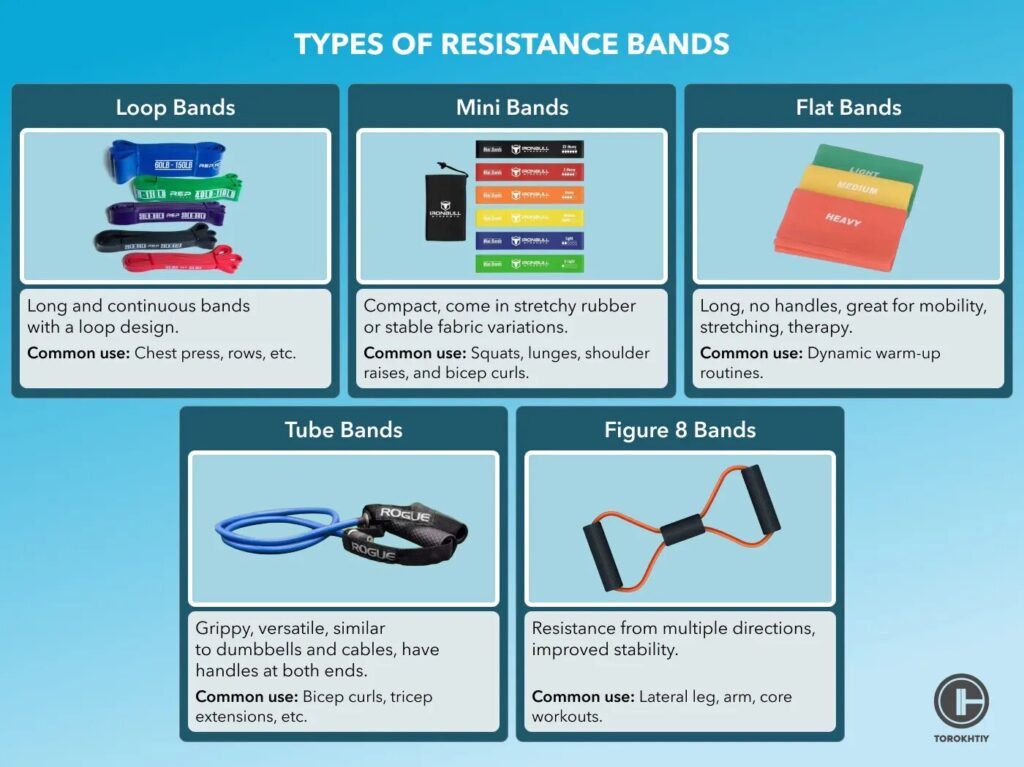
Loop Bands: The Most Versatile Option for Beginners
Loop bands form complete circles of elastic material, typically ranging from 41 to 81 inches in circumference, and represent the most versatile option for beginners. These continuous loops can be anchored around poles, furniture, door frames, or used directly under feet for countless exercise variations. The simplicity of loop bands makes them ideal for learning proper form without handles to manage or complicated setup procedures.
Positioned above or below the knees, loop bands effectively target hip abductors, glutes, and thighs during walking lateral movements or glute bridges. Wristed during pulling exercises, they challenge back and shoulder muscles. Their compact nature means you can carry multiple bands in a gym bag, enabling workouts anywhere. For beginners seeking maximum versatility from a single purchase, quality loop band sets provide an excellent foundation.
Therapy Bands with Handles for Comfortable Upper Body Training
Therapy bands feature long sheets of elastic material with looped ends or attached grips designed for comfortable gripping during exercises. The flat design distributes pressure more evenly across hands and wrists compared to ropes or cords, reducing fatigue during high-repetition sessions—particularly valuable for individuals with grip limitations or hand arthritis.
Handles attached to therapy bands provide significant advantages for beginners learning proper technique. The secure grip allows confident focusing on movement patterns without worrying about bands slipping from hands during dynamic exercises. This stability proves especially valuable for chest presses, rows, and bicep curls where hand positioning directly impacts muscle engagement. While therapy bands typically cost more than basic loop bands, their comfort and control make them worthwhile investments for beginners committed to regular upper body training.
Decode Resistance Levels for Effective Beginner Progression
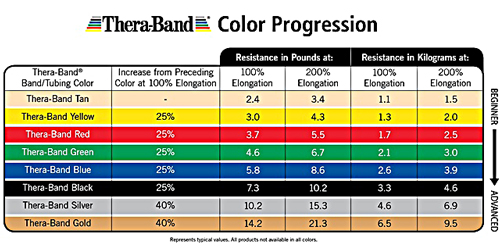
Understanding Poundage Specifications and Color Codes
Resistance bands receive ratings indicating their tension at full stretch, typically expressed in pounds of resistance. However, no universal standard governs these ratings across manufacturers, meaning a “light” red band from one company may differ substantially from a competitor’s “light” red offering. This variability makes checking actual poundage specifications essential rather than relying solely on color designations when comparing products.
Most beginners benefit from bands in these ranges:
– Extra light (2-5 pounds): Suitable for rehabilitation or significant limitations
– Light (5-15 pounds): Appropriate starting point for healthy beginners
– Medium (15-30 pounds): Next progression level for consistent trainers
– Heavy (30+ pounds): Typically for advanced users or lower body training
Progressive Resistance Throughout Your Movement Range
The unique characteristic of resistance bands involves increasing tension as elongation progresses, unlike dumbbells providing constant load throughout movements. At fifty percent stretch, you might feel only about twenty-five percent of a band’s rated resistance, while full extension delivers complete rated tension. This progressive nature means selection must account for your ability to control bands throughout entire ranges of motion, not just comfortable starting positions.
Pro tip: When evaluating bands, stretch them to near full length to accurately gauge maximum resistance encountered during exercises. A band feeling manageable when barely stretched may become unmanageable at full extension, causing lost form or dropped equipment.
Select Quality Features That Prevent Early Band Failure
Width and Thickness: The Comfort-Durability Balance
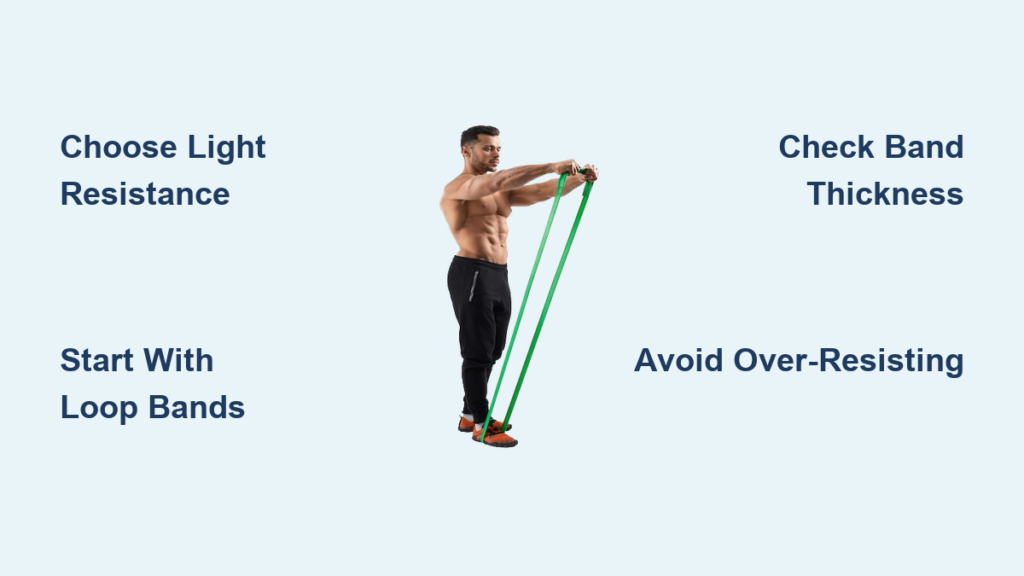
Physical dimensions of resistance bands directly influence performance characteristics. Wider bands distribute resistance across larger surface areas, reducing cutting discomfort during exercises where bands contact skin. Thicker bands generally offer greater durability and achieve higher resistance levels without breaking, though individuals with smaller hands may find thicker bands more difficult to grip.
Bands in the 0.5 to 1 inch width range typically provide optimal balance for beginners, wide enough to prevent skin cutting during squats and hip thrusts while remaining narrow enough for effective anchoring. Bands exceeding 1.5 inches may feel cumbersome during exercises requiring quick direction changes and prove more difficult to stretch fully.
Construction Quality: Identifying Bands That Won’t Snap Prematurely
High-quality resistance bands maintain consistent thickness throughout their entire length without thin spots, bubbles, or visible imperfections. Seamless construction represents the manufacturing gold standard, as sewn seams create weak points eventually failing under repeated stretching stress. Premium bands are typically molded rather than cut and assembled, resulting in uniform material properties throughout.
Critical inspection points before purchase:
– Smooth, even surfaces without discoloration
– No rough patches or deformed areas suggesting material stress
– Consistent thickness along the entire band
– Reinforced connection points where handles attach
Match Bands to Your Specific Beginner Goals

General Fitness and Toning Objectives
Beginners seeking overall fitness improvement benefit most from versatile band sets offering medium resistance levels across multiple options. Sets including three to five bands spanning light through moderate resistance enable comprehensive workouts targeting all major muscle groups without requiring specialized equipment.
Starting with lighter bands for learning proper form, then progressing to heavier options as strength develops, creates sustainable training progressions that prevent plateaus while minimizing injury risks. For general fitness, prioritize sets that include door anchors for expanded exercise options like rows and chest presses.
Rehabilitation and Mobility Focus
Those recovering from injuries should prioritize bands offering smooth, consistent resistance and comfortable handling characteristics. Therapy bands with handles work particularly well for rehabilitation purposes, allowing careful positioning without straining healing tissues. Starting resistance levels for rehabilitation typically fall in the extra light to light range, allowing complete focus on movement quality rather than challenging strength demands.
Important: Consult with physical therapists about appropriate resistance levels and exercise selections to ensure your training supports recovery without causing setbacks.
Avoid Critical Beginner Selection Mistakes
Choosing Excessive Resistance Too Early
Selecting resistance bands too challenging for current strength levels represents the most frequent error beginners make. While heavier resistance intuitively suggests faster results, using bands beyond your current capability forces form compromises, increases injury risk, and creates frustration undermining long-term training commitment. Start with bands allowing ten to fifteen repetitions with excellent form, feeling challenging only by final repetitions.
Progression rule: Increase resistance every two to four weeks as strength improves. Rushing this progression by selecting inappropriately heavy bands from the start undermines training effectiveness and may cause injuries requiring extended recovery periods.
Ignoring Equipment Condition and Wear
Resistance bands degrade over time, and using worn or damaged equipment poses safety risks beginners often overlook. Small tears, material thinning, permanent stretching where bands fail returning to original lengths, and surface damage from UV exposure all indicate bands requiring replacement. Inspecting bands before each use catches developing issues before they result in failures during workouts.
Storage tip: Keep bands coiled neatly in protective cases away from direct sunlight and extreme temperatures. Dusting bands with talcum powder after use prevents sticking and maintains smooth stretching properties.
Build Your Complete Beginner Equipment Kit
Essential Starter Equipment
A complete beginner setup should include:
– 3-5 bands spanning light through moderate resistance levels
– Carrying case for organization and protection
– Door anchor for expanded exercise options
– Exercise guide or access to instructional content
Quality multi-band sets from established fitness manufacturers typically provide better value than purchasing individual bands separately while ensuring resistance levels complement rather than duplicate each other. Sets including carrying cases and basic accessories offer immediate training readiness without additional purchases.
Supplementary Accessories Worth Adding
While bands alone enable comprehensive training, several accessories enhance versatility:
– Ankle attachments for lateral walks and hip abduction exercises
– Handles with rotating connections to prevent band twisting
– Door anchors with multiple attachment points for angle variations
– Fabric bands for superior comfort during lower body training
These accessories significantly expand your exercise options while improving comfort and effectiveness, making them worthwhile investments as you progress beyond your first few weeks of training.
Start Training: First Steps to Effective Workouts
Fundamental Beginner Exercises
Mastering foundational resistance band exercises builds proper movement patterns supporting advanced training later:
– Banded pull-aparts: Target rear deltoids and upper back muscles
– Banded squats: Deliver effective lower body training anywhere
– Bicep curls: Isolate biceps effectively with proper form
– Glute bridges: Target gluteus medius and maximus with band above knees
Begin with light to medium bands for ten to fifteen repetitions, focusing on slow, controlled movements through full ranges of motion. Quality training with appropriate resistance always trumps using bands that are too heavy with compromised form.
Structuring Your First Workouts
Effective resistance band workouts for beginners balance exercise selection, repetition ranges, and rest periods:
– Frequency: 2-3 full-body sessions weekly on non-consecutive days
– Volume: 2-3 exercises per session, 3-4 sets of 8-15 repetitions
– Rest: 60-90 seconds between sets
– Progression: Increase resistance when consistently completing target repetitions
Documenting workouts tracks progress and identifies appropriate resistance increase timing. Recording which bands used, sets and repetitions completed, and perceived challenge levels guides progression decisions while maintaining motivation through visible gains.
Choosing how to select resistance bands for beginners ultimately comes down to matching equipment characteristics with individual needs, goals, and circumstances. The right bands feel challenging yet controllable, accommodate your training environment, and support progressive advancement as strength develops. Start with appropriate resistance levels, prioritize proper form over heavy challenge, maintain equipment through regular inspection and care, and adjust progression timing based on demonstrated capability rather than arbitrary timelines. Following these principles transforms resistance band selection from overwhelming guessing game into informed decision-making supporting successful strength training journeys. With the right bands in hand, you’re prepared to build foundational strength that will serve you well as you progress toward your fitness goals.