Struggling to complete your first pull-up or stuck at the same number of repetitions? Resistance bands provide the perfect solution to break through plateaus and build real pulling strength. These versatile tools offer adjustable assistance that scales with your ability, making them essential equipment for anyone serious about mastering pull-ups. Whether you’re a complete beginner or an advanced athlete looking to add volume to your training, selecting the right resistance band directly impacts your progress. This guide reveals exactly how to choose resistance bands for pull ups that match your body weight, current strength level, and long-term goals—ensuring you maximize every training session without wasting money on the wrong equipment.
Why Resistance Bands Transform Pull-Up Training
Resistance bands create a unique training effect that machines can’t replicate—progressive assistance that decreases as you get stronger through the movement. When you step on a band anchored beneath your feet or loop it around the pull-up bar, the elastic material stretches most at the bottom of your pull-up (when your muscles face maximum challenge) and provides less assistance as you reach the top position. This “accommodating resistance” delivers the most support exactly when you need it most, allowing you to complete repetitions with proper form while still challenging your muscles throughout the entire range of motion.
This physics-based assistance creates the ideal strength curve for pull-up development. Unlike fixed-weight machines that provide constant support, bands mirror the actual strength demands of the movement, building functional strength that transfers directly to unassisted pull-ups. As your strength improves, simply switch to lighter bands to maintain optimal challenge—creating a clear progression path from your first assisted repetition to multiple unassisted pull-ups.
Match Band Resistance to Your Current Ability

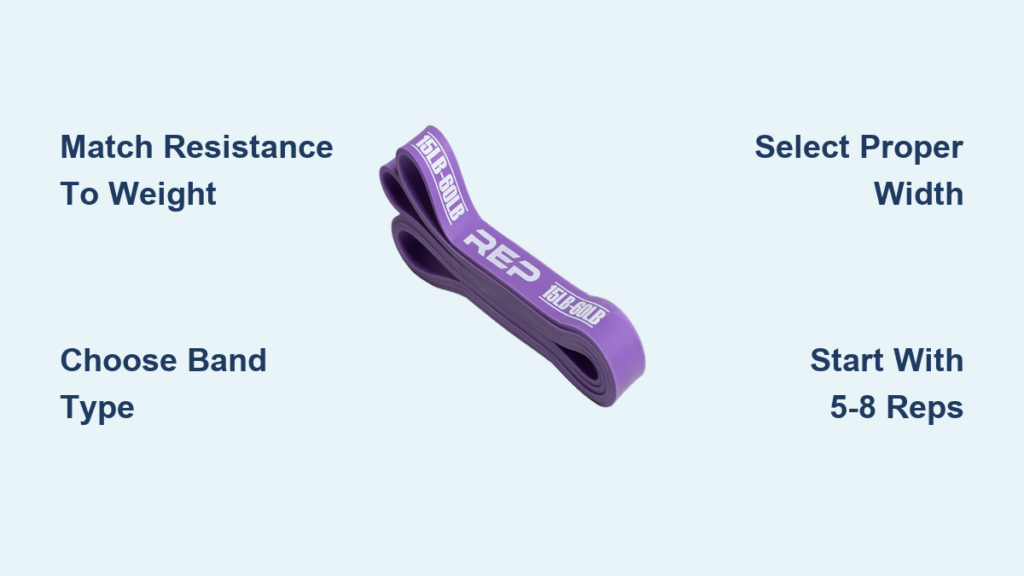
Selecting the right resistance level starts with honest self-assessment of your current pull-up capacity. The perfect band allows you to complete 5-8 quality repetitions with proper form while experiencing muscular fatigue by your final rep. If you can easily complete 10+ reps, the band is too light and won’t provide the progressive overload needed for strength development. If you can’t complete at least 3-4 reps even with the band, you need more assistance to make your training productive.
Body weight significantly impacts your band selection—a 150-pound person typically needs 20-30 pounds less resistance than a 200-pound individual to achieve similar assistance. Most effective pull-up progression systems involve maintaining multiple bands spanning 20-40 pounds of resistance difference. This allows you to adjust assistance based on daily energy levels, training volume goals, or specific weak points you’re addressing. The right resistance selection ensures you’re always training in the optimal zone for continued strength development.
Light, Medium, and Heavy Band Options Explained
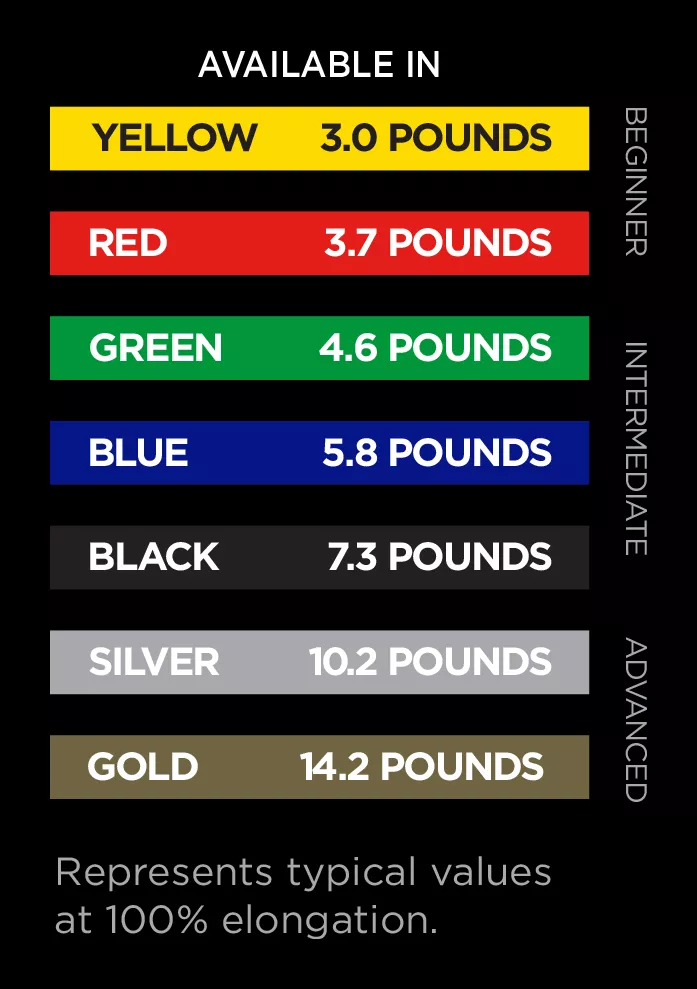
Light Bands: 10-30 Pounds of Assistance
Light resistance bands suit individuals who can already perform 3-8 unassisted pull-ups and want to increase training volume or add weighted variations. These bands allow you to complete additional repetitions beyond your unassisted capacity while maintaining proper form. They’re also ideal for advanced athletes performing high-repetition training blocks or using bands to extend sets during greasing-the-groove protocols.
Medium Bands: 30-50 Pounds of Assistance
Medium resistance bands serve intermediate athletes who can complete 1-5 unassisted pull-ups. This range typically allows trainees to add 3-5 repetitions to their sets, transforming a maximum-effort single rep into a productive set of 5-8 controlled repetitions. Most beginners progressing toward their first pull-up find medium bands represent the “sweet spot” that challenges developing strength while maintaining proper technique.
Heavy Bands: 50-80+ Pounds of Assistance
Heavy bands serve two primary purposes: helping beginners complete their first pull-up repetitions and enabling advanced athletes to train explosive variations. For someone who cannot complete a single pull-up independently, a heavy band provides the foundational support needed to practice the movement pattern and build confidence. Advanced athletes also use heavy bands for assisted single-arm pull-ups or explosive concentric training that would otherwise be impossible.
Loop Bands Versus Long Bands for Pull Ups
Loop bands feature a continuous circular design that creates even tension throughout your entire pull-up range of motion. You can easily loop them around the pull-up bar, step into them, or hook them behind your knees for consistent assistance that doesn’t require constant adjustment. The closed-loop construction prevents shifting during repetitions, maintaining stable resistance from first to last rep.
Long bands (rectangular with handles or open ends) offer versatility across multiple exercises but present challenges for pull-up-specific training. While you can tie knots in long bands to create loops, they generally provide more variable resistance and less stability than purpose-designed loop bands. The open-ended design allows shifting during repetitions, requiring frequent setup adjustments that interrupt your training flow. However, long bands work well if you want one piece of equipment for both pull-ups and dozens of other exercises.
Fabric Bands Versus Latex: Key Differences

Fabric bands constructed from woven materials provide a premium training experience that justifies their higher price point. The fabric construction eliminates the pinching sensation that latex bands cause against your skin, particularly when bands snap back toward their resting position. They also resist degradation from UV exposure and repeated stretching, maintaining consistent resistance characteristics over months or years of regular training.
Latex bands remain the most common and affordable option, offering excellent elasticity and a wide resistance range at accessible price points. Quality latex bands last 6-12 months with proper maintenance, but require protection from direct sunlight, regular inspection for micro-tears, and careful storage. If you have latex sensitivities, fabric or synthetic alternatives become your only viable training options.
Find the Right Band Width and Length
Band width and thickness directly correlate with resistance level—thicker bands produce higher resistance at equivalent stretch distances. For pull-up assistance, bands typically range from half an inch to several inches wide, with wider bands preferred for heavy assistance due to better force distribution across your feet or knees.
Length determines both maximum stretch available and setup options. Longer bands (41-48 inches) provide more versatility for different heights and exercises but may require multiple wraps around the bar. Shorter bands offer less adjustment range but typically provide more consistent resistance specifically for pull-ups. Consider your height and preferred setup method when selecting band length—taller athletes often benefit from longer bands.
Beginner Band Selection Strategies
Newcomers should prioritize bands offering substantial assistance (50-80 pounds for most adults) with comfortable construction that makes regular training sustainable. Look for wider bands that distribute force comfortably across your feet, reducing pressure concentration that causes discomfort during extended sets. Beginner-specific bundles featuring multiple resistance levels, carrying cases, and training guides often represent better value than piecing together individual purchases.
Consider band attachment design carefully—options with built-in handles or foot straps simplify setup and eliminate fiddling between sets. Many beginners make the mistake of purchasing only one band; instead, invest in a set with 2-3 resistance levels to accommodate your progress as strength improves over weeks and months of consistent training.
Advanced Pull-Up Band Techniques
Experienced athletes can use bands in creative configurations to challenge pull-up strength uniquely. One advanced approach involves using lighter assistance bands in reverse—anchoring them at the top of the pull-up bar and stepping down into them to create added resistance. This “reverse band” technique provides maximum resistance at the top of the movement where you’re strongest, creating a strength curve that targets weak points while allowing heavier loading than unassisted pull-ups.
Advanced practitioners also benefit from combining bands with weighted vests to create variable resistance systems. Configuring bands to provide minimal assistance at the top while offering more support at the bottom creates unique strength curves that address specific limitations within your pull-up movement. Identify your weakest point in the pull-up range (bottom dead hang, mid-range, or top lockout) to select band configurations targeting those specific weaknesses.
Extend Band Lifespan with Proper Care
Proper maintenance significantly extends your resistance band’s functional lifespan. Store bands away from direct sunlight, extreme temperatures, and sharp objects that could cause damage. Many athletes keep bands loosely rolled or hanging to prevent permanent kinks that alter resistance characteristics—once a band takes a set shape, it rarely returns to consistent performance.
Regular cleaning removes sweat and skin oils that accelerate material degradation. For latex bands, use mild soap and water followed by thorough drying. Fabric bands typically tolerate machine washing on gentle cycles (check manufacturer specs first). Before each training session, inspect bands for warning signs including surface cracking, thinning in high-stress areas, permanent deformation when relaxed, or loss of elasticity.
Get the Best Value for Your Budget
Resistance bands for pull-ups span from budget multi-packs under $20 to premium single bands exceeding $50. Entry-level bands offer adequate performance for casual users, while serious athletes often invest in specialized bands from manufacturers focusing specifically on resistance training equipment. The price difference typically reflects material quality, resistance consistency, and durability rather than dramatic functional differences for pull-up applications.
When comparing options, check actual resistance specifications rather than relying on color codes, as these vary significantly between manufacturers. Customer reviews often reveal real-world insights about consistency between bands of the same model and actual longevity under regular training conditions. Bundled multi-band packages provide the best value since maintaining multiple resistance levels proves essential for progressive pull-up training regardless of your current ability level.
Making Your Final Selection
Choosing the right resistance band for pull-ups requires balancing your current strength level, body weight, training goals, and budget. Start with resistance allowing 5-8 quality repetitions with proper form, and progress to lighter bands as your strength improves. Prioritize comfort through appropriate width and material selection—discomfort during high-volume sessions undermines training consistency. Maintain bands properly to ensure safe, consistent training over time.
With the right resistance band selection and committed training application, these versatile tools provide one of the most effective pathways to developing pull-up strength. Whether you’re working toward your first unassisted repetition or looking to dramatically increase your pull-up capacity, matching the right band to your current abilities accelerates your progress while building foundational pulling strength that transfers to countless other fitness pursuits.