Your cork yoga mat has become your sanctuary—a place where you find balance, strength, and peace. But after months of downward dogs and warrior poses, that once-pristine surface now shows sweat stains, dirt buildup, and unpleasant odors. When your cork mat starts slipping during practice or develops that unmistakable “gym bag smell,” you know it’s time for proper cleaning. Learning how to clean cork yoga mat properly isn’t just about appearance—it directly impacts your grip, hygiene, and the longevity of your investment. In this guide, you’ll discover the exact cleaning methods that preserve your mat’s natural antimicrobial properties while keeping it fresh for every practice session.
Unlike standard PVC mats, cork yoga mats require specialized care that protects their unique composition. Most cork mats combine natural cork with a rubber or jute backing, creating an eco-friendly surface that’s naturally antimicrobial but vulnerable to improper cleaning techniques. Many yogis make the critical mistake of using harsh chemicals that strip away cork’s natural properties or soaking their mats too long, causing delamination. By following the precise cleaning methods outlined here, you’ll extend your mat’s life by years while maintaining optimal grip and performance. Let’s dive into the specific techniques that keep your cork mat in prime condition without damaging its natural structure.
Why Standard Cleaning Methods Damage Cork Yoga Mats
How Harsh Chemicals Destroy Natural Cork Properties
Using household cleaners like Windex, bleach, or vinegar solutions on your cork yoga mat creates irreversible damage to its surface. These chemicals break down the natural oils in cork that provide antimicrobial benefits and superior grip. When you spray vinegar directly on cork, the acid content causes the material to become brittle and crack over time. Similarly, alcohol-based cleaners strip away the protective layer that makes cork naturally resistant to bacteria and odors. The result? A mat that smells worse than before, slips during practice, and develops permanent discoloration.
Consequences of Improper Drying Techniques
Leaving your damp cork mat rolled up or folded creates the perfect breeding ground for mildew between the layers. Unlike foam mats that can withstand full submersion, cork mats have a porous surface bonded to a rubber backing—when moisture gets trapped between these layers, separation occurs. Many yogis unknowingly ruin their expensive mats by hanging them in direct sunlight to dry, which causes the cork to dry too quickly and develop cracks. The thermal shock from moving a wet mat from a cool room to hot sun creates stress points that compromise structural integrity.
Essential Tools for Proper Cork Yoga Mat Cleaning
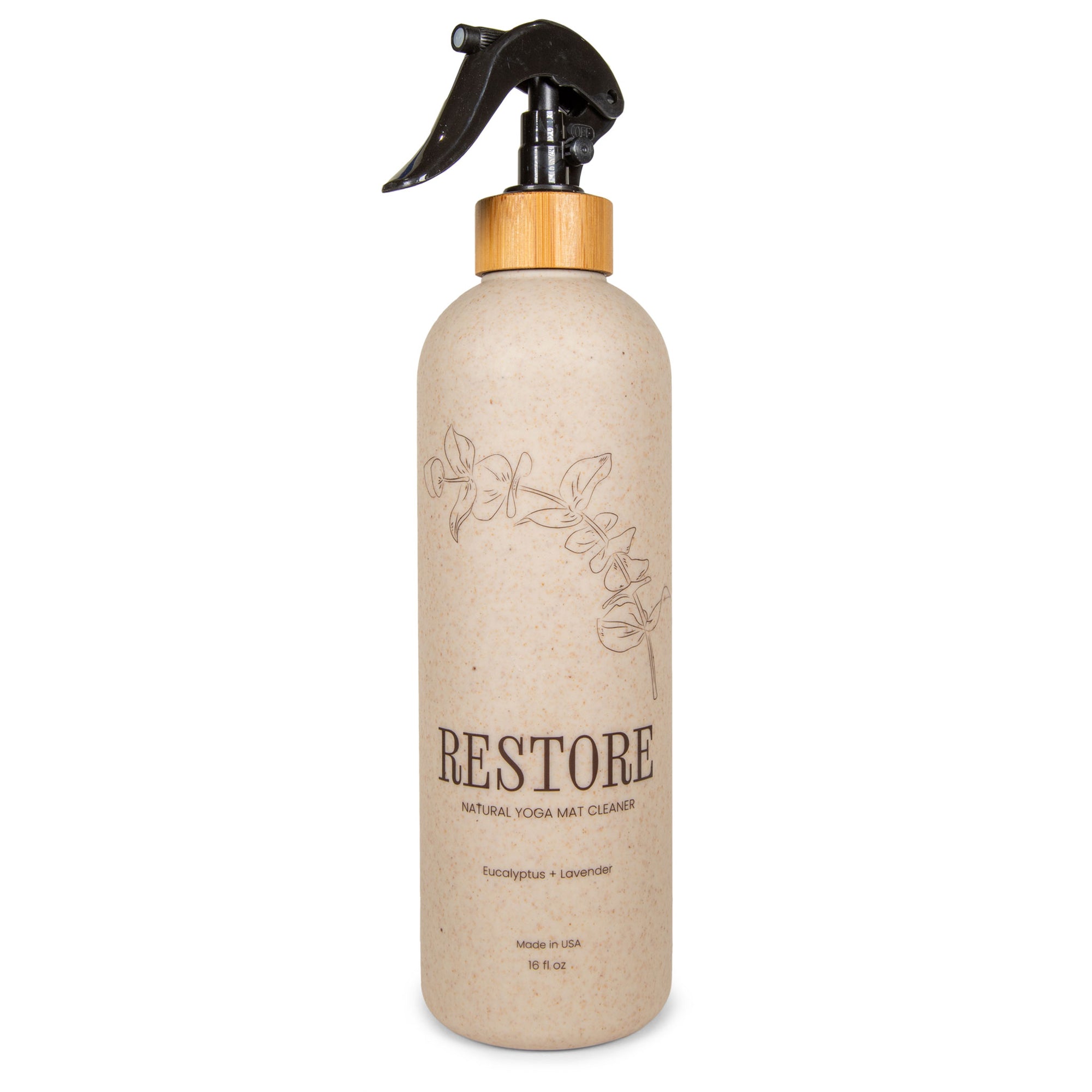
Natural Cleaning Solutions That Actually Work
Create an effective cleaning solution using just three household items: distilled water, mild castile soap, and optional essential oils. Mix 1 cup of water with 1 teaspoon of castile soap in a spray bottle—this gentle formula cleans without stripping natural oils. For stubborn odors, add 3-5 drops of tea tree oil, which enhances cork’s natural antimicrobial properties without chemical residue. Avoid pre-mixed yoga mat sprays containing alcohol or vinegar, as these degrade cork’s surface over time. Keep microfiber towels specifically designated for mat cleaning—they absorb moisture without leaving lint or fibers on your surface.
Equipment That Prevents Accidental Damage
Use a soft-bristled brush with natural fibers for spot cleaning stubborn dirt without scratching the cork surface. Never use abrasive sponges or stiff brushes that create micro-tears where bacteria can grow. Keep a dedicated mat rack or door hanger for proper drying—never use clothespins or clips that create permanent crease marks. Have several clean towels ready specifically for mat maintenance; using gym towels with fabric softener residue transfers chemicals that reduce grip. Store your cleaning supplies together in a small caddy for quick access after each practice session.
Step-by-Step Cleaning Process for Daily Maintenance
Quick Post-Practice Wipe Down Procedure
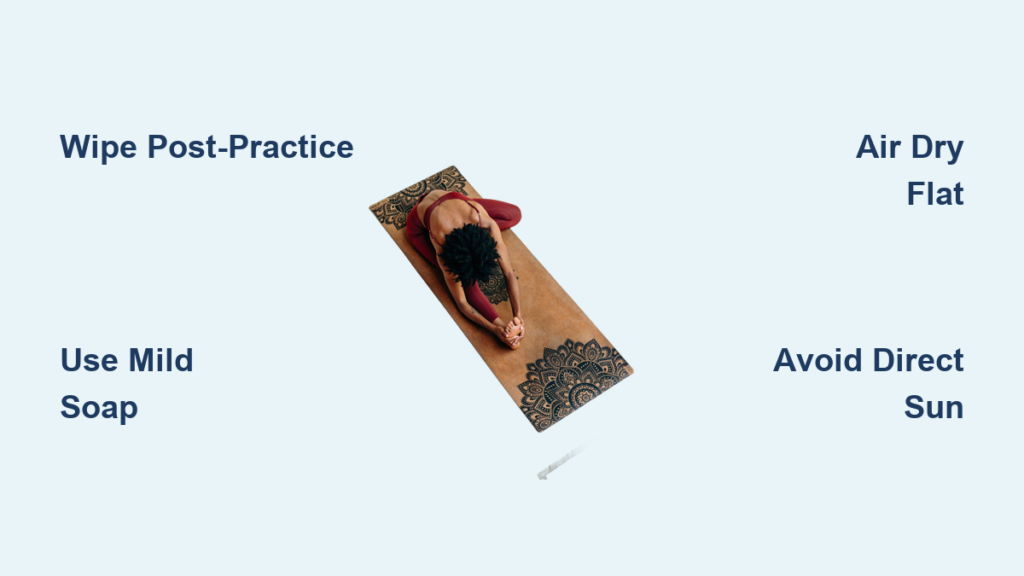
Wipe your cork yoga mat immediately after each session while sweat is still fresh using a damp microfiber cloth with just water. Start from the top near the head area and work downward toward the foot end using long, smooth strokes—never circular motions that spread moisture. Flip the mat and quickly wipe the rubber backing to prevent sweat accumulation that causes slipping. For hot yoga practitioners, keep a second dry towel to immediately absorb excess moisture before wiping. This simple 60-second routine prevents 90% of odor and staining problems by removing moisture before it penetrates deep into the cork.
Deep Cleaning Method for Weekly Refresh
Spray your natural cleaning solution evenly across the entire mat surface, focusing on high-sweat areas like the center and hand positions. Wait exactly 2 minutes—any less and the solution won’t penetrate, any longer and excess moisture risks delamination. Gently wipe using downward strokes with moderate pressure, rotating your towel frequently to avoid redepositing dirt. For stubborn spots near fingers and toes, use the soft-bristled brush with light circular motions for no more than 10 seconds. Immediately follow with a clean, dry towel using the same downward motion pattern to remove all moisture. Never let cleaning solution air dry on the surface.
Proper Drying Techniques That Extend Mat Lifespan

Indoor Drying Method for Humid Climates
Hang your mat in a well-ventilated room away from direct sunlight using a dedicated mat hanger that supports the full length without creasing. Position it near an open window or fan for gentle airflow, but never directly in front of an air conditioning vent that creates rapid drying. Check the mat every 30 minutes, flipping it to the opposite side once the initial dampness disappears from the first side. The complete drying process should take 2-4 hours depending on humidity—never rush it with hair dryers or heaters. Test for complete dryness by pressing your palm firmly in multiple spots; if any coolness remains, continue drying.
Emergency Drying for Time-Pressed Yogis
When you need your mat ready quickly for back-to-back classes, use the towel compression method. Lay the mat flat on clean towels, then roll it up gently with the towels inside. Step on the rolled mat along its entire length to compress moisture into the towels. Unroll and replace with dry towels, repeating until minimal moisture transfers. Never wring or twist the mat, as this creates permanent distortion in the cork layer. For immediate use, focus drying only on the top surface where hands and feet contact, ensuring at minimum these areas are completely dry to prevent slipping.
Preventative Maintenance That Reduces Cleaning Frequency
Pre-Practice Preparation to Minimize Sweat Transfer
Wipe your hands and feet with a dry towel before stepping on your mat to remove excess moisture and skin oils. Apply natural grip aids like chalk-free rosin powder only to problem areas rather than the entire surface. Wear moisture-wicking clothing that pulls sweat away from your body instead of cotton that retains moisture. Place a thin yoga towel over high-sweat zones during intense practices, changing it midway through long sessions. These simple steps reduce direct sweat contact with cork by up to 70%, dramatically decreasing cleaning frequency.
Storage Methods That Prevent Premature Aging
Store your mat completely unrolled in a temperature-controlled space away from direct sunlight or heating vents. Never compress it tightly in a bag—loosely roll it with the cork side out to prevent creasing the functional surface. Place acid-free tissue paper between folded areas if temporary folding is necessary. Keep it away from rubber-soled shoes or other rubber products that can cause staining through chemical interaction. Proper storage prevents the most common causes of cork deterioration that make mats appear dirty even when clean.
Troubleshooting Common Cork Mat Cleaning Problems
Removing Yellow Sweat Stains Without Damage
Mix a paste of baking soda and just enough water to form a thick consistency. Apply only to stained areas using a soft cloth in gentle circular motions for 15 seconds maximum. Wipe immediately with a damp cloth followed by dry towel—never let baking soda residue dry on cork. For persistent stains, repeat the process but reduce contact time to 5 seconds. Never use hydrogen peroxide or commercial stain removers that bleach the natural cork color. Most stains will fade significantly after 2-3 proper cleaning sessions as the mat’s natural oils rebalance.
Eliminating Persistent Odors From Deep Within the Mat
Create an odor-neutralizing mist by combining 1 cup water, 1 teaspoon baking soda, and 3 drops lavender essential oil in a spray bottle. Mist lightly over the entire surface and let air for 10 minutes before wiping with a damp cloth. Place the mat in indirect sunlight for no more than 20 minutes—any longer causes damage. For severe odors, sprinkle a light layer of baking soda across the mat, let sit for 15 minutes, then vacuum gently with a brush attachment. Never use Febreze or other commercial odor eliminators that leave chemical residues affecting grip.
Monthly Maintenance Routine for Long-Term Performance
Perform a deep conditioning treatment monthly using natural cork conditioner or a homemade version of beeswax and jojoba oil. Apply a thin, even layer across the entire surface with a soft cloth, let absorb for 30 minutes, then buff gently. This restores natural oils stripped through regular use and cleaning. Check for early signs of delamination along edges and address immediately by applying light pressure with a book while drying. Rotate your mat regularly to ensure even wear across the entire surface. Proper monthly care adds 2-3 years to your mat’s functional lifespan while maintaining optimal performance.
By implementing these precise cleaning methods tailored specifically for cork yoga mats, you’ll maintain superior grip, eliminate odors, and extend the life of your investment. Remember that consistency matters more than intensity—regular gentle cleaning preserves cork’s natural properties better than occasional aggressive treatment. Your mat will continue providing the perfect foundation for your practice, session after session, without compromising the eco-friendly benefits that made you choose cork in the first place. Treat your cork mat right, and it will support your yoga journey for years to come.