Iron weight plates endure constant use in home and commercial gyms, accumulating sweat, dead skin cells, chalk residue, and bacteria with every workout. This buildup doesn’t just create an unhygienic training environment—it actively damages your equipment by promoting rust and corrosion on the iron surfaces. Learning how to clean iron weight plates properly extends their lifespan, maintains their appearance, and ensures a sanitary space for your workouts. Whether you’re maintaining competition plates that need to look pristine or simply want to protect your home gym investment, this comprehensive guide covers everything from basic cleaning techniques to rust prevention strategies that keep your plates in peak condition for years to come.
Why Your Iron Plates Develop Rust Without Proper Cleaning
Iron weight plates are exposed to moisture and contaminants every time you lift. Sweat contains salts and acids that accelerate corrosion when left sitting on plate surfaces, while chalk—commonly used for grip—creates a sticky residue that traps dirt and bacteria. Over time, this combination leads to pitting, rust spots, and degraded grip textures that make plates uncomfortable and unsafe to handle. Beyond the hygiene concerns, corroded plates can damage barbells and weight trees through contact, creating a cascade of maintenance issues throughout your gym setup. Regular cleaning interrupts this destructive cycle, protecting both your equipment and your health. Gym owners should recognize that clean equipment also projects professionalism and care, contributing to member satisfaction and retention.
How Sweat Chemistry Attacks Iron Surfaces
Your sweat contains approximately 0.5% salt by weight, along with various acids and proteins that create the perfect environment for oxidation when left on iron surfaces. Within hours of your workout, this biological cocktail begins breaking down the metal’s surface integrity. The textured grip areas on plates trap more moisture, creating microscopic pockets where rust initiates and spreads unseen. This hidden corrosion often progresses significantly before becoming visible to the naked eye, making regular cleaning essential even when plates appear clean.
Health Risks from Unclean Weight Plates
Beyond equipment damage, unclean iron weight plates harbor dangerous bacteria that transfer directly to your hands and body during workouts. Studies show gym equipment can carry pathogens like Staphylococcus aureus and E. coli at rates 79 times higher than public toilet seats. When these bacteria interact with the microscopic abrasions common during weightlifting, they create entry points for infection. Regular cleaning with proper disinfection protocols eliminates these health risks while preserving your equipment investment.
Gather the Right Cleaning Supplies for Iron Plates

Before diving into the cleaning process, assemble the supplies you’ll need for both routine maintenance and deeper cleaning tasks. Having everything organized before you start prevents interruptions and ensures a thorough, efficient cleaning session. The right tools make the difference between a quick maintenance task and a frustrating restoration project.
Essential Cleaning Kit for Weekly Maintenance
You don’t need expensive specialty products to keep iron weight plates clean—most household items work perfectly. Start with mild dish soap that cuts through sweat and oils without damaging plate surfaces or markings. Warm water acts as the primary solvent for loosening dried-on residue, while a stiff-bristled scrubbing brush tackles stubborn buildup in grip textures and around plate edges. Microfiber cloths or clean towels provide streak-free drying and absorbency, ensuring no moisture remains to promote rust. For high-traffic gym environments, especially during cold and flu seasons, include rubbing alcohol for powerful disinfection. Keep these basic supplies in a dedicated cleaning caddy for quick access after each workout session.
Specialized Tools for Rust Removal and Prevention
For addressing existing rust or implementing prevention strategies, add white vinegar, mineral oil or gun oil, and optionally some protective gloves to your cleaning arsenal. White vinegar works as a natural rust dissolver that’s safe for iron surfaces without requiring harsh commercial chemicals. Mineral oil creates an effective moisture barrier when applied in thin layers, while gun oil offers superior protection in humid environments due to its longer-lasting formula. Keep fine-grit sandpaper or steel wool on hand for stubborn rust spots, but use these cautiously on painted or coated plates to avoid damaging the finish.
Execute the 5-Minute Daily Cleaning Routine for Iron Plates
The most effective cleaning strategy involves consistent, quick maintenance rather than occasional intensive sessions. This daily routine takes just minutes but prevents the buildup that leads to rust and hygiene issues. Implementing this simple process after every workout saves hours of restoration work down the line.
Step-by-Step Post-Workout Wipe Down
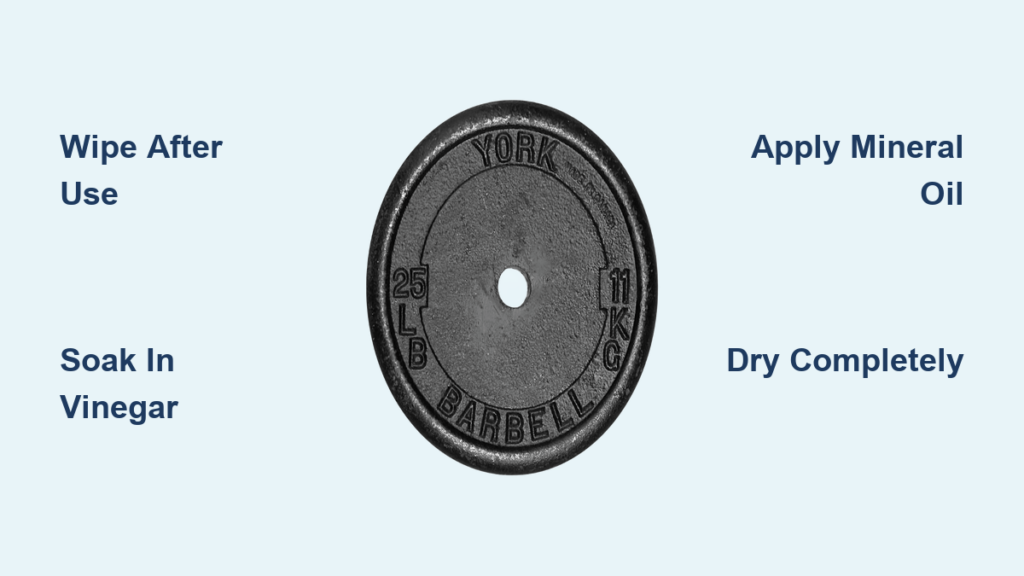
Begin by removing all weight plates from your barbells or storage pins and inspecting each one for visible debris or problem areas. Mix warm water with a few drops of mild dish soap in a spray bottle or bowl. Using a damp microfiber cloth, wipe down all surfaces of each plate, focusing on the grip areas where fingers contact the plate and the outer edges where residue accumulates most heavily. For plates with noticeable dried sweat or chalk buildup, gently scrub with your stiff-bristled brush using the soapy solution. Rinse each plate with a clean, damp cloth to remove all soap residue, which can attract dirt if left behind. Dry each plate completely with a dry microfiber towel, ensuring no moisture remains in crevices or around the center hole—trapped water accelerates rust formation within hours.
Spot Cleaning High-Traffic Areas
Pay special attention to the textured grip surfaces where your fingers make contact—these areas trap the most sweat and bacteria. Run your fingers over these textures during cleaning to feel for any remaining residue. The center hole that slides onto the barbell deserves extra attention, as moisture often collects here and leads to internal rust that compromises structural integrity. If you notice any early rust spots (small orange dots), address them immediately with a vinegar-soaked cloth before they spread. For commercial gyms or during illness seasons, follow the drying step with a quick wipe-down using rubbing alcohol to disinfect all surfaces thoroughly.
Deep Clean Heavily Soiled Iron Plates in 30 Minutes
Plates that have been neglected or see heavy daily use often require more intensive treatment beyond basic wiping. This deep cleaning process effectively removes years of buildup without damaging your equipment when performed correctly. Knowing when to move beyond basic cleaning prevents minor issues from becoming major restoration projects.
When to Initiate a Deep Cleaning Session
Schedule deep cleaning sessions when you notice plates feeling gritty to the touch, see visible chalk buildup that doesn’t wipe away easily, or spot early rust formation. Home gym plates used regularly by one or two people require monthly deep cleaning, while commercial gym plates need this treatment weekly due to higher traffic. Competition plates should receive deep cleaning after each event, as the combination of heavy handling, chalk application, and varied environmental conditions accelerates buildup and corrosion risk. Ignoring these warning signs leads to increased maintenance time and potential equipment replacement costs.
Effective Soaking and Scrubbing Techniques
For significant buildup, prepare a soaking solution of warm water and mild dish soap in a large container or bathtub, submerging the plates for fifteen to thirty minutes to loosen caked-on residue. After soaking, attack stubborn areas with your stiff-bristled brush or, for particularly tough spots, a wire brush—though use caution on painted or coated plates to avoid damaging the finish. For rust spots that have developed during neglect, apply white vinegar directly to affected areas and allow it to sit for ten to fifteen minutes, which dissolves light surface rust without requiring harsh commercial chemicals. Following the vinegar treatment, scrub the areas thoroughly and rinse completely with clean water. Dry immediately and completely, then apply a protective oil coating to prevent future corrosion.
Stop Rust in Its Tracks with Proper Treatment

Rust on iron weight plates progresses rapidly if left untreated, spreading from small spots to extensive corrosion that compromises plate integrity and appearance. When addressing existing rust, start with the least aggressive methods—white vinegar for light surface rust, progressing to fine-grit sandpaper or steel wool for more established corrosion.
Step-by-Step Rust Removal Process
For light surface rust, apply white vinegar directly to affected areas using a cloth or spray bottle and let sit for 10-15 minutes. The acetic acid in vinegar dissolves rust without damaging the underlying iron. After treatment, scrub the area with a stiff brush to remove the dissolved rust particles, then rinse thoroughly with clean water. For more established rust, use fine-grit sandpaper (220-400 grit) or steel wool to gently remove corrosion while preserving as much of the original surface as possible. Always work in the direction of any existing texture to maintain grip functionality. After removing all visible rust, neutralize any remaining acid from cleaning agents by wiping plates with a baking soda solution, then rinse and dry thoroughly.
Creating an Effective Moisture Barrier
After rust removal and complete drying, apply a thin layer of mineral oil or gun oil to create a moisture barrier, paying special attention to edges and any areas where rust previously formed. Use a clean cloth to apply just enough oil to create a slight sheen—excess oil will attract dust and dirt. This protective coating should be reapplied monthly for plates in humid environments or quarterly for those in climate-controlled spaces. Establishing this routine transforms rust maintenance from a major restoration project into a quick, manageable task that keeps your plates looking new indefinitely.
Store Iron Plates Properly to Minimize Maintenance Needs
Proper storage significantly reduces the cleaning burden and protects your plates between workouts. Keep iron weight plates in a climate-controlled environment with stable, low humidity—garages and basements with temperature fluctuations create ideal conditions for condensation and corrosion.
Ideal Storage Conditions for Longevity
Store plates vertically on dedicated weight trees or plate holders rather than stacking them flat, which prevents moisture from becoming trapped between surfaces and allows air circulation around each plate. Consider using plate covers or storing plates in cabinets for additional protection against dust and humidity in home gym settings. Always ensure plates are completely dry before storing them, and periodically inspect stored plates for early signs of moisture damage or rust development. Commercial gyms should designate specific storage areas away from high-traffic zones where plates are less likely to be bumped, dropped, or exposed to sweat residue from nearby activity.
Avoid These 5 Costly Iron Plate Cleaning Mistakes
Several well-intentioned cleaning practices actually damage iron weight plates and should be avoided. Never use bleach or ammonia-based cleaners, which corrode iron and can strip paint or coating from plate surfaces. Avoid pressure washing or fully submerging plates for extended periods, as water can penetrate areas that won’t dry properly, promoting internal rust. Don’t skip the drying step—even “damp” plates left to air dry will develop rust spots within days. Never apply oil to plates that haven’t been thoroughly cleaned and dried, as you’re essentially sealing moisture and contaminants onto the surface. Avoid storing plates immediately after cleaning without confirming complete dryness, and don’t neglect the center hole and hub areas where moisture collects and rust commonly forms.
Why Commercial Rust Removers Damage Plates
Many commercial rust removers contain phosphoric acid or other strong chemicals that not only remove rust but also etch the surrounding iron surface. While they may provide immediate visual improvement, these products compromise the structural integrity of your plates over time. The resulting microscopic pitting creates more surface area for future rust to take hold, accelerating the corrosion cycle. Stick with white vinegar for home rust removal—it works more slowly but preserves your plate’s surface integrity for long-term use.
Implement This Iron Plate Maintenance Schedule for Longevity
Consistency matters more than occasional intensive cleaning when maintaining iron weight plates. Commercial gyms with high traffic should implement daily surface wiping with quick disinfection, supplemented by weekly deep cleaning that includes thorough scrubbing and complete drying. Home gym plates used regularly by one or two people require weekly basic cleaning, with monthly deep cleaning sessions that incorporate rust inspection and protective oil application. Plates that see competition use should be cleaned after each event. Track your cleaning schedule in a gym maintenance log to ensure consistency and identify patterns—such as increased maintenance needs during humid summer months—that might require adjusted routines. This systematic approach prevents the overwhelming buildup that makes cleaning feel like a major project, keeping maintenance quick and manageable.