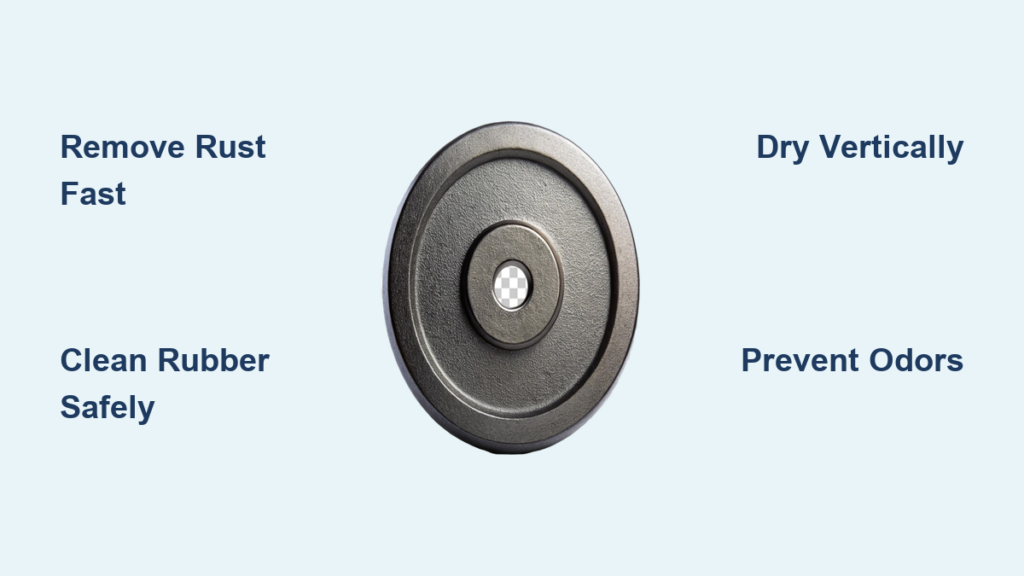
Grabbing a slimy, rusty weight plate mid-workout isn’t just gross—it’s a bacterial hazard. Sweat, chalk, and moisture transform weight plates into petri dishes for staph and ringworm, while neglect accelerates rust that permanently damages your investment. Whether you’re dealing with corroded cast iron plates or smelly rubber-coated sets, this guide delivers proven methods to restore hygiene and extend equipment life. You’ll learn how to clean weight plates safely without damaging coatings, eliminate stubborn rust in under 20 minutes, and implement a maintenance routine that keeps gym germs at bay. No more avoiding that sticky 45-pounder—we’ve got field-tested solutions for every plate type and contamination level.
Why Dirty Weight Plates Put Your Health and Equipment at Risk
Skipping weight plate cleaning creates invisible threats. Sweat and skin cells trapped in rust pits harbor bacteria like Staphylococcus aureus, which survives on gym surfaces for weeks. Rubber-coated plates develop porous biofilms that standard wipes can’t penetrate, turning them into odor factories. For cast iron, moisture exposure triggers oxidation within hours—leading to pitting that weakens structural integrity. A single neglected session accelerates corrosion exponentially, especially in humid climates. The solution isn’t just wiping; it’s understanding how different plate materials react to cleaners. Rubber degrades with alcohol-based solutions, while cast iron requires immediate drying to prevent flash rust. Ignoring this risks equipment replacement costs exceeding $200 for a full set.
How Sweat and Chalk Create Permanent Damage Cycles
Sweat’s salt content reacts with metal oxides, accelerating rust formation 5x faster than dry corrosion. Chalk particles then embed into these pits, creating abrasive grooves that shred gym towels and hands during use. For rubber plates, chalk mixes with oils to form a cement-like residue that attracts more dirt. You’ll recognize this as the gritty, white film that won’t wipe off with water alone. Left untreated, this cycle degrades rubber elasticity within months, causing cracks during heavy lifts.
Spotting Early-Stage Contamination Before It’s Too Late
Check plates weekly for these red flags:
– Metal plates: Dull spots where coating is lifting (indicates subsurface rust)
– Rubber plates: Sticky residue that leaves fingerprints (biofilm buildup)
– All plates: Musty smell after wiping (bacteria trapped in micro-pores)
– Critical warning: Orange dust when handling cast iron (active rust propagation)
Essential Supplies for Safe Weight Plate Cleaning

Never use household cleaners like bleach or ammonia—they strip rubber coatings and pit metal. Your kit needs three core components: a pH-neutral cleaner, non-abrasive tools, and proper drying aids. Skip the gym’s shared towels; they transfer bacteria between equipment.
Must-Have Cleaning Toolkit (Under $15 Total)
- Gentle cleaner: 2 oz hydrogen peroxide mixed with 1 cup water (kills 99.9% of gym bacteria)
- Scrubbing tools: Brass-bristle brush (safe for metal/rubber), microfiber cloths (lint-free)
- Rust treatment: Fine steel wool (0000 grade) for cast iron only
- Drying system: Fan + elevated drying rack (prevents moisture pooling)
What to Avoid: 3 Products That Destroy Weight Plates
- Vinegar solutions: Acetic acid etches rubber and accelerates iron oxidation
- Disinfectant sprays: Alcohol content dries out rubber, causing micro-tears
- Wire brushes: Leave scratches that become rust nests on metal plates
Deep Cleaning Cast Iron Plates: Stop Rust Before It Spreads
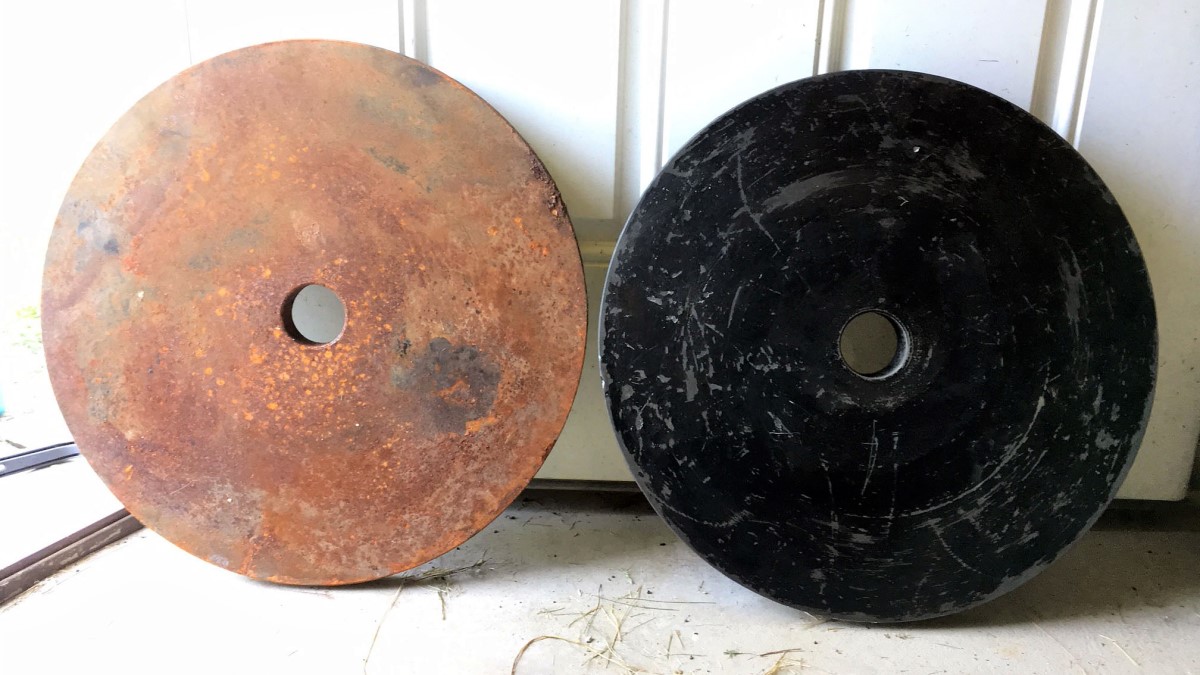
Cast iron plates demand immediate action at the first rust sign. Delaying treatment turns surface rust into deep pitting that compromises structural strength. The key is removing oxidation without stripping the factory oil coating.
Step-by-Step Rust Removal for Cast Iron
- Prep the plate: Wipe with dry cloth to remove loose debris (prevents scratching)
- Apply rust treatment: Rub 0000 steel wool in circular motions over rust spots until metal shines
- Neutralize residue: Spray peroxide solution, wait 2 minutes, then scrub with brass brush
- Final wipe: Use microfiber cloth dampened with mineral oil to restore protective coating
- Dry thoroughly: Place plate vertically on rack with fan blowing for 30+ minutes
How to Identify Irreparable Rust Damage
Stop cleaning if you see:
– Pitting deeper than 1/16 inch (measured with fingernail)
– Rust spreading under grip holes (indicates internal corrosion)
– Plate flexing when lifted (structural weakness)
These require professional refinishing or replacement—don’t risk plate failure during lifts.
Cleaning Rubber-Coated Plates Without Damaging the Surface
Rubber plates fail when cleaning removes their protective topcoat. Standard gym wipes push bacteria deeper into pores, while harsh chemicals cause “blooming”—a white residue signaling chemical breakdown. The fix requires gentle agitation to extract embedded grime.
The 10-Minute Rubber Plate Revival Method
- Pre-rinse: Hose off loose dirt (never soak—water seeps into core)
- Apply cleaner: Spray peroxide solution, wait 90 seconds to break down biofilms
- Scrub strategically: Use brass brush in straight lines (not circles) to avoid swirl marks
- Target sticky spots: Rub stubborn areas with cloth dampened in baking soda paste
- Dry correctly: Stand plates upright on rack; never stack until fully dry (2+ hours)
Eliminating Permanent Rubber Odors in 3 Steps
Musty smells mean bacteria penetrated the coating. Standard cleaning won’t fix this:
1. Sun treatment: Place plates in direct sunlight for 2 hours (UV kills deep bacteria)
2. Baking soda soak: Wipe with baking soda paste, wait 15 minutes, then rinse
3. Vinegar wipe: Only after sun treatment—dampen cloth with 50/50 water/vinegar, wipe, and dry immediately
Drying Weight Plates Properly: The #1 Mistake Everyone Makes
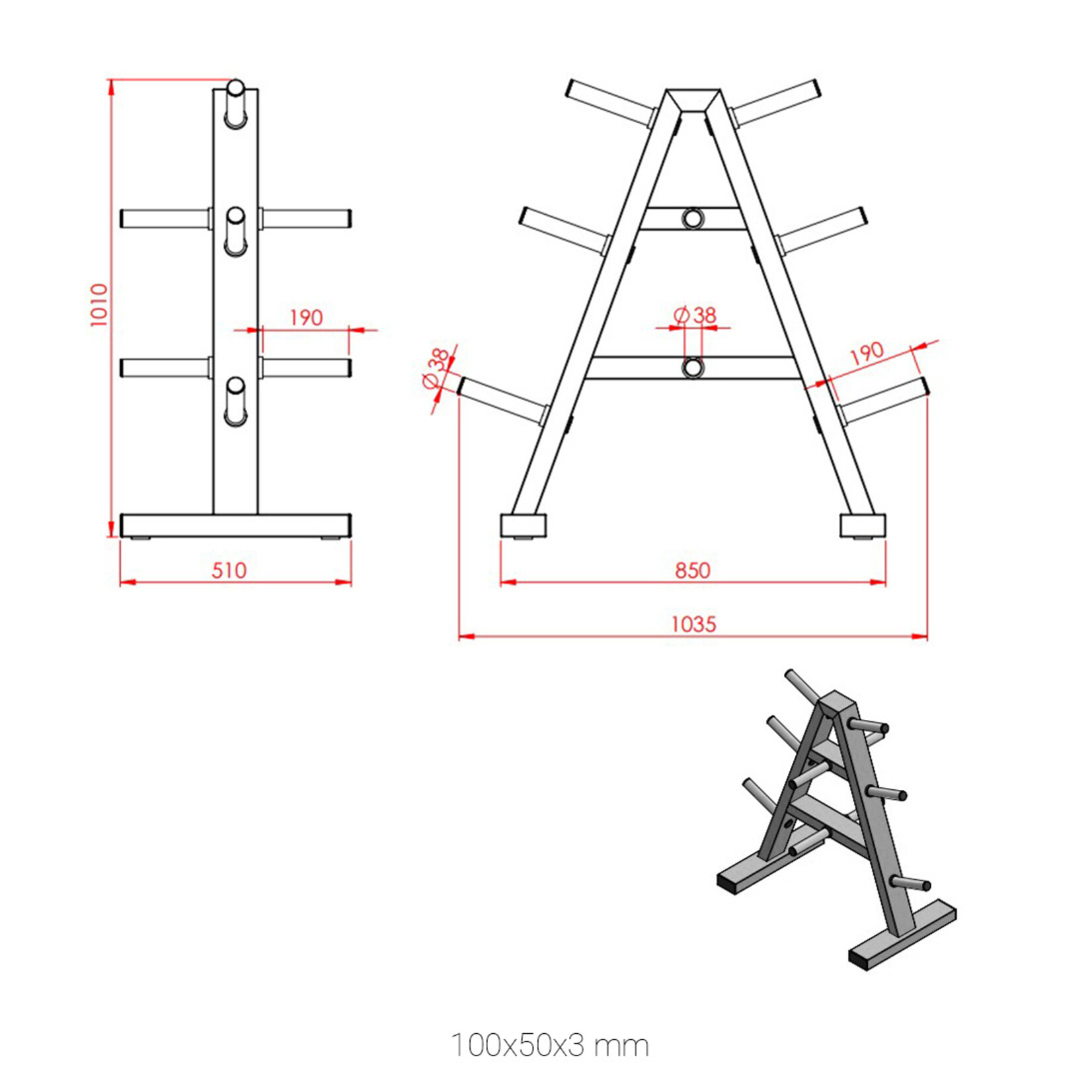
Towel-drying seems efficient but traps moisture in plate crevices—guaranteeing overnight rust. Rubber plates develop micro-condensation between layers when stacked wet, accelerating mold growth. Proper drying requires airflow physics most gyms ignore.
Why Airflow Direction Determines Rust Prevention
Place plates vertically on a drying rack with holes facing upward. This uses convection: warm air rises through the center hole, pulling moisture out from the core. Horizontal placement creates “dead zones” where humidity lingers. For rubber plates, separate with cardboard spacers to prevent sticking. Critical timing: cast iron must dry within 20 minutes of cleaning to avoid flash rust—use a fan on high.
Preventing Rust and Odors: The Maintenance Schedule That Works
Cleaning alone fails without prevention. Gym humidity above 60% triggers rust in 48 hours. Implement these habits based on your usage frequency to avoid deep cleaning emergencies.
Daily Routine (Takes 45 Seconds Per Plate)
After each use:
1. Wipe with dry microfiber cloth
2. Spray with 3:1 water/isopropyl alcohol mix (70% concentration)
3. Store vertically with space between plates
Weekly Maintenance for Heavy-Use Gyms
- Cast iron: Apply light coat of mineral oil to center hole edges
- Rubber: Sprinkle baking soda on surface, wipe after 10 minutes
- All plates: Rotate storage positions to prevent moisture pockets
When Professional Help Is Non-Negotiable
Some damage requires experts. Attempting DIY fixes on these issues risks equipment failure:
– Deep rust under grip holes (requires media blasting)
– Rubber delamination (peeling coating exposes metal core)
– Cracks near center hole (compromises structural integrity)
– Persistent odors after sun treatment (indicates core contamination)
Reputable refinishing costs $8–$12 per plate—far less than replacing a full set.
Common Cleaning Mistakes That Destroy Weight Plates
Avoid these costly errors:
– Using paper towels: Leaves fibers that embed into rubber pores
– Soaking rubber plates: Water seeps into urethane core, causing swelling
– Skipping center holes: Moisture trapped here causes internal rust
– Stacking wet plates: Creates bacterial breeding chambers between surfaces
Final Note
Keeping weight plates clean isn’t about spotless aesthetics—it’s infection control and equipment preservation. By dedicating 15 minutes weekly to proper cleaning, you eliminate germ hotspots while extending plate life by 3–5 years. Cast iron plates need immediate rust intervention, while rubber sets require biofilm-focused maintenance. Always dry vertically with airflow, never stack wet plates, and ditch alcohol-heavy sprays that degrade coatings. For ongoing protection, implement the 45-second post-workout wipe-down and weekly baking soda treatment. Your future self will thank you when that 45-pounder still feels smooth and rust-free years from now. Ready to tackle other gym equipment? Master how to sanitize barbells without stripping knurling in our next guide.