When your project requires precise steel plate weight calculations, getting it wrong could mean costly shipping errors, structural miscalculations, or wasted materials. Whether you’re a fabricator estimating costs, an engineer verifying load capacities, or a DIY enthusiast building a steel project, knowing exactly how to find weight of steel plate ensures your work proceeds smoothly and safely. This guide delivers the exact calculation methods professionals use, with clear examples you can apply immediately to any steel plate—no guesswork required.
Steel plate weight calculations follow a straightforward volume-density relationship that works consistently across all projects. By mastering these techniques, you’ll eliminate expensive estimation errors, verify supplier quotes with confidence, and plan material handling that keeps your worksite safe. The difference between a successful project and one plagued by delays often comes down to accurate weight calculations performed correctly the first time.
Steel Plate Weight Formula Explained
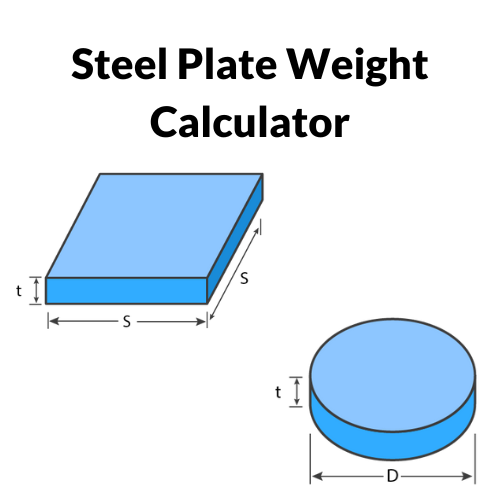
Weight = Length × Width × Thickness × Density
This fundamental equation forms the basis of all steel plate weight calculations. The formula works because steel maintains consistent density across most common grades, making it possible to calculate weight from physical dimensions alone. When applying this formula, the critical factor is maintaining unit consistency throughout your calculation—mixing inches with meters or pounds with kilograms guarantees incorrect results.
For practical application, you’ll convert the basic formula into unit-specific versions that eliminate intermediate conversion steps. In metric calculations, you’ll use millimeters for dimensions and multiply by 0.00000785 to get kilograms. For imperial measurements, inches multiply by 0.2835 to yield pounds. These pre-adjusted factors incorporate the standard steel density (7.85 g/cm³ or 490 lb/ft³) directly into the calculation, reducing errors from manual unit conversions.
How to Apply the Formula Correctly
Begin by measuring your plate’s three dimensions with precision—thickness, width, and length—using calipers for thickness and tape measures for larger dimensions. Record these measurements in consistent units (all metric or all imperial). For example, measuring thickness in inches but width in feet creates immediate calculation errors. Double-check each measurement before proceeding, as a single incorrect dimension invalidates your entire calculation.
Multiply the three dimensions together to determine volume, then multiply by the appropriate density factor. For a 10mm thick, 1000mm wide, and 2000mm long plate: 10 × 1000 × 2000 = 20,000,000 mm³. Multiply this by 0.00000785 to get 157 kg. For imperial, a 0.5″ thick, 24″ wide, 48″ long plate: 0.5 × 24 × 48 = 576 in³ × 0.2835 = 163.3 lbs.
Common Formula Mistakes That Skew Results
The most frequent error involves inconsistent units—measuring thickness in inches while width and length are in feet, or mixing millimeters with meters. A plate measured as 0.5″ thick, 2′ wide, and 4′ long requires converting all dimensions to inches (0.5 × 24 × 48) before multiplying by 0.2835. Forgetting to convert feet to inches produces results 1728 times too small.
Another critical mistake is using water density (1 g/cm³) instead of steel density (7.85 g/cm³), resulting in weights approximately 8 times too low. Some calculators default to generic metal density, so always verify the density value matches your specific steel type before accepting results.
Metric vs. Imperial Calculation Methods
Metric Calculation Process for Steel Plates
When working with metric units, the simplified formula Weight (kg) = Thickness (mm) × Width (mm) × Length (mm) × 0.00000785 eliminates unit conversion headaches. This factor combines the standard steel density (7850 kg/m³) with the conversion from cubic millimeters to cubic meters (1,000,000,000 mm³ = 1 m³).
For a 15mm thick structural steel plate measuring 1200mm wide and 3000mm long: 15 × 1200 × 3000 = 54,000,000 × 0.00000785 = 423.9 kg. This represents a substantial plate commonly used in building foundations and machinery bases where precise weight matters for load calculations.
Pro Tip: For quick mental estimates, remember that 1m² of 1mm thick steel weighs approximately 7.85 kg. A 1m² plate at 10mm thickness would weigh about 78.5 kg—useful for rapid verification of calculator results.
Imperial Calculation Process for Steel Plates
In imperial units, use Weight (lbs) = Thickness (in) × Width (in) × Length (in) × 0.2835, where 0.2835 represents steel’s density in pounds per cubic inch (490 lb/ft³ ÷ 1728 in³/ft³). This factor converts cubic inches directly to pounds without intermediate steps.
Calculate a 1″ thick steel plate measuring 36″ wide and 96″ long: 1 × 36 × 96 = 3,456 × 0.2835 = 979.5 lbs. This weight determines whether standard forklifts can handle the plate or if specialized lifting equipment is required—critical information before material arrives on-site.
Warning: Never confuse cubic foot density (490 lb/ft³) with cubic inch density (0.2835 lb/in³). Using 490 with inch measurements produces weights 1728 times too large—a catastrophic error for structural calculations.
Material-Specific Density Adjustments
Mild Steel vs. Stainless Steel Density Differences
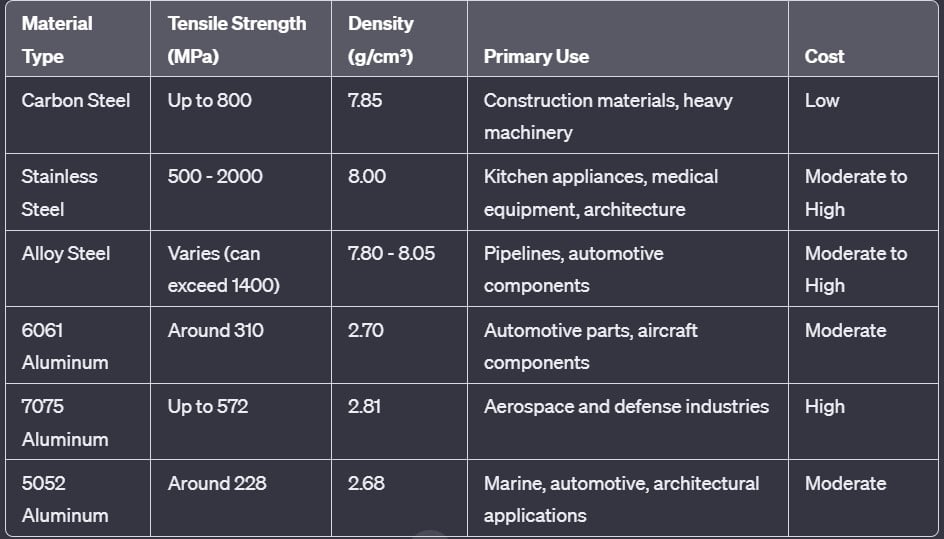
While standard carbon steel uses 7.85 g/cm³ density, stainless steel varieties require specific values. Grade 304 stainless steel has a density of 7.90 g/cm³ (0.285 lb/in³), while grade 316 reaches 7.98 g/cm³ (0.288 lb/in³). These small differences become significant with large plates—a 20mm × 2000mm × 6000mm stainless 316 plate weighs approximately 1,915 kg versus 1,884 kg for mild steel, a 31 kg difference that affects shipping costs and structural calculations.
For aluminum plates (density 2.7 g/cm³), use 0.0000027 in metric calculations or 0.0975 in imperial. The same 20mm × 2000mm × 6000mm plate weighs only 648 kg in aluminum—demonstrating why aluminum replaces steel in weight-critical applications despite higher material costs.
When Density Variations Actually Matter
For small plates under 50 kg (110 lbs), density variations between steel grades typically produce differences under 1 kg—often negligible for most applications. However, for structural steel in bridges or buildings where total steel weight exceeds 10,000 kg, even 0.5% density differences represent 50 kg of material affecting foundation design and cost estimates.
Critical applications like pressure vessels or aerospace components require exact density values from mill test reports. For general fabrication and construction, the standard 7.85 g/cm³ value provides sufficient accuracy while simplifying calculations across multiple plates.
Verification Methods for Accurate Results
Three-Step Calculation Verification Process
-
Estimate first: Before calculating, estimate expected weight. A 1″ thick × 4′ × 8′ steel plate should weigh approximately 1,568 lbs (490 lb/ft³ × 2.67 ft³). If your calculation yields 156 lbs or 15,680 lbs, you’ve made a unit error.
-
Cross-verify with alternative method: Calculate using both metric and imperial systems, converting final results to the same unit. Significant discrepancies indicate calculation errors.
-
Check against standard tables: Compare your result to published weight tables for common plate sizes. Reputable steel suppliers provide these tables showing weights for standard dimensions.
Online Calculator Pitfalls to Avoid
Many online steel weight calculators assume mild steel density by default and don’t account for stainless steel variations unless specifically selected. Always verify the calculator’s density assumptions match your material. More critically, ensure you’re entering dimensions in the correct units—entering millimeters when the calculator expects inches produces results 25.4 times too small.
Premium calculators from steel suppliers often include additional features like material cost estimation and multiple plate calculations. For critical applications, use calculators from reputable industry sources like the American Iron and Steel Institute rather than generic engineering sites.
Practical Applications of Steel Weight Calculations
Structural Engineering and Safety Considerations
Accurate steel plate weight calculations directly impact structural integrity in building design. An engineer miscalculating plate weights might undersize support beams, creating safety hazards. For elevator pits, machine foundations, or structural platforms, precise weight calculations determine required concrete thickness and reinforcement.
When installing heavy machinery, knowing exact plate weights ensures proper lifting equipment selection. A 2,000 lb plate requires different handling than a 20,000 lb plate—using inadequate lifting gear risks serious accidents. Always add 10-15% to calculated weights for safety factors in lifting equipment selection.
Cost Estimation and Material Ordering
Steel fabricators quote prices per pound or kilogram, making accurate weight calculations essential for budgeting. A 5% error on a 10,000 lb order represents $250-$500 in commercial steel pricing (at $0.50-$1.00 per pound). For large projects, these errors compound across multiple plates, significantly impacting project profitability.
When ordering materials, precise weight calculations prevent costly oversights. Ordering insufficient material delays projects, while excess material ties up capital and requires storage space. Many steel suppliers charge restocking fees for unused material, making accurate initial calculations financially critical.
Final Verification Before Implementation
Before committing to calculated weights for important applications, implement these verification steps:
- Physical sample check: Weigh a small sample plate of known dimensions to verify your calculation method
- Supplier confirmation: Cross-check your calculations against supplier documentation
- Peer review: Have another professional verify your calculations
- Unit consistency audit: Ensure all dimensions use the same measurement system
Mistakes in steel plate weight calculations rarely get caught before they cause problems—whether an overloaded trailer, undersized crane, or structural miscalculation. Taking five extra minutes to verify your calculations prevents days of delays and potentially dangerous situations.
Mastering how to find weight of steel plate transforms from a simple calculation into a critical project management skill. By applying these methods consistently, you’ll eliminate costly errors, improve safety, and enhance your professional reputation for precision and reliability in all steel-related projects. Whether working with a single plate or an entire structural framework, accurate weight calculations form the foundation of successful steel fabrication and construction.