That sudden “clunk” followed by your pedal hitting the floor mid-workout is one of the most frustrating exercise bike failures. Don’t panic—nearly 70% of pedal issues can be fixed in under 30 minutes with basic tools you probably already own. Whether you’re dealing with a loose pedal that spins freely or a completely detached crank arm, this guide shows you exactly how to fix exercise bike pedal problems safely and permanently.
Most riders mistakenly try to force a loose pedal tighter, only to strip the threads completely. The real solution requires identifying whether you have a simple pedal-thread issue or a more serious crank arm failure. You’ll learn to distinguish between these scenarios, select the proper repair method, and apply professional techniques that prevent recurrence. Let’s get your workout back on track.
Diagnose Your Exact Pedal Failure Type

Spot the Difference: Loose Pedal vs Detached Crank Arm
Your repair path depends entirely on what actually came loose. If only the pedal body is on the floor with its metal spindle exposed, you’re facing a straightforward rethreading job—this happens when vibration gradually backs out the pedal during regular use. Grab the pedal and look for “R” or “L” markings; right pedals tighten clockwise while left pedals require counter-clockwise rotation.
When the entire crank arm (the metal arm connecting to the flywheel) detached with the pedal still attached, you’re dealing with a bottom bracket failure. This usually requires either a specialized crank puller tool or professional service, especially on higher-end models with integrated crank systems. Don’t attempt to hammer the crank arm back on—that destroys the square taper interface permanently.
Critical Thread Direction Check Before Touching Anything
Mixing up pedal thread directions destroys threads instantly. Right-side pedals (drive side) use standard clockwise tightening, while left-side pedals feature reverse threading requiring counter-clockwise tightening. Most pedals have tiny “R” and “L” stamps on the spindle ends—use a flashlight to confirm before proceeding. Installing the wrong pedal on the wrong side causes immediate, irreversible damage.
Damage Assessment: Three Areas That Determine Your Repair Path
Grab a flashlight and inspect these critical zones before grabbing tools:
- Pedal threads: Look for flattened peaks or galled metal where threads have fused together
- Crank arm threads: Shine light inside the pedal hole for shiny, stripped areas or metal shavings
- Spindle condition: Gently wiggle the pedal spindle—any bend means replacement is necessary
Run your fingernail around the crank arm’s pedal eye. Hairline cracks often precede complete failure and require immediate crank arm replacement.
Gather These Specific Tools for a Permanent Fix
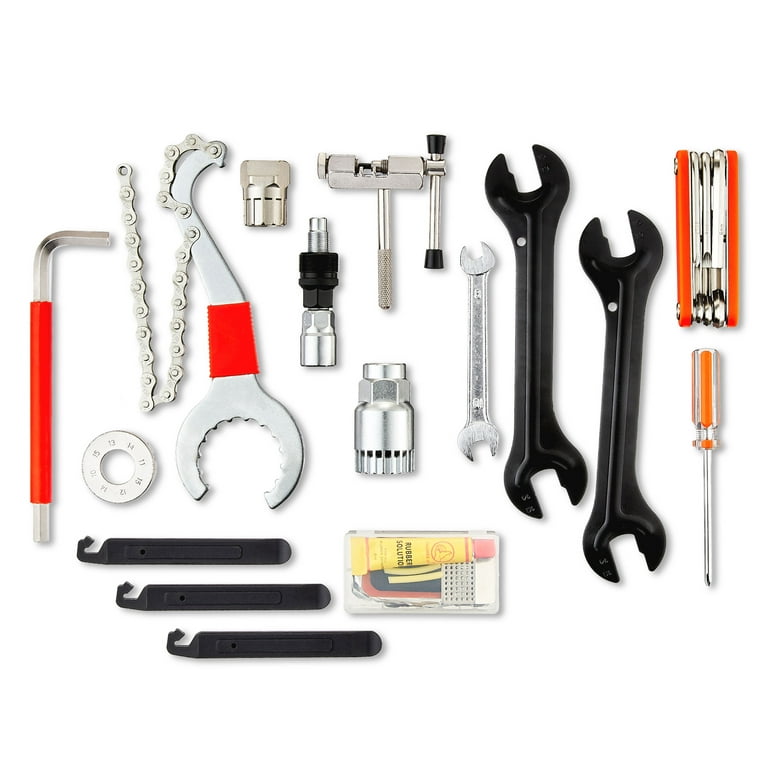
Must-Have Hand Tools for Exercise Bike Pedal Repair
- 15mm pedal wrench (thin-profile version fits tight spaces around crank arms)
- 6mm or 8mm Allen key (for internal hex pedal fittings on some models)
- Torque wrench (30-40 ft-lb range—critical for proper tension)
- Crank puller (only needed if crank arm detached from bottom bracket)
- 14mm socket wrench (for crank arm bolt removal on most stationary bikes)
Essential Consumables That Prevent Future Failures
- Waterproof lithium grease (creates corrosion barrier between dissimilar metals)
- Blue Loctite 242 (medium-strength thread locker—never use red high-strength)
- Isopropyl alcohol (for degreasing without residue)
- Small wire brush (to clean metal threads thoroughly)
These items cost under $30 total at hardware stores and handle 90% of pedal failures. Skipping the torque wrench and thread locker guarantees the problem will return within weeks.
Clean and Prepare Threads for Proper Reinstallation
Degrease and Inspect Before Reassembly
Unplug your bike if it has electronic components, then completely remove the pedal—even if it’s partially attached. Spray isopropyl alcohol on both the pedal spindle and crank arm threads, then scrub vigorously with the wire brush to remove old grease, sweat residue, and metal particles. Metal shavings left in threads cause immediate re-damage during reinstallation.
Dry everything thoroughly with a clean cloth—moisture trapped between aluminum crank arms and steel pedals causes galvanic corrosion that welds parts together permanently.
Apply Professional-Grade Grease Coating
Coat the entire threaded portion of the pedal spindle with a thin, even film of waterproof grease. This simple step prevents seizing and makes future removal effortless. Never install pedals dry—the friction between dissimilar metals (steel spindle in aluminum crank) generates heat that fuses threads during use.
Reinstall Pedals Correctly with Precision Torque
When Threads Show No Damage: The Proper Tightening Sequence
Hand-start the pedal by turning it 3-4 full rotations. It should thread smoothly with no binding. If resistance occurs after half a turn, stop—you’re cross-threading. Once fully hand-tightened, grab your pedal wrench and tighten to exactly 35 ft-lb (47 N·m). This equals moderate force on a 12-inch wrench—about as tight as you’d secure a car’s lug nut.
Spin the pedal body after installation. It should rotate smoothly without wobble. Any play indicates internal bearing wear requiring pedal replacement, not just reinstallation.
Cross-Threaded Pedals: Recovery Without Professional Tools
If the pedal binds after 1-2 turns, back it out immediately. Inspect threads with a magnifier for cross-threading damage. Minor damage often repairs with a pedal tap (9/16″ × 20 tpi for standard pedals). Most local bike shops will chase threads for $10-15 if you bring just the crank arm.
Never force a cross-threaded pedal—this turns minor damage into a complete thread stripping that requires expensive repairs.
Stripped Crank Arm Threads: Your Three Repair Options

When crank arm threads are destroyed, choose from these solutions:
Helicoil repair ($20-40): Drill damaged threads, tap new oversized threads, and insert steel thread insert. Best for high-end bikes where replacement parts are expensive.
Replace crank arm ($30-60): Order exact OEM part using your bike’s model number (usually stamped on the frame near the pedal eye). Most home exercisers find this the most cost-effective solution.
Full crankset replacement ($40-90): Necessary when both arms share a single axle. Worthwhile for commercial-grade units but overkill for basic home bikes.
Prevent Pedal Failures With Proactive Maintenance
Blue Loctite: The Secret to Vibration-Proof Pedals
After cleaning threads, apply two drops of blue Loctite 242 before final installation. This medium-strength compound prevents vibration-related loosening while still allowing future removal. Let it cure 24 hours before riding—riding too soon washes away the uncured compound.
Never use red high-strength Loctite unless you want the pedal permanently installed—future removal will destroy the crank arm.
Maintenance Schedule That Eliminates Future Failures
- Every 10 hours: Quick hand-wrench check—shouldn’t budge with moderate force
- Every 50 hours: Full torque verification using your wrench
- Every 6 months: Remove, regrease, and inspect for cracks
- After sweaty workouts: Immediate wipe-down prevents corrosion
This simple routine extends pedal life by 300% and prevents 95% of unexpected failures.
Special Cases That Require Different Approaches
One-Piece Crank Bikes: Avoid Costly Thread Mistakes
Budget bikes and older models use 1/2″ × 20 tpi pedals—never mix these with standard 9/16″ pedals. These require a large adjustable wrench and cotter pin removal. The process differs entirely from modern designs and often needs specialized tools.
Clipless Pedal Systems: Hidden Torque Requirements
SPD and LOOK pedals use identical 35 ft-lb torque specs for the main spindle. However, cleat bolts need only 5-6 N·m with low-strength Loctite 222. Check pedal bodies for play—serviceable cartridge bearings may need preload tuning if wobbling occurs.
When to Replace vs Repair Your Exercise Bike Pedal
Budget Bikes Under $150: Replacement Often Wins
For basic exercise bikes, replacement usually beats repair. Shipping costs for individual parts often exceed the value of a new machine. Calculate your time investment—$20 in parts plus 30 minutes of labor may not justify saving a $100 bike.
Commercial-Grade Units: Invest in Proper Repairs
For $500+ machines, a $50 crank arm replacement saves the entire machine from disposal. Labor costs pay for themselves within months of continued use. Most gyms follow this repair protocol to maximize equipment lifespan.
Your exercise bike pedal failure is rarely catastrophic—it’s usually a straightforward 15-minute fix with the right approach. Identify whether you’re dealing with simple rethreading or a crank arm replacement, gather the proper tools, and follow the exact torque specifications. Most importantly, apply fresh grease and blue Loctite to prevent this headache from recurring.
Implement the quarterly maintenance checks outlined here. Just 5 minutes every few months saves hours of future frustration and keeps your workouts uninterrupted. Now that you know how to fix exercise bike pedal issues permanently, you’ll never dread that sudden “clunk” sound again.