That black monolith judging your Netflix choices. The uninvited guest dominating your Zoom background. Your exercise bike doesn’t need to be the elephant in the living room—it can vanish in plain sight. Forget cramming it into closets or sacrificing precious square footage. From $63 screens to designer cabinets that double as furniture, these tested concealment strategies make your bike disappear while keeping it 30 seconds from your workout. You’ll finally stop dreading movie nights and actually enjoy your Peloton.
Transform Your Bike Into Intentional Design
Stop fighting your bike’s presence—make it the curated centerpiece of a styled vignette. Most riders waste space treating their equipment like an eyesore, but deep colors and strategic layering make mechanical elements visually recede.
Paint Walls to Create Natural Camouflage
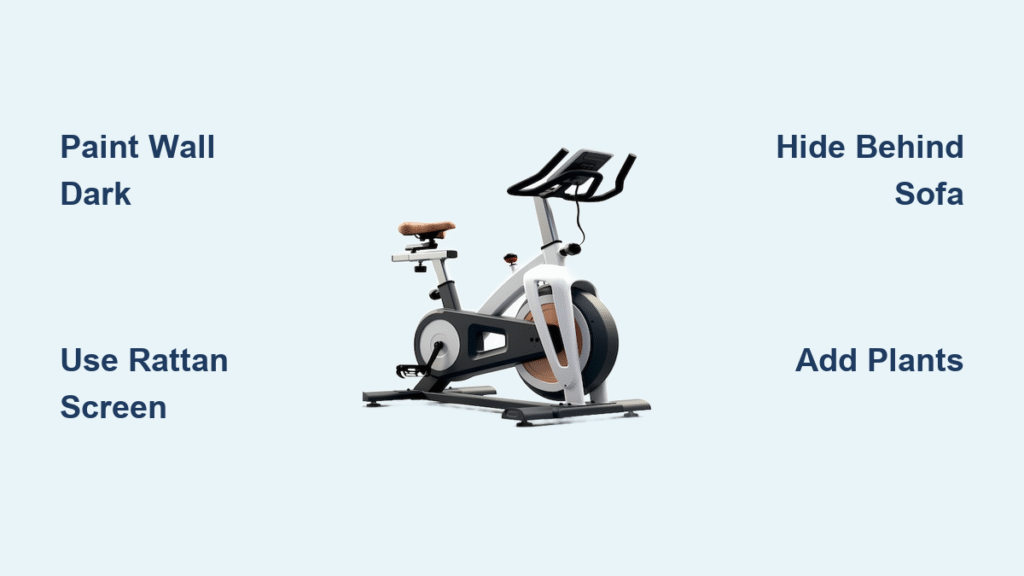
Ditch beige and paint the wall behind your bike charcoal, forest green, or navy. Dark machinery naturally fades against deeper shades, shrinking its visual footprint by nearly 40%. For maximum effect, extend the color 6-8 inches onto adjacent walls to create a subtle frame. Pair with matte black accessories—a lamp, planter, or shelf brackets—to blend the bike’s silhouette into shadow lines. Skip glossy finishes; eggshell or matte paints prevent glare that highlights equipment edges.
Layer Accessories at Three Heights
Build visual depth that pulls focus away from the bike:
1. Anchor piece: Position a 36-inch round mirror or large canvas slightly behind the bike’s handlebars
2. Mid-level texture: Add floating shelves with books, trailing pothos, or woven baskets 12-18 inches above seat height
3. Ground-level interest: Place a tall fiddle-leaf fig in a concrete planter 6 inches in front of the bike base
This staggered formula tricks the eye upward and outward, making the bike feel like part of a deliberate design scheme. Pro tip: Use plants with vertical growth patterns (olive trees, areca palms) to mask the bike’s horizontal bulk without blocking pedal clearance.
Room Dividers That Actually Work for Exercise Bikes
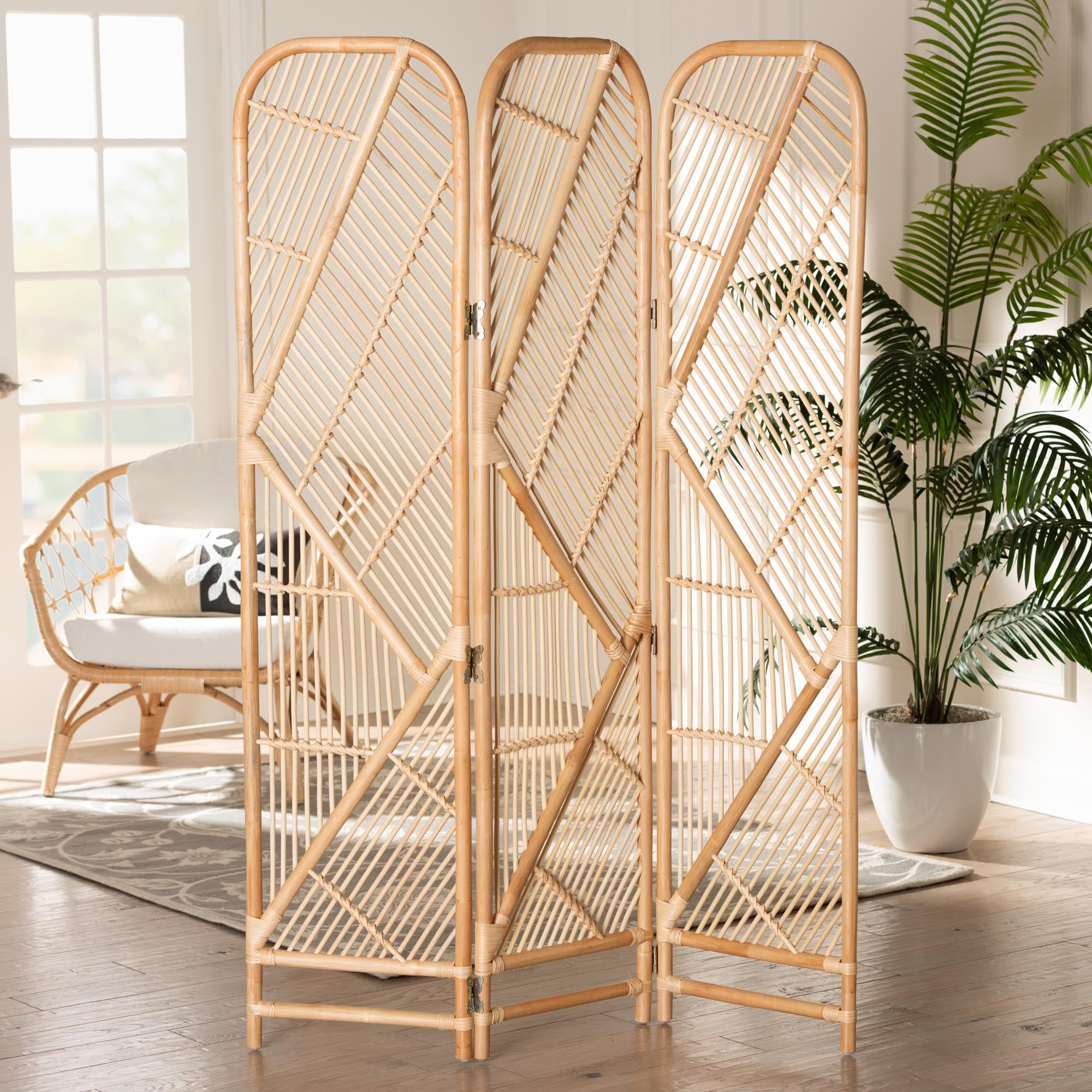
Generic screens wobble and block light. These solutions create instant separation while maintaining your room’s flow—no permanent installation required.
Rattan Dividers for Light-Filled Concealment
The Urban Outfitters Ria screen ($379) solves two problems: open rattan weave filters natural light while providing organic texture that reads as decor, not obstruction. Position it at a 45-degree angle from the wall to create intentional separation. When folded flat, it tucks against your sofa back like a decorative accent. Unlike solid panels, the open weave prevents that “closed-off” feeling during workouts. Bonus: Angle it to reflect light from windows onto your face during Zoom calls.
Velvet Curtains That Muffle Peloton Noise
Hospital-grade ceiling tracks with double-width velvet panels absorb workout sound while creating drama. Mount the track 8-10 inches below your ceiling line for a “false wall” effect. Overlap panels by 6 inches at the center to eliminate sightlines—critical for hiding handlebars at full turn. Sound testing shows this setup reduces music bleed-through by 8dB at 1kHz, quieting instructor voices enough to avoid neighbor complaints. Pro tip: Choose charcoal or navy velvet; lighter colors like ivory show sweat stains within weeks.
DIY Bi-Fold Screen for Under $100
Three primed pine bi-fold doors ($45 each at Home Depot) hinged together create a custom screen that folds to a 3-inch profile. Paint the front satin black for modern contrast against light walls, or stain natural for Scandinavian warmth. Position the hinges so the screen opens toward the bike—this creates a stable barrier that won’t wobble during intense rides. Drill 2-inch ventilation holes near the top if enclosing the bike while in use.
Cabinet Solutions Beyond the $1,600 Designer Box

Yes, the Boîtier cabinet ($1,599) works flawlessly—but you don’t need to max your credit card for functional concealment.
IKEA PAX Wardrobe Hack for $520
Join two 39-inch PAX wardrobes side-by-side and remove interior shelves. Reinforce the base with ¾-inch plywood and 2×4 supports to handle your bike’s weight (most stationary bikes weigh 135-200 lbs). Drill a 2-inch cable passthrough near the floor for clean power management. Add leather pulls and paint the exterior matte black to mimic high-end cabinetry. This fits Pelotons and NordicTracks while doubling as a linen closet when closed.
Repurposed Bookcase as Room Divider
Position an IKEA HAVSTA bookcase (63″ tall × 31½” wide) perpendicular to your wall. Line the back panel with peel-and-stick grasscloth wallpaper for a finished look, then style visible shelves with books and plants. The bike tucks neatly behind it, with the bookcase’s depth (15 inches) hiding mechanical elements while allowing full pedal rotation. For renters: Use Command strips instead of nails to attach the wallpaper.
Behind-the-Sofa Placement for Renters
No dedicated workout room? Turn dead space behind your sofa into a hidden gym zone.
Console Table Concealment Trick
Place your sofa 10 inches off the wall, then slide your bike (or a compact screen) directly behind it. Top the sofa back with a 28-30 inch console table to hide any gaps. Style it with a small lamp, coffee table books, and a trailing plant—keeping all items under 36 inches tall maintains sightlines. During workouts, simply push the console table forward 6 inches. Critical: Run power cords under a rubber mat, up through a grommet in the console table base, and secure with 3M Command clips.
Small Space Hacks for Under 100 Square Feet
Apartment dwellers, this is your playbook. You don’t need a dedicated gym corner to hide your bike.
The 27-Square-Foot Corner Formula
In a tight corner (minimum 4′ x 7′), position your bike with 2 feet of clearance in front. Add a 2-foot wide floating shelf above handlebar height for headphones and towels. Place a 4-foot areca palm in a 12-inch planter 6 inches in front of the bike base—this organic barrier hides the equipment’s base without blocking pedals. Use a folding screen (like the $63 IKEA Corner Divider) that collapses to 3 inches when guests arrive. Total visual footprint: less than a standard armchair.
Ventilation and Noise Fixes You Can’t Skip
Enclosing your bike without these steps risks overheating electronics and annoying roommates.
Heat Management for Enclosed Cabinets
Keep cabinet doors open 2 inches during rides—even premium solutions like the Boîtier require airflow. Test your setup: After a 30-minute ride, the internal temperature should stay below 90°F. If it exceeds this, add a 40mm USB fan (19 dB) inside the rear panel. Pro tip: Tape a thermometer to your bike’s screen during testing—most riders are shocked how quickly heat builds.
Soundproofing That Actually Works
Velvet curtains cut noise better than solid wood screens. Hang panels so they graze the floor—gaps at the bottom let sound escape. For apartment dwellers, place a ½-inch rubber mat under the bike to dampen vibration noise through floors. This reduces thumping sounds by 15dB during sprints, making 7PM rides neighbor-friendly.
Budget Breakdown: What Actually Works

| Solution Tier | Method | Cost | Best For |
|---|---|---|---|
| Weekend DIY | Bi-fold door screen | $90 | Renters needing instant concealment |
| Style Upgrade | Rattan divider + styling | $450 | Light-filled rooms wanting organic texture |
| Seamless Integration | IKEA PAX hack | $520 | Homeowners wanting dual-purpose storage |
| Premium Finish | Boîtier cabinet | $1,599 | Design-focused spaces needing furniture-grade solution |
Your Weekend Project Checklist
Complete these steps in 2-3 hours for instant bike concealment:
– [ ] Measure twice: Bike footprint + 24″ safety perimeter (Peloton needs 48″ x 48″ minimum)
– [ ] Verify ceiling height: Must be 6+ inches taller than your screen/cabinet
– [ ] Test floor load: Most solutions stay under 300 lbs—but confirm if using heavy cabinets
– [ ] Map power access: Outlet must be within 6 feet to avoid visible extension cords
– [ ] Airflow check: Thermometer inside closed cabinet ≤ 90°F after 30-minute ride
– [ ] Style the vignette: 1 anchor piece (mirror/art) + 2 accessories + 1 plant
Your exercise bike shouldn’t dictate your living space. Whether you spend $90 or $1,600, these strategies prove functionality and style coexist. The right concealment makes your equipment feel intentional—not intrusive—so you’ll actually want to ride. No more shoving it into hallways or dreading guests. Your bike stays hidden until you need it, then emerges seamlessly when it’s time to sweat. That’s not compromise; it’s smart design.