Nothing disrupts your home’s aesthetic quite like a bulky walking pad sitting in the middle of your living space. When you’re not using your walking pad, it can dominate your room, clash with your decor, and make even the most spacious home feel cramped. Whether you live in a studio apartment where every inch counts or simply want to maintain a clutter-free environment, knowing how to hide a walking pad effectively is essential for home fitness enthusiasts. The good news is that with the right strategies, you can keep your walking pad completely concealed yet instantly accessible—preserving your home’s visual appeal without sacrificing your health goals.
This guide delivers practical, room-specific solutions for concealing your walking pad that actually work in real homes. You’ll discover space-saving storage techniques, furniture integration tricks, and budget-friendly concealment methods that make your walking pad disappear when not in use.
Measure Your Walking Pad and Available Space Before Hiding
Before attempting any concealment method, accurately measuring your walking pad and potential storage locations prevents wasted effort and frustration. These measurements determine which hiding strategies will actually work in your specific situation.
Record Exact Dimensions in Both Positions
Grab your tape measure and document three critical dimensions: length, width, and height of your walking pad in its operational position. Then measure the same dimensions when folded if your model features foldability. Most walking pads range from 40-60 inches long and 20-30 inches wide when in use, while folded models typically reduce to half their length and can stand vertically. For example, a popular compact walking pad measures 42″ x 22″ when open but folds to just 21″ x 22″—small enough to tuck behind most sofas. Knowing these specifics helps you identify storage locations that perfectly accommodate your equipment.
Identify High-Potential Storage Locations in Your Home
Walk through each room and evaluate spaces where your folded walking pad could logically disappear from view. Under beds typically offer 6-12 inches of clearance—perfect for most folded walking pads. Closets with at least 24″ depth provide enclosed storage that completely hides your equipment. Corners behind furniture create natural blind spots where your walking pad won’t draw attention. For frequent users, prioritize locations within 5-10 feet of your usual walking spot to minimize setup time. Measure these potential spots against your walking pad dimensions to confirm fit before committing to a concealment method.
Foldable Walking Pad Storage Solutions That Actually Work

If your walking pad folds, you’ve got the simplest path to concealment. Proper folding technique and strategic positioning maximize space savings while protecting your investment.
Store Your Walking Pad Vertically in Tight Spaces
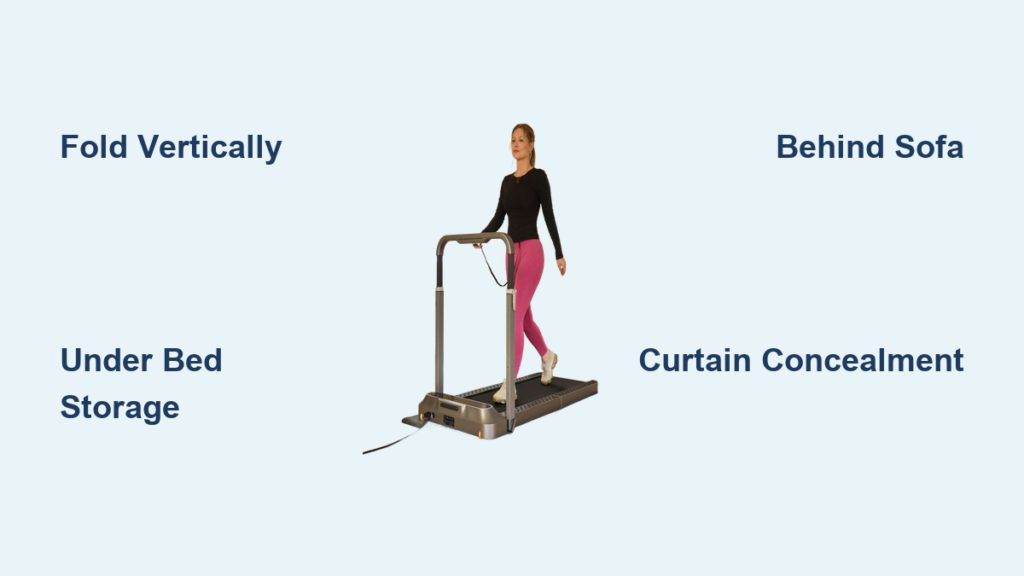
Most foldable walking pads stand upright when stored, occupying just 20″ x 30″ of floor space—roughly the footprint of a narrow bookshelf. This vertical position lets you slide the pad into closets, behind doors, or into corners where it remains completely out of sight. Critical tip: Before storing vertically, ensure the belt is clean and completely dry to prevent mold growth in enclosed spaces. For easier movement, add locking casters to the base of your walking pad—this simple $20 upgrade transforms heavy lifting into a smooth glide. When positioning your upright walking pad, avoid leaning it against walls at sharp angles; prolonged pressure on the belt system causes uneven wear that shortens equipment life.
Slide Your Walking Pad Under Beds for Instant Disappearance
Under-bed storage offers one of the most effective concealment methods since it utilizes otherwise wasted space. Measure your bed’s clearance first—most standard bed frames provide 8-10 inches of space beneath them. If your folded walking pad exceeds this height, bed risers instantly create additional clearance without permanent modifications. For effortless access, place heavy-duty furniture sliders under each corner of your walking pad before sliding it under the bed. These inexpensive discs let you pull the pad out with one hand, eliminating the need to crawl on the floor. Pro tip: Place a thin rubber mat beneath your walking pad in storage to prevent belt slippage and absorb minor vibrations during use.
Furniture Integration Methods for Seamless Concealment

Strategically positioning your walking pad behind or beneath existing furniture creates natural concealment without requiring dedicated storage space.
Position Your Walking Pad Behind Sofas and Console Tables
The space behind sofas and console tables creates perfect concealment zones in living rooms and home offices. Position your folded walking pad against the wall, then place your furniture 4-6 inches in front of it—just enough to completely hide the equipment while maintaining normal functionality. For this method to work, your walking pad must be lower than your furniture’s height. Many users enhance this setup by adding a decorative folding screen in front of the walking pad location, creating an elegant visual barrier that doubles as a room divider. This approach works especially well in open-concept spaces where you want to define different functional areas without permanent walls.
Create Under-Desk Walking Solutions for Office Spaces
For home office users, integrating your walking pad beneath your desk provides the ultimate convenience. Purchase a standing desk with sufficient clearance (typically 28-30 inches when lowered) to accommodate your walking pad underneath. Install locking casters on a plywood platform sized for your walking pad, creating a rolling cart that slides smoothly in and out. When working seated, lower your desk completely to hide the walking pad. When you want to walk, raise the desk to standing height and roll out your walking pad. This setup requires minimal space reconfiguration while keeping your walking pad perpetually ready for use. Key consideration: Ensure your desk’s height range accommodates both seated work and comfortable walking—most standard desks only lower to 22-24 inches, which may not provide enough clearance.
Decorative Screening Solutions for Flexible Concealment
When permanent modifications aren’t possible, decorative screens and panels offer adaptable concealment that enhances your room’s design.
Use Room Divider Screens to Hide Walking Pads in Open Spaces
Freestanding room dividers serve multiple purposes—they create visual separation in open floor plans, add design interest, and effectively conceal walking pads positioned behind them. Choose a screen at least 6 inches taller and wider than your walking pad for complete coverage. For small spaces, a simple three-panel folding screen works best; larger areas benefit from more elaborate designs. Position the screen at a 15-30 degree angle rather than straight across the room to create visual depth that naturally draws the eye away from what’s behind it. Budget-friendly option: Repurpose an existing folding screen you already own—simply position it strategically to block sightlines to your walking pad location.
Install Simple Curtain Systems for Elegant Concealment
Hanging curtains along walls creates sophisticated concealment with minimal installation effort. Attach a tension rod or decorative curtain rod along the wall where your walking pad resides, then add floor-to-ceiling panels that close when you want the equipment hidden. This method works particularly well in home offices where you can maintain a professional appearance during video calls. For optimal functionality, install a double curtain rod—one for lightweight sheers that stay open during the day, and one for heavier panels that close when concealing your walking pad. Pro tip: Choose curtains with weights in the hems to ensure they hang straight and completely cover your walking pad without gaps.
Budget-Friendly Concealment Methods for Every Situation
Walking pad concealment doesn’t require expensive custom solutions—many effective methods cost little to nothing.
Implement These Free Concealment Strategies First
Start with solutions that leverage what you already own before investing in new equipment. Slide your walking pad under existing furniture like beds or sofas—this costs nothing and provides immediate results. Position it behind large potted plants or floor mirrors that naturally block sightlines. Use existing bookshelves as visual barriers by placing them strategically between your walking pad and main room areas. Repurpose decorative baskets you already own to store accessories, keeping the entire setup looking tidy. These zero-cost methods work surprisingly well in most homes and should always be your first concealment approach.
Invest Smartly in Mid-Range Concealment Solutions
When free methods aren’t sufficient, these affordable upgrades deliver significant improvement. A high-quality room divider screen ($60-$150) provides flexible concealment that works in multiple rooms. Heavy-duty furniture sliders ($15 for a set) make moving your walking pad effortless. A simple tension rod with decorative curtains ($25-$50) creates elegant concealment in minutes. These mid-range investments deliver maximum value by solving specific concealment challenges without breaking your budget. Critical consideration: Prioritize solutions that serve multiple purposes—like a room divider that both conceals your walking pad and defines separate spaces in an open floor plan.
Maintain Easy Access While Keeping Your Walking Pad Hidden

The best concealment method is one you’ll actually use consistently—don’t create barriers to regular walking sessions.
Balance Concealment with Convenience for Daily Use
If you plan to walk daily, choose concealment methods that require minimal effort to access. Complicated systems that take more than 2 minutes to deploy often result in skipped workouts. For frequent users, under-desk storage or behind-sofa positioning provides the perfect balance—your walking pad remains hidden yet instantly accessible. Store power cords and accessories within arm’s reach of your walking pad location to minimize setup time. Key insight: The more friction involved in accessing your walking pad, the less likely you are to use it regularly—prioritize convenience alongside concealment.
Implement These Quick-Access Storage Solutions
Create a dedicated “walking station” where your equipment stays partially set up for immediate use. Position your walking pad behind furniture but leave power cords connected and running discreetly along baseboards. Store your wireless earbuds and water bottle in a small decorative basket right next to the walking pad location. If using under-bed storage, leave one end slightly protruding so you can pull it out without crawling. These small adjustments transform your walking routine from a production into a seamless part of your daily schedule—maximizing both convenience and concealment.
Learning how to hide a walking pad effectively doesn’t require expensive renovations or sacrificing convenience. By measuring your specific equipment, matching concealment methods to your usage patterns, and implementing solutions that balance aesthetics with accessibility, you can enjoy the health benefits of regular walking without compromising your home’s visual appeal. The most successful setups make your walking pad disappear when not in use while remaining instantly accessible when you’re ready to walk—creating a home environment that supports both your wellness goals and your design preferences. Start with simple, low-cost solutions that work with your existing space, then refine your approach as you discover what works best for your daily routine.