Sore feet can derail your entire day, whether you’ve been on your feet for hours at work, completed a long run, or simply endured uncomfortable shoes. If you’re searching for an immediate, affordable solution that you can do anywhere, learning how to massage feet with tennis ball is one of the most effective self-care techniques available. This simple method requires nothing more than a tennis ball you probably already have at home and just 10-15 minutes of your time. Unlike expensive foot massagers or professional treatments that cost $50-$100 per session, this technique delivers targeted relief exactly where you need it—no appointments necessary.
The effectiveness of tennis ball foot massage stems from its perfect balance of firmness and flexibility. The textured surface of the ball provides just enough grip to work into the muscles without slipping, while the hollow rubber core offers slight give that prevents bruising. When you apply your body weight through the ball, it creates sustained pressure that penetrates deep into the plantar fascia—the thick band of tissue connecting your heel to your toes that’s responsible for many common foot problems. In this comprehensive guide, you’ll discover precisely how to use this simple tool to relieve tension, improve circulation, and restore comfort to tired feet, whether you’re an athlete, healthcare worker, or simply someone who wants to treat themselves to professional-quality foot care at home.
Why Tennis Ball Massage Works Better Than Other Options

Understanding the biomechanics behind why tennis ball foot massage delivers superior results compared to foam rollers or massage guns helps you maximize your technique. The standard tennis ball’s 2.7-inch diameter perfectly matches the curvature of the human foot, allowing it to cradle and target specific areas without losing contact during movement. When you roll your foot over the ball, the pressure created reaches depths of 1-1.5 inches—deep enough to affect the plantar fascia and intrinsic foot muscles but shallow enough to avoid damaging delicate structures.
This technique works through three key physiological mechanisms. First, it applies myofascial release to break up adhesions in the connective tissue that develop from repetitive stress and poor footwear. These adhesions create “knots” that restrict movement and cause pain. Second, the sustained pressure stimulates mechanoreceptors in your feet, triggering your nervous system to release endorphins that reduce pain perception. Third, the massage increases blood flow by up to 40% in treated areas, delivering oxygen and nutrients while flushing out metabolic waste products like lactic acid that accumulate during physical activity.
Many people mistakenly believe harder pressure equals better results, but the tennis ball’s unique composition provides optimal pressure distribution. Unlike a lacrosse ball (which is too firm for beginners) or a foam roller (which spreads pressure too broadly), the tennis ball creates focused yet comfortable pressure that encourages muscles to relax rather than tense up defensively. This makes it particularly effective for conditions like plantar fasciitis, where aggressive techniques can actually worsen inflammation.
Perfecting Your Setup for Maximum Results
Before you begin learning how to massage feet with tennis ball effectively, creating the ideal environment ensures you’ll get consistent, comfortable results every time. Start by selecting a tennis ball that still has some bounce—slightly worn balls with flattened areas won’t provide even pressure distribution. If you have particularly sensitive feet, consider placing the ball inside a thin sock for slightly reduced firmness while maintaining the crucial textured surface.
Your seating position dramatically affects your ability to control pressure. Sit in a sturdy chair with your feet flat on the floor, then place the ball under the arch of one foot. Keep your other foot flat on the floor for stability. This seated position allows you to precisely modulate pressure by shifting your weight through your hands (resting lightly on your knees) and the non-massaging foot. Avoid lying down for this technique, as it reduces your control over pressure application and makes it harder to target specific areas.
For optimal results, warm your feet first with a 5-minute soak in warm (not hot) water with Epsom salts. Warm tissues respond better to massage and are less likely to cramp. If you’re short on time, simply rub your hands together vigorously and massage them over your feet for 30 seconds to increase surface temperature. Always perform your tennis ball massage on bare feet—socks create a barrier that reduces the effectiveness of pressure application and prevents the ball’s texture from properly engaging your skin.
Mastering the Fundamental Rolling Technique
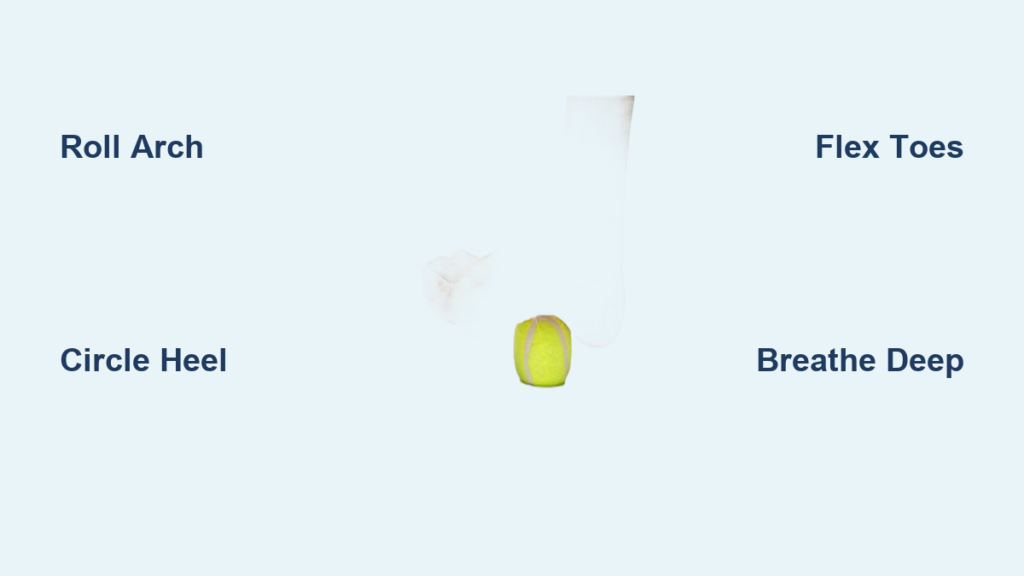
The core technique for how to massage feet with tennis ball involves three distinct rolling patterns that systematically address different foot structures. Begin by placing the ball under your heel and applying gentle pressure—just enough to feel the ball indenting your skin without causing pain. Roll slowly toward your toes along the medial (inner) arch, taking 5 full seconds to complete the movement. This longitudinal roll follows the path of your plantar fascia and helps lengthen this often-tightened tissue.
After 5-6 lengthwise rolls, switch to transverse movements by rolling the ball from the inner arch toward the outer edge of your foot. This motion targets the intrinsic foot muscles that run horizontally across your sole. As you roll, wiggle your toes slightly to engage these small muscles and enhance the release. Complete 5-6 transverse rolls across different sections of your foot, from the heel area to just behind the ball of your foot.
Finally, incorporate circular motions to address specific trigger points. Position the ball under any tender spot you discovered during your lengthwise rolling and make slow, deliberate circles for 30-60 seconds. The key is maintaining consistent pressure while moving—don’t just press statically. Imagine you’re “writing” the letter “O” with your foot as you circle the ball. Breathe deeply throughout, exhaling as you apply slightly more pressure during each circle. This three-directional approach ensures comprehensive release of tension throughout all layers of foot tissue.
Targeting Problem Areas with Precision

Certain foot regions demand specialized attention when learning how to massage feet with tennis ball effectively. For heel pain (common with plantar fasciitis), position the ball directly under your calcaneus (heel bone) and apply moderate pressure while making tiny circles no larger than a quarter. Focus on the medial (inner) aspect of your heel where the plantar fascia attaches—this spot often feels like a deep, dull ache rather than sharp pain. Hold sustained pressure here for 45-60 seconds while taking slow, deep breaths; you should feel the tissue gradually soften as blood flow increases.
If you experience ball-of-foot pain (metatarsalgia), modify your technique by placing the ball under the affected area and flexing your toes upward against the ball’s resistance. This combines pressure application with active movement to release the intermetatarsal ligaments. Roll the ball in small figure-eight patterns rather than straight lines, which better addresses the complex structure of this region. For stubborn knots, try “pinning” the ball in place while you slowly extend and flex your big toe 5-10 times to mobilize the surrounding tissues.
When addressing arch tension, experiment with different pressure points along the medial longitudinal arch. Many people discover a particularly tender spot about one-third of the way from heel to toes that corresponds to a key plantar fascia attachment point. Apply steady pressure here while gently rocking your foot side-to-side to create a “shearing” effect that helps separate adhered tissue layers. If you feel nerve-like shooting sensations, reduce pressure immediately—this indicates you’re pressing too deeply on sensitive structures.
Creating Your Personalized Routine
Developing a systematic approach for how to massage feet with tennis ball ensures you address all areas without missing critical zones. Start with 2 minutes of general warm-up rolling across the entire sole to increase blood flow and identify tender areas. Follow this with 3 minutes focusing on your heel using circular motions, then spend 4 minutes working the arch with both longitudinal and transverse rolls.
Dedicate 3 minutes to the ball of your foot using figure-eight patterns and toe flexion movements, then spend 2 minutes addressing the outer lateral edge of your foot—a frequently neglected area that supports your arch. Finish with 1 minute of toe-specific work by gripping and releasing the ball with your toes. This 13-minute routine provides comprehensive treatment while fitting easily into even the busiest schedule.
Adjust timing based on your specific needs: if you have plantar fasciitis, add extra time to heel and arch work; if you’re a runner, emphasize the ball-of-foot section. Always end your session with 30 seconds of gentle toe stretches—use your hands to pull each toe gently away from the foot while the ball remains in place. This completes the release cycle by elongating the tissues you’ve just worked.
Avoiding Common Technique Errors
Even when performing how to massage feet with tennis ball correctly, subtle mistakes can diminish results or cause discomfort. The most frequent error is rolling too quickly—your tissues need sustained pressure (at least 30 seconds per area) to properly release. Imagine you’re moving through thick honey rather than rolling rapidly across a smooth surface.
Another common mistake is neglecting to adjust pressure based on foot position. You need less pressure when working the delicate ball of your foot compared to the more resilient heel area. Many people also forget to breathe properly; holding your breath creates tension elsewhere in your body that counteracts the foot massage benefits. Practice inhaling for 4 counts and exhaling for 6 counts throughout your session.
Don’t skip the warm-up phase—jumping straight into deep tissue work on cold feet can cause micro-tears in muscle fibers. And never work through sharp pain; the “no pain, no gain” mentality doesn’t apply here. Discomfort should feel like a “good ache” that gradually diminishes as you maintain pressure, not sharp or shooting pain that indicates you’re causing damage.
Incorporating Tennis Ball Massage Into Daily Life
The true power of learning how to massage feet with tennis ball emerges when you integrate it into your regular routine. Keep a tennis ball in your office and use it during conference calls—most people won’t even notice as you roll under your desk. After workouts, spend 5 minutes on each foot to prevent next-day soreness. Before bed, combine your foot massage with deep breathing to signal your body it’s time to rest.
For travel, pack a lightweight massage ball specifically designed for feet (slightly smaller than a tennis ball) in your carry-on. Use it during long flights to prevent swelling or in hotel rooms to relieve sightseeing fatigue. Many yoga practitioners incorporate foot rolling into their warm-up routine to improve balance and connection with the ground.
Track your progress by rating your foot pain on a 1-10 scale before and after each session. Most people notice significant improvement within 2-3 weeks of consistent daily use. Remember that consistency matters more than duration—a daily 5-minute session yields better long-term results than an occasional 30-minute marathon.
Final Note: Mastering how to massage feet with tennis ball gives you a powerful, always-available tool for maintaining foot health and comfort. By following these precise techniques and incorporating them into your daily routine, you’ll transform tired, achy feet into strong, resilient foundations for all your activities. Whether you’re an athlete, healthcare worker, or simply someone who values self-care, this simple practice delivers professional-quality relief without the professional price tag—anytime, anywhere.