Tight glutes can cause more than just discomfort in your backside—they often lead to lower back pain, hip stiffness, and even knee problems without you realizing the connection. A simple tennis ball offers an incredibly effective, affordable solution for releasing tension right where it counts. This guide shows you exactly how to perform professional-quality glute massage in just minutes a day from your living room floor. Whether you’re a desk worker with chronically tight glutes or an athlete seeking better recovery, mastering tennis ball self-massage can transform your mobility and comfort.
Self-myofascial release with a tennis ball targets the connective tissue surrounding your muscles, breaking up restrictions that limit movement and cause pain. Unlike expensive massage guns or professional sessions, this technique requires minimal equipment but delivers remarkable results when done correctly. The following guide draws from established principles of myofascial release to give you actionable steps that work immediately—no prior experience needed.
Why Your Glutes Need Tennis Ball Massage
Modern lifestyles create perfect conditions for gluteal dysfunction: sitting for hours shortens hip flexors while weakening glutes, creating what experts call “gluteal amnesia.” When these powerful muscles stop firing properly, your body compensates by overusing other muscles, leading to pain cascades through your lower body. A tennis ball penetrates deep into muscle tissue to reactivate dormant fibers and release trigger points that standard stretching can’t reach.
The glutes consist of three primary muscles—maximus, medius, and minimus—each with distinct functions. The maximus powers hip extension for activities like climbing stairs, while the medius and minimus stabilize your pelvis during walking. When these muscles become tight or inhibited, they refer pain to your lower back, hips, and even knees. Tennis ball massage directly addresses these issues by increasing blood flow, breaking up adhesions, and restoring normal muscle function in under 15 minutes.
Anatomy Targets for Effective Release
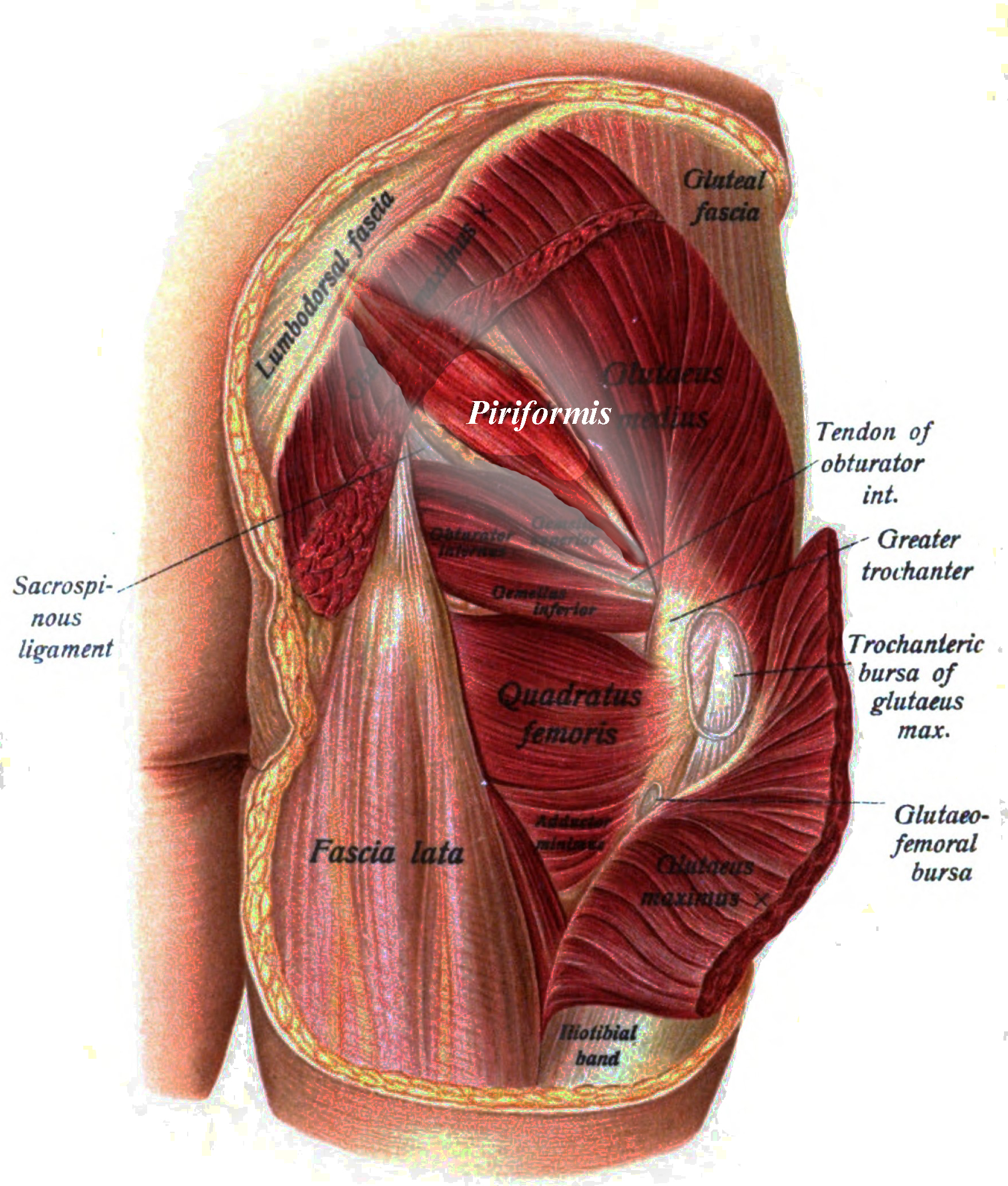
Gluteus Maximus Release Technique
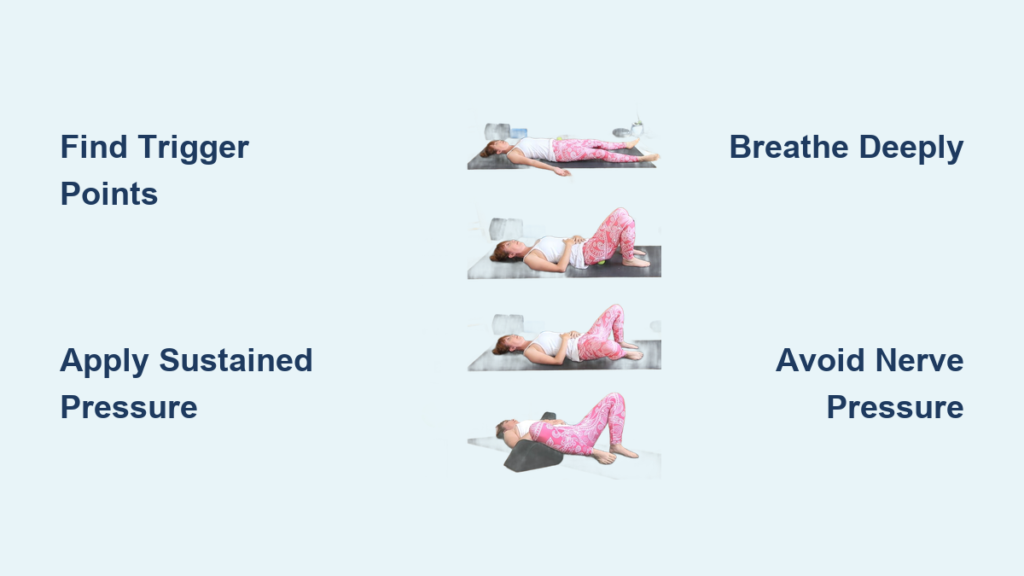
Position yourself on the floor with knees bent and feet flat. Place the tennis ball under one buttock cheek, slightly off-center toward your outer hip. Slowly shift your weight onto the ball, finding tender spots that feel like dense knots. When you locate a trigger point, pause and breathe deeply for 30-60 seconds, allowing the muscle to relax into the pressure. Roll gently side-to-side to cover the entire muscle belly from sacrum to upper thigh.
Piriformis and Deep Rotators Release
For sciatic pain relief, target the piriformis muscle beneath the gluteus maximus. Lie on your back with knees bent, then cross one ankle over the opposite knee into a figure-four position. Place the tennis ball under the crossed hip, just below the bony sacrum. Apply steady pressure for 45 seconds—you should feel deep release in the hip socket. This position specifically addresses piriformis syndrome, a common cause of radiating leg pain.
Selecting the Right Ball for Your Needs

Standard yellow tennis balls work perfectly for most people, offering the ideal balance of firmness and give. Their textured felt surface grips skin effectively without causing abrasions. If you have very dense tissue or need more precise targeting, consider a lacrosse ball for deeper penetration into smaller muscles like the piriformis. Avoid overly hard massage balls that can cause bruising or nerve irritation—your goal is therapeutic pressure, not pain tolerance.
For broader coverage, tape two tennis balls together side-by-side. This configuration works exceptionally well for the large surface area of the gluteus maximus, allowing you to treat both sides of the muscle simultaneously. Simply position them under your buttocks while lying on your back with knees bent.
Proper Positioning for Maximum Effect
Floor-Based Technique for Beginners
Start with the simplest position: lying on your back with knees bent and feet flat. Place the tennis ball under one glute, then slowly roll to find tender spots. Use your hands to support some of your body weight initially, gradually increasing pressure as the tissue releases. This position gives you complete control over pressure intensity while protecting your lower back.
Advanced Side-Lying Position
For targeted work on the gluteus medius (the outer hip muscle), lie on your side with the bottom leg bent for stability. Position the tennis ball along your hip bone, just below the bony prominence. Support your upper body with your forearm while gently rocking to explore the entire lateral hip area. This position specifically addresses IT band issues and hip drop during walking.
Mastering Pressure Application
Finding Your Pain Threshold
Apply enough pressure to create a “good hurt”—about 7 on a 1-10 pain scale where 10 is unbearable. If you’re holding your breath or tensing other muscles, you’re pressing too hard. The key is sustained pressure on trigger points for 30-90 seconds while breathing deeply. Many people make the mistake of rolling too quickly; slow, deliberate pressure creates lasting change.
Nerve Sensitivity Warning
If you experience sharp, shooting, or electric sensations, immediately reposition the ball. These indicate pressure on the sciatic nerve rather than muscle tissue. Proper technique should create deep ache in the muscle, not nerve-like symptoms. Slight adjustments of just an inch can make the difference between effective release and uncomfortable nerve pressure.
Optimal Session Structure

Duration and Frequency Guidelines
Spend 10-15 minutes per session, focusing on 3-5 trigger points per glute. New users should start with 2 sessions weekly, gradually increasing to daily as tissues adapt. Each trigger point needs only 30-60 seconds of sustained pressure—longer durations rarely provide additional benefit and may increase soreness.
Timing for Maximum Benefit
Pre-activity massage (5-10 minutes) prepares glutes for optimal function during exercise. Post-activity sessions enhance recovery by flushing metabolic waste. Many users report best results with evening sessions that release accumulated tension before sleep. Avoid aggressive massage immediately before high-performance activities that require maximum gluteal activation.
Critical Safety Considerations
Contraindications to Avoid
Never apply pressure over bruises, open wounds, or areas with active inflammation (redness, heat, swelling). People with osteoporosis should use extreme caution or consult a physical therapist before beginning. Avoid deep pressure if you take blood thinners, as this increases bruising risk. Stop immediately if you experience numbness, tingling, or radiating pain—these signal potential nerve compression.
When Professional Help Is Needed
Persistent pain that doesn’t improve after 2-3 weeks of consistent self-treatment warrants professional evaluation. Severe weakness, loss of sensation, or bowel/bladder changes require immediate medical attention. A physical therapist specializing in pelvic health can provide targeted treatment for complex conditions that self-massage alone can’t resolve.
Troubleshooting Common Problems
“I Can’t Find My Glute Muscles”
If you struggle to locate trigger points, place your hand on the muscle first while lying down to establish body awareness. The gluteus maximus extends from your lower spine to the top of your thigh—focus on the fleshy part between your hip bone and spine. Start with lighter pressure and gradually increase as your sensitivity improves with practice.
“It’s Too Painful”
Reduce pressure immediately and focus on deep breathing. Place a folded towel between you and the ball for cushioning. Warm up the area first with light walking or a warm shower. Begin with shorter sessions (5 minutes) and gradually increase duration as your tissues adapt. Remember that effective release shouldn’t leave you sore for days afterward.
Long-Term Glute Health Maintenance
Combine tennis ball massage with daily hip mobility exercises like figure-four stretches and glute bridges. Address movement patterns that contribute to tightness—stand up every 30 minutes if you work at a desk, and avoid sitting on thick wallets that compress the piriformis. Consistent, moderate daily maintenance prevents the buildup of tension that requires aggressive treatment.
For lasting results, pair self-massage with glute-strengthening exercises 2-3 times weekly. Weak glutes become tight as they struggle to stabilize your pelvis—building strength creates healthier, more resilient tissue that requires less frequent maintenance. Walking regularly with proper hip extension activates dormant glute fibers better than passive stretching alone.
Regular tennis ball glute massage delivers remarkable benefits with minimal time investment. Start with gentle pressure, focus on proper positioning, and listen to your body’s feedback. Within weeks, you’ll notice improved mobility, reduced pain, and better performance in daily activities. The key to success lies not in intensity but in consistent, mindful application—your glutes will thank you for the attention.