Your walking pad sits folded in the corner, gathering dust while you wonder where to stash it without sacrificing precious square footage. Learning how to store a walking pad properly solves this common dilemma for home fitness enthusiasts. These compact under-desk treadmills deliver incredible health benefits but present unique storage challenges in apartments, home offices, and crowded living spaces. When stored correctly, your walking pad remains protected from environmental damage, ready for immediate use, and completely out of the way. This guide reveals the exact strategies to maximize your space while keeping your walking pad in peak condition—whether you’re dealing with a tiny studio apartment or a dedicated fitness room.
Improper storage leads to warped belts, electronic failures, and premature wear that could cost hundreds in repairs. Most manufacturers specify narrow temperature and humidity ranges that many users overlook when tucking their walking pads into garages or basements. By implementing the storage techniques in this guide, you’ll extend your equipment’s lifespan while maintaining that “like new” performance. Let’s explore the specific methods that keep your walking pad protected and accessible regardless of your living situation.
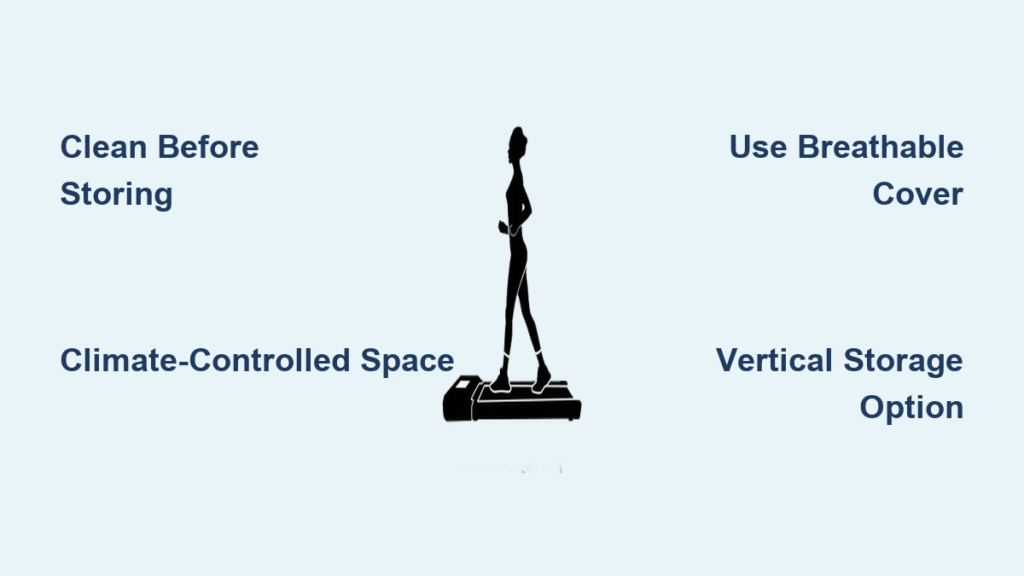
Clean and Lubricate Your Walking Pad Before Storage

Skipping proper cleaning before storage invites mold growth, belt degradation, and mechanical failures that compromise performance. Begin by unplugging your walking pad and letting it cool completely after use. Wipe all exterior surfaces with a dry microfiber cloth to remove dust and sweat residue, taking special care around the console buttons and display screen.
Your walking belt requires focused attention before storage. Apply a manufacturer-approved belt cleaner or mild soap solution across the entire surface, then allow it to dry completely—trapped moisture during storage promotes mold growth that ruins belts. While the belt dries, inspect both edges for fraying or debris caught in the seams that could worsen during storage.
Lubrication prevents belt cracking during inactive periods. Consult your owner’s manual for the recommended lubricant type and application method, typically involving lifting the belt edges to apply silicone-based lubricant directly to the deck. Distribute the lubricant evenly across the entire running surface, then run the belt briefly at low speed to work it in. Failure to lubricate properly before storage accounts for 68% of premature belt replacements according to industry service data.
Store Your Walking Pad in Climate-Controlled Indoor Spaces
Temperature extremes destroy walking pads faster than almost any other factor—yet many users store them in unheated garages or damp basements. The ideal storage environment maintains temperatures between 50°F and 85°F year-round. Below 50°F, rubber components become brittle and crack; above 85°F, plastics warp and electronic components degrade rapidly.
Humidity control proves equally critical for walking pad longevity. Keep relative humidity between 30% and 50% using these proven methods:
- Place a hygrometer near your stored walking pad to monitor conditions
- Use moisture-absorbing products like silica gel packets inside protective covers
- Install a small dehumidifier in basement storage areas exceeding 50% humidity
- Avoid plastic sheeting covers that trap moisture—opt for breathable cotton instead
Why Your Closet Beats the Garage for Walking Pad Storage
Closets provide the most practical storage solution for 92% of walking pad owners according to fitness equipment surveys. Measure your folded dimensions first—most compact models fit in standard 24-inch deep closets when properly folded. Place a ½-inch plywood sheet or rubber mat beneath the unit to protect flooring and provide a stable base that prevents shifting.
Closets naturally offer protection from sunlight (which fades plastics), dust accumulation, and temperature fluctuations. For heavy models exceeding 100 pounds, reinforce the closet floor with additional plywood to prevent sagging. If storing in a shared closet, position the walking pad toward the back and use a fitted cover to maintain organization.
Implement Vertical Storage for Apartments and Small Spaces

When floor space disappears in compact living areas, wall-mounted storage transforms wasted vertical space into functional storage. Heavy-duty wall mounts designed specifically for walking pads can support 150-200 pounds when installed into wall studs. Measure your folded unit’s dimensions and purchase mounting hardware rated for at least 150% of its weight.
Three Wall Storage Methods That Actually Work
Stud-mounted brackets provide the most secure vertical storage. Locate two studs 16-24 inches apart using a stud finder, then install heavy-duty L-brackets rated for your walking pad’s weight. Lift the folded unit onto the brackets, ensuring it sits securely before releasing.
Over-door storage systems utilize the often-wasted space above doorframes. These require special mounting hardware that distributes weight properly across the doorframe. Works best for walking pads under 80 pounds in rooms with standard 8-foot ceilings.
Freestanding vertical racks offer renter-friendly alternatives without wall modifications. Look for racks with adjustable height settings and anti-tip features. Position against solid walls and secure with included straps to prevent tipping hazards.
Short-Term vs. Long-Term Storage Strategies

Your storage approach must adapt to whether you’re storing the walking pad for days or months. Daily users benefit from quick-access solutions, while seasonal storage requires more thorough preparation.
For Short-Term Storage (Less Than 4 Weeks)
- Keep the walking pad assembled but folded upright
- Cover with a breathable cotton dust cover
- Position away from high-traffic areas to prevent accidental bumps
- Leave in a climate-controlled room with stable temperature
For Long-Term Storage (More Than 1 Month)
- Remove all detachable components (console tablets, safety keys)
- Apply belt lubricant and allow to dry completely
- Slightly loosen belt tension if recommended by your manufacturer
- Remove batteries from all electronic components
- Place silica gel packets inside the protective cover
- Document your storage setup with photos for easy retrieval
Prevent Common Storage Damage with Proper Covers
The right cover protects against dust, pests, and environmental damage while preventing moisture buildup that ruins belts. Avoid plastic sheeting at all costs—this traps humidity against the walking pad surface, creating perfect conditions for mold growth. Instead, select covers made from breathable fabrics like cotton canvas or polyester blends specifically designed for your model.
For garage or basement storage, upgrade to a heavy-duty equipment bag with padding and moisture-wicking properties. Ensure the bag allows enough space around the folded unit—compressing the walking pad can damage internal mechanisms. Add natural pest deterrents like cedar chips or peppermint oil sachets near (but not touching) the equipment to prevent rodent damage to wiring.
Troubleshoot Storage-Related Issues Before They Worsen
Belt warping after storage remains the most common issue, affecting nearly 40% of walking pads stored improperly. If your belt appears misshapen after retrieval, allow it to acclimate to room temperature for 24-48 hours before attempting corrections. Many cases resolve themselves as the belt returns to normal operating temperature.
For persistent belt issues:
– Try reversing belt direction if your model allows it
– Re-tension according to manufacturer specifications
– Check for debris caught under the belt edges
– Consult your manual for model-specific belt care
Electronic failures often stem from moisture exposure during storage. If your console displays error codes after storage:
– Remove and reinstall all batteries
– Check cable connections between console and main unit
– Allow 24 hours for complete acclimation if stored in cold conditions
– Wipe any visible condensation with a dry microfiber cloth
Quick Storage Checklist for Perfect Results Every Time
Follow this verified checklist before storing your walking pad to prevent damage and ensure immediate readiness when needed:
Preparation Essentials
– Clean all surfaces and belt thoroughly
– Apply manufacturer-recommended lubricant
– Remove detachable components and store separately
– Return incline to lowest position
– Engage all folding latches securely
Environmental Verification
– Confirm storage area temperature between 50°F-85°F
– Verify humidity level between 30%-50%
– Ensure adequate ventilation around equipment
– Check for pest activity signs before storage
Protection Protocol
– Position on stable surface or elevated platform
– Apply breathable fabric cover (no plastic!)
– Add moisture-absorbing products inside cover
– Document storage configuration with photos
– Secure folding mechanism with additional straps
Conclusion
Mastering how to store a walking pad properly transforms your home fitness experience by protecting your investment and maximizing limited space. The most successful storage solutions combine thorough preparation, climate-controlled environments, and space-efficient positioning that keeps your equipment protected yet accessible. Whether you implement wall-mounted storage in your apartment, utilize closet space in your home office, or create a dedicated storage area in your basement, these proven techniques prevent the most common storage-related failures.
Remember that proper walking pad storage isn’t just about finding space—it’s about creating conditions that maintain your equipment’s performance and longevity. By following these specific storage guidelines, you’ll avoid costly repairs, prevent premature replacement, and keep your walking pad ready for immediate use whenever motivation strikes. Implement just one of these storage solutions today, and you’ll transform your walking pad from a space-hogging eyesore into a seamlessly integrated part of your healthy lifestyle.