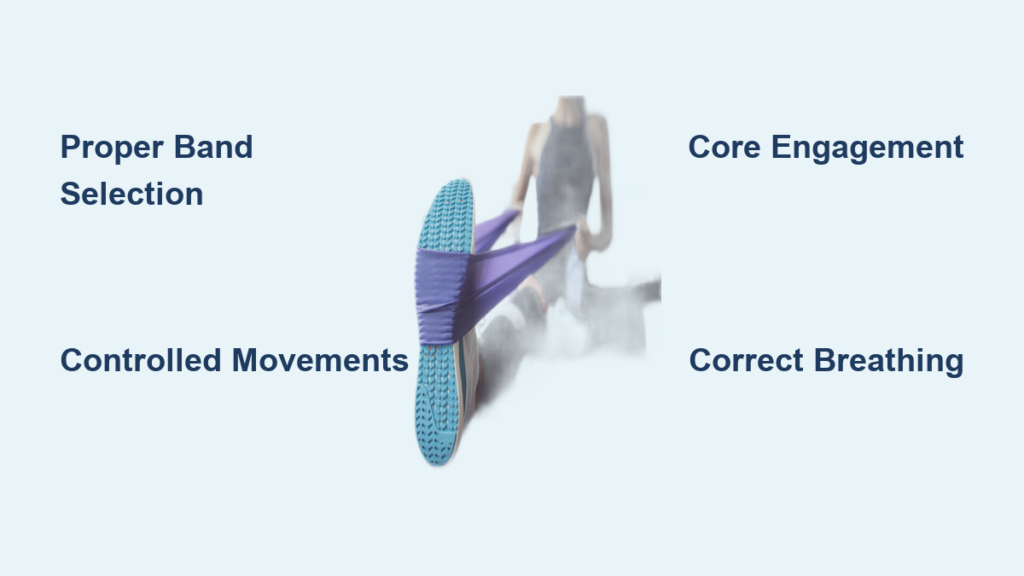
You’re scrolling through social media, watching fitness influencers lift heavy weights in fancy gyms, when it hits you—you don’t need any of that expensive equipment to build serious strength. Learning how to train with resistance bands properly unlocks a portable, joint-friendly fitness solution that delivers results anywhere you happen to be. Unlike traditional weights that rely solely on gravity and often strain joints, resistance bands provide continuous tension throughout every movement while being gentle on your body. This unique training method activates stabilizing muscles typically neglected during conventional weightlifting, improving your balance, joint health, and functional strength simultaneously.
Resistance bands offer the perfect solution when gym access disappears or time constraints tighten. A single band weighs mere ounces yet provides resistance levels comparable to substantial free weights, making your training program travel-ready whether you’re working from a hotel room or squeezing in a session during a lunch break. Consistency drives results, and bands eliminate the access barriers that derail workout routines. This guide delivers twelve targeted exercises organized into three focused groups, giving you everything needed for a complete workout in just twenty minutes.
Why Resistance Bands Beat Traditional Weights for Home Training
The continuous tension mechanism of bands creates greater muscle activation than free weights ever can. When lifting dumbbells, tension naturally decreases at certain points in the movement arc as gravity takes over. Resistance bands maintain consistent muscle engagement from the first to the last repetition, generating greater metabolic stress that translates to improved strength over time. This constant tension particularly benefits stabilizing muscles surrounding each joint, enhancing joint integrity while reducing injury risk during both training and daily activities.
Joint health represents another significant advantage of band training. The elastic nature of bands reduces compressive forces that dumbbells place on joints, making this method ideal for individuals with joint concerns or those recovering from injuries. You’ll build strength without the pounding impact of traditional weights, allowing more frequent training sessions with less recovery time needed between workouts.
Essential Equipment Checklist for Effective Band Training
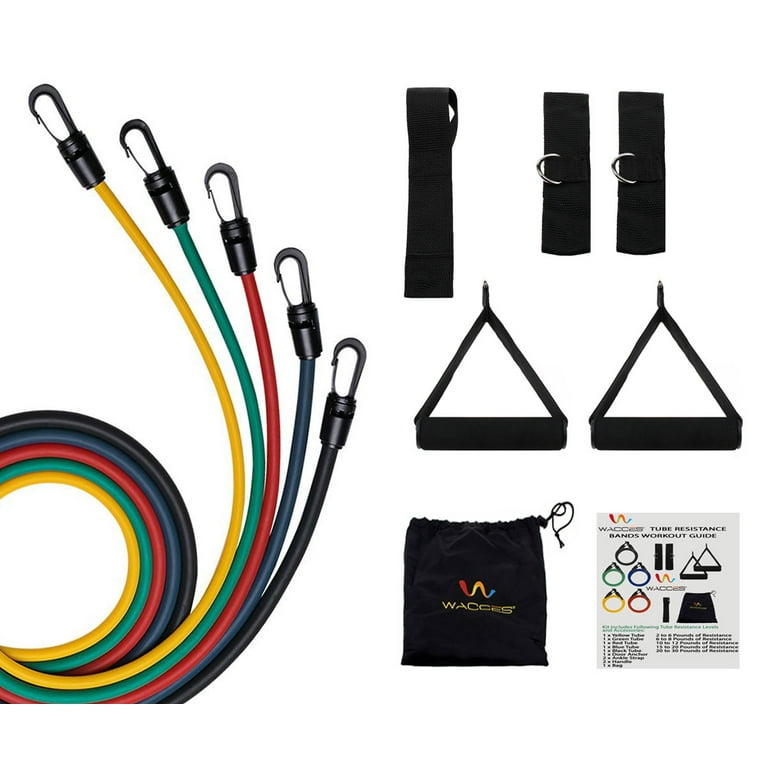
Training with resistance bands requires remarkably minimal equipment, making this approach accessible to virtually anyone ready to begin strengthening. Your primary piece consists of a single resistance band selected according to your current fitness level—lighter bands suit beginners and upper body work, while lower body exercises typically require higher resistance. The appropriate band allows you to complete prescribed repetitions with proper form while still experiencing meaningful challenge by your final repetitions.
Critical band selection tip: If you can breeze through sets without muscular fatigue, the band is too light. If your form breaks down significantly before completing repetitions, the band is likely too heavy. An exercise mat, though optional, substantially enhances comfort during floor-based exercises and provides additional shock absorption for movements performed on hard surfaces. For lower body exercises, you’ll need to tie both ends together to create a continuous loop that positions effectively around your ankles and thighs.
Upper Body Band Exercises That Build Real Strength
Band Pull for Instant Posture Improvement
Stand with arms stretched straight forward, holding your resistance band at its center with hands positioned approximately one foot apart. Note that the distance between your hands directly influences exercise difficulty—bringing hands closer together increases resistance while wider hand placement reduces intensity. While maintaining your shoulders at their current height—avoid hiking them toward your ears—pull your hands apart with controlled movement. Focus on squeezing your shoulder blades together as your hands separate, feeling the muscles between your shoulder blades activate forcefully. Complete twelve repetitions per set, maintaining smooth breathing throughout.
Bent-Over Row for a Stronger Back
Stand on your resistance band with feet hip-width apart, gripping one end in each hand with palms facing inward. Slightly bend your knees and hinge forward at the hips to approximately thirty degrees, establishing a flat back position with arms hanging straight toward the ground. Draw the band toward your chest by bending your elbows while maintaining them close to your torso—they should actually skim along your sides as you pull upward. After reaching maximal contraction, slowly straighten your arms to return to the starting position. Keep your core engaged throughout to protect your lower back, completing twelve controlled repetitions.
Lower Body Strength Building: Squats and Lunges That Work

Banded Squat for Glute Activation
Position the loop around both ankles with feet placed shoulder-width apart and slight external rotation. Descend by progressively bending your knees while pushing your hips backward, maintaining weight distribution in your heels throughout. You should always be able to see your toes during the descent—if not, you’re leaning too far forward. Maintain core engagement, a lifted chest, and a flat back position throughout both descending and ascending phases. Push through your heels to return to standing, completing one repetition. Twelve repetitions constitute one set of this fundamental lower body exercise.
Lateral Lunge for Hip Mobility
With the band looped around both ankles and hands either clasped in front of your chest or placed on your hips, take a substantial step approximately two feet to your right. Upon your foot contacting the ground, continue by hinging at your hips and pushing your buttocks backward while bending your right knee. Pause briefly at the bottom position for momentary isometric contraction before pushing off your right foot to return to the starting position. Complete twelve repetitions on each side, developing hip mobility while strengthening quadriceps, hamstrings, and glutes.
Core Activation Secrets for Maximum Band Training Results
Lateral Leg Raise for Stronger Obliques
Lie on your right side with the resistance band looped around both ankles. Extend both legs straight with your left leg stacked directly on top of your right leg. From this position, lift your left leg upward while keeping it straight, engaging your core and squeezing your glutes throughout. Raise the leg to approximately one to two feet off the ground, stopping immediately before any lower back arching begins. Lower the leg slowly back to the starting position with control. Complete all twelve repetitions on one side before switching to the other.
Glute Bridge for Spinal Stability
Lie on your back with hands at your sides, knees bent, and feet flat on the floor positioned hip-width apart. Loop the resistance band around your thighs just above your knees. Simultaneously squeeze your glutes and abdominals while pushing through your heels to lift your hips several inches off the floor. Create a straight line from your shoulders through your knees at the top position. Hold briefly while ensuring your knees neither collapse inward nor fall outward. Lower your hips slowly back to the starting position to complete one repetition.
Breathing Techniques That Boost Your Band Workout Performance
Two fundamental principles remain constant throughout all resistance band exercises: consistent breathing and continuous core engagement. Proper breathing supports both performance and safety. Exhale during the concentric (working) phase when you’re contracting against the band resistance, and inhale during the eccentric (lowering) phase. Avoid holding your breath during exertion, as this can spike blood pressure and compromise performance.
Core engagement involves actively drawing your abdominal muscles inward and maintaining this contraction throughout each exercise. This practice stabilizes your spine, protects against injury, and enhances exercise effectiveness. The engagement should be firm enough to provide stability but not so intense that it interferes with breathing. Think of bracing as if preparing to receive a punch—tight but still able to breathe comfortably.
Avoid These 5 Common Resistance Band Training Mistakes
- Using momentum instead of muscle control – Swinging your body to complete repetitions reduces effectiveness and increases injury risk
- Selecting inappropriate resistance levels – Too light provides minimal challenge; too heavy compromises form
- Holding your breath during exertion – This spikes blood pressure and reduces oxygen to working muscles
- Allowing joints to collapse inward – Particularly during lower body exercises, maintain proper alignment
- Rushing through repetitions – Slow, controlled movements maximize muscle engagement and reduce injury risk
Creating Your Perfect 20-Minute Resistance Band Routine
For beginners or those with time constraints, complete just one set of each exercise for an effective twenty-minute session. Start with Group 1 (upper body), progress to Group 2 (lower body), and finish with Group 3 (core). Rest 30-60 seconds between exercises, maintaining consistent breathing throughout. As you build strength, progress to two sets of each exercise for a forty-minute comprehensive workout.
Pro tip: Keep your resistance band in your suitcase when traveling—maintain your training routine anywhere with minimal space requirements. The portability of bands ensures consistency, the single most important factor in achieving fitness results. Whether you’re working out at home, in a hotel room, or during a lunch break, you now have everything needed to train with resistance bands effectively.
Before beginning any resistance band training program, consult with appropriate medical professionals to determine whether such exercise is appropriate for your specific health circumstances. Inspect your resistance band before each use for any signs of damage including cracks or tears—damaged bands should be replaced immediately as they may snap during use. Proper form should always take precedence over completing prescribed repetitions—when fatigue compromises movement quality, conclude your session rather than continuing with compromised technique.