Sitting on a stability ball instead of a traditional office chair has become a popular ergonomic solution for desk workers seeking relief from back pain and poor posture. When used correctly, a stability ball engages your core muscles throughout the workday, promotes natural spinal alignment, and encourages subtle movement that combats the negative effects of prolonged sitting. Yet most people make critical errors that turn this potential solution into a source of discomfort within days. The difference between success and failure lies in proper implementation—selecting the right ball, inflating it correctly, mastering sitting technique, and gradually adapting your body to the new demands. This guide reveals exactly how to integrate a stability ball into your workspace for sustainable benefits without the common pitfalls that cause most beginners to abandon the practice within weeks.
Select Your Stability Ball Based on Height and Workspace
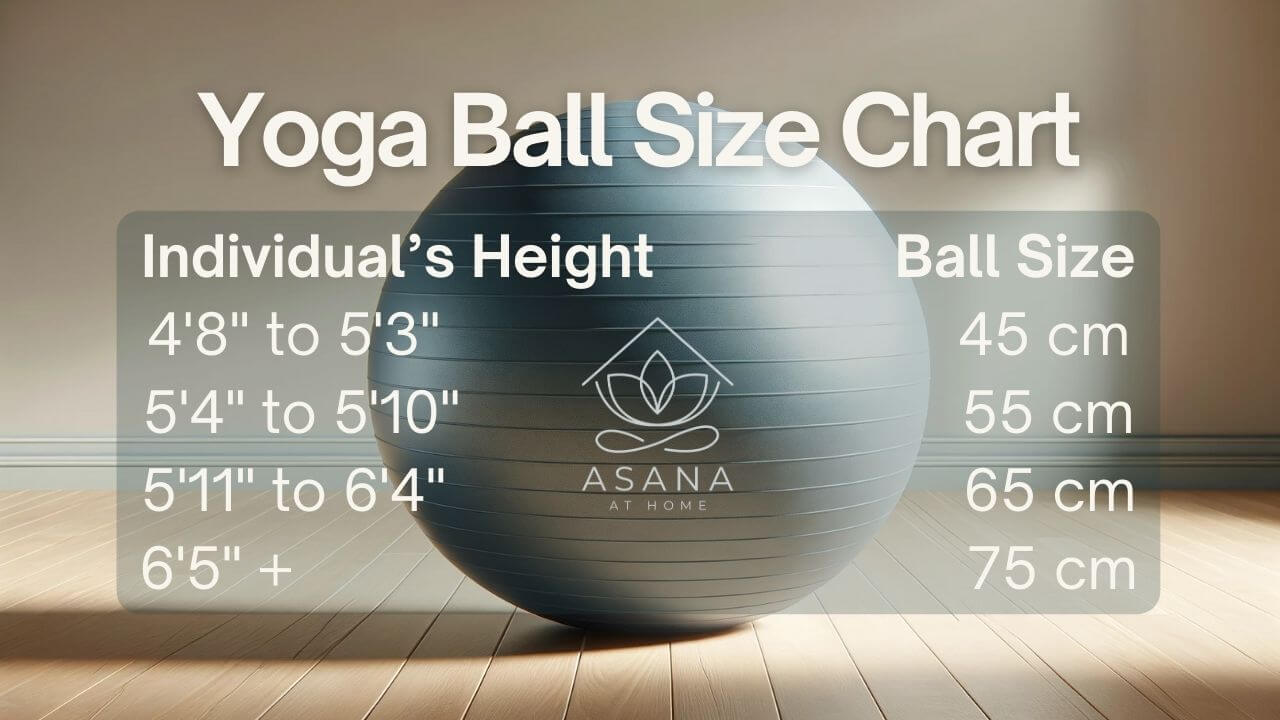
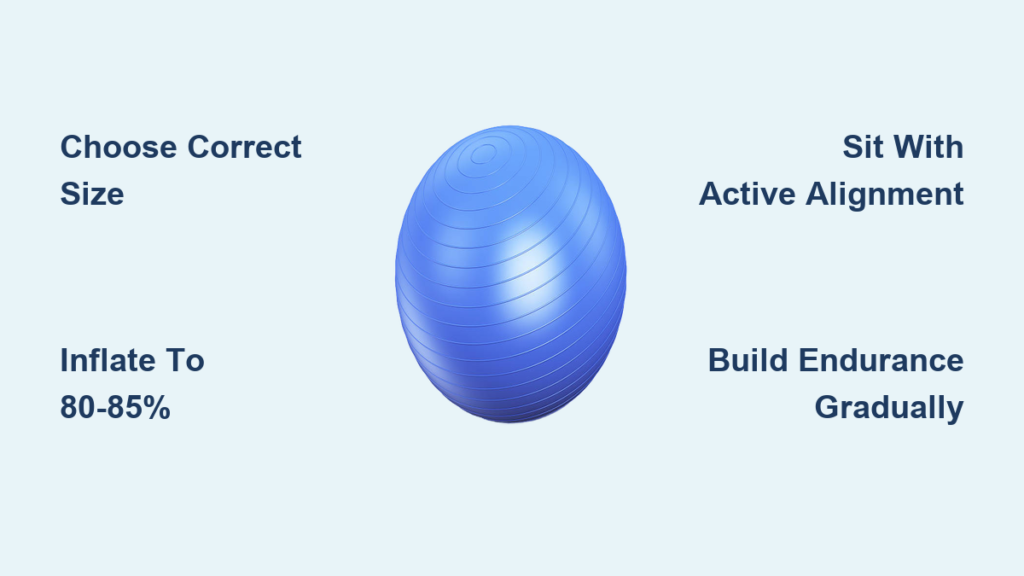
Choosing the wrong size stability ball is the most common mistake that sabotages your entire effort before you even sit down. Your height directly determines which ball size will position your body correctly at your desk, creating the foundation for proper posture and comfort.
For desk workers under 5’4″, a 55-centimeter stability ball typically positions your knees at the ideal 90-degree angle with feet flat on the floor. If you’re between 5’4″ and 6’2″, you’ll likely need the standard 65-centimeter ball to achieve proper thigh alignment parallel to the floor. Taller individuals exceeding 6’2″ should opt for the 75-centimeter option to prevent knee strain from sitting too high. When properly positioned, your hips should sit slightly higher than your knees, creating a gentle pelvic tilt that maintains your spine’s natural curve.
Prioritize burst-resistant construction designed for office use rather than standard exercise balls. Look for thicker PVC material (at least 1mm) that resists gradual stretching—cheaper balls often sag within weeks, compromising your posture. Some manufacturers offer stability balls with textured surfaces that provide better grip against clothing, preventing that frustrating slide when you shift position. While anti-roll bases seem appealing for office use, avoid them if possible—they eliminate the subtle movements that activate your core muscles, defeating the primary purpose of ball seating.
Inflate to 80-85% Capacity for Optimal Office Support

Most stability ball users make the critical error of inflating their ball to maximum capacity, creating an unstable, uncomfortable surface that causes rapid fatigue. For office use, inflate your ball to only 80-85% of its maximum size—this slight softness increases your contact area with the ball, distributing pressure evenly and reducing painful pressure points during extended sitting.
Check the manufacturer’s specifications for your specific ball model, then use a pressure gauge to achieve the ideal firmness. After initial inflation, wait 24-48 hours before making final adjustments, as the material will stretch slightly during this period. Properly inflated, the ball should give slightly when you sit down but quickly return to shape when you stand—a fully rigid ball creates too much instability for productive work.
Position your workspace to complement your stability ball’s height rather than forcing your body to adapt to existing furniture. Your monitor should sit at eye level when you’re seated with good posture, approximately an arm’s length away. Your keyboard and mouse must allow your elbows to rest at 90 degrees with shoulders relaxed—not hunched upward. If your current desk is too high, consider lowering your keyboard tray or raising your monitor instead of compromising your ball’s inflation level.
Sit with Active Spinal Alignment, Not Forced Posture
The most critical technique for successful stability ball office use involves understanding how to sit properly—many users mistakenly believe they must maintain rigid, military-straight posture, which quickly causes fatigue and abandonment of the practice.
Position yourself with your sit bones (the bony prominences beneath your glutes) slightly behind the ball’s center point, allowing your lower back to maintain its natural inward curve. Your chest should open naturally without forcing your shoulders back, and your head should balance directly over your spine—not jutting forward toward your screen. This neutral spinal alignment engages your deep core muscles continuously but gently, providing the postural benefits without causing strain.
Keep your feet flat on the floor approximately hip-width apart to create a stable base of support. Avoid crossing your legs or tucking one foot beneath you, as these positions create uneven weight distribution that leads to hip imbalances and lower back strain over time. Your weight should distribute evenly across both sit bones with minimal pressure on your thighs—rolling forward onto your knees indicates your ball is under-inflated or too small.
Build Sitting Endurance Gradually Over Three Weeks

Attempting to sit on a stability ball for eight hours on day one guarantees failure through muscle fatigue and discomfort. Your core and back muscles need progressive adaptation to sustain the increased engagement required for ball sitting.
Start with just 20-30 minutes per day during your first week, alternating with your regular office chair. Gradually increase your sitting duration by 10-15 minutes daily as your body adapts—most users reach 45-60 minute sessions comfortably within two weeks. Listen for your body’s warning signals: mild muscle awareness indicates proper engagement, while sharp pain or persistent discomfort means you’re progressing too quickly.
Set hourly reminders to stand up and move regardless of what you’re sitting on. Even with perfect technique, prolonged sitting in any position creates health risks. Combine your stability ball use with regular standing breaks—many successful users implement a 45/15 pattern (45 minutes sitting, 15 minutes standing) for optimal circulation and muscle recovery throughout the workday.
Perform Subtle Desk Exercises Without Interrupting Work
One of the stability ball’s greatest advantages over traditional chairs is the ability to incorporate subtle movements while remaining productive. These micro-exercises maintain circulation, prevent stiffness, and enhance the core engagement benefits without requiring you to stop working.
While typing or reading, perform seated pelvic tilts by alternately arching and rounding your lower back in a controlled motion. This gentle movement lubricates spinal joints and maintains lumbar mobility. Complete 10-15 repetitions every 30 minutes to combat stiffness from static sitting positions.
For upper body engagement, perform seated figure-eights with your hips while maintaining upper body stability. This movement activates your obliques and hip rotators without requiring you to stop working. Spend 30 seconds making large circles in each direction hourly to maintain joint mobility and prevent the stiffness that plagues traditional office workers.
Avoid These Three Costly Stability Ball Mistakes
Most stability ball office users fail within the first month due to preventable errors that undermine their efforts and create unnecessary discomfort.
Leaning forward onto your thighs as you fatigue creates a C-curved spine position that compresses discs and strains ligaments—this common adaptation defeats the entire purpose of ball sitting. If you notice yourself sliding forward, take an immediate standing break rather than continuing in compromised posture.
Using the ball on inappropriate flooring creates safety hazards and frustration. Smooth surfaces like hardwood or tile allow excessive rolling during sitting transitions, while thick carpet creates too much resistance. A low-pile rug or non-slip mat provides the ideal balance of traction and movement.
Neglecting gradual adaptation causes most beginners to abandon the practice. Your core muscles need weeks to develop the endurance required for sustained ball sitting—jumping straight to full-day use guarantees soreness and failure. Respect your body’s adaptation timeline for sustainable results.
Maintain Your Stability Ball for Long-Term Office Use
Regular maintenance ensures your stability ball continues performing as effective ergonomic seating rather than degrading into an uncomfortable hazard.
Check inflation levels weekly during your first month, then bi-weekly thereafter. Temperature changes and normal use cause gradual air loss that shifts your posture into suboptimal positions. Keep a small hand pump at your desk for quick touch-ups before your morning work session.
Inspect your ball monthly for signs of wear, particularly where your sit bones make contact. Look for thinning material, surface cracks, or loss of texture that reduces grip. Replace your ball immediately if you notice any structural concerns—waiting until failure creates a dangerous situation at your workstation.
Clean your ball weekly with a mild soap solution to maintain surface grip and hygiene. Sweat and dead skin cells accumulate on the surface, reducing friction and creating bacterial growth. Allow your ball to dry completely before use to prevent slipping during sitting transitions.
Combine Stability Ball Sitting with Comprehensive Ergonomics
Maximum benefit comes from integrating your stability ball into a complete ergonomic strategy rather than treating it as a standalone solution.
Alternate between your stability ball and an ergonomic office chair throughout your workday—many successful users sit on the ball for reading and reviewing tasks, then switch to a chair for writing-intensive work. This hybrid approach provides necessary muscle recovery while maintaining core engagement benefits.
Supplement your ball sitting with regular standing breaks and movement regardless of seating. Set a timer to remind yourself to stand, stretch, and walk for two minutes every hour to boost circulation and prevent the blood flow restrictions caused by prolonged sitting in any position.
Maintain overall fitness outside work hours to support your stability ball sitting. Strength training for your core and back muscles accelerates your adaptation period and enhances the benefits you experience during work hours. A comprehensive fitness routine complements rather than replaces your ergonomic workstation setup.
Using a stability ball as your office chair can transform your workday experience when implemented correctly. By selecting the right size ball, inflating it properly, mastering active sitting technique, and gradually building endurance, you’ll harness the core engagement and postural benefits while avoiding the common mistakes that derail most beginners. Remember that sustainable success comes from patience during the adaptation phase and integration into a comprehensive ergonomic strategy—not from treating the stability ball as a magic solution. Start with short sessions, listen to your body’s signals, and give yourself the three to four weeks needed for genuine adaptation. When implemented thoughtfully, stability ball sitting becomes a powerful tool for creating a more dynamic, health-supportive work environment.