You’ve probably seen fitness enthusiasts strapping small resistance bands around their ankles at the gym or in workout videos. These unassuming pieces of elastic equipment are powerful tools for building lower body strength, improving mobility, and targeting muscles that traditional weights sometimes miss. When your hip abductors feel weak during lateral movements or your glutes aren’t firing properly during squats, ankle resistance bands provide the targeted resistance needed to correct these imbalances. This guide delivers precise techniques for maximizing your ankle band workouts with proper form, specific exercise protocols, and safety considerations that prevent common injuries—so you can transform your lower body training without expensive equipment.
Proper Ankle Resistance Band Placement and Fit

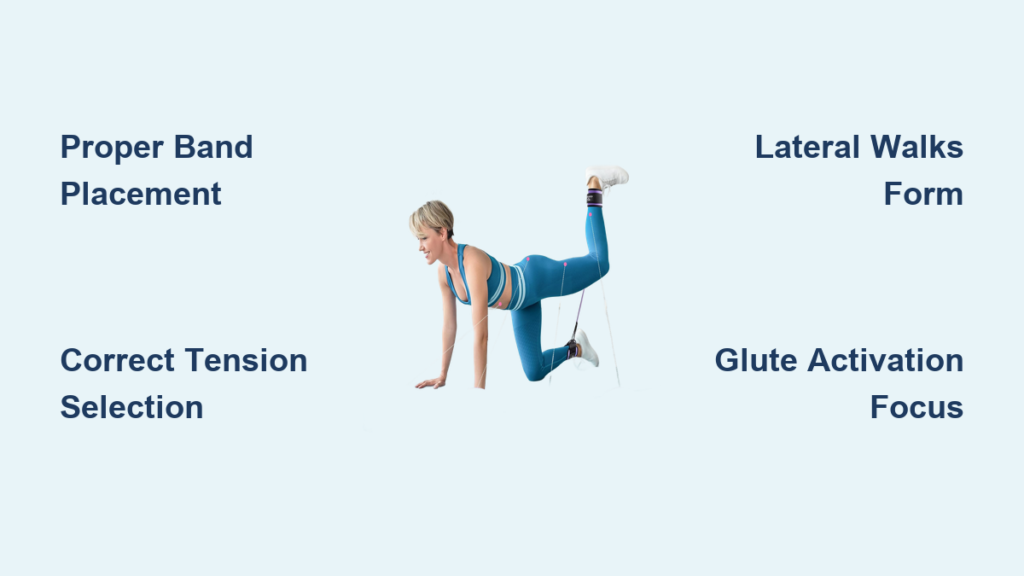
Before performing any exercises, correct band placement ensures maximum effectiveness and prevents slippage during movement. Position the resistance band approximately 2-3 inches above your ankle bone, where your calf naturally narrows. The band should sit snugly without restricting circulation—when properly fitted, you should be able to slide one finger underneath the band comfortably. Avoid placing the band directly over your ankle joint, as this creates unnecessary pressure on tendons and reduces exercise effectiveness.
Why Band Tension Matters for Muscle Activation
The resistance level you select directly impacts which muscle fibers engage during your workout. Lighter resistance bands (yellow or green) work best for warm-up activation exercises and rehabilitation work, targeting slow-twitch muscle fibers for endurance. Medium resistance (red or blue) provides optimal tension for muscle hypertrophy in gluteus medius and minimus development. Heavy resistance bands (purple or black) challenge fast-twitch fibers for strength gains but require proper form to prevent compensatory movements. Always begin with lighter resistance to master movement patterns before progressing.
Troubleshooting Common Placement Issues
If your band consistently slides down during exercises, you’re likely using a band that’s too wide for your ankle circumference. Narrow loop bands (approximately 2 inches wide) maintain better positioning than wider bands during dynamic movements. For individuals with particularly narrow ankles, doubling the band (creating two overlapping loops) provides additional grip without increasing resistance level. Should the band cause skin irritation, place a thin cotton sock between your skin and the band—never compromise proper tension for comfort, as this reduces exercise effectiveness by 30-40%.
Essential Ankle Band Exercises for Glute Activation
Lateral Walks With Perfect Form Technique
This foundational movement targets your hip abductors, crucial for knee stability and athletic performance. Begin with feet shoulder-width apart, knees slightly bent in athletic stance. Step sideways with your right foot, maintaining tension on the band throughout the movement. Follow with your left foot, never allowing it to cross the midline of your body. Complete 10-15 steps in one direction before reversing. Key form cues: Keep your chest up, avoid leaning forward at the hips, and ensure your knees track in line with your toes—not caving inward.
Pro Tip: Place your hands on your hip bones during the first few repetitions to feel your gluteus medius engage. If you’re primarily feeling this in your quadriceps, you’re likely leaning too far forward—adjust your posture until the burn shifts to your outer hips.
Fire Hydrants With Controlled Execution
This isolation exercise specifically targets the often-neglected gluteus medius. Begin on all fours with hands under shoulders and knees under hips. Loop the band around both ankles while maintaining a neutral spine. Keeping your knee bent at 90 degrees, lift your right knee out to the side until your thigh is parallel to the floor. Pause for two seconds at the top position before slowly lowering. Complete 12-15 repetitions per side for 3 sets.
Critical Mistake to Avoid: Do not rotate your torso or hike your hip during the movement. If your upper body shifts, reduce your range of motion until you can maintain proper spinal alignment. This exercise loses 70% of its effectiveness when performed with compensatory movements.
Advanced Ankle Band Techniques for Athletic Performance

Resistance Band Squats With External Rotation
This variation transforms a basic squat into a gluteus maximus and medius powerhouse movement. Position the band above your knees while standing with feet slightly wider than shoulder-width. As you descend into your squat, actively press your knees outward against the band’s resistance. Maintain this outward pressure throughout the entire movement. Perform 3 sets of 8-12 repetitions with 60-90 seconds rest between sets.
Why This Works Better: The external rotation component recruits 40% more gluteal muscle fibers compared to standard squats. You’ll notice improved hip stability and greater muscle activation in the posterior chain.
Curtsy Lunges With Band Resistance
The curtsy lunge with ankle resistance specifically targets the tensor fasciae latae and gluteus medius—muscles critical for hip stability during running and cutting movements. Stand with the band above your ankles, feet hip-width apart. Step your right foot diagonally behind your left leg, bending both knees to lower into the lunge position. Push through your left heel to return to start. Complete 10 repetitions per leg for 3 sets.
Form Checkpoint: If your front knee caves inward during the movement, reduce your range of motion until you can maintain proper alignment. The band should create noticeable tension during the entire movement—not just at the bottom position.
Safety Protocols and Injury Prevention

Recognizing Early Warning Signs of Overexertion
While resistance bands are generally safer than free weights, improper use still causes injuries. Stop immediately if you experience sharp pain in your hip joint or knee—this indicates improper form or excessive resistance. Mild muscle fatigue is expected, but joint pain signals potential harm. Pay special attention to your hip flexors; if you feel strain in the front of your hip during abduction exercises, you’re likely tilting your pelvis anteriorly—engage your core to maintain neutral pelvic alignment.
Progressive Overload Without Injury
Many users make the mistake of jumping to heavier resistance too quickly with ankle bands. Follow the 10% progression rule: only increase resistance when you can complete all prescribed repetitions with perfect form and without compensatory movements. Allow at least 48 hours between intense glute-focused band sessions for proper recovery. Remember that muscle growth occurs during rest periods, not during the workout itself.
Creating Your Ankle Band Workout Routine
Beginner Activation Protocol (10 Minutes)
Start with this daily routine to wake up dormant glute muscles before your regular workouts:
– Banded Glute Bridges: 2 sets of 15 reps
– Standing Clamshells: 2 sets of 12 reps per side
– Lateral Walks: 2 sets of 10 steps each direction
Rest 30 seconds between sets. Perform this routine before lower body workouts or even while brushing your teeth for consistent activation.
Intermediate Strength Builder (20 Minutes)
For those with 4+ weeks of consistent training:
– Banded Squats: 3 sets of 10 reps
– Curtsy Lunges: 3 sets of 10 reps per leg
– Fire Hydrants: 3 sets of 12 reps per side
– Lateral Walks: 3 sets of 15 steps each direction
Rest 45 seconds between sets. Perform 2-3 times weekly with at least one rest day between sessions.
Advanced Power Routine (25 Minutes)
For athletes needing explosive strength:
– Banded Jump Squats: 4 sets of 8 reps
– Lateral Bound to Stick: 3 sets of 8 reps per side
– Single-Leg Glute Bridges: 3 sets of 10 reps per leg
– Resistance Band Monster Walks: 3 sets of 20 steps each direction
Rest 60 seconds between sets. Limit to once weekly during power phase training.
Maintenance and Band Longevity
Your resistance bands will last significantly longer with proper care. After each use, wipe them with a dry cloth to remove skin oils that degrade the latex. Store bands loosely coiled in a cool, dark place—never in direct sunlight or in your gym bag where they’ll be stretched against other equipment. Check for nicks, tears, or thinning areas before each use; replace bands showing any signs of wear to prevent snapping during exercise. Never use household lotions or oils on your skin before band workouts, as these chemicals accelerate band deterioration.
Final Note: Consistent ankle resistance band training delivers noticeable improvements in lower body strength and stability within 4-6 weeks when performed with proper technique. Focus on quality over quantity—perfect form with lighter resistance creates better results than sloppy movements with heavy bands. Incorporate these exercises into your regular routine 2-3 times weekly, and you’ll develop stronger glutes, better hip stability, and improved athletic performance that translates to everything from daily activities to sports performance. Remember that muscle activation precedes strength development, so patience with the process yields the best long-term results.