Do your feet ache after a long day on your feet? Are you struggling with plantar fasciitis pain that makes mornings miserable? You’re not alone—millions suffer from foot pain that impacts daily life. Learning how to use a foot massage ball properly can transform your foot health without expensive treatments or medication. These compact, affordable tools deliver targeted relief right where you need it, whether you’re at home, work, or traveling. In just minutes a day, you can stimulate thousands of nerve endings in your feet to reduce pain, improve circulation, and promote whole-body relaxation.
Foot massage balls work by applying precise pressure to your foot’s intricate network of 26 bones, 100+ muscles, tendons, and ligaments. When you roll a ball under your foot, you’re not just soothing sore soles—you’re triggering physiological responses that benefit your entire body. The pressure breaks up adhesions in connective tissue, increases blood flow to deliver healing nutrients, and stimulates nerve pathways that reduce stress. Unlike professional massages that require appointments and significant expense, foot massage balls put relief in your control. This guide shows you exactly how to use a foot massage ball for maximum benefit, with techniques backed by both tradition and modern understanding of foot anatomy.
Why Your Feet Need Daily Massage Ball Therapy
Foot pain isn’t just uncomfortable—it’s your body signaling that tension has built up in critical structures. When you stand, walk, or run, stress accumulates in the plantar fascia, arch muscles, and heel tissues. A massage ball allows you to apply targeted pressure that breaks up these adhesions before they cause chronic pain. People with plantar fasciitis often report significant reductions in morning heel pain after just two weeks of consistent use. The deep pressure stimulates blood flow to damaged tissues, accelerating your body’s natural healing processes far more effectively than passive rest.
Beyond physical relief, foot massage triggers profound relaxation responses throughout your nervous system. Your feet contain approximately 7,000 nerve endings that connect to various systems in your body. Stimulating these points reduces cortisol levels and activates your parasympathetic nervous system—the “rest and digest” mode that counteracts chronic stress. Many users report improved sleep quality and enhanced mood after incorporating daily foot massage into their routine. This dual benefit makes how to use foot massage ball knowledge essential for both physical recovery and mental well-being.
Lacrosse and Hockey Balls for Deep Tissue Work

For serious foot pain relief, lacrosse and hockey balls deliver the firm pressure needed to reach deep tissue layers. These 2.5-inch rubber balls maintain their shape under heavy pressure, allowing you to work effectively into the plantar fascia without collapsing. Lacrosse balls offer maximum firmness for those with high pain tolerance, while hockey balls provide slightly less intensity for beginners transitioning from softer options. Their textured surface grips the foot just enough to prevent slipping while still allowing smooth rolling motion.
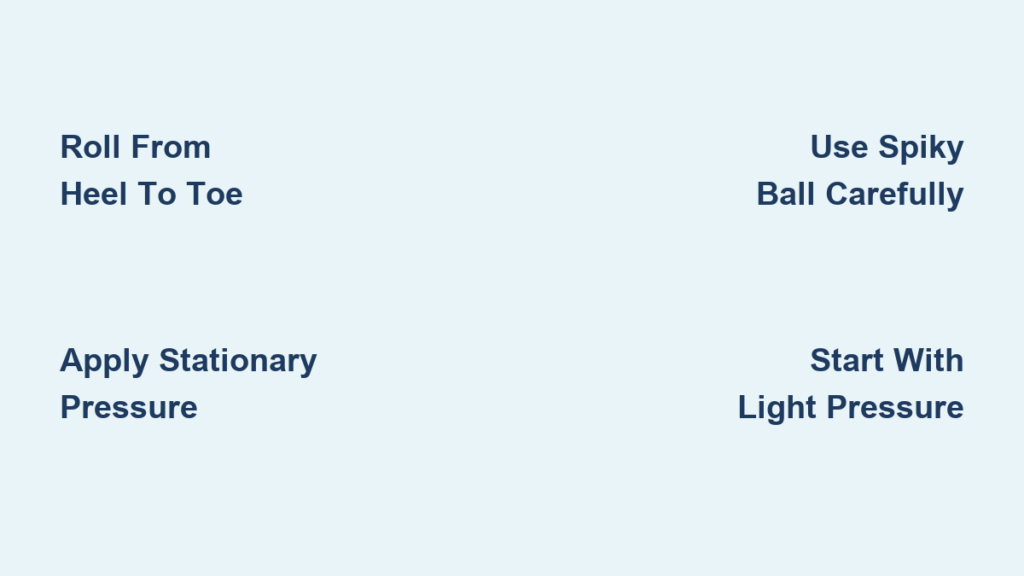
Pro Tip: Start with hockey balls if you’re new to foot massage—they’re approximately 15% softer than lacrosse balls but still provide enough resistance for meaningful tissue release. Place the ball on the floor, position your bare foot on top, and roll slowly from heel to toe with moderate pressure. For stubborn heel pain, stand with the ball between your foot and a wall, leaning in to control intensity. Most sporting goods stores carry these balls for under $5, making them the most cost-effective option for regular foot therapy.
Spiky Massage Balls for Targeted Stimulation

Spiky massage balls create intense, pinpoint pressure that’s exceptionally effective for breaking up deep adhesions in the heel and arch. The numerous projections stimulate blood flow more aggressively than smooth balls, making them ideal for chronic plantar fasciitis sufferers. These balls work by concentrating pressure at multiple points simultaneously, triggering faster tissue release than single-point pressure. However, their intensity means beginners should start with brief 30-second sessions and gradually increase duration as feet adapt.
Critical Warning: Never use spiky balls directly on inflamed areas during acute plantar fasciitis flare-ups—this can worsen inflammation. Instead, warm your feet with a 10-minute soak first to make tissues more pliable. Position the ball under your arch and roll slowly for 60 seconds, focusing on areas that feel tight but not painful. If sharp pain occurs, switch to a smoother ball immediately. Many users find spiky balls most effective when used after standard rolling has warmed up the tissues.
Basic Rolling for Full Sole Coverage
Master this fundamental technique to cover your entire foot systematically: Place the ball on the floor, position your bare foot on top, and roll slowly from heel to toe and back again in smooth, controlled movements. Maintain moderate pressure that feels intense but manageable—your foot should never lift off the ball during rolling. Spend at least 30 seconds on each major foot section (heel, arch, ball) while breathing deeply to enhance tissue release.
Follow this precise sequence for optimal results:
– Start with light pressure for 60 seconds to warm up tissues
– Increase to moderate pressure for 90 seconds of thorough rolling
– Focus extra time on tight spots using slower, more deliberate movements
– Finish with 30 seconds of light pressure to soothe tissues
This technique identifies problem areas needing extra attention while providing general circulation benefits. For best results, perform basic rolling daily—morning sessions prepare feet for daily activity, while evening sessions release accumulated tension.
Stationary Pressure for Stubborn Knots
When you find a particularly tight spot during rolling, switch to stationary pressure for deeper release. Position the ball directly on the tender point and hold it in place, allowing sustained pressure to gradually break up the adhesion. Begin with light pressure for 15 seconds, then gradually increase until you reach moderate intensity. Maintain pressure for 30-90 seconds while taking deep breaths—most knots release significantly within this timeframe.
Common Mistake: Applying too much pressure too soon causes muscles to tense up defensively, reducing effectiveness. Instead, use the “talk test”—you should be able to speak comfortably while applying pressure. If you’re grunting or holding your breath, reduce intensity immediately. For plantar fascia knots, position the ball just below the inner ankle bone where the tissue feels tightest. This spot often holds tension that refers pain to the heel.
Heel and Plantar Fascia Focus
The heel and plantar fascia require special attention since they’re common pain sources. Position the ball at the center of your heel and roll slowly toward the ball of your foot, applying extra pressure directly under the heel where the plantar fascia attaches. For stubborn plantar fasciitis, spend additional time working along the inner edge of your foot where the tissue is most prominent.
Time-Saving Shortcut: Combine heel massage with your morning routine—place the ball under your heel while brushing your teeth for two minutes. Focus on slow, deliberate rolling motions rather than speed. If morning heel pain is severe, warm your foot with a 5-minute soak first to make tissues more pliable. Consistent daily attention to this area typically produces the most significant reductions in heel pain within 2-3 weeks.
Ball of the Foot Relief
The ball of your foot bears significant pressure during walking and contains numerous small muscles that fatigue easily. Position the ball just behind your toes and roll toward your arch with moderate pressure, or work laterally across the ball from inside to outside. This area is highly sensitive, so many prefer lighter pressure or a softer ball here—consider using a foam ball specifically for this zone.
Pro Tip: For immediate relief after wearing high heels, place a thin sock over your foot while massaging the ball area. This reduces intensity while still providing benefits. Spend 60 seconds massaging between your metatarsal bones (the long foot bones) to release tension in the interossei muscles. If you’re a runner, incorporate this technique into your post-run recovery routine to prevent metatarsalgia.
Quick 5-Minute Daily Routine
Follow this efficient sequence for maximum benefit in minimal time:
- Warm-up (60 seconds): Roll lightly across entire sole with moderate pressure
- Heel focus (90 seconds): Target heel and inner arch edge with stationary pressure
- Ball of foot (60 seconds): Roll laterally across forefoot with lighter pressure
- Finishing (30 seconds): Gentle toe stretches and light rolling
Difficulty Indicator: ★☆☆ (Easy) – This routine requires no special equipment beyond your massage ball and can be done anywhere. Perform it daily for best results—consistency matters more than session length. Many users report noticeable improvement in foot comfort within just one week of following this simple routine.
Optimal Session Length for Results
For general foot health maintenance, five to ten minutes per foot provides significant benefits without overdoing it. Longer sessions don’t necessarily yield better results—excessive massage can irritate tissues and cause soreness. Aim for at least one minute per major area: heel, arch, ball, and outer edge. Beginners should start with three to five minutes per foot, gradually increasing as feet adapt.
Expert Note: Daily brief sessions prove more effective than occasional long ones. Morning massage prepares feet for daily activity, while evening sessions release accumulated tension. Those with acute plantar fasciitis may benefit from two shorter sessions daily (3-5 minutes each), but never exceed 15 minutes total per foot in a single day. If feet feel sore after sessions, reduce duration by 30-50% until they adapt.
When to Avoid Foot Massage Balls
While generally safe, certain conditions require avoiding foot massage balls entirely. Open wounds, cuts, or skin infections on your feet should never be massaged, as pressure can introduce bacteria and delay healing. Diabetics and those with peripheral neuropathy must exercise extreme caution due to reduced foot sensation—they should consult a healthcare provider before starting any foot massage routine.
Critical Warning: Never use massage balls if you have:
– Active foot fractures (wait for medical clearance)
– Blood clotting disorders or on blood thinners
– Severe osteoporosis (risk of bone damage)
– Plantar warts or other contagious skin conditions
If you experience sharp, stabbing pain during massage (not just deep pressure), stop immediately—this indicates potential tissue damage rather than productive release. Persistent pain after sessions warrants medical consultation to rule out underlying conditions.
Hardness and Firmness Considerations
Selecting the right hardness ensures comfortable, effective sessions. Very soft foam balls suit sensitive feet and beginners, medium-firm lacrosse balls work for most users, and very firm spiky balls provide intense pressure for experienced users. Feet that feel standard balls too gentle may need firmer options, while those finding standard balls uncomfortable should choose softer alternatives.
Pro Tip: Test different hardness levels by pressing your thumb into various balls—choose one that yields slightly but maintains shape under moderate pressure. For plantar fasciitis, medium-firm provides the best balance of effectiveness and comfort. Consider purchasing multiple types to have options for different days and conditions—your feet’s needs change based on activity level and pain intensity.
Combining Techniques for Best Outcomes

Maximize your foot massage ball results by strategically combining techniques. Start with basic rolling to warm up tissues and identify tight spots, then switch to stationary pressure on problem areas. Finish with circular motions to work into tissues from multiple directions. This layered approach breaks up adhesions more effectively than any single technique.
Expert Strategy: For plantar fasciitis relief, follow this sequence:
– 2 minutes basic rolling (heel to toe)
– 90 seconds stationary pressure on inner arch
– 60 seconds circular motions around heel
– 30 seconds light finishing strokes
Pair foot massage with other wellness practices for enhanced benefits: warm foot soaks before sessions make tissues more pliable, stretching before and after maintains flexibility, and hydration afterward helps flush released toxins. Consistent daily practice transforms foot massage from a temporary fix to a sustainable foot health solution.