That stubborn knot in your shoulder that won’t budge, the tension building between your shoulder blades after hours at your desk, or the tightness in your glutes that makes sitting uncomfortable—all these common problems can be addressed with a tool you might already have in your sports bag. Learning how to use a lacrosse ball for massage delivers professional-grade muscle relief without requiring expensive equipment or appointments. This simple, portable solution has become essential for athletes, office workers, and anyone dealing with chronic muscle tension who wants immediate, effective results.
Unlike foam rollers that treat broad muscle groups, a lacrosse ball’s compact size and firm density allow you to target specific trigger points with precision. When you understand how to use a lacrosse ball for massage properly, you can release deep muscle knots, improve flexibility, and accelerate recovery from workouts. This guide provides practical techniques you can implement today, showing exactly where to apply pressure, how much force to use, and which body areas respond best to this powerful self-treatment method.
Why Lacrosse Balls Work for Self-Massage
The effectiveness of lacrosse ball massage stems from its ability to deliver targeted myofascial release, a technique that addresses restrictions in the connective tissue surrounding your muscles. Fascia forms a continuous web throughout your body, and when it becomes tight or develops adhesions, it creates pain, limits mobility, and forms those frustrating trigger points that feel like knots in your muscles. The concentrated pressure from a lacrosse ball—typically made from solid rubber with a firmness rating around 60 durometer—penetrates deep into tissue to break up these restrictions.
Lacrosse balls outperform other tools because of their consistent density and compact size. Measuring approximately 2.5 inches in diameter, they provide a small contact point that can isolate specific problem areas foam rollers simply can’t reach. When you position the ball against a wall or floor and apply your body weight, you create precise pressure exactly where you need it. This focused approach allows you to work on deep-seated trigger points in areas like your rotator cuff, piriformis, or plantar fascia that broader tools miss entirely.
Regular lacrosse ball massage delivers multiple therapeutic benefits beyond simple knot release. It increases blood flow to treated areas, accelerating healing after intense activity. It also improves your range of motion by releasing restrictions in both muscles and their surrounding fascia. Many users report enhanced athletic performance as released muscles function more efficiently with reduced pain and greater flexibility.
Essential Tools and Preparation

Before diving into how to use a lacrosse ball for massage, gather the right equipment and prepare your space properly. While any standard lacrosse ball works, your specific needs might call for variations. Traditional orange lacrosse balls provide firm, consistent pressure ideal for deep tissue work. If you’re new to self-massage or have sensitive muscles, consider starting with a slightly softer practice ball to build tolerance before progressing to standard lacrosse balls. Some users prefer massage-specific balls like the Lacrosse Ball Pro or Yoga Tune Up balls, which feature textured surfaces that enhance skin grip and provide additional sensory feedback. Avoid hollow lacrosse balls as they deform under pressure, reducing effectiveness.
Prepare a flat, stable surface—either the floor, a firm table, or wall depending on your target area. Wear comfortable, non-restrictive clothing that allows free movement and skin access to treated areas. Many users prefer direct skin contact for better pressure control and precision, but thin clothing works if initial pressure feels too intense. Place a yoga mat or cushion under body parts not being treated for comfort, especially when lying on hard surfaces. Keep a towel nearby for sweat and consider having a second ball available when treating different areas without relocating your primary ball.
Target Areas You Can Treat

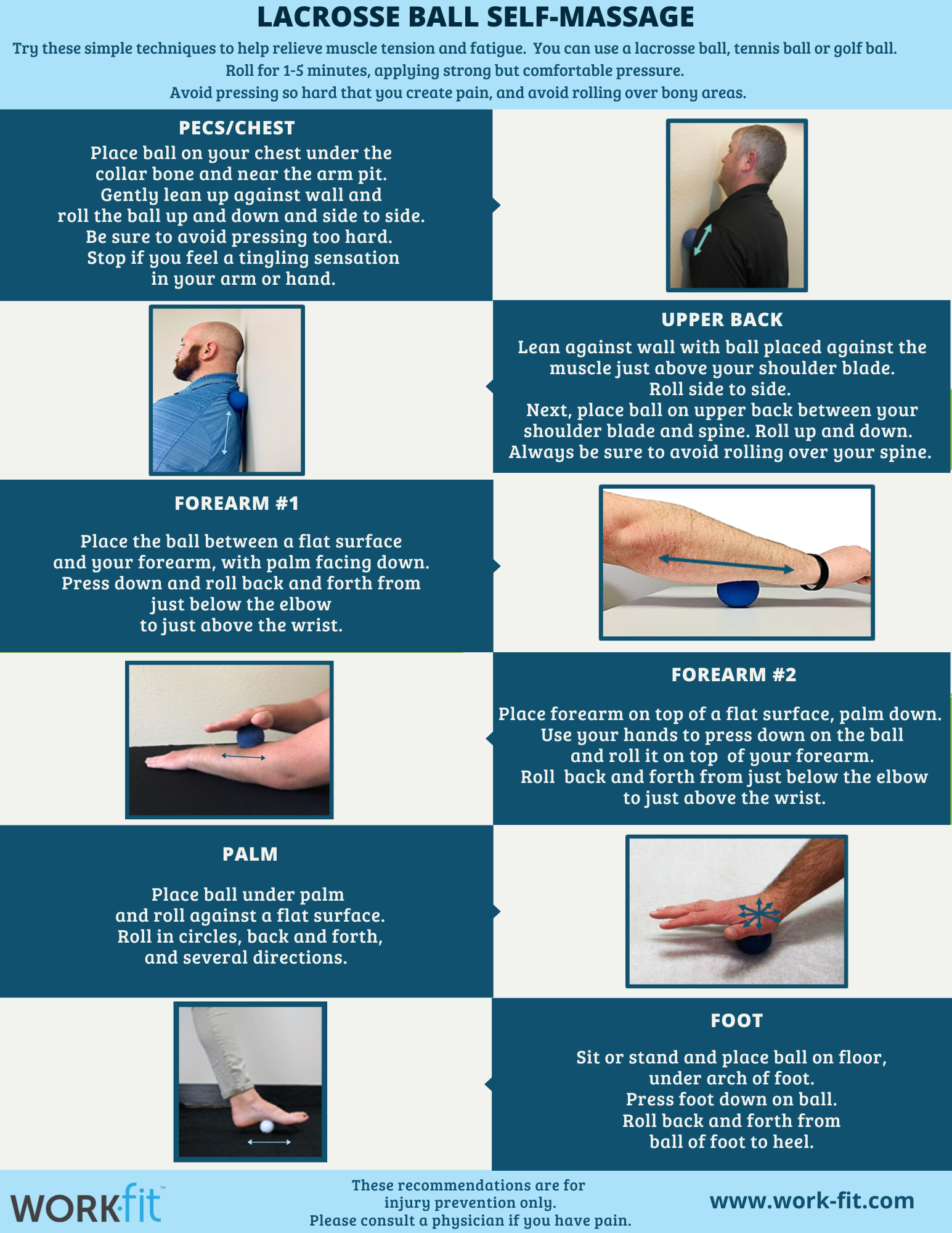
Understanding which body regions respond well to lacrosse ball treatment maximizes your results while keeping you safe. The muscles alongside your spine—from neck to lower back—accumulate tension from poor posture and stress. To treat upper back tension, position the ball between your back and a wall, then slowly walk your body up and down to roll along the muscles beside your spine. For middle and lower back, lie on the floor with the ball beneath you, rolling carefully while avoiding direct pressure on the bony spine itself.
Shoulders and the rotator cuff benefit tremendously from lacrosse ball work. Position the ball against a wall and press your shoulder blade into it, moving your arm in circles or across your body to change pressure angles. For glutes and piriformis—critical for anyone who sits extensively—sit on the ball and roll through the buttock muscle, pausing on tender spots. Crossing one ankle over the opposite knee opens the hip for better piriformis access.
Your lower body offers several highly treatable areas. Place the ball beneath your calf and roll from ankle to knee for tight calves and Achilles tendons. For plantar fascia relief, roll the ball under your bare foot while seated. Hip flexors at the front of your hip can be accessed by lying face-down with the ball positioned in the hip crease, though treat this sensitive area gently.
Proper Pressure and Duration Guidelines
Finding the right pressure intensity separates effective treatment from potentially harmful sessions. Many beginners mistakenly believe more pressure equals better results, but excessive force often causes bruising, inflammation, or protective muscle guarding. Use a pressure scale from one to ten, aiming for three to seven depending on the area—more muscle mass can handle higher pressure while sensitive areas need lighter touch. The sensation should be uncomfortable but manageable—you should breathe normally without tensing up.
For general rolling, work each muscle group for 60-90 seconds, spending extra time on tight spots. When locating specific trigger points, maintain static pressure for 30-90 seconds before reassessing sensitivity. Full-body sessions typically last 10-20 minutes, with two to three dedicated weekly sessions proving more effective than frequent brief ones. Listen carefully to your body—if you experience sharp pain, numbness, or persistent tingling, reduce pressure immediately. Bruising after sessions indicates excessive force was used.
Safety Precautions and Contraindications
Certain conditions require caution or complete avoidance when learning how to use a lacrosse ball for massage. Never press directly on bones, joints, the spine itself, areas with open wounds, or regions with varicose veins. Avoid compressing the carotid arteries on either side of your neck. Consult your healthcare provider before using lacrosse ball massage if you have osteoporosis, bleeding disorders, blood thinners, diabetes (especially for foot treatment), cancer, or are pregnant.
Acute injuries need different treatment than chronic tension. Avoid direct massage on fresh strains, sprains, or inflamed areas during the first 48-72 hours. Once initial inflammation passes, gentle work can aid recovery, but stop immediately if you feel sharp pain or notice swelling. Never use lacrosse ball massage over suspected fractures, blood clots, or deep vein thrombosis.
Common Mistakes to Avoid
Pressing too hard too soon remains the most frequent error. Start with lighter pressure, gradually building intensity as your tissues adapt. Skipping warm-up tissues reduces effectiveness—spend a few minutes moving the area or take a warm shower before intense work. Working through thick clothing absorbs pressure, reducing muscle impact.
Neglecting surrounding areas leads to incomplete relief. Tight muscles rarely exist in isolation—they’re part of a kinetic chain where adjacent muscles compensate. Treat the entire affected region rather than just the painful spot. Rushing through sessions without pausing on tender spots misses therapeutic opportunities. Finally, inconsistent practice undermines progress—regular maintenance beats occasional intensive sessions for resolving chronic tightness.
When to Seek Professional Help
While lacrosse ball massage addresses many common issues, persistent pain that doesn’t improve after several weeks of consistent self-treatment warrants professional evaluation. Sharp, shooting, or numbing pain indicates possible nerve involvement requiring expert assessment. Any suspected structural issues—herniated discs, labral tears, or severe tendon damage—need medical diagnosis before attempting self-massage.
Mastering how to use a lacrosse ball for massage puts affordable, convenient muscle relief within your reach. By applying proper techniques, respecting your body’s signals, and maintaining consistency, you can address chronic tension, speed recovery, and improve overall physical comfort. Start with basic techniques, progress gradually, and build a sustainable practice that supports your health and performance long-term.