Your weight bench isn’t just for bench presses and shoulder workouts—it holds untapped potential for sculpting strong, defined abdominal muscles. While most gym-goers relegate this versatile equipment to upper body exercises, the weight bench provides stability, adjustable angles, and positioning options that can revolutionize your ab training. Whether you’re building your first core routine or seeking to add intensity to your existing regimen, learning how to use weight bench for abs unlocks exercise possibilities impossible to replicate on the floor alone.
The bench’s fixed surface creates unique resistance angles that challenge your core in ways basic bodyweight exercises cannot achieve. By incorporating incline positions, you increase gravitational resistance, forcing your abs to work harder during each repetition. This guide delivers everything you need to transform your weight bench into a powerful ab-building tool—no fancy attachments or additional equipment required. Follow these techniques to develop stronger, more functional core strength that supports every aspect of your fitness journey.
Secure Your Bench Before Starting Any Exercise

Before attempting your first ab movement, proper bench setup ensures maximum effectiveness while keeping you safe from preventable injuries. Many people skip this critical step, only to struggle with unstable equipment mid-workout.
Test the Bench Lock Mechanism Thoroughly
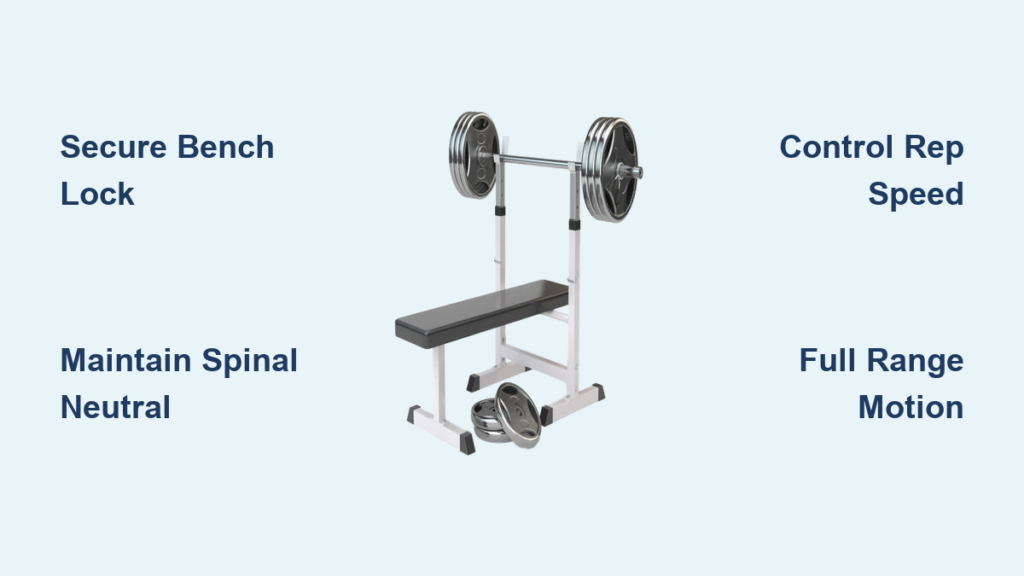
Every adjustable bench has a locking mechanism that secures the bench pad at various incline angles. Never assume it’s properly engaged—place one hand firmly on the bench pad and apply downward pressure to test stability before trusting it with your full body weight. If the bench wobbles or the lock feels loose, stop immediately and either repair the equipment or find an alternative. Collapsing benches during ab exercises can cause serious back injuries when your spine is in vulnerable positions.
Position for Unobstructed Movement
Ab exercises on a weight bench require space for your body to move through complete ranges of motion. Position the bench away from walls, other equipment, and any obstacles that could block your movements. A clear zone of at least three feet behind and above the bench prevents collisions during exercises that involve leaning back or extending upward. Place a mat underneath if you’re on a slick surface to prevent the bench from sliding during intense contractions.
Wear Proper Footwear for Stability
Unlike floor ab exercises where bare feet or socks might suffice, weight bench ab work requires shoes with flat, non-marking soles that grip the floor. Your footwear should provide ankle support and a stable base for bracing during exercises. Avoid loose clothing that could catch on bench mechanisms—form-fitting athletic wear keeps everything out of the way and allows you to observe proper form in mirrors.
Perfect Your Technique Across All Bench Ab Exercises
The difference between effective ab development and wasted effort comes down to execution quality. These fundamental principles apply across virtually every weight bench ab exercise and deserve your full attention before progressing.
Maintain Spinal Neutrality Throughout Movement
Your spine should maintain its natural curve during all exercises, avoiding excessive rounding or arching that shifts tension away from your abs. Think of lengthening your spine tall as you position yourself, creating space between each vertebra. When performing incline exercises, this neutral position becomes critical because the angle increases strain on your lumbar spine if you allow hyper-extension. Engage your core by drawing your belly button gently toward your spine before initiating each movement—this activation should remain constant throughout the entire set.
Control Every Phase of Each Repetition
Momentum might make exercises feel easier temporarily, but it cheats your abs out of necessary tension. Every repetition should move with deliberate speed—typically taking two to three seconds for the challenging phase and two to three seconds to return to start. Avoid jerky movements or using swinging momentum to lift your torso. If you cannot control the movement, reduce difficulty by adjusting the bench angle or returning to easier variations.
Breathe to Maximize Core Engagement
Proper breathing directly impacts core stability and exercise effectiveness. Inhale during the lowering phase, expanding your belly sideways. Exhale during the lifting phase, drawing your navel toward your spine to engage deep core muscles. This breathing pattern creates intra-abdominal pressure that stabilizes your spine. Never hold your breath during ab exercises—this increases blood pressure and reduces core engagement.
Top Bench Exercises for Complete Ab Development
These exercises represent the most effective movements for targeting all sections of your abdominal muscles using a standard weight bench.
Decline Sit-Ups for Maximum Resistance
Decline sit-ups provide superior resistance throughout the movement while offering lower body support.
Setup and Execution
Set your bench to 30-45 degrees. Secure your feet under ankle rollers, sitting on the lower portion with knees bent. Extend arms overhead or place hands behind ears without pulling on your neck. Lower torso backward until shoulder blades touch the bench, then contract abs to lift body back up. Imagine curling your ribcage toward your pelvis rather than pulling with arms. Complete three sets of 12-15 repetitions.
Pro Tips
Avoid pulling on your neck—keep chin slightly tucked. If too easy, incrementally raise the bench angle. Focus on the contraction quality rather than speed.
Bench-Supported Leg Raises for Lower Abs
This exercise specifically targets your lower abs, an area many struggle to engage effectively.
Setup and Execution
Set bench flat. Lie face-up with buttocks near the edge, gripping bench head with both hands. Extend legs straight with knees slightly bent. Raise legs to 90-degree angle with bench, hold briefly, then lower slowly while maintaining tension. Complete three sets of 10-15 repetitions.
Common Mistakes
Avoid swinging legs with momentum—reduce range of motion if needed. Prevent lower back arching by pressing it firmly into the bench and focusing on pelvic curl.
Russian Twists on Bench Edge for Obliques
Russian twists target your obliques and rotational core strength, enhanced by the bench’s instability.
Setup and Execution
Sit on bench edge with feet flat, knees bent at 90 degrees. Lean back slightly until core engages, maintaining straight line from shoulders to hips. Clasp hands or hold weight plate. Rotate torso to one side while keeping hips forward, pause, then twist to opposite side. Alternate sides for designated repetitions.
Progressions
Increase difficulty by lifting feet slightly off floor or holding weight. For maximum challenge, perform on decline bench with feet secured.
Incline Reverse Crunches for Lower Abs
Reverse crunches emphasize lower abs with incline position adding resistance.
Setup and Execution
Set bench to 30-45 degrees. Lie face-up with hips near bottom edge, gripping bench above head. Bend knees, bringing thighs toward chest. Curl pelvis upward while drawing knees toward chest, lifting hips off bench. Hold contraction, then lower slowly while maintaining tension. Complete three sets of 12-15 repetitions.
Form Focus
Quality matters more than quantity—feel lower abs doing the work. Avoid pulling with arms. If lower back strains, reduce range of motion.
Build Your Effective Ab Routine
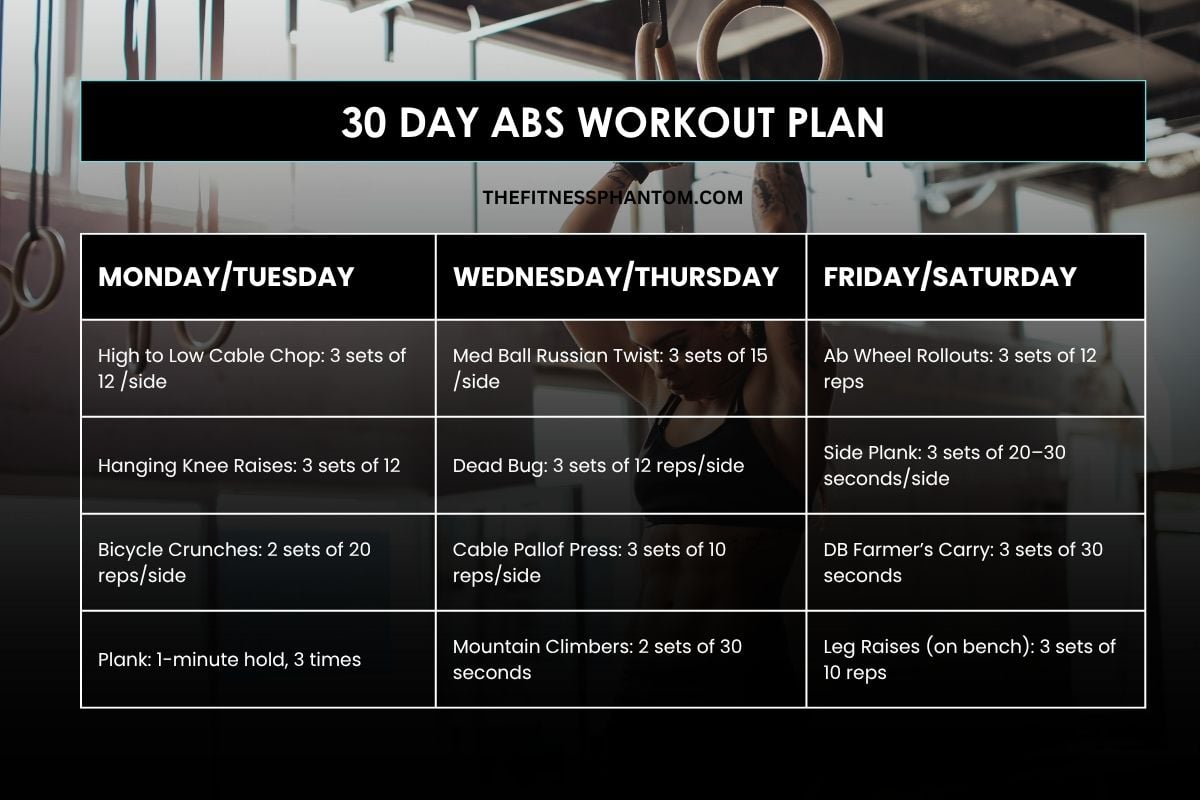
Combine these exercises into a structured routine for balanced development.
Sample Workout Structure
Begin with 5-10 minutes light cardio. Complete three rounds: decline sit-ups (12-15 reps), bench leg raises (10-12 reps), Russian twists (20 total rotations), incline reverse crunches (12-15 reps). Rest 90 seconds between rounds.
Progressive Overload Principles
Track repetitions and sets, aiming to increase difficulty weekly. Options include increasing bench angles, adding resistance, extending time under tension, or reducing rest periods. Document your starting point and review weekly.
Training Frequency
Train abs two to three times weekly with at least one rest day between sessions. Overtraining impedes progress as muscles need recovery time to rebuild and strengthen.
Avoid Common Training Mistakes
Understanding pitfalls accelerates your results.
Complete Full Range of Motion
Partial repetitions limit development. Lower fully during sit-ups, nearly parallel to floor during leg raises. Full range movements produce superior long-term results despite feeling harder initially.
Control Your Repetition Speed
High-speed circuits offer cardio benefits but minimal muscle development. Aim for 30-45 seconds per set with controlled movements. Pause at peak contractions and focus on muscle engagement rather than completing reps quickly.
Address Body Composition Realistically
No amount of ab training reveals definition if body fat covers the muscle. Combine your bench ab routine with full-body strength training, cardio, and proper nutrition to reduce overall body fat. Spot reduction doesn’t work—you must lower total body fat to reveal developed abs.
Maximize Your Long-Term Results
Building strong abs on a weight bench requires consistency and progressive challenges. Start with fundamental movements, then systematically increase difficulty as strength improves. The weight bench offers far more ab development potential than most realize—consistent training transforms this overlooked equipment into your most valuable core-building tool.
Remember that visible abs come from both strong muscles and low enough body fat. Focus on building ab strength through these exercises while reducing overall body fat through comprehensive fitness practices. Incorporate these weight bench ab exercises into your routine two to three times weekly, track progress, and adjust difficulty as you grow stronger. Within weeks, you’ll notice improved core stability, better posture, and increasing definition as your abs develop through dedicated, intelligent training.