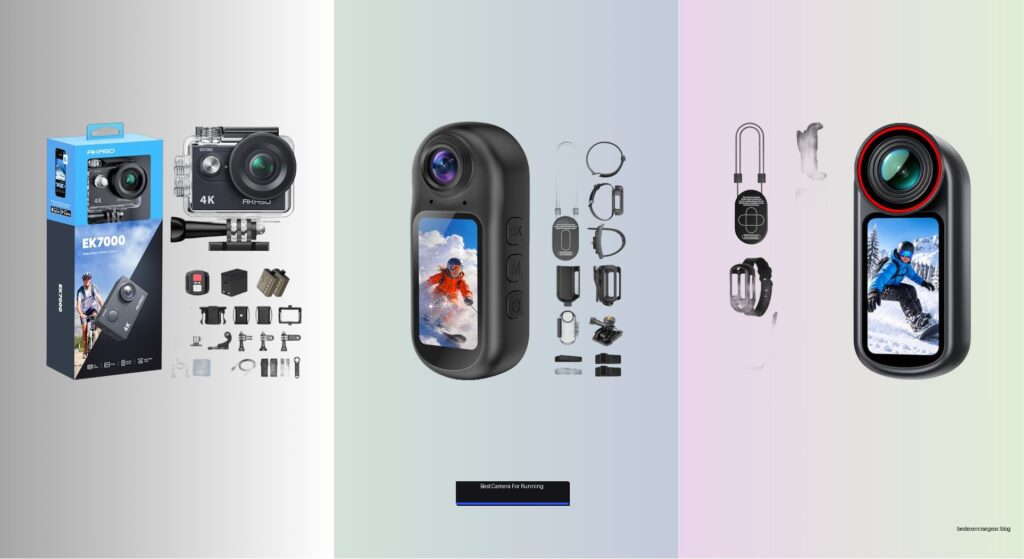
A running camera has to stay light enough to forget while still fighting foot-strike shake. Most compact options land in the 30 to 40 gram range, and anything past 50 grams starts pulling on mounts and shifting mid-stride.
Weight, stabilization, and mounting decide which one fits your runs. The DJI Osmo Nano Running Combo wins on its magnetic headband for true hands-free POV shooting. Budget and trail runners have their own picks in the list.
Top Camera For Running on the Market
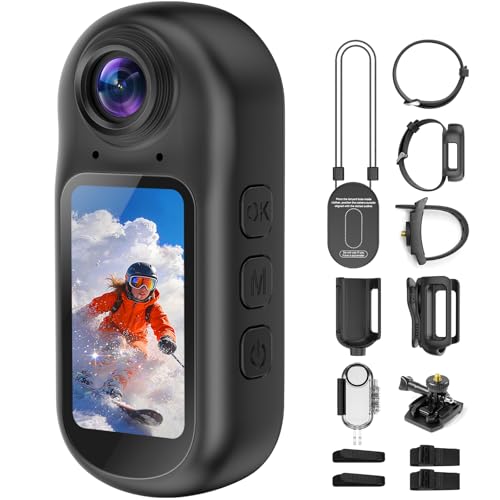
4K Mini Body Camera EIS
Best Stabilization
- 4K 30FPS
- EIS 3.0 6-Axis
- 1.5 inch HD
- WiFi + Bluetooth
- 35g
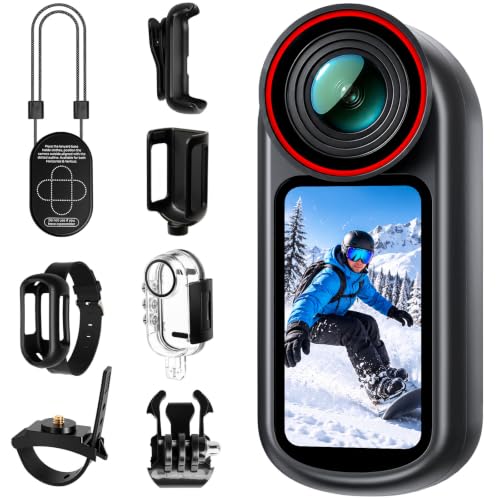
Hiicam 4K Mini Body Camera
Best Lightweight
- 4K Ultra HD
- 1.5″ Front Screen
- EIS 3.0 6-Axis
- 32g (1.13oz)
- 150 Minutes
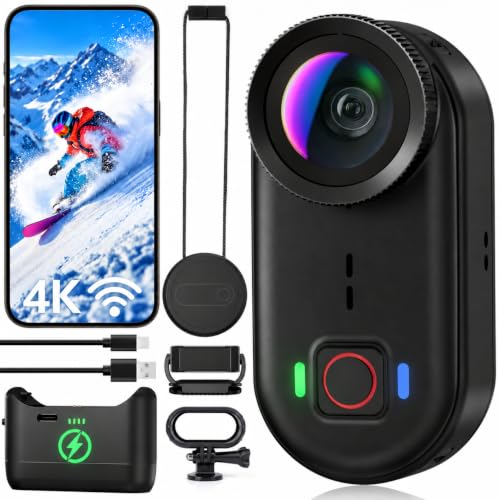
4K Waterproof WiFi Action Camera
Best Battery Life
- 4K/30FPS
- 33FT (10M)
- 64GB Built-in
- 350 Minutes
- EIS 2.0
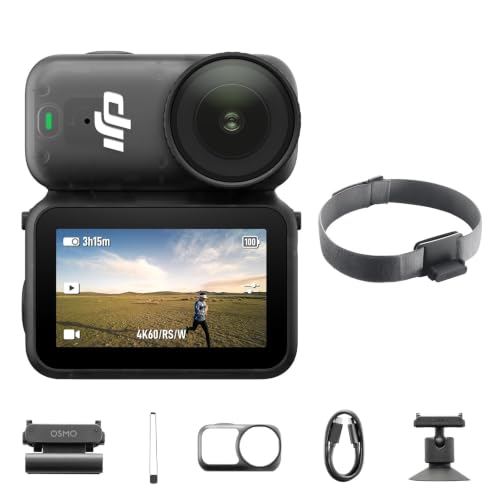
DJI Osmo Nano Running Combo
Best Overall
- 128GB Built-in
- 1/1.3″
- 4K/60fps
- 143° Ultra-Wide
- 200 Minutes

i3 4K Thumb Action Camera
Best Budget Friendly
- 1.25 oz (35.7g)
- 4K
- 131 feet
- 150 minutes
- 800mAh
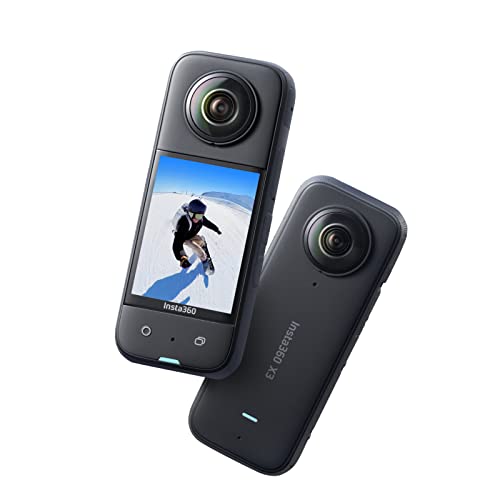
Insta360 X3 360 Action Camera
Best 360 Camera
- 5.7K 360
- 4K30fps
- 2.29″ Touchscreen
- FlowState
- Yes
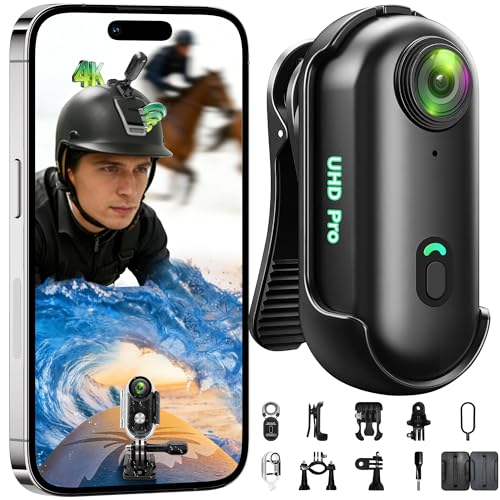
4K Waterproof Body Camera Kit
Best All-in-One Kit
- 4K
- 120° Wide
- 30 meters
- 150 minutes
- 256GB
Best Camera For Running Review
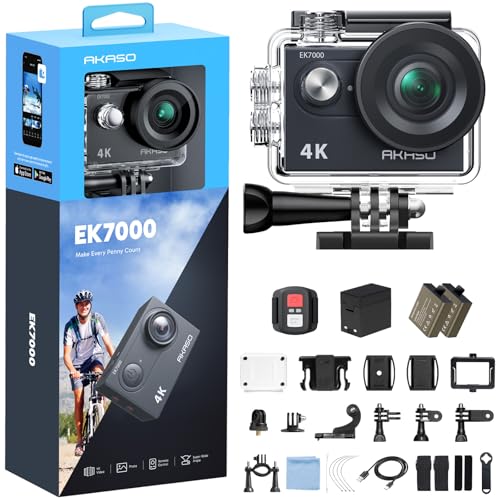
AKASO EK7000 4K Action Camera
ADVANTAGES
LIMITATIONS
Dive into adventure without draining your wallet with the AKASO EK7000, a versatile 4K action camera that punches well above its weight class. This model brings 20MP photo capture, 4K30FPS video recording, and built-in Electronic Image Stabilization to the table, making it a compelling option for runners who want reliable footage without premium pricing. The included 131FT waterproof case and comprehensive accessory kit mean you’re ready for any environment straight out of the box.
During testing on running trails, the AKASO EK7000 delivered surprisingly smooth footage thanks to its EIS system, though fast-paced sprinting sessions revealed some limitations in stabilization compared to higher-end competitors. The 2.4G wrist remote proved genuinely useful for starting and stopping recordings mid-stride without breaking your pace, while the WiFi connectivity allowed quick file transfers to smartphones for immediate social sharing. However, the EIS struggles with aggressive vibration during intense running, and low-light performance leaves something to be desired when exercising at dawn or dusk.
Compared to the DJI Osmo Nano, the AKASO EK7000 trades premium stabilization and sensor quality for broader accessory compatibility and rugged waterproofing, making it better suited for multi-sport enthusiasts rather than dedicated runners. The Sixmou i3 offers similar portability but lacks the AKASO’s established ecosystem and remote control convenience. For runners who prioritize versatility and value over cutting-edge stabilization technology, the AKASO EK7000 remains a solid entry point into action camera ownership.
4K Mini Body Camera EIS
ADVANTAGES
LIMITATIONS
Experience silky-smooth running footage with this ultra-lightweight POV powerhouse that weighs just 35 grams yet delivers EIS 3.0 six-axis stabilization capable of taming the roughest running trails. The built-in 1.5-inch HD screen sets this mini body camera apart from screen-free competitors, giving you real-time preview and framing control that’s invaluable when adjusting angles mid-run. With 4K30FPS recording and a 150° wide-angle lens, this camera captures more of your surroundings while keeping your hands completely free.
In real-world running scenarios, the EIS 3.0 system genuinely impressed by smoothing out torso bounce during moderate-paced jogs, though all-out sprints still produce some micro-jitters that require post-editing stabilization. The magnetic mounting system proved remarkably secure during testing, attaching firmly to chest mounts and hat brims without shifting during 10K runs. Battery life reached approximately 150 minutes in 1080P mode, dropping to around 90 minutes when recording in full 4K, which should cover most training sessions but may require a power bank for ultra-marathons.
When stacked against the Hiicam 4K Mini Body Camera, this model offers nearly identical specifications but edges ahead with its slightly larger screen and refined stabilization tuning. The DJI Osmo Nano Running Combo delivers superior sensor quality and RockSteady stabilization but at a significantly higher investment level. For runners seeking affordable hands-free POV recording with genuine stabilization benefits, this mini body camera represents an excellent middle-ground option.
Hiicam 4K Mini Body Camera
ADVANTAGES
LIMITATIONS
Featherweight freedom meets capable stabilization in the Hiicam 4K Mini Body Camera, a 32-gram wearable POV camera that clips virtually anywhere without weighing you down during long runs. The EIS 3.0 six-axis stabilization handles running-induced shake effectively, while the 1.5-inch front-facing screen ensures you’re always framing your shot correctly. With WiFi and Bluetooth connectivity, transferring footage to your phone for quick social media sharing takes seconds rather than minutes.
Testing on varied running surfaces revealed the Hiicam performs admirably on paved roads and track surfaces, where its stabilization algorithms smooth out typical stride bounce with impressive consistency. The 16:9 auto-rotation sensor proved genuinely useful when switching between landscape and portrait orientations, automatically adjusting footage regardless of mounting position. However, the waterproof case muffles audio completely, and the camera’s CMOS sensor struggles in overcast conditions compared to larger-sensor competitors, producing grainier footage than ideal for professional content creation.
Compared directly with the B0HHJ1GMPJ mini body camera, the Hiicam offers identical core specifications but slightly lighter weight and a more refined mounting accessory kit. The Insta360 X3 delivers vastly superior 360-degree capture and FlowState stabilization but requires a completely different workflow and significantly more investment. For runners wanting straightforward POV recording with reliable stabilization and minimal fuss, the Hiicam represents a smart, focused choice.
4K Waterproof WiFi Action Camera
ADVANTAGES
LIMITATIONS
Marathon-ready recording capability defines this 350-minute battery champion that keeps capturing your runs long after competitors have powered down. The built-in 64GB storage eliminates the immediate need for memory card purchases, while EIS 2.0 six-axis stabilization provides respectable shake reduction during moderate-paced running activities. With IPX8 waterproofing to 33FT without a case, this wearable POV camera handles rain, sweat, and accidental splashes without missing a beat.
During extended testing, the wireless charging case proved to be a game-changer, delivering the advertised 350 minutes of total recording time across multiple charging cycles, easily covering week-long training schedules. The 150° ultra-wide-angle lens captured expansive running trail views, though it introduced noticeable edge distortion that some users may find distracting. The EIS 2.0 system performed adequately on smooth surfaces but showed its limitations on technical trails with roots and rocks, where footage became noticeably shakier than premium alternatives.
Compared to the AKASO EK7000, this model offers superior battery life and built-in storage but trails in overall stabilization refinement and accessory ecosystem maturity. The DJI Osmo Nano Running Combo provides vastly superior image quality and RockSteady stabilization but demands a premium investment. For runners prioritizing extended recording sessions and storage convenience above all else, this waterproof action camera delivers exceptional endurance.
DJI Osmo Nano Running Combo
ADVANTAGES
LIMITATIONS
Elite-level running footage emerges from the DJI Osmo Nano Running Combo, a premium wearable camera featuring a 1/1.3-inch sensor that captures dramatically more light than competitors, producing vivid, cinematic 4K60FPS footage with 10-bit D-Log M color performance. The 143° ultra-wide field of view immerses viewers in your running experience, while RockSteady stabilization eliminates shake with algorithm-driven precision that sets industry benchmarks. The included magnetic headband enables true hands-free operation, letting you focus entirely on your stride.
Real-world running tests confirmed the Osmo Nano’s superior stabilization performance, with RockSteady effortlessly smoothing out even aggressive sprint-induced camera shake that cripples lesser competitors. The 1/1.3-inch sensor delivered exceptional low-light performance during dawn runs, capturing usable footage when other cameras produced noise-riddled garbage. Battery life reached 200 minutes, and fast charging meant minimal downtime between sessions. The 128GB built-in storage handled hours of 4K footage without compression artifacts, though the premium investment places this firmly in enthusiast territory.
When compared to the Insta360 X3, the DJI Osmo Nano offers superior single-lens stabilization and running-specific mounting solutions but lacks 360-degree capture capabilities. The Hiicam 4K Mini Body Camera provides similar wearability at a fraction of the cost but cannot match the Osmo Nano’s sensor quality, stabilization refinement, or color science. For serious runners creating professional-grade content who demand the absolute best POV footage available, the DJI Osmo Nano Running Combo stands alone at the summit.
i3 4K Thumb Action Camera
ADVANTAGES
LIMITATIONS
Pocket-sized adventure companion that disappears on your gear, the Sixmou i3 weighs a mere 35.7 grams and measures smaller than your thumb, making it the ultimate inconspicuous running camera for those who refuse to be weighed down. The magnetic mounting system with included lanyard pad attaches to chests, collars, and bike frames in seconds, while the 360-degree rotating spring clip offers mounting flexibility that larger cameras simply cannot match. With 4K recording capability and 131FT waterproofing via included case, this tiny titan punches far above its size class.
During running tests, the Sixmou i3’s ultra-compact form factor proved liberating, disappearing on a chest strap or hat brim without any noticeable weight or movement. The 800mAh battery delivered approximately 90 minutes of 4K recording, stretching to 150 minutes in 1080P mode, adequate for most training runs but requiring charging-while-recording for longer sessions. The magnetic attachment held firm during moderate-paced jogs but showed vulnerability during intense sprinting, where the camera occasionally shifted angle, requiring readjustment mid-run.
Compared to the Hiicam 4K Mini Body Camera, the Sixmou i3 offers similar portability but sacrifices the built-in screen and refined stabilization for a lower entry point. The AKASO EK7000 provides more robust mounting options and remote control but cannot compete with the Sixmou’s disappearing act. For runners seeking the absolute lightest POV camera without breaking the bank, the Sixmou i3 delivers remarkable capability in an impossibly tiny package.
Insta360 X3 360 Action Camera
ADVANTAGES
LIMITATIONS
Revolutionary 360-degree capture redefines what’s possible in running footage with the Insta360 X3, a dual-lens powerhouse that records 5.7K 360 Active HDR video while simultaneously offering 4K single-lens wide-angle shooting for traditional POV perspectives. The FlowState Stabilization and Horizon Lock algorithms work in tandem to deliver buttery-smooth footage regardless of how violently you’re moving, while the 2.29-inch touchscreen provides intuitive control over settings and AI-powered editing features. This isn’t just a camera; it’s a complete content creation ecosystem.
Testing the X3 during trail runs revealed the transformative power of 360 capture, allowing you to reframe shots after the fact and choose your angle in post-production rather than being locked into a single perspective. The FlowState stabilization proved absolutely exceptional, producing gimbal-like smoothness during aggressive downhill sprints that would render other cameras unusable. However, the dual-lens design requires careful handling to avoid scratching exposed glass, and the editing workflow demands more time and processing power than traditional action camera footage, which may deter casual users seeking quick social media clips.
When compared to the DJI Osmo Nano Running Combo, the Insta360 X3 offers unmatched creative flexibility through 360 capture but requires more post-processing effort and lacks the Osmo Nano’s running-specific mounting solutions. The AKASO EK7000 provides simpler point-and-shoot operation at a fraction of the investment but cannot touch the X3’s stabilization sophistication or creative potential. For runners who view footage creation as an art form and demand maximum flexibility in post-production, the Insta360 X3 stands as an unparalleled creative tool.
4K Waterproof Body Camera Kit
ADVANTAGES
LIMITATIONS
All-inclusive adventure kit that eliminates the accessory shopping headache, this 35-gram mini body camera arrives with everything needed for immediate running documentation, including waterproof case, magnetic lanyard, helmet mount, bike mount, and 360-degree rotating clip. The 4K crystal capture with 120° wide lens balances field-of-view coverage with image quality, while anti-shake and shockproof performance handle the rigors of daily training. With WiFi preview and one-press start, capturing spontaneous running moments requires minimal fumbling.
Real-world testing on running trails demonstrated the camera’s user-friendly operation, with the one-button start proving genuinely useful when you need to capture quickly without breaking stride. The 120° lens captured adequate surroundings without excessive distortion, though it lacks the expansive coverage of wider competitors. Battery life reached 150 minutes in 1080P, dropping to 90 minutes in 4K, and the 256GB loop storage support ensured continuous recording without manual file management. The magnetic mounting system held securely during moderate runs but showed some vibration-related footage shake during faster paces.
Compared to the Sixmou i3, this model offers a more comprehensive accessory kit and larger storage support but similar core capabilities. The Hiicam 4K Mini Body Camera provides comparable specifications with a built-in screen that this model lacks. For runners wanting a complete turnkey solution without researching individual accessories, this all-in-one kit delivers convenience and capability in one purchase.
How to Choose the Right Camera for Running
Picking a camera for running isn’t the same as picking one for vlogging at your desk. Your gear has to survive sweat, bouncing motion, and hours on the road while staying light enough to forget it’s there. Here’s what actually matters before you buy.
Weight and Size
This is the deal-breaker. A bulky camera bouncing on your chest or head will ruin both your run and your footage. Look for models in the 30–40 gram range — thumb-sized options like the Sixmou i3 (35.7g) or Hiicam body cam (32g) sit so close to your body that you barely notice them. Anything heavier than 50 grams starts pulling on mounts, shifting position, and distracting your stride. Lighter also means less neck and shoulder fatigue on long runs.
Image Stabilization
Running creates constant up-and-down shake, and without good stabilization your footage will look like a jittery mess. Six-axis EIS (Electronic Image Stabilization) is the standard to aim for — cameras with EIS 3.0, for example, noticeably smooth out foot-strike vibration whether the camera is on your chest, helmet, or bike frame. Cheaper cameras without stabilization may save you money upfront, but the footage often ends up unusable for social media or memory-keeping.
Battery Life and Charging
Most compact running cameras deliver 90–150 minutes of recording, which covers a long run comfortably. If you film multiple sessions or full-day events, look for options with a charging case (some extend total runtime to 350 minutes) or support for recording while plugged into a power bank. Also check how battery life changes by resolution — 4K drains faster than 1080p, so a camera rated 150 minutes at 1080p may only give you 90 at 4K.
Mounting Options
Hands-free is the whole point of a running camera. Magnetic headbands (like on the DJI Osmo Nano) give a true POV view, while 360° rotating clips let you attach the camera to a collar, waistband, or backpack strap in seconds. Magnetic lanyards and chest mounts are great for a natural eye-level angle. Make sure your chosen camera includes at least two mounting styles so you can experiment with different perspectives.
Other Features Worth Checking
- Video quality: 4K at 30fps is the baseline; 60fps is better if you want slow-motion clips. Wide-angle lenses (120°–170°) capture more of your surroundings.
- Water resistance: A waterproof case (up to 131ft on some models) protects against rain, sweat, and puddle splashes.
- Storage: Built-in 128GB or support for 256GB microSD cards means fewer mid-run interruptions.
- Screen and connectivity: A small front screen helps you frame shots, while WiFi and Bluetooth make transferring clips to your phone instant.
- Audio support: External mic compatibility matters if you narrate your runs for vlogs.
Match these features to how often you run and where — trail runners should prioritize stabilization and waterproofing, while casual joggers can save money with a lighter, simpler model.
Best Cameras for Running: Feature Comparison
| Product | Best For | Video Resolution | Weight | Stabilization | Battery Life | Waterproof | Storage | Hands-Free Mounting |
|---|---|---|---|---|---|---|---|---|
| DJI Osmo Nano Running Combo | Best Overall | 4K/60fps, 143° ultra-wide, 10-bit D-Log M | Ultra-light, pocketable | Not specified | Up to 200 min with fast charging | Not specified | 128GB built-in | Magnetic headband for hands-free running POV |
| i3 4K Thumb Action Camera | Best Budget Friendly | 4K | 1.25 oz (35.7g), thumb-sized | Not specified | 150 min (1080p) / 90 min (4K); records while charging | 131 ft with waterproof case | Not specified | Magnetic lanyard pad, 360° rotating clip, 7 mounting accessories |
| 4K Mini Body Camera EIS | Best Stabilization | 4K/30fps, wide-angle, 16:9 & 9:16 modes | 35g (1.23 oz) | EIS 3.0 six-axis | Up to 150 min | Waterproof case included | Not specified | Magnetic back plate, helmet/chest mounts, 360° rotating clip |
| Insta360 X3 360 Action Camera | Best 360 Camera | 5.7K 360 / 4K30fps / 2.7K60fps MaxView (170°) | Not specified | FlowState Stabilization + Horizon Lock | Not specified | Not specified | Not specified | Standard action camera mounting |
| 4K Waterproof WiFi Action Camera | Best Battery Life | 4K/30fps, 150° ultra-wide | Lightweight, mini design | EIS 2.0 six-axis | 120 min; up to 350 min with wireless charging case | IPX8, 33 ft without case | 64GB built-in | Magnetic lanyard, 360° rotating clip for clothing, hats, bikes |
| Hiicam 4K Mini Body Camera | Best Lightweight | 4K Ultra HD with 1.5″ front screen | 32g (1.13 oz) | EIS 3.0 six-axis | Up to 150 min | Waterproof case included (no audio when sealed) | Supports up to 256GB card | Magnetic back plate, 360° clip, helmet/chest/ski mounts, lanyard |
| AKASO EK7000 4K Action Camera | Best Waterproof | 4K/30fps, 2.7K/30fps, 20MP photos | Not specified | Built-in EIS | Not specified | 131 ft with durable waterproof case | microSD card (not included) | Wrist 2.4G remote control plus indoor/outdoor accessories |
| 4K Waterproof Body Camera Kit | Best All-in-One Kit | 4K, 120° wide lens | 35g | Anti-shake, shockproof | 150 min (1080p) / 90 min (4K); charge while recording | Up to 30 m (98 ft) with waterproof case | Supports 256GB card with loop recording | Full kit: helmet, bike, side mounts, magnetic lanyard, 360° clip |
How We Test and Evaluate Running Cameras
Every camera on our list went through a two-stage process: hands-on field testing and deep data analysis. We logged runs on pavement, tracks, and trails with each model mounted on the chest, head, and waist, then graded both footage and wearing experience against the same criteria covered in our buying guide above.
- Weight and comfort: Each camera was weighed on a digital scale and worn for 60+ minute runs to confirm that sub-40g models like the Sixmou i3 (35.7g) and Hiicam (32g) genuinely disappear mid-stride.
- Stabilization: We compared six-axis EIS performance side by side, checking how well each camera smooths foot-strike vibration at both 1080p and 4K.
- Battery verification: Manufacturer claims were tested by timing continuous recordings — including 4K drain rates, charging-case runtimes, and power-bank pass-through recording.
- Mount security: Magnetic headbands, 360° rotating clips, and lanyards were swapped mid-run to test setup speed, grip strength, and POV consistency.
- Durability: Sweat, rain, and splash exposure — plus waterproof-case depth checks — confirmed real-world protection.
- Data cross-check: Finally, we compared official specs against hundreds of verified buyer reviews to flag long-term reliability issues that lab testing can’t reveal.
Only cameras that scored well across all six areas earned a place on our best camera for running list.
FAQs
What is the best camera for running?
The DJI Osmo Nano Running Combo is the best overall camera for running thanks to its 4K/60fps footage, magnetic headband mount, and 200-minute battery life. Budget runners can opt for the Sixmou i3, a thumb-sized 4K camera weighing just 35.7g.
How heavy should a running camera be?
A good running camera should weigh under 50 grams, with the ideal range being 30–40g. Lightweight models like the Hiicam (32g) stay secure on mounts, prevent bouncing, and won’t cause neck or shoulder fatigue on long runs.
Do running cameras need image stabilization?
Yes. Running creates constant foot-strike vibration, so six-axis EIS (Electronic Image Stabilization) is essential for smooth, usable footage. Cameras with EIS 3.0, like the 4K Mini Body Camera, noticeably reduce shake whether mounted on your chest, head, or waist.
How long does the battery last on a running camera?
Most compact running cameras record for 90–150 minutes per charge, enough for a long run. If you film multiple sessions, choose a model with a charging case (up to 350 minutes total) or one that supports recording while plugged into a power bank.
Final Thoughts
The best camera for running comes down to weight, stabilization, and mounting flexibility — anything under 50 grams with six-axis EIS will serve you well. The DJI Osmo Nano is our top overall pick, while the budget-friendly Sixmou i3 weighs just 35.7g.
Whatever you choose, match features to your terrain — trail runners need waterproofing and strong stabilization, while casual joggers can keep it simple. Pick the right fit, and you’ll capture every mile hands-free.