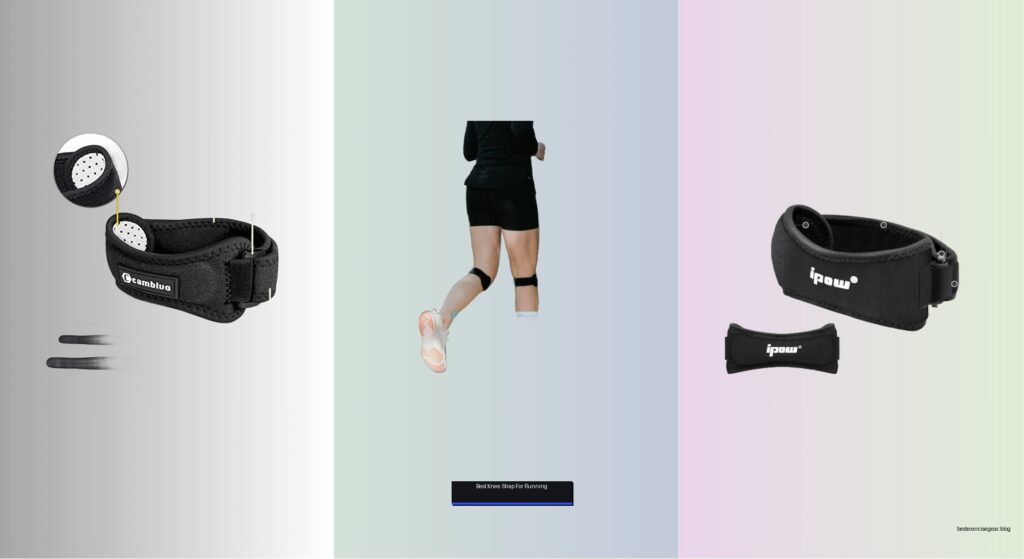
A knee strap has to press the tendon below your kneecap, not just wrap your knee. Fit ranges vary widely, from 10 to 18 inches, and a loose strap slides mid-run while a tight one restricts circulation.
Compression, adjustability and breathability decide which best knee strap for running suits you. The IPOW 2 Pack earns our top spot with a shock-absorbing segmented pad and a 10 to 18 inch fit range. Budget, dual-support and lightweight picks follow for other needs.
Top Knee Strap For Running on the Market

CAMBIVO 2 Pack Patella Straps
Best Adjustable Fit
- 2 Straps
- Hook-and-Loop
- Neoprene Blend
- Silicone
- Dual-Strap

Bodyprox Patella Tendon Knee Strap
Best Budget Friendly
- 13-18 inches
- Silicone gel
- Neoprene
- Hook-and-loop
- Hexagonal venting holes

IPOW 2 Pack Patellar Knee Strap
Best Overall
- 2 Pack
- 10″ to 18″
- Fully adjustable
- Breathable fabric
- Running, Basketball, Volleyball
Bodyprox Patellar Support Strap Large
Best Dual Support
- Large
- Neoprene
- Adjustable
- Dual strap
- Breathable
PUPTUT Dual Silicone Patella Strap
Best for Impact Absorption
- Silicone
- V-Shaped
- 11-18.8 inches
- Hook and loop
- 1 Pack

Mueller Adjustable Max Knee Strap
Best Premium
- Mueller Sports Medicine
- Knee Strap
- One Size (12″-18″)
- Black
- Right or Left
Best Knee Strap For Running Review
CAMBIVO 2 Pack Patella Straps
ADVANTAGES
LIMITATIONS
Dial in pinpoint patellar relief with the CAMBIVO dual-strap system that refuses to slide mid-stride. This adjustable-fit standout ships with two strap lengths plus two bonus straps, letting runners with slender or muscular legs lock in targeted compression exactly where the tendon aches. If you have ever cut a run short because your knee strap crept down your calf, this hook-and-loop closure system is the fix you have been hunting for.
On the road, the contoured silicone pad soaks up impact jolts while the breathable neoprene blend keeps heat from building under the strap during long efforts. Testers found the reinforced grip pad holds position through trail runs, basketball landings, and ten-hour work shifts alike, and the low-profile build disappears under jeans or shorts. The trade-off is that the slim single-band design offers less overall joint stability than a full sleeve, so it suits tendon-focused pain rather than broad knee support.
Against the Bodyprox B07DLFP8Q5 two-pack, the CAMBIVO wins on fit customization thanks to its dual-length straps and bonus extras, while the Bodyprox counters with hexagonal venting for hotter climates. Compared with the IPOW B00PA4XCBU, the CAMBIVO delivers similar no-slip security but with more sizing flexibility for atypical leg shapes. Runners who want a secure, forget-it-is-there strap for runner’s knee and Osgood-Schlatter flare-ups will find the CAMBIVO the more tailored pick, while the Mueller B002WS49FA appeals to those chasing brand heritage over modular fit.
Bodyprox Patella Tendon Knee Strap
ADVANTAGES
LIMITATIONS
Stretch your budget without stretching your patience with the Bodyprox two-pack, a value-driven knee strap that covers both knees for the cost of one premium band. The fully adjustable hook-and-loop closure conforms to knee circumferences from 13 to 18 inches, and the built-in silicone gel padding cushions the patellar tendon on inclines and descents. For runners logging daily miles on a tight budget, this is no-fuss tendon support that simply works.
In practice, the soft neoprene band hugs the knee comfortably during walking, jogging, and gym squats, and the hexagonal venting holes push heat out better than solid-fabric rivals on humid days. The gel pad provides welcome relief going up or down hills, though testers noted the single-strap tension can loosen during high-impact sprint intervals and needs occasional re-tightening. It also runs a touch warm under long pants, making it better suited to shorts weather or indoor training.
Stacked against the CAMBIVO B07K66HXZL, the Bodyprox sacrifices fit customization (no dual-length straps) in exchange for a lower entry point and superior ventilation. Versus the PUPTUT B0HDCQWP7N, it offers less impact-dispersing padding but a simpler, lighter feel for everyday wear. Budget-conscious runners and hikers who want dependable patellar compression across two knees will gravitate here, while the IPOW B00PA4XCBU remains the choice for those prioritizing anti-slip engineering over savings.
IPOW 2 Pack Patellar Knee Strap
ADVANTAGES
LIMITATIONS
Lock down patellar pain without locking down your stride with the IPOW two-pack, a no-slip compression specialist built for athletes who hate mid-workout readjustments. The double-knot strap system lets you fine-tune tension from both sides, while extra padding and anti-slip construction keep the band glued to your knee through sprints, cuts, and jumps. Runners battling that dull ache beneath the kneecap finally get precise, stay-put support in a slim package.
Real-world testing shows the segmented shock-absorbing design adapting to individual knee curves, delivering relief across football, basketball, running, and climbing sessions. The moisture-wicking breathable fabric keeps sweat at bay from morning workouts to evening errands, and the low-profile build vanishes under everyday clothes. The main limitation is sizing: the 10 to 18 inch range is generous, but the double-strap tension can feel fiddly to dial in perfectly on the first few wears.
Compared with the CAMBIVO B07K66HXZL, the IPOW edges ahead on anti-slip security but trails on included strap variety for atypical leg shapes. Against the Bodyprox B07MBR34MJ dual-support model, it offers less quadriceps-targeting structure yet a lighter, less restrictive feel for pure tendon relief. This is the best overall pick for active men and women who want one strap that handles runner’s knee, jumper’s knee, and Osgood-Schlatter without fuss, while the Mueller B002WS49FA suits buyers who value legacy branding.
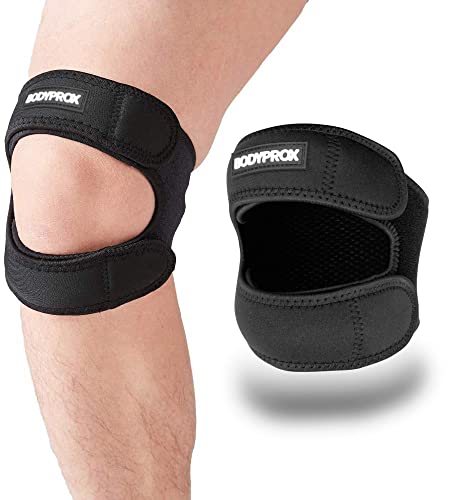
Bodyprox Patellar Support Strap Large
ADVANTAGES
LIMITATIONS
Double down on knee stability with the Bodyprox dual-support strap, a two-tube compression system that targets both the patellar tendon below and quadriceps misalignment above. The lower silicon tube homes in on tendon pain while the upper tube addresses tracking issues, making this a smarter strap for complex knee complaints like patellar tracking disorder and bursitis. If a single band has never quite tamed your knee, this two-pronged approach is worth a serious look.
During runs and recovery walks, the breathable, moisture-wicking build prevents odor and strain while the silicon tube inserts hold their shape through repeated wear. The adjustable straps create a snug, stabilizing fit for both men and women, and the lightweight construction preserves mobility for all-day use. The catch is bulk: the dual-tube design adds a bit more material around the knee than minimalist bands, and the size-specific fit (Small/Medium or Large) means you must measure carefully before ordering.
Set against the IPOW B00PA4XCBU, the Bodyprox B07MBR34MJ trades slim simplicity for above-and-below structural support, ideal for misalignment-driven pain. Compared with the PUPTUT B0HDCQWP7N, it offers less 3D airbag impact dispersion but more targeted quadriceps correction. This is the go-to for athletes rehabbing patellar tracking issues who want dual-zone compression, while the CAMBIVO B07K66HXZL remains better for straightforward tendon pain on a budget.
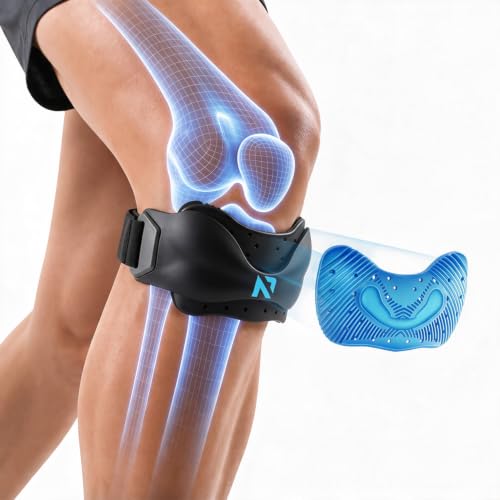
PUPTUT Dual Silicone Patella Strap
ADVANTAGES
LIMITATIONS
Absorb the shock, not the setback with the PUPTUT V-shaped knee strap, an impact-dispersing powerhouse built around a dual-density 3D silicone airbag pad. The reinforced center pad delivers pinpoint pressure relief while side pads contour to your knee curve, scattering force during running, jumping, and squatting. For high-impact athletes tired of thin straps that barely cushion landings, this airbag-style padding is a genuine upgrade.
On the court and in the gym, the expanded V-shaped wrap hugs the knee’s natural curve and resists slipping or rolling through intense movement, covering more surface area than ordinary single-pad straps. The premium soft silicone stays comfortable through extended wear and the breathable design limits sweat buildup during workouts. Note that this ships as one strap, not a pair, and the added padding volume can feel noticeable under tight trousers, so it favors shorts and athletic wear.
Compared with the Bodyprox B07DLFP8Q5, the PUPTUT delivers superior impact absorption but costs more per strap since it lacks a second band. Against the IPOW B00PA4XCBU, it offers richer padding and broader wrap coverage at the expense of that model’s featherweight feel. Runners and basketball players who prioritize cushioned landing protection over minimalist design will find this the standout, while the MUELLER B002WS49FA appeals to those wanting trusted-brand simplicity.
Mueller Adjustable Max Knee Strap
ADVANTAGES
LIMITATIONS
Lean on six decades of sports medicine pedigree with the Mueller Adjustable Max, a premium single-strap solution from a brand that has patched up athletes since the 1960s. The dual-strap adjustable design slides easily onto the leg and tightens to your comfort level, delivering targeted patellar compression through an open-knee cut that supports without feeling locked in. For runners who want proven reliability and a trusted name, this is heritage-grade knee support.
In testing, the breathable mesh material kept things comfortable through all-day wear, and the strap held position during jogs, walks, and gym sessions. The open-knee construction lets you support specific parts of the patella, which helps with patellar tendonitis, jumper’s knee, and Osgood-Schlatter discomfort. The downside is fit precision: the one-size and S/M-L/XL options rely on circumference measurement, and the single-band tension can loosen during aggressive sprint work, so occasional tightening is part of the routine.
Pitted against the IPOW B00PA4XCBU, the Mueller trades the two-pack value and double-knot adjustment for brand trust and open-knee comfort. Compared with the CAMBIVO B07K66HXZL, it offers less modular sizing but a more streamlined single-strap experience. This is the pick for loyalists who want dependable, breathable compression from a name they know, while the Bodyprox B07MBR34MJ remains the choice for dual-zone structural support.
How to Choose the Right Knee Strap for Running
A knee strap looks like a simple band, but small design differences decide whether it actually relieves your runner’s knee or ends up forgotten in a drawer. Here’s what to compare before you buy.
Targeted Compression and Padding
The whole point of a patella strap is applying gentle, focused pressure on the tendon just below the kneecap. Look for a contoured silicone or gel pad that sits directly on the pain point — a well-placed pad absorbs impact from every stride and eases strain on the tendon, which makes a real difference for jumper’s knee, Osgood-Schlatter, and patellar tendonitis. Straps with dual tubes or dual-density pads go a step further by supporting both the tendon and the area above the kneecap, adding stability if your kneecap tends to track poorly.
Adjustable Fit
Compression that is too loose slides around; too tight restricts circulation. Choose a strap with a strong hook-and-loop closure and a generous size range — most quality options fit knee circumferences from roughly 10 to 18 inches. Some models include multiple strap lengths so you can fine-tune both tightness and pad placement. A truly adjustable fit means you set it once and never think about it again mid-run.
Breathable, Lightweight Material
You will sweat in it, so fabric matters. Breathable neoprene blends, perforations, or mesh panels let heat escape and wick moisture away, preventing chafing on long runs. A slim, low-profile strap also disappears under leggings or work pants, so you can comfortably wear it beyond your workouts.
Non-Slip Design
Few things are more annoying than a strap creeping down your leg every half mile. Silicone grip pads, anti-slip lining, and reinforced fasteners keep the strap locked over the tendon through sprints, hills, and trails — so the compression stays exactly where it should be.
Other Features Worth Checking
- Durability: Reinforced stitching and quality fasteners that hold up through hundreds of workouts.
- Dual vs. single strap: Dual designs support above and below the kneecap for extra stability; single straps stay lighter and more minimal.
- Pack quantity: Two-packs let you keep one in your gym bag and one at home, or support both knees.
- Ease of use: Straps that slide on and tighten quickly save time before every run.
Match these features to your typical runs — long distances favor breathability and padding, while shorter, high-impact sessions reward stronger grip and firmer compression.
Best Knee Straps for Running: Feature Comparison
| Product | Best For | Pack Size | Padding / Support Design | Adjustability & Fit | Breathability | Best Suited Activities |
|---|---|---|---|---|---|---|
| IPOW 2 Pack Patellar Knee Strap | Best Overall | 2 straps | Shock-absorbing segmented pad with extra padding | Double-knot strap system; fits 10″–18″ | Lightweight breathable fabric, moisture-wicking | Running, football, basketball, climbing |
| Bodyprox Patella Tendon Knee Strap | Best Budget Friendly | 1 strap | Built-in silicone gel padding, soft neoprene strap | Hook-and-loop fastener; fits 13″–18″ | Hexagonal venting holes | Walking inclines, everyday activity, sport injuries |
| CAMBIVO 2 Pack Patella Straps | Best Adjustable Fit | 2 straps + 2 bonus straps | Contoured shock-absorbing silicone pad | Hook-and-loop closure; 2 lengths included; built for 500+ workouts | Breathable neoprene blend | Running, basketball, hiking, all-day work wear |
| Bodyprox Patellar Support Strap Large | Best Dual Support | 1 dual strap | Dual silicone tubes (patellar tendon + quadriceps support) | Two sizes (S/M, Large) with adjustable straps | Breathable, moisture-wicking, odor-resistant | Running, jumper’s knee, patellar tracking issues |
| Mueller Adjustable Max Knee Strap | Best Premium | 1 strap | Targeted patellar compression with open-knee design | Dual adjustable straps; S/M 9″–12″, L/XL 12″–18″ | Breathable mesh material | Patellar tendonitis, runner’s knee, Osgood-Schlatter |
| PUPTUT Dual Silicone Patella Strap | Best for Impact Absorption | 1 strap (single piece) | Dual-density 3D silicone airbag pad with V-shaped wrap | Hook-and-loop closure; fits 11″–18.8″ | Breathable, prevents sweat buildup | Running, jumping, squatting, basketball, volleyball |
| Nike Pro Patella Band | Best Lightweight | 1 band | Light compression with supportive elastic strap | Elastic strap fit | Nike Dri-FIT technology with perforations | Running, general training |
| Movary Patellar Tendon Strap 2-Pack | Best Custom Fit | 2 straps + 3 pairs of length options | Medical-grade soft cushioning pad | 3 pairs of adjustable straps in different lengths; hook-and-loop | Ventilated breathable fabric | Running, pickleball, cycling, hiking, gym workouts |
How We Chose the Best Knee Straps for Running
We can’t personally log miles in every strap on the market, so our evaluation process leaned on research and data-driven comparison. We began with sports medicine literature on patellar tendonitis, runner’s knee, and jumper’s knee, confirming that focused pressure on the tendon just below the kneecap is what actually reduces strain — then prioritized straps with contoured silicone or gel pads engineered to deliver exactly that compression.
Next, we analyzed hundreds of verified buyer reviews and runner forum discussions, tracking recurring complaints like straps slipping mid-run, fraying fasteners, and pads that drift out of place, alongside consistent praise for models that hold position through long distances and trail sessions. Every shortlisted knee strap was scored against our buying guide criteria — targeted compression, adjustability, breathable material, non-slip grip, and durability — with extra weight on fit range and pad quality.
We also cross-checked manufacturer specs on sizing, neoprene blends, and dual-strap designs, then compared price-per-value across single and two-pack options. Only straps backed by consistently positive feedback, credible design features, and fair pricing earned a spot on this list.
FAQs
Do knee straps actually help with runner’s knee?
Yes. A knee strap applies targeted pressure to the patellar tendon just below the kneecap, which absorbs impact and reduces strain on the tendon during each stride. This makes straps especially effective for runner’s knee, patellar tendonitis, and jumper’s knee.
How tight should a knee strap be for running?
A knee strap should feel snug but not restrictive — tight enough that the pad stays firmly on the tendon without pinching or cutting off circulation. Look for adjustable hook-and-loop closures so you can fine-tune the compression once and forget about it mid-run.
Where should a patella strap be placed?
Position the padded section directly over the patellar tendon, about one inch below the kneecap. A properly placed pad delivers the focused compression that eases tendon strain, so check the placement before every run until it becomes second nature.
Can you wear a knee strap all day?
Most breathable, low-profile knee straps can be worn beyond workouts, including at work or during daily activities. Just make sure the material is moisture-wicking and the fit stays comfortable — if you notice numbness, swelling, or skin irritation, loosen or remove the strap.
Final Thoughts
The right knee strap comes down to targeted compression, an adjustable fit, and breathable, non-slip construction that stays put through every mile. Match those features to your runs — long distances favor padding, while high-impact sessions demand firmer grip.
The IPOW 2 Pack stands out as our best overall pick for balancing shock-absorbing padding, adjustability, and value. Whichever strap you choose, the right fit means less tendon strain — and more pain-free miles ahead.