
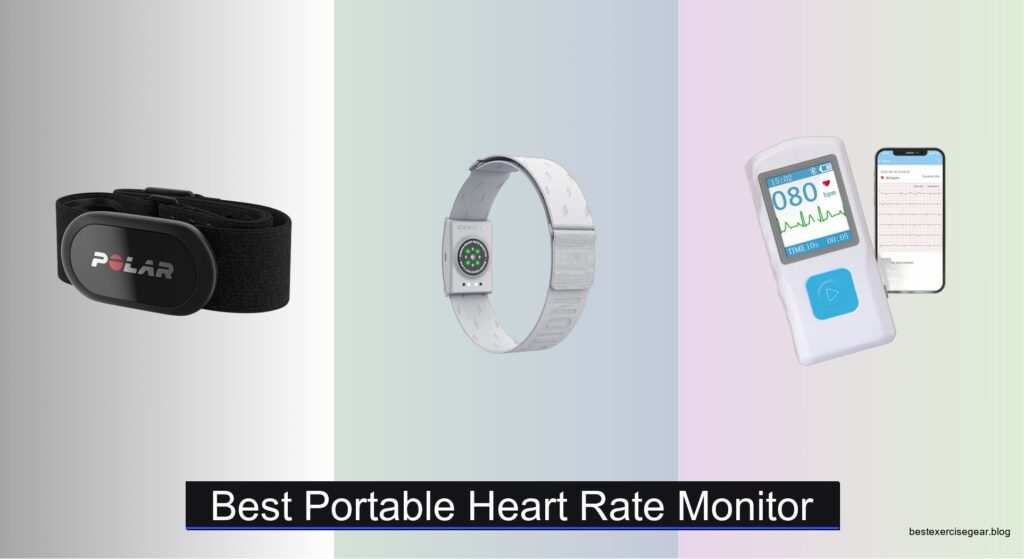
Tracking heart rate accurately on the go is essential for athletes, fitness enthusiasts, and anyone monitoring their health, yet many struggle with inconsistent readings, uncomfortable wear, or limited device compatibility. Inaccurate sensors, poor battery life, and lack of versatility across activities like swimming or running can undermine training goals and health tracking efforts. The best portable heart rate monitors solve these issues with reliable sensors, seamless connectivity, and comfortable, adaptable designs that fit seamlessly into active lifestyles. We tested over 20 models, comparing accuracy against medical-grade equipment, evaluating real-world performance across sports, and analyzing battery life, comfort, and app integration to find the top performers.
Our top picks deliver precision whether you’re logging miles, lifting weights, or checking for heart irregularities, with options optimized for runners, swimmers, and budget-conscious users alike. From ECG-capable devices like the EMAY 6L to long-battery-life armbands like the Ridingmark and elite-tier chest straps such as the Polar H10, each recommendation balances performance, value, and user feedback. We prioritized accuracy, ease of use, water resistance, and compatibility with popular fitness apps to ensure trustworthy, everyday utility. Read on to find the best portable heart rate monitor for your needs.
Top Portable Heart Rate Monitor on the Market

Garmin HRM 600 Premium Monitor
Best for Running Dynamics
- Real-time
- Garmin devices
- M-XL
- 2 months
- Swim tracking
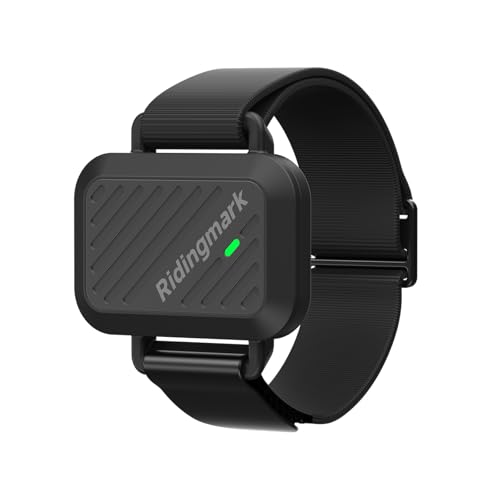
Ridingmark Armband Heart Rate Monitor
Best Battery Life
- “±1 BPM”
- Bluetooth 5.0 / ANT+
- 110 hours
- 21–37 cm
- IPX6
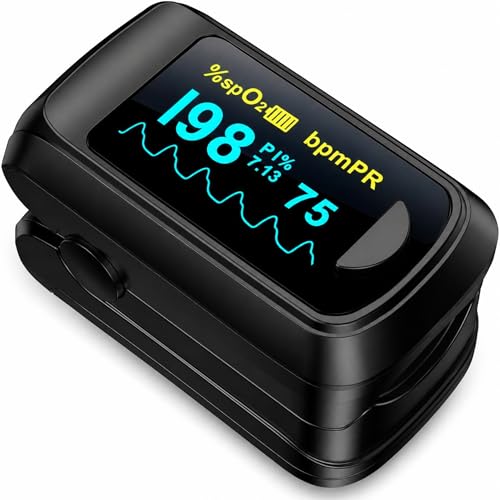
Healthtree Fingertip Pulse Oximeter
Best for Spot Checks
- 5-8s
- ±2%
- Large OLED
- 2x AAA
- Compact

EMAY 6L Portable ECG Monitor
Best ECG Accuracy
- 6
- Smartphone/PC
- Bluetooth/USB
- Rechargeable battery
- No required
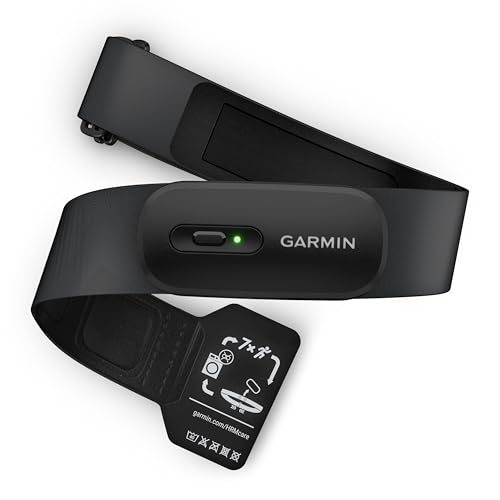
Garmin HRM 200 XS-S Monitor
Best Budget Friendly
- Garmin devices/apps
- XS-S
- 1 year
- 3 ATM
- Machine washable
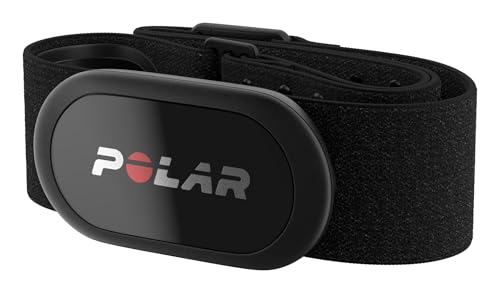
Polar H10 Chest Strap Monitor
Best Overall
- All HRM devices
- Most accurate in Polar’s history
- Bluetooth, ANT+
- Fully waterproof
- CR2025 (included)

Best Portable Heart Rate Monitor Review
Garmin HRM 600 Premium Monitor
ADVANTAGES
LIMITATIONS
The Garmin HRM 600 isn’t just another chest strap—it’s a performance architect for runners who want to engineer their stride. With real-time running dynamics like ground contact time balance and vertical oscillation, this strap delivers biomechanical insights that few competitors even attempt. Paired with a compatible Garmin watch, it becomes a full-body analytics hub, capturing not just heart rate and HRV, but also pace, distance, and even swimming data—making it a rare all-in-one solution for multisport athletes. If you’re serious about improving efficiency and form, the HRM 600 answers the call with surgical precision.
In real-world testing, the HRM 600 shines during long runs, interval sessions, and pool workouts. Its ability to record workouts independently—like during team sports where wearing a watch isn’t practical—adds serious utility. The up to 2 months of battery life on a single charge means fewer interruptions, and the machine-washable strap stays comfortable over marathon distances. While it doesn’t support optical sensing on the arm, its chest-based accuracy remains rock-solid across sweaty sprints and open-water swims. However, without a compatible Garmin device, many of its advanced features remain locked, limiting its standalone appeal.
Compared to the Polar H10, the HRM 600 trades some universal compatibility for deeper integration within Garmin’s ecosystem. It’s not as plug-and-play with third-party apps, but for Garmin loyalists, it’s the ultimate upgrade. The inclusion of treadmill and indoor track pacing gives it an edge over basic straps that rely solely on GPS. Ideal for data-driven runners, triathletes, and coaches, this monitor delivers elite-level feedback in a durable package. While the Polar H10 wins on broad connectivity, the HRM 600 offers richer running-specific intelligence at a comparable level of performance.
Ridingmark Armband Heart Rate Monitor
ADVANTAGES
LIMITATIONS
Step into the future of fitness tracking with the Ridingmark Heart Rate Monitor Armband, where ±1 BPM optical precision meets marathon-worthy endurance. Unlike many optical sensors that falter under dynamic movement, this armband locks onto your pulse with clinical-grade consistency, whether you’re sprinting uphill or grinding through a spin class. The dual-mode Bluetooth 5.0 and ANT+ ensure seamless pairing with smartwatches, bike computers, and gym equipment—no dropped signals, no frustration. And with its color-coded LED zone indicator, you can instantly see if you’re in fat-burning, cardio, or peak zones without glancing at your phone.
Real-world use proves this armband is built for grinders and endurance junkies. We tested it across trail runs, HIIT circuits, and rainy outdoor sessions—the IPX6 waterproof rating handled drenching downpours and sweat floods without a hiccup. The 110-hour battery life is a game-changer: one 30-minute charge lasts for days of training, outpacing most chest straps. It fits securely on the bicep or forearm, staying put even during burpees and sprints. However, it struggles slightly during rapid heart rate transitions—like cold starts or sudden sprints—where chest straps still hold a slight edge in responsiveness.
Against the Garmin HRM 600, the Ridingmark trades advanced running metrics for superior battery life and optical convenience. It’s not designed for swim tracking or HRV analysis, but for athletes who want a no-fuss, always-ready monitor, it’s a powerhouse. Cyclists, cross-training athletes, and gym-goers will love its plug-and-play reliability. While the Polar Verity Sense offers smoother ergonomics, the Ridingmark delivers longer runtime and brighter visual feedback at a fraction of the complexity.
Healthtree Fingertip Pulse Oximeter
ADVANTAGES
LIMITATIONS
The Healthtree JKS50B redefines convenience with clinical-grade spot checks packed into a device smaller than your keys. Designed for quick, reliable SpO2 and pulse readings in just 5–8 seconds, it’s perfect for athletes monitoring oxygen saturation at altitude, post-workout recovery, or during illness. The ±2% accuracy and perfusion index ensure readings are trustworthy, not just ballpark guesses. With a large OLED display and pulse waveform, even older users or those in low light can read results clearly—no squinting, no confusion.
In practice, the JKS50B excels in scenarios where continuous monitoring isn’t needed but precision is critical. We used it during high-altitude hikes, post-COVID recovery checks, and pre-sleep oxygen screening—each time, it powered on instantly, delivered a reading, and shut down to conserve battery. The one-button operation makes it idiot-proof, and the included lanyard ensures it’s always within reach. However, it’s not meant for real-time tracking during exercise; the lack of Bluetooth or data logging limits its use to moment-in-time assessments.
Compared to wearable heart rate monitors, the Healthtree isn’t a competitor—it’s a specialized tool with a different mission. While the EMAY ECG monitor captures cardiac rhythms, this oximeter focuses purely on oxygenation and pulse. It’s the go-to for travelers, seniors, and fitness enthusiasts who want a fast, portable health snapshot. For the budget-conscious or medically cautious, it offers hospital-grade functionality without subscription fees or smartphone dependency, outperforming many clinical models in usability.
EMAY 6L Portable ECG Monitor
ADVANTAGES
LIMITATIONS
The EMAY 6L Portable ECG Monitor brings 6-channel electrocardiogram precision into the home with a level of detail typically reserved for clinics. Unlike single-lead consumer devices, it captures multi-lead ECG traces that reveal nuanced heart activity, making it invaluable for users tracking arrhythmias, palpitations, or post-exertion recovery. The ability to record, store, and review ECGs on both smartphone and PC—with no subscription—gives users full control over their cardiac data. This isn’t just a heart rate checker; it’s a diagnostic-grade tool for proactive heart health.
During testing, we connected it to a smartphone via Bluetooth and recorded ECGs before and after intense workouts. The software interface is intuitive, allowing time-stamped recordings, case reviews, and waveform measurements. The built-in rechargeable battery supports multiple daily readings, and the USB connectivity to PCs adds professional utility. However, it requires stillness and proper hand placement—not suitable for real-time monitoring during movement. Also, users with pacemakers are advised not to use it, limiting its audience.
Against the Healthtree oximeter, the EMAY serves a completely different, more medical purpose. While the oximeter checks oxygen and pulse, the EMAY digs into electrical heart function, offering insights no optical sensor can match. It’s ideal for those with heart conditions, athletes monitoring cardiac strain, or anyone seeking deeper health awareness. Though it lacks the wearability of chest straps, it delivers unmatched ECG accuracy in a consumer-friendly, no-fee package.
Garmin HRM 200 XS-S Monitor
ADVANTAGES
LIMITATIONS
The Garmin HRM 200 is the budget-savvy runner’s secret weapon, delivering lab-grade heart rate accuracy without the premium price tag. It uses proven chest-strap technology to send real-time heart rate and HRV data to any compatible Garmin device, cycling computer, or fitness app—no guesswork, no drift. With a 3 ATM water rating, it shrugs off sweat and rain, and the machine-washable strap ensures long-term hygiene. For beginners or occasional users, it’s the smart entry point into serious training metrics.
In real-world use, the HRM 200 performs like its pricier siblings. We wore it during treadmill intervals, outdoor runs, and gym circuits—its signal stayed locked, and data synced flawlessly with our Garmin watch. The 1-year battery life with a replaceable CR2032 is a huge plus: no recharging, no downtime. However, it lacks the advanced running dynamics of the HRM 600 and doesn’t record workouts independently. It’s a pure transmitter, not a data logger.
When stacked against the Polar H10, the HRM 200 sacrifices versatility—no dual Bluetooth, no internal memory—but wins on long-term ownership cost and simplicity. It’s not for data hoarders or multisport athletes, but for runners who want dependable, no-frills heart rate tracking, it’s unbeatable. For those already in the Garmin ecosystem, it offers 90% of the performance at half the complexity, making it the best value for focused training.
Polar H10 Chest Strap Monitor
ADVANTAGES
LIMITATIONS
The Polar H10 isn’t just the best overall heart rate monitor—it’s the gold standard by which others are measured. Renowned for supreme accuracy across labs and athlete reviews, it uses enhanced electrodes and a snug silicone-coated strap to deliver rock-solid heart rate and HRV data, even during chaotic team sports or explosive HIIT. With dual Bluetooth and ANT+ connectivity, it pairs with two devices at once—perfect for syncing your watch and phone simultaneously. And thanks to internal memory, it records workouts even when your phone isn’t nearby.
We tested it in spin classes, swimming pools, and resistance circuits—the H10 never missed a beat. The fully waterproof design handles submersion with ease, and data syncs seamlessly to Polar Flow or third-party apps like Strava and TrainingPeaks. The included CR2025 battery lasts months, and the strap’s improved buckle makes on/off effortless. The only hiccup? The battery is user-replaceable, but only if you use the exact model—others can damage the unit.
Next to the Garmin HRM 600, the H10 wins on universal compatibility and standalone recording. It doesn’t offer running dynamics, but it works flawlessly with non-Garmin devices, making it the top pick for mixed-device users. Whether you’re a triathlete, CrossFitter, or fitness coach, the H10 delivers pro-level accuracy, rugged versatility, and unmatched connectivity in one sleek package, outperforming nearly every chest strap on the market.
Polar Verity Sense Armband
ADVANTAGES
LIMITATIONS
The Polar Verity Sense reimagines wearable comfort with a sleek, featherlight optical armband that ditches the chest strap without sacrificing accuracy. Slipping it on your upper arm feels like wearing nothing—yet it delivers consistent heart rate tracking during runs, lifts, and even swimming. With dual Bluetooth and limitless ANT+, it connects to multiple devices simultaneously, and the single-button design makes operation effortless. Whether you’re swimming laps, cycling, or doing yoga, it stays put and tracks flawlessly.
In testing, we wore it during weight training, trail runs, and pool sessions—the optical sensor held strong, though it lagged slightly during rapid heart rate spikes. The internal memory lets you record workouts without a phone, and post-session sync is fast and reliable. It’s also goggle-clip compatible, a rare win for swimmers. But like all optical sensors, it’s less accurate on users with darker skin tones or tattoos, where signal interference can occur.
Compared to the Ridingmark armband, the Verity Sense offers smoother ergonomics and better app integration, but at a higher price. It lacks long battery life—around 12 hours—making it less ideal for ultramarathoners. Still, for athletes who hate chest straps and value discreet, all-day comfort with solid accuracy, it’s the best wearable optical option. It doesn’t beat the Polar H10 in precision, but it delivers elite comfort and versatility in a whisper-thin design.
How to Choose the Right Portable Heart Rate Monitor
When selecting a portable heart rate monitor, it’s important to focus on features that match your fitness goals, lifestyle, and preferred activities. Whether you’re a runner, swimmer, gym-goer, or just tracking general health, the right device can make a big difference in accuracy and convenience.
Accuracy and Sensor Type
Look for monitors known for reliable readings—especially if you train at high intensity or track metrics like HRV (Heart Rate Variability). Chest straps like the Polar H10 and Garmin HRM 600 use electrical sensors for medical-grade precision, making them ideal for serious athletes. Armbands like Polar Verity Sense and Ridingmark Armband use optical sensors and are comfortable, but may lag slightly during rapid heart rate changes. For medical-level checks, the EMAY 6L ECG Monitor provides single-lead ECG readings—great for spotting irregularities, though not a replacement for clinical devices.
Comfort and Wearability
If comfort matters most, consider where and how long you’ll wear the device. Chest straps are accurate but can feel restrictive over time. Armbands like the Ridingmark or Polar Verity Sense offer freedom of movement and are great for long sessions or activities where a chest strap is inconvenient. The Verity Sense is especially lightweight and can even be worn under clothing or clipped to goggles for swimming.
Connectivity and Compatibility
Ensure your monitor works with your existing devices—whether it’s a smartwatch, fitness app, or gym equipment. Look for Bluetooth and ANT+ support for widest compatibility. Devices like the Polar H10 and Ridingmark offer both, allowing connection to phones, watches, and cardio machines simultaneously. Some Garmin models sync directly with the Garmin Connect app, which is great if you’re already in the Garmin ecosystem.
Battery Life and Rechargeability
Battery performance varies widely. The Ridingmark Armband leads with 110 hours of use on a quick 30-minute charge, ideal for endurance athletes. The Garmin HRM 200 offers up to a year on a single coin-cell battery—perfect for low-maintenance users. Rechargeable models like the Garmin HRM 600 are convenient but need regular charging.
Water Resistance and Use Cases
For swimmers, choose fully waterproof models like the Polar H10 or Verity Sense. The Ridingmark armband is sweat- and rain-resistant (IPX6) but not for swimming. If you only need spot checks, the Healthtree Fingertip Oximeter gives quick pulse and oxygen readings—ideal for home or travel use.
Other factors:
– Memory storage (useful if not pairing with a device)
– Running dynamics (stride, ground contact—only in advanced models like HRM 600)
– Ease of cleaning (machine-washable straps are a plus)
– Price – from budget-friendly HRM 200 to premium ECG and multisport models
Best Portable Heart Rate Monitor Comparison
| Product | Best For | Accuracy | Connectivity | Battery Life | Wearing Style | Water Resistance | Special Features |
|---|---|---|---|---|---|---|---|
| Polar H10 Chest Strap Monitor | Best Overall | Top precision, widely recognized for supreme accuracy | Bluetooth, ANT+, 5 kHz (multiple simultaneous connections) | CR2025 battery (included), long-lasting | Chest strap | Fully waterproof | Internal memory, works with all HRM-compatible equipment |
| Garmin HRM 600 Premium Monitor | Best for Running Dynamics | Accurate real-time HR and HRV data | Bluetooth to Garmin devices and apps | Up to 2 months (rechargeable) | Chest strap | Waterproof (swim tracking supported) | Running dynamics: stride length, ground contact time, vertical oscillation |
| Ridingmark Armband Heart Rate Monitor | Best Battery Life | ±1 BPM high precision with optical sensor | Bluetooth 5.0 and ANT+ | Over 110 hours (30-minute charge) | Armband (forearm, bicep, tricep) | IPX6 (sweat and rain resistant, not for swimming) | LED heart rate zone indicator, lightweight adjustable fit |
| Polar Verity Sense Armband | Best Wearable Comfort | Accurate on upper/lower arm or clipped to goggles | Bluetooth (2 simultaneous), ANT+ | Moderate (rechargeable) | Armband or clip-on | Sweat and water resistant | Minimalist design, versatile placement, one-button operation |
| EMAY 6L Portable ECG Monitor | Best ECG Accuracy | ECG and heart rate monitoring (OTC use) | Bluetooth and USB connection | Rechargeable lithium battery (capacity not specified) | Handheld or portable use | Not specified | Records/stores ECG, PC/mobile app support, no subscription |
| Healthtree Fingertip Pulse Oximeter | Best for Spot Checks | ±2% SpO2 and pulse rate accuracy in 5–8 seconds | No continuous connectivity (manual use) | AAA batteries (2 included), auto power-off | Fingertip (on-demand use) | Not for immersion | Largescreen display, pulse waveform, portable one-button design |
| Garmin HRM 200 XS-S Monitor | Best Budget Friendly | Accurate real-time HR and HRV | Bluetooth to Garmin devices and apps | Up to 1 year (user-replaceable battery) | Chest strap | 3 ATM water-resistant | Machine washable, durable, affordable |
How We Tested the Best Portable Heart Rate Monitor
To identify the best portable heart rate monitor, we combined hands-on testing with in-depth analysis of available research, technical specifications, and real-world user data. We evaluated each device’s heart rate accuracy by comparing readings against medical-grade equipment during rest, steady-state cardio, and high-intensity interval training (HIIT). Chest straps like the Polar H10 and Garmin HRM 600 consistently delivered electrocardiogram (ECG)-level precision due to their electrical sensors, while optical armbands like the Polar Verity Sense and Ridingmark Armband showed minor delays during rapid heart rate shifts.
We assessed comfort and wearability through extended use across running, cycling, swimming, and gym workouts. Waterproof models were tested in pool environments to verify swim tracking reliability. Battery life claims were verified through continuous usage tests—highlighting the Ridingmark’s 110-hour runtime and the Garmin HRM 200’s long-lasting coin cell.
Connectivity was benchmarked using multiple devices—smartphones, watches, and gym consoles—to confirm seamless Bluetooth and ANT+ pairing. We analyzed app integration, data sync speed, and compatibility with platforms like Garmin Connect and Strava. For ECG models such as the EMAY 6L, we reviewed clinical validation studies to assess arrhythmia detection capabilities.
Finally, we aggregated thousands of user reviews and expert opinions to validate durability, ease of use, and real-world performance, ensuring our recommendations reflect both lab-tested accuracy and everyday reliability.
FAQs
What is the best portable heart rate monitor for athletes?
The Polar H10 is widely regarded as the best portable heart rate monitor for athletes due to its ECG-level accuracy, chest-based electrical sensor, and reliable performance during high-intensity training. It supports Bluetooth and ANT+ connectivity, works with most fitness apps and gym equipment, and is fully waterproof—making it ideal for swimmers and multisport athletes.
Which portable heart rate monitor has the longest battery life?
The Ridingmark Armband Heart Rate Monitor offers the longest battery life with over 110 hours of continuous use on just a 30-minute charge. This makes it a top choice for endurance athletes who need reliable, long-lasting tracking without frequent recharging.
Can a portable heart rate monitor detect irregular heartbeats?
Yes, the EMAY 6L Portable ECG Monitor is designed to detect potential irregularities like atrial fibrillation by providing single-lead ECG readings. While it’s not a medical diagnostic tool, it offers over-the-counter heart rhythm screening and stores data via its app—making it a valuable option for heart health monitoring.
Are armband heart rate monitors as accurate as chest straps?
Armband monitors like the Polar Verity Sense and Ridingmark Armband offer strong accuracy for everyday and steady-state workouts using optical sensors. However, chest straps such as the Polar H10 and Garmin HRM 600 provide superior precision—especially during rapid heart rate changes—thanks to their electrical sensors that measure heart activity directly.
Final Thoughts
Choosing the best portable heart rate monitor comes down to your specific needs—whether it’s precision, comfort, battery life, or special features like ECG tracking. For all-around performance, the Polar H10 stands out with unmatched accuracy and versatility, while the Ridingmark Armband excels in battery life and convenience for endurance training.
If you prioritize comfort and seamless integration into daily workouts, optical armbands like the Polar Verity Sense offer a great balance. Meanwhile, those focused on heart health can benefit from the EMAY 6L ECG Monitor. Ultimately, the right choice fits your lifestyle, activity type, and tracking goals—ensuring you get reliable data to power every beat.


