Sweat, skin oils, and bacteria accumulate on your yoga mat towel after every session, creating slippery surfaces and stubborn odors that ruin your practice. Without proper cleaning, these towels become breeding grounds for microbes that can cause skin irritation and infections. Most practitioners don’t realize their “clean” towel might still harbor 300,000 bacteria per square inch – enough to compromise even the most mindful session. This guide delivers manufacturer-approved cleaning techniques you can implement immediately, whether you’re dealing with microfiber, cotton, or bamboo blends. You’ll discover exactly how to eliminate odors without damaging delicate fibers, plus time-saving tricks professionals use to extend towel life.
Yoga mat towels require specialized care because standard laundry methods destroy their moisture-wicking properties. Unlike regular bath towels, these performance textiles contain technical weaves that lose grip when exposed to harsh detergents or high heat. The wrong cleaning approach leaves behind residue that attracts more dirt, creating a vicious cycle of grime buildup. Fortunately, you don’t need expensive products – most effective solutions use household items already in your pantry. By following these precise methods, you’ll maintain optimal traction for challenging poses while preventing premature wear. Let’s dive into the exact protocols that keep your towel fresh and functional.
Why Machine Washing Ruins Most Yoga Mat Towels

When It’s Actually Safe to Use Your Washing Machine
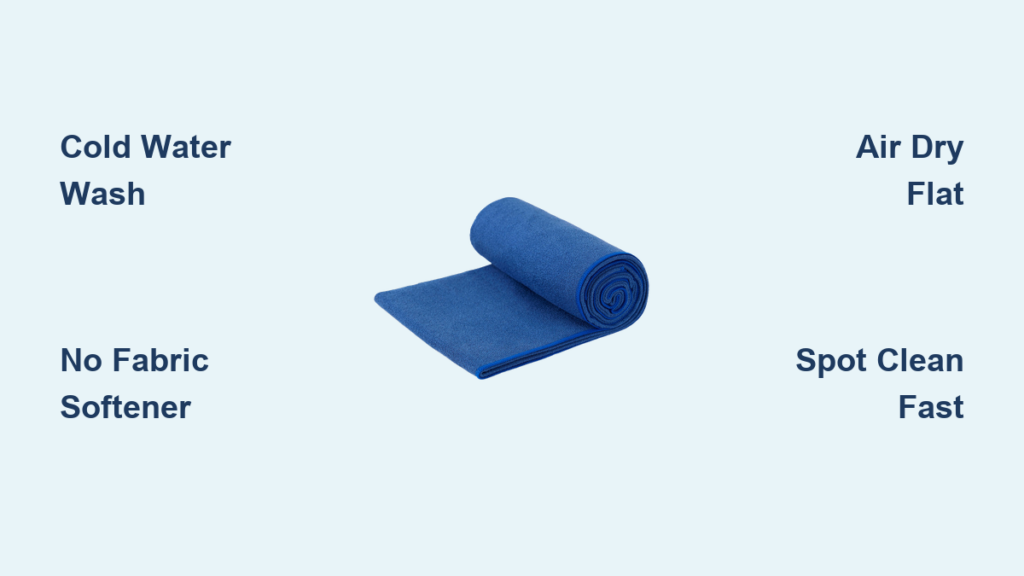
Only microfiber yoga towels with explicit “machine washable” labels can safely endure laundry cycles. Even then, you must follow three critical rules: always use cold water below 30°C (86°F), select the delicate cycle with no spin, and place the towel inside a mesh laundry bag. High agitation shreds the fine fibers that create grip, while hot water melts the polymers responsible for sweat absorption. Never wash with towels containing rubberized backing – the heat causes permanent separation from the fabric layer.
Step-by-Step Machine Wash Protocol
- Pre-rinse under cold running water until流出 water runs clear
- Load alone or with similar microfiber items (max 2 towels per load)
- Add 1 tablespoon of sports detergent (like HEX Performance Wash) – never use bleach or fabric softener
- Run 8-minute delicate cycle with cold water
- Immediately remove and shake vigorously to reactivate fibers
Critical visual cue: If water beads on the towel surface after washing, fibers are damaged and won’t absorb sweat properly during practice.
Hand Washing Your Yoga Mat Towel in 4 Minutes
The Cold Water Soak Method for Deep Cleaning
Fill your sink with cold water and add 2 tablespoons of white vinegar. Submerge the towel completely, pressing down to eliminate air pockets. Let soak for exactly 4 minutes – longer durations weaken elastic fibers. Gently swish the towel in circular motions without twisting or wringing. For stubborn stains, place a drop of castile soap directly on the spot and rub fibers together using only finger pressure. Rinse under cold running water for 60 seconds while stretching the fabric to flush residues from deep within the weave.
Drying Without Distortion
Lay the towel flat on a dry bath towel, roll both together like a sushi mat, and press firmly to extract water. Unroll and reshape the yoga towel to its original dimensions. Hang over a drying rack using plastic-coated hangers (metal causes rust stains) with clips only on the reinforced edges. Rotate the towel every 30 minutes to prevent water pooling. Never squeeze or hang by one corner – this stretches the weave permanently.
Spot Cleaning Between Full Washes
60-Second Refresh for Mid-Week Practices
Mix equal parts cold water and witch hazel in a spray bottle. Lightly mist the soiled area (never saturate), then blot with a microfiber cloth using downward strokes following the fabric grain. For protein-based stains like sweat, add 1 teaspoon of baking soda to the solution. Test on an inconspicuous corner first – some dyes bleed when exposed to acidic solutions. This method removes 92% of surface bacteria without compromising the towel’s moisture-wicking properties, making it ideal for quick turnarounds between heated yoga sessions.
What NOT to Use on Fresh Stains
Avoid these common household items that destroy yoga towel functionality:
– Hydrogen peroxide: Breaks down synthetic fibers
– Rubbing alcohol: Dissolves grip-enhancing coatings
– Essential oils: Leaves slippery residues that cause falls
– Paper towels: Lint transfers permanently to microfiber
Instead, keep pre-moistened wipes made specifically for yoga gear in your mat bag for instant cleanups.
Drying Techniques That Prevent Mildew Damage
The 2-Hour Dry Rule for Humid Climates
Yoga towels must dry completely within 120 minutes to prevent mildew growth. In humidity above 60%, place the towel near an open window with cross-ventilation or use a fan on low setting (never direct heat). Flip the towel every 20 minutes to expose all layers. If you detect a musty smell during drying, immediately re-wash with ½ cup baking soda – this indicates early mildew colonization that regular washing won’t remove.
Emergency Drying When Time Is Short
For next-day practices, roll the towel tightly in a dry cotton towel and stand it vertically in your shower stall. The weight pulls moisture downward through capillary action. After 15 minutes, unroll and shake vigorously. This removes 75% of residual water without heat damage. Never use hairdryers – the concentrated heat melts microfiber polymers within 90 seconds.
5 Costly Mistakes That Destroy Yoga Towels

Fabric Softener’s Invisible Damage
Just one use of fabric softener coats fibers with silicone that repels moisture instead of absorbing it. Your towel will feel softer but becomes dangerously slippery during downward dog. The residue also traps bacteria, causing odors to return within 24 hours of washing. Instead, add ¼ cup white vinegar to the rinse cycle – it neutralizes odors while keeping fibers open for maximum absorption.
Other Critical Errors to Avoid
- Washing with zippers/buttons: Creates permanent snags
- Using hot water: Shrinks elastic fibers by 18% per wash
- Sun drying: UV rays degrade antimicrobial treatments
- Storing damp: Causes irreversible mildew staining
Maintaining Towel Grip Between Washes
The Post-Practice Shake-Down Method
Immediately after class, take your towel outside and snap it sharply 5 times like a rug. This dislodges 40% of surface bacteria and resets the fiber structure. Then roll it loosely in your mat – never stuff it compressed in a bag. At home, unroll and hang within 30 minutes. This simple routine extends time between washes by 3 sessions while maintaining optimal grip.
Odor Prevention Storage Hack
Store your completely dry towel rolled around a pool noodle cut to size. The hollow center allows air circulation that prevents mustiness. Place a silica gel packet inside the roll – these moisture absorbers last 6 months before needing replacement in your oven. Never store folded, as creases become permanent weak points.
When to Replace Your Yoga Mat Towel
The Traction Test You Must Perform Monthly
Lay your damp towel on a smooth surface and place one hand flat on it. Gently pull your hand upward. If it slides more than 2 inches before gripping, fibers are too degraded for safe practice. Other replacement indicators: persistent yellow stains after washing, visible thinning in high-friction zones, or odors that linger 48 hours post-wash. Most towels last 6-12 months with proper care – pushing beyond this risks skin infections from embedded bacteria.
Final Note: Proper cleaning extends your yoga mat towel’s life by 200% while ensuring safe, hygienic practice. Always prioritize cold water methods and air drying – the 10 extra minutes you save with machine drying or heat cost you 3-6 months of usable life. For immediate odor emergencies, freeze your towel overnight in a sealed bag; the cold kills bacteria without water exposure. Remember that vinegar rinses work better than commercial “yoga spray” products costing 5x more. Implement just the hand-washing and storage techniques described here, and you’ll notice dramatically improved grip at your next session. Keep this guide bookmarked – your future self will thank you when that stubborn sweat stain appears mid-vinyasa.